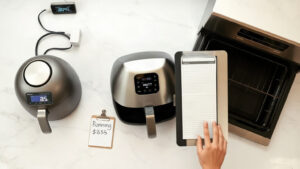
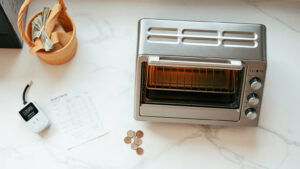
To convert a regular oven roasted vegetable recipe to a toaster oven, reduce the temperature by 25°F and check for doneness about 20-25% earlier than the recipe states. Toaster ovens run hotter and more efficiently than conventional ovens because the heating elements are much closer to the food. That means your vegetables will likely roast faster — and you’ll get better browning on smaller batches, too.
Safety First: Toaster ovens reach extremely high temperatures and the exterior surfaces — including the door and sides — can cause serious burns on contact. Always use oven mitts when handling pans, never line the bottom tray with foil (it can cause overheating and fire), keep the toaster oven at least 4 inches from walls and cabinets, and never leave it unattended when roasting at high heat with oily vegetables.
Quick Takeaways
- Lower your target temperature by 25°F (so a 425°F recipe becomes 400°F in the toaster oven)
- Start checking doneness 10 minutes early on any recipe that calls for 30+ minutes of roasting
- Cut vegetables slightly smaller than you would for a full-size oven — this helps compensate for uneven hot spots
- Don’t crowd the pan; toaster ovens have less airflow and a packed tray will steam, not roast
- Rotate the pan halfway through — toaster oven heating isn’t perfectly even, especially front-to-back
Why Toaster Ovens Cook Differently
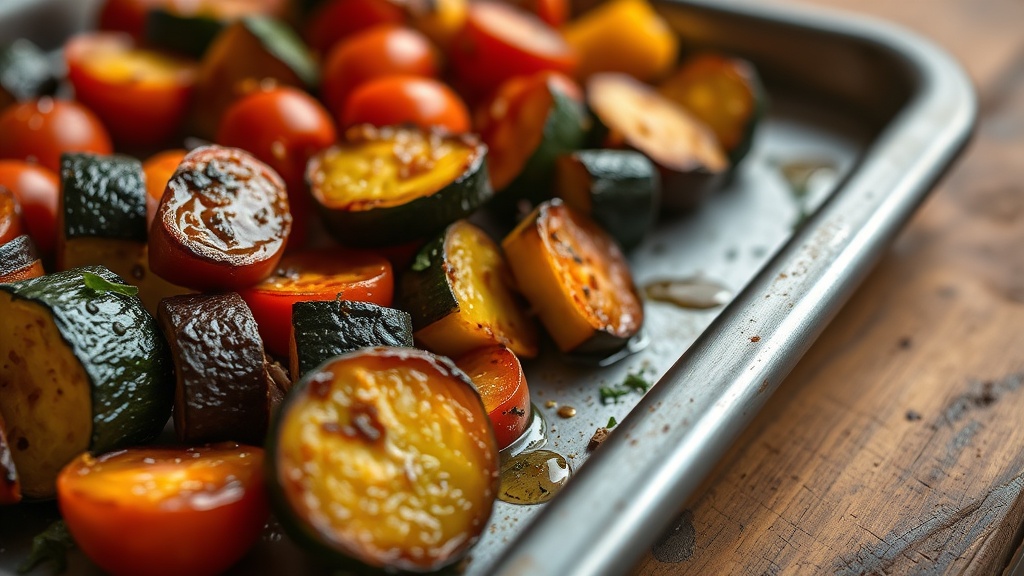
A standard oven has a big cavity. The heating elements are far from the food, and it takes a while for the heat to stabilize and circulate evenly. Toaster ovens are tiny by comparison. The top and bottom heating elements might be just a few inches from whatever you’re cooking, which means the radiant heat hits the food fast and hard.
That proximity is actually great for roasting vegetables — you get caramelization and browning quickly. But it also means you can go from “perfectly charred edges” to “burnt” in under two minutes. Not ideal if you’ve walked away to watch TV.
There’s also the thermostat issue. Many toaster ovens run 25-50°F hotter than they claim. Honestly, mine runs about 30°F hot based on an oven thermometer I picked up years ago. That’s one reason why I always drop the temperature from whatever the original recipe says. It’s just safer to undershoot and add time than to open the drawer to a tray of blackened broccoli.
If you want to get into the specifics of heat output and how these appliances actually work, check out this breakdown of how hot a toaster gets — it’s more relevant to your roasting results than you’d think.
The Basic Conversion Rule (And When to Break It)
The 25°F / 20% Time Rule
Here’s the rule I use every time: subtract 25°F from the recipe temperature and plan to check the vegetables at 75-80% of the listed cook time. That’s it. Simple, and it works most of the time.
So if a recipe says roast at 425°F for 35 minutes, I set my toaster oven to 400°F and check at the 25-minute mark. Sometimes they’re done. Sometimes they need 5-8 more minutes. But I’ve never had them burn using this approach.
If your toaster oven has a convection setting, that changes things a bit. Convection fans circulate the air and speed up cooking even more. For convection mode, drop the temperature a full 50°F below what the recipe calls for, and cut the time by about 25-30%. Convection roasted vegetables are genuinely excellent, by the way. The outsides get crispier faster.
When the Rule Doesn’t Apply
Dense root vegetables — think beets, thick carrot chunks, whole baby potatoes — sometimes need more time, not less. The outside browns quickly in a toaster oven but the inside stays firm. For anything thick and starchy, I’ll actually keep the time close to what the recipe says and just watch the browning. If it’s getting too dark on top, loosely tent with foil.
Delicate vegetables like asparagus, zucchini, and cherry tomatoes go fast regardless. Really fast. A toaster oven at 400°F will roast asparagus spears in 8-10 minutes. Don’t walk away.
Temperature and Time Reference Table
Here’s a practical conversion chart based on common vegetable roasting recipes. These are based on using a toaster oven without convection. Adjust down another 25°F if yours has a fan.
| Vegetable | Standard Oven Temp / Time | Toaster Oven Temp / Time | Notes |
|---|---|---|---|
| Broccoli florets | 425°F / 20-25 min | 400°F / 15-18 min | Check at 12 min; edges burn fast |
| Brussels sprouts (halved) | 425°F / 25-30 min | 400°F / 20-22 min | Don’t crowd — they need space |
| Asparagus (thin spears) | 400°F / 12-15 min | 375°F / 8-10 min | Really watch this one |
| Baby potatoes (halved) | 425°F / 35-40 min | 400°F / 30-35 min | Time stays similar; rotate halfway |
| Bell peppers (strips) | 400°F / 25-30 min | 375°F / 18-22 min | Great results in toaster oven |
| Carrots (1″ chunks) | 425°F / 30-35 min | 400°F / 28-32 min | Dense; keep time close to original |
| Zucchini (sliced) | 400°F / 20-25 min | 375°F / 13-16 min | Can get mushy if overdone |
| Cherry tomatoes | 400°F / 20-25 min | 375°F / 12-15 min | Watch for bursting/burning |
Pan Choice and Loading Tips That Actually Matter
Use the Right Pan
This part gets ignored more than it should. Most toaster ovens come with a small dark-coated pan that gets the job done, but it tends to cook the bottom of vegetables faster than the top. That can lead to burning on the underside before the tops have any color.
My preference is a light-colored metal pan — something like a quarter sheet pan if it fits in your toaster oven. Light pans reflect heat more evenly. If you’re doing vegetables that need more airflow and crispiness all around, a toaster oven wire rack set over the drip tray works really well. The air circulates underneath and you get crispier results.
Also worth picking up: a dedicated toaster oven baking pan that actually fits your model. A lot of people try to use a pan that hangs over the edges and wonder why it doesn’t cook right.
Don’t Overload the Tray
Crowding is the number one reason toaster oven roasted vegetables turn out soggy. In a regular oven you have a big pan with room for vegetables to spread out and steam to escape. In a toaster oven, pile too much on and you’ve basically created a steam chamber. The vegetables release moisture, that moisture has nowhere to go, and you end up with soft, pale vegetables instead of caramelized ones.
Single layer. Always. If you’ve got too many vegetables, do two batches. The second batch actually tends to cook a little faster because the oven is already fully up to temp.
Oil and Seasoning
You don’t need to change anything about your oil or seasoning quantities. Same amount of olive oil as the recipe calls for. Maybe even a tiny bit less since the heat is more concentrated and things can char quickly. Toss your vegetables in a bowl before they go on the pan — don’t drizzle and hope.
Serious Eats has a good breakdown of what actually makes roasted vegetables crispy, and honestly most of it applies directly to toaster oven roasting with the adjustments we’ve talked about here.
Troubleshooting Common Toaster Oven Roasting Problems
Vegetables Are Browning Too Fast on Top
The top heating element is the culprit. Either lower the rack position (if your toaster oven allows it) or loosely drape a small piece of foil over the top of the vegetables after the first 10 minutes. Don’t seal it — just lay it over to slow the top browning while the insides finish cooking.
Vegetables Are Burning on the Bottom
Dark pans absorb heat aggressively. Switch to a lighter pan or put a layer of parchment paper under the vegetables. Not foil on the bottom tray — parchment on the actual cooking surface is fine. You can also try raising the rack position so the vegetables are further from the bottom element.
Vegetables Are Steaming, Not Roasting
Too many vegetables on the pan, or the temperature is too low. Try increasing by 25°F and spreading things out more. It can also help to pre-heat the pan in the toaster oven before adding the vegetables — toss them onto a hot surface and they start searing immediately instead of just sitting and steaming. This trick is particularly good for potatoes and Brussels sprouts.
If you use your toaster oven for more than just roasting, the guide on reheating food in a toaster oven is worth a look — the same principles around temperature management apply there too.
A Few More Things Worth Knowing
Get an oven thermometer. Seriously. It’s a $10-12 investment and it’ll immediately tell you if your toaster oven runs hot or cool. This single tool has saved me from so many roasting disasters. Most toaster ovens are not calibrated accurately, especially cheaper models.
Preheat fully. A lot of people set the temperature and immediately put food in. Give the toaster oven 8-10 minutes to fully stabilize. It heats up fast, but the walls and rack need to come up to temp too, not just the air.
And if you’re shopping for a new unit and want better roasting results, the best mini toaster ovens roundup covers models that handle high-heat cooking particularly well.
Final Thoughts
Converting a roasted vegetable recipe to a toaster oven isn’t complicated. Drop the temp 25°F, check early, don’t crowd the pan, and preheat properly. That covers about 90% of the adjustments you’ll ever need to make.
The toaster oven can actually produce better roasted vegetables than a full-size oven for smaller quantities — the heat is intense and immediate, which is exactly what you want for caramelization. You just have to pay attention, especially the first couple of times you’re making a new recipe. After that, you’ll know exactly how your particular toaster oven behaves and it becomes second nature.
For additional guidance on safe temperatures and roasting food properly, the USDA’s food safety and preparation guidelines are worth bookmarking.
Frequently Asked Questions
What temperature do I use to roast vegetables in a toaster oven?
Set your toaster oven 25°F lower than the recipe temperature — so if the recipe calls for 425°F, use 400°F. Toaster ovens run hotter than conventional ovens because the heating elements are close to the food. If your model has a convection fan, drop the temperature a full 50°F below what the recipe states.
How long does it take to roast vegetables in a toaster oven vs a regular oven?
Toaster ovens typically roast vegetables 20-25% faster than a regular oven at the same temperature. A recipe that takes 35 minutes in a conventional oven will often be done in 25-28 minutes in a toaster oven. Start checking for doneness about 10 minutes before the recipe’s listed cook time to avoid overcooking.
Can I roast vegetables in a toaster oven using convection mode?
Yes, and convection mode is actually excellent for roasting vegetables — you’ll get crispier edges and more even browning. Reduce the recipe temperature by 50°F and cut the cook time by about 25-30% compared to what a conventional oven recipe specifies. Keep a close eye on thin or delicate vegetables like asparagus, which can cook extremely fast under convection heat.
Why are my toaster oven roasted vegetables coming out soggy instead of crispy?
Soggy vegetables in a toaster oven almost always come down to crowding the pan. When vegetables are piled on top of each other or packed too closely, the moisture they release can’t escape and they steam instead of roast. Spread them in a single layer with space between pieces, and if you have a lot of vegetables, roast them in two separate batches.
Do I need a special pan to roast vegetables in a toaster oven?
You don’t need a special pan, but the pan you use does matter. A light-colored quarter sheet pan that fits inside your toaster oven gives more even results than the dark-coated pans that often come included with the appliance. A wire rack set over a drip tray is another good option that promotes airflow and crispier results, especially for things like broccoli or Brussels sprouts.

Written by
Emma founded Toastera to turn vague appliance advice into clear, researched, safety-first guidance on toasters and toaster ovens.
Free: the Toaster Oven Cheat Sheet
Get the printable cheat sheet (temps, cook times & safety tips) plus new recipes. No spam, unsubscribe anytime.