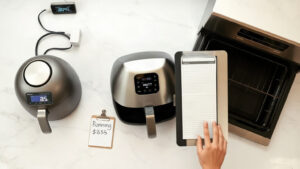
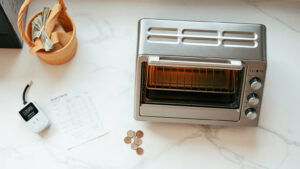
To convert oven baked potato cook time to an air fryer, cut the temperature by about 25°F and reduce the cooking time by roughly 25–30%. A potato that takes 60 minutes at 400°F in a conventional oven will be done in about 40–45 minutes at 375°F–400°F in an air fryer. The circulating hot air works faster and more efficiently than a standard oven, so you’ll get a crispier skin in less time.
Safety First: Air fryers and toaster ovens reach temperatures above 400°F. Always use oven mitts when removing baked potatoes — the basket, rack, and potato skin itself retain intense heat. Don’t place the appliance near flammable materials, and never leave it unattended on a high-heat setting for extended cooking times.
Key Takeaways
- Reduce oven temperature by 25°F when converting to air fryer (e.g., 425°F oven → 400°F air fryer)
- Cut cook time by about 25–30% — a 60-minute oven potato takes 40–45 minutes in an air fryer
- Large russets (10–12 oz) need 40–50 minutes; medium potatoes (6–8 oz) are done in 35–40 minutes
- Don’t wrap potatoes in foil in the air fryer — you’ll lose the crispy skin that makes it worth the effort
- Always check doneness with a fork or instant-read thermometer (internal temp should hit 205–210°F)
Why Air Fryers Cook Potatoes Faster Than a Regular Oven
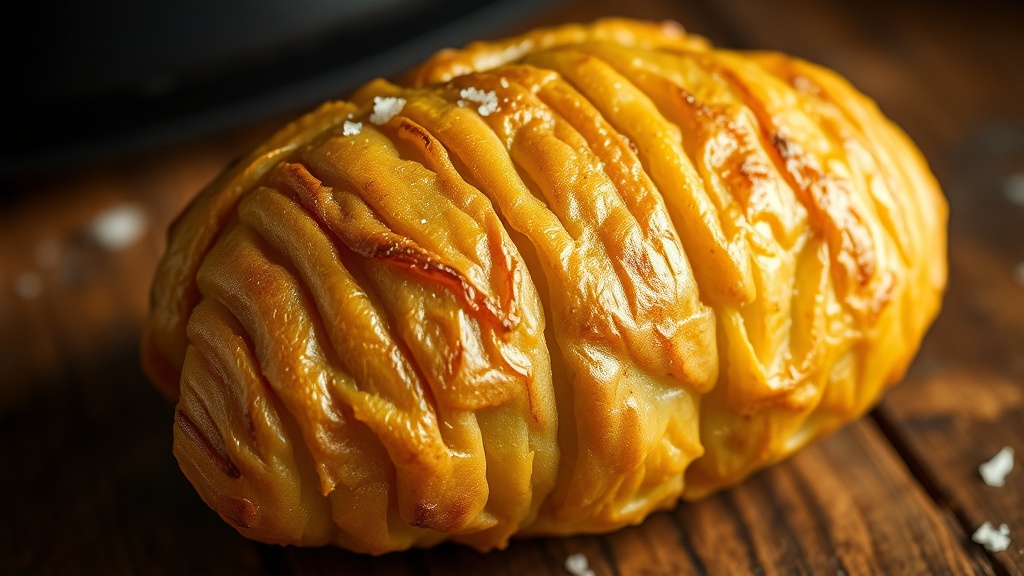
A conventional oven heats the air around your food, but that air is relatively still. It works, but it’s slow. An air fryer — or a good countertop toaster oven with convection — uses a fan to blast that hot air in tight circles around your food. That constant movement strips away the cool boundary layer right next to the potato’s surface. Heat transfers faster. The potato cooks from the outside in much more aggressively.
That’s why you can’t just set the same temperature and same timer and walk away. You’ll end up with a potato that’s either shrunken and overdone or, if your air fryer runs cool, weirdly chewy. Neither is great.
The general rule I follow: drop the temp 25°F and check the potato at the 75% time mark. So if your oven recipe says 60 minutes at 400°F, I’m setting the air fryer to 375°F and peeking at 45 minutes. Usually it needs another 5 minutes, but sometimes it’s already done. Size matters a lot here — more on that below.
The Conversion Formula (With a Comparison Table)
Here’s the table I wish someone had handed me when I first started messing around with air fryer potatoes. These times are based on russet potatoes — the classic baked potato choice — scrubbed clean, poked a few times, rubbed with a little oil and salt.
| Potato Size | Conventional Oven Temp | Conventional Oven Time | Air Fryer Temp | Air Fryer Time |
|---|---|---|---|---|
| Small (4–6 oz) | 400°F | 45–50 min | 375°F | 30–35 min |
| Medium (6–8 oz) | 400°F | 55–60 min | 375°F | 38–42 min |
| Large (10–12 oz) | 400°F | 60–75 min | 375°F–400°F | 45–52 min |
| Extra Large (12+ oz) | 425°F | 75–90 min | 400°F | 55–65 min |
Those times assume you’re not wrapping the potato in foil (more on why that’s a bad idea in a minute) and that your air fryer is preheated. A cold air fryer adds 3–5 minutes to anything you cook, and people forget that all the time.
What About Higher Oven Temperatures?
Some recipes call for 450°F to get a really crackling skin. That works fine in a big oven. In an air fryer, I’d be careful going above 400°F for a whole potato — the outside can get too dark before the center is fully cooked. Stick to 400°F max and give it a little more time if needed. Patience wins here.
Prep Steps That Actually Make a Difference
Technique matters as much as timing. A few things that genuinely affect how the potato turns out:
Oil the Skin — But Not Too Much
A thin coat of neutral oil (avocado or vegetable oil, not olive oil — olive oil smokes at these temps) helps the skin crisp up. Too much and it’ll steam instead. I use maybe half a teaspoon, rubbed all over with my hands. Then salt. Kosher salt, because it sticks better than fine table salt and you get those little crunchy bits.
Skip the Foil
Wrapping a potato in foil in an air fryer is kind of pointless. You’re blocking the whole reason the air fryer works — that circulating hot air. Foil traps steam, and steam makes the skin soft and almost papery. If you want crispy skin (and you should want that), just put the naked potato right on the rack or in the basket. Use an air fryer oven wire rack if your machine has one; it lets air get under the potato too.
Poke It. Seriously.
Poke the potato 6–8 times with a fork before cooking. Steam builds up inside as moisture heats. Without those holes, you’re risking a small explosion in your air fryer — which is as messy as it sounds. According to Serious Eats’ baked potato guide, poking also slightly affects texture by letting some moisture escape, which concentrates flavor.
How to Tell When It’s Actually Done
Don’t just trust the timer. Air fryers vary — some run hot, some don’t. The only reliable way to check a baked potato is to stab it.
A fork should slide into the center with zero resistance. None. If you feel any firmness at all, give it 5 more minutes. The other method is an instant-read thermometer; you want the internal temperature at 205–210°F. Below 200°F and the starch hasn’t fully broken down — it’ll taste a little dense and slightly raw-ish in the center, even if it looks done from the outside.
I also like to give the potato a gentle squeeze through an oven mitt. A done potato gives a little — there’s a slight softness. An underdone one feels firm and unyielding. It sounds vague, but after you’ve done it a few times, you’ll know exactly what you’re feeling for.
If you’re doing multiple potatoes at once — say, four medium ones for a weeknight dinner — try to pick ones that are as close to the same size as possible. One 6-oz potato and one 10-oz potato in the same basket is a recipe for one overcooked potato and one undercooked one. Annoying but avoidable.
Using a Toaster Oven With Convection? Here’s How It Differs
A lot of people reading this might be using a countertop toaster oven with a convection setting rather than a standalone basket-style air fryer. The conversion is slightly different. Convection toaster ovens circulate air but not as intensely as a dedicated air fryer, so the speed boost is a bit more modest.
For a convection toaster oven, I’d still drop the temperature by 25°F, but only cut the time by about 20% instead of 25–30%. A 60-minute oven potato becomes roughly 47–50 minutes in a convection toaster oven at 375°F. Check at 45 minutes and adjust from there.
You’ll want a good baking vessel for this. A nonstick toaster oven baking pan works fine, though for baked potatoes I actually prefer putting the potato directly on the rack with a small pan underneath to catch drips. Better airflow. For more on getting the most out of this approach, the guide on reheating food in a toaster oven has some useful technique crossover.
One thing to watch with toaster ovens: the heating elements are much closer to the food than in a full-size oven. If your potato is sitting too close to the top element, the skin can char before the inside is done. Keep it centered in the oven, and rotate it once halfway through.
Wrapping Up
Converting oven baked potato times to air fryer times isn’t complicated once you have the formula: down 25°F, cut the time by 25–30%, and check early. The results are genuinely better than a conventional oven in most cases — crispier skin, fluffy inside, done faster. I’d rather make baked potatoes in an air fryer or convection toaster oven than a big oven almost every time now.
The main things people get wrong: trusting the timer blindly, wrapping in foil, or skipping the preheat. Fix those and you’ll have a near-perfect baked potato in under 45 minutes most nights. Not bad for a weeknight side.
Frequently Asked Questions
How long does it take to bake a potato in an air fryer at 400°F?
A medium russet potato (6–8 oz) takes about 38–42 minutes at 400°F in a preheated air fryer. A large potato (10–12 oz) needs 45–52 minutes. Always check with a fork — it should slide in with no resistance — rather than relying solely on the timer.
What temperature do you use to convert oven recipes to air fryer?
Reduce the oven temperature by 25°F when converting to an air fryer. So an oven recipe calling for 425°F becomes 400°F in the air fryer. You also cut the cooking time by 25–30% and check for doneness earlier than you think you need to.
Should I wrap baked potatoes in foil in the air fryer?
No. Wrapping potatoes in foil in an air fryer traps steam and prevents the skin from crisping up. The whole point of using an air fryer is to get better texture faster, and foil works against that. Cook them unwrapped, oiled, and salted directly on the rack or basket.
How do I know when a baked potato is done in the air fryer?
The most reliable method is inserting a fork into the center — it should slide in with zero resistance. You can also use an instant-read thermometer; the internal temperature should be between 205°F and 210°F. Anything below 200°F usually means the center is still a little dense and undercooked.
Can I bake a potato in a toaster oven the same way as an air fryer?
A toaster oven with convection is close but not quite as fast as a dedicated air fryer. Use the same 25°F temperature reduction, but only cut the cooking time by about 20% instead of 25–30%. Position the potato in the center of the oven and rotate it once halfway through to avoid the skin charring near the heating elements.

Written by
Emma founded Toastera to turn vague appliance advice into clear, researched, safety-first guidance on toasters and toaster ovens.
Free: the Toaster Oven Cheat Sheet
Get the printable cheat sheet (temps, cook times & safety tips) plus new recipes. No spam, unsubscribe anytime.