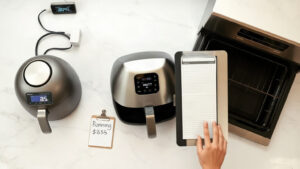
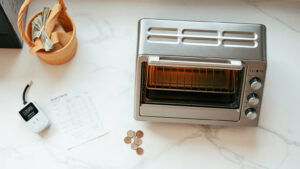
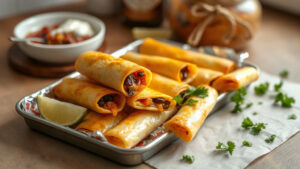
The convection setting on a toaster oven activates a small internal fan that continuously circulates hot air around your food. That moving air strips away the cool, moist layer sitting right against your food’s surface, which speeds up cooking and browns things more evenly. In practical terms, you’ll cook about 20–25% faster than regular bake mode, and your roasted vegetables will actually caramelize instead of just going limp.
Safety First: Toaster oven heating elements can reach over 500°F, and the convection fan doesn’t reduce that risk — it redistributes it. Always use oven mitts rated for high heat when reaching inside, keep the oven at least 4 inches from walls or cabinets, and never cover the vents on the back or sides of the unit. If you smell burning plastic or see sparks, unplug immediately and do not use until inspected.
Quick Facts: Convection Setting at a Glance
- The convection fan circulates heated air, cutting cooking time by roughly 20–25% compared to regular bake mode
- Most recipes written for conventional ovens can be adapted by reducing the temperature 25°F or cutting the time by about 20%
- Convection works best for roasting, crisping, and baking cookies — it’s less ideal for custards, soufflés, or anything delicate that needs still air to set
- A toaster oven’s small interior actually makes convection more effective than in a full-size oven, because the fan doesn’t have to push air as far
- Not all “convection” toaster ovens are equal — models with a third heating element dedicated to convection (true convection) outperform those with just a fan
I’ve been using toaster ovens almost daily for years, and the convection button was honestly a mystery to me for the first few months. I used it once, my cookies came out over-browned on the bottom, and I ignored it for a while after that. Turns out I just hadn’t adjusted the temperature. Once I figured that out, convection became the setting I reach for more than any other.
How the Convection Setting Actually Works
Regular bake mode heats air inside the oven cavity and leaves it mostly still. Hot air rises, cooler air sinks, and you get pockets of uneven temperature — which is why one corner of a sheet pan often browns faster than the other. The convection setting fixes that by running a fan (usually mounted on the back wall) continuously while the heating elements do their job.
The fan forces that heated air to move in a constant loop around your food. This does two things. First, it eliminates most of those hot and cool spots. Second, it carries heat directly to the food’s surface more aggressively, which is why things crisp up faster.
On some higher-end models, there’s also a third heating element wrapped around the fan itself — this is what manufacturers call “true convection” or “European convection.” That third element heats the air before the fan pushes it out, so you’re getting a more consistent temperature throughout the entire cavity, not just recirculated air from the top and bottom elements. It matters. I tested a basic fan-only model against a true convection unit on the same batch of frozen fries, same temperature, same time. The true convection batch was noticeably more uniform.
Convection vs. Regular Bake: A Direct Comparison
Here’s a quick look at how the two modes actually differ in practice. These numbers are based on typical toaster oven performance — your specific model may vary slightly.
| Feature | Regular Bake | Convection Bake |
|---|---|---|
| Air circulation | Still/passive | Active fan |
| Cooking speed | Baseline | ~20–25% faster |
| Browning/crisping | Moderate, uneven | Strong, even |
| Temperature adjustment needed | None | Reduce ~25°F |
| Best for | Bread, custards, delicate bakes | Roasting, cookies, pizza, fries |
| Worst for | Crisping, large batches | Soufflés, wet batters that need to set slowly |
| Noise level | Silent | Faint fan hum |
When You Should (and Shouldn’t) Use Convection
Foods That Love Convection
Roasted vegetables are probably the best argument for convection. At 400°F on convection, broccoli florets get crispy edges in about 15–18 minutes. Same florets on regular bake at the same temperature take closer to 22–25 minutes and come out softer, less caramelized. It’s not subtle.
Chicken pieces — thighs especially — do really well under convection. The moving air keeps pulling moisture off the skin, which is exactly what you want for crispy skin. I run bone-in thighs at 375°F convection for about 35–40 minutes and they come out better than most things I’ve made in a full-size oven. Cookies spread more evenly across the whole pan too, which matters when you’re baking a full sheet and don’t want to rotate halfway through.
Pizza is another strong use case. Serious Eats has written about toaster oven pizza and the convection setting genuinely makes a difference for crust texture. I use a small baking stone for my toaster oven on convection at 450°F — comes out better than delivery, most nights.
Foods That Don’t
Anything with a delicate structure that needs to rise slowly and set undisturbed — soufflés, cheesecakes, steam-leavened quick breads — can suffer under convection. The fan can disturb the surface before it’s set and lead to uneven rising or a cracked top. Not the end of the world, but if you’re making a cheesecake, just use regular bake.
Custards and anything with a high egg content are similar. The forced air can cause them to cook unevenly or form a skin you didn’t want. I’d stick to regular bake for those. Also worth mentioning: if you’re reheating something that’s already moist and you just want it warmed through without drying out — like leftover pasta or rice — convection will actually work against you. Check out our guide to reheating food in a toaster oven for which mode to use for different leftovers.
How to Adjust Recipes for Convection
Most recipes you find online or in cookbooks are written for conventional ovens. Using them as-is on convection will often result in overcooked or over-browned food, because the recipe doesn’t account for that extra speed.
There are two standard adjustments, and you generally only need one of them — not both:
- Temperature reduction: Drop the recipe temperature by 25°F and use the same time. A recipe that calls for 375°F becomes 350°F on convection.
- Time reduction: Keep the temperature the same but start checking for doneness at about 75–80% of the suggested cook time. A 40-minute recipe might be done in 30–32 minutes.
My personal preference is the temperature reduction method. I find it gives me a bit more control, especially with things that can go from perfectly golden to burnt fairly quickly — like cookies or thin chicken cutlets. The time-reduction approach is fine for larger roasts where you’re checking internal temperature anyway.
One thing that tripped me up early on: I was using a dark, nonstick toaster oven baking pan and running convection at full temperature. Dark pans absorb more heat, convection speeds things up further, and together they burned the bottoms of my muffins. Switched to a lighter pan and dropped the temp 25°F — problem solved.
The USDA recommends always verifying doneness with a food thermometer regardless of cooking method. That’s especially true with convection, since the outside of meat can brown and look done before the inside reaches a safe temperature. Poultry needs to hit 165°F internally, full stop. See the USDA’s safe minimum internal temperature chart if you want the full breakdown.
The Edge Case Nobody Talks About: Convection in a Small Cavity
Here’s something the other articles on this topic tend to gloss over. A full-size oven has a large cavity — that fan has to push air across a lot of space, and the circulation isn’t always as thorough near the corners. A toaster oven’s cavity is tiny by comparison. The fan covers the whole space much more effectively, which means the performance difference between convection and regular bake is actually more pronounced in a toaster oven than in a standard range.
That’s good news most of the time. But it also means you need to be more careful about crowding the pan. In a full-size convection oven, you can sometimes get away with two sheet pans at once. In a toaster oven, a single overfilled rack can block airflow enough to undercut most of the convection benefit. Single layer, space between pieces — that’s not optional if you want actual crispness.
Another thing: if your toaster oven is on the smaller side, be aware that the fan can blow around lightweight things. Parchment paper, for instance. I’ve had a sheet of parchment fold back over my cookies mid-bake. Clip it down or use a toaster oven wire rack with a matching pan that holds things in place. Small thing, but annoying the first time it happens.
For more on choosing the right size unit for your cooking style, check out our list of the best mini toaster ovens — some handle convection better than others in that smaller form factor.
Wrapping Up
The convection setting isn’t complicated. It’s a fan. But that fan changes the cooking environment enough that it’s genuinely worth understanding if you use your toaster oven for anything beyond reheating leftovers. Drop the temperature by 25°F, don’t crowd the pan, skip it for delicate egg-based things, and you’ll get better results on basically everything else — faster, more evenly browned, crispier. Once you get used to it, regular bake starts to feel like a fallback rather than the default. You can also read more about how hot a toaster gets if you want to understand the heating element side of things more deeply.
Frequently Asked Questions
Does the convection setting cook food faster in a toaster oven?
Yes — convection typically reduces cooking time by 20–25% compared to regular bake mode. The fan circulates hot air continuously, which transfers heat to food more efficiently than still air. If a recipe says 400°F for 40 minutes, expect it to be done in roughly 30–32 minutes on convection at the same temperature.
Should I use convection for everything in a toaster oven?
Not everything. Convection is great for roasting, crisping, cookies, pizza, and chicken. It’s not ideal for delicate custards, cheesecakes, soufflés, or anything that needs still, moist heat to set properly. For those, stick to regular bake mode.
Do I need to adjust the temperature when using the convection setting?
Yes, if you’re following a recipe written for a conventional oven. The standard adjustment is to reduce the temperature by 25°F and keep the time the same — or alternatively, keep the temperature and start checking for doneness at about 75–80% of the suggested time. Most experienced cooks prefer the temperature reduction method for more precise control.
What is the difference between convection bake and convection roast on a toaster oven?
Convection bake typically uses both top and bottom heating elements with the fan running, emphasizing even, all-around heat — good for baked goods and casseroles. Convection roast often emphasizes the top element more heavily along with the fan, which is better suited to browning and crisping the exterior of meats. Not all toaster ovens have both; check your manual to see which elements each mode activates.
Is a convection toaster oven the same as an air fryer?
They’re similar but not identical. Both use a fan to circulate hot air, but an air fryer typically has a more powerful fan and a smaller, more concentrated basket that allows faster air movement at higher intensity — which produces a crispier result for things like fries or chicken wings. A convection toaster oven is more versatile overall, but it won’t quite replicate the extreme crispness of a dedicated air fryer for those specific foods.

Written by
Emma founded Toastera to turn vague appliance advice into clear, researched, safety-first guidance on toasters and toaster ovens.
Free: the Toaster Oven Cheat Sheet
Get the printable cheat sheet (temps, cook times & safety tips) plus new recipes. No spam, unsubscribe anytime.