You can use a microwave and toaster oven on the same circuit, but you almost certainly shouldn’t run them at the same time. Together, they’ll easily pull 20–30 amps, which exceeds a standard 15-amp or even 20-amp kitchen circuit and will trip your breaker — or worse, create a sustained overload if the protection isn’t working properly. The safest setup is two separate dedicated circuits, one for each appliance.
Safety First: Running high-wattage appliances like microwaves and toaster ovens on an overloaded circuit is a real fire risk, not just a nuisance. An overloaded circuit can overheat wiring inside your walls before the breaker ever trips. If your breaker trips repeatedly, stop using that outlet combination and call a licensed electrician — don’t just reset and ignore it.
Key Takeaways
- A typical microwave draws 900–1,500 watts (roughly 7.5–12.5 amps at 120V); a toaster oven draws 1,200–1,800 watts (10–15 amps). Running both simultaneously on one 20-amp circuit almost always trips the breaker.
- Most standard kitchen countertop circuits are 15 or 20 amps. Toaster ovens and microwaves each ideally need their own 20-amp dedicated circuit.
- Microwaves have a startup surge — some pull up to 15 amps for a fraction of a second before settling — which makes simultaneous use even riskier.
- Plugging both into the same outlet strip or multi-plug adapter is a fire hazard. Don’t do it.
- The edge case most people overlook: if both appliances are on the same circuit but different outlets, that’s still the same circuit — same rules apply.
Why These Two Appliances Are a Problematic Pair
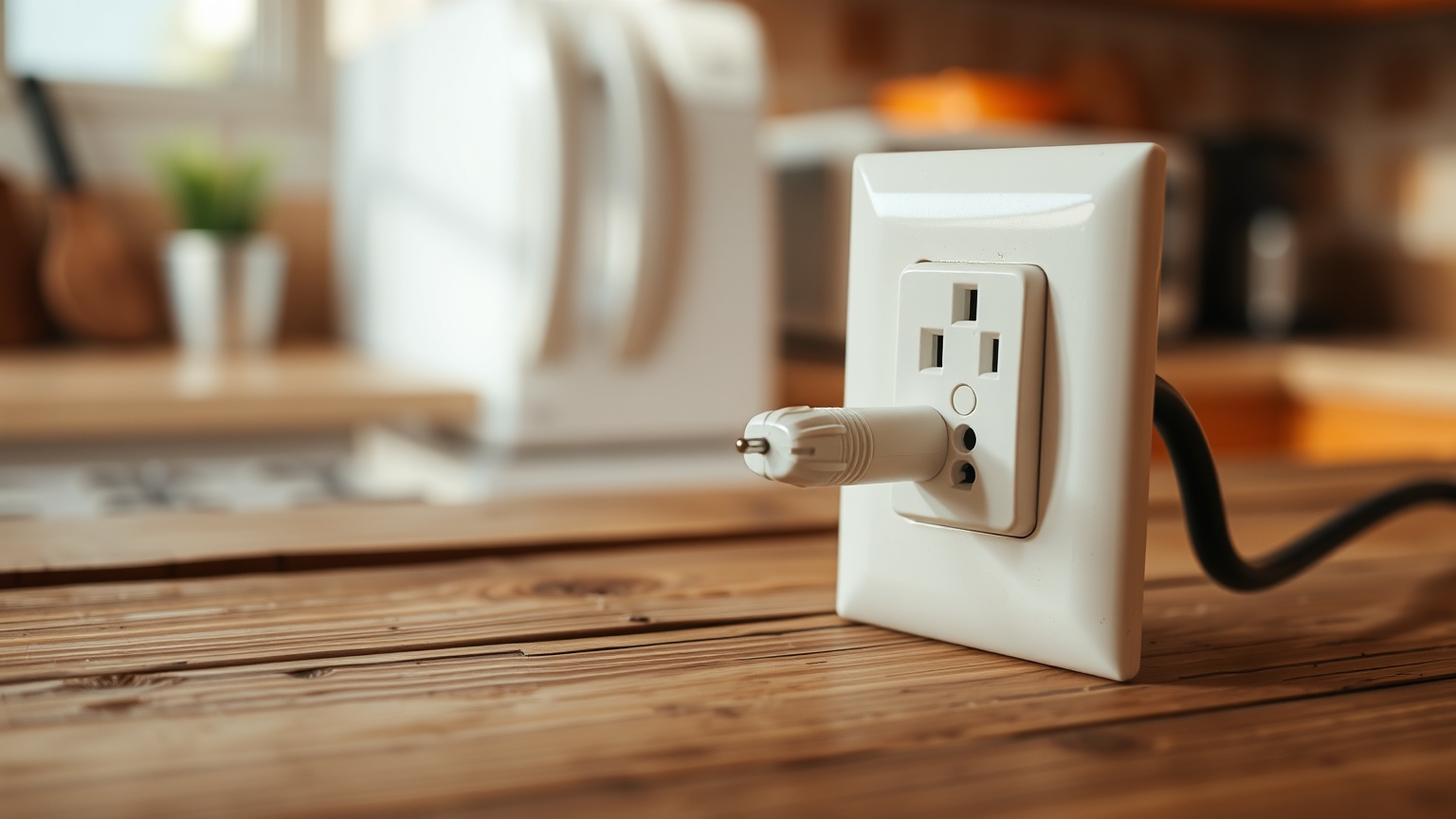
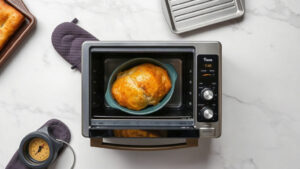
Here’s the thing about toaster ovens and microwaves: they’re both power-hungry in ways that aren’t always obvious from the outside. A toaster oven looks like a small box sitting quietly on your counter, but it’s running a heating element at sustained high draw — often 1,500 to 1,800 watts for a mid-size unit. A microwave is similar. My Toshiba countertop unit is rated at 1,100 watts, and honestly that’s on the modest side of modern microwaves.
Put those two on the same 20-amp circuit and you’re asking the wiring to handle 25+ amps continuously. It won’t. Breakers are designed to trip at around 80% of their rated load for sustained use — so a 20-amp breaker should really only carry 16 amps continuously. Both appliances running simultaneously blows past that instantly.
The first time I tried using my toaster oven to keep a pizza warm while reheating soup in the microwave, I lost power to half the kitchen. Not a catastrophe, but annoying — and it taught me something I probably should’ve already known.
The Numbers: How Much Power Each Appliance Actually Uses
Let’s get specific, because “a lot of power” isn’t useful information.
| Appliance | Typical Wattage | Amperage at 120V | Dedicated Circuit Recommended? |
|---|---|---|---|
| Compact microwave (700W) | 700–900W | 5.8–7.5A | Yes, ideally |
| Standard countertop microwave | 1,000–1,200W | 8.3–10A | Yes |
| High-power microwave | 1,400–1,650W | 11.7–13.8A | Yes, 20A required |
| Compact toaster oven | 1,000–1,200W | 8.3–10A | Yes, ideally |
| Mid-size toaster oven | 1,400–1,800W | 11.7–15A | Yes, 20A required |
| Both running simultaneously | 2,400–3,450W | 20–28.8A | Needs two separate circuits |
The math is pretty unambiguous. Even two relatively modest appliances (say, an 800W microwave and a 1,200W toaster oven) together draw 16.7 amps — already over the 80% continuous use threshold for a 20-amp circuit. And that’s before accounting for the microwave’s startup surge, which can briefly spike to 15 amps on its own.
If you’re curious about the heat side of things, I’ve written separately about how hot a toaster gets internally — and the numbers there are just as eye-opening from a safety standpoint.
What “The Same Circuit” Actually Means
This is the part that trips people up. If you have two outlets on the same counter — even on opposite sides of the sink — they may share a single circuit breaker. That means they’re electrically the same as far as load is concerned. Your microwave in outlet A and toaster oven in outlet B might look separate, but if they’re on the same 20-amp breaker, you’re in the same situation as using one outlet with a power strip.
The only way to know for sure is to check your breaker panel, or have an electrician trace the circuits. Some newer kitchens have dedicated 20-amp circuits for individual countertop zones. Older homes often don’t — a 15-amp circuit might serve the entire counter.
Can You Ever Get Away With It? (Honest Answer)
Sometimes, yes. If you have a 20-amp circuit and your specific appliances are both on the lower end of the wattage range — a 700W microwave and a small compact 1,200W toaster oven, say — you might squeak under the 16-amp continuous threshold. Might. Briefly.
But here’s the thing: “getting away with it” isn’t the same as it being safe. A breaker that doesn’t trip isn’t proof that your wiring isn’t overheating. If the breaker is slightly worn, undersized, or the wiring connections are loose (common in older homes), you can have a dangerous condition before any visible warning sign appears.
My honest take: don’t stagger-run them if you can avoid it. The marginal convenience isn’t worth it. If you need both going simultaneously regularly — say you’re reheating food in a toaster oven while defrosting something in the microwave — plan your meal prep to use them sequentially, or get an electrician to add a circuit. It’s not a huge job.
The Multi-Wire Branch Circuit Option
This is an option that comes up in electrician forums and one that most homeowner articles don’t mention. A multi-wire branch circuit (MWBC) uses 12/3 wiring to create two separate 20-amp circuits sharing a neutral wire. Done correctly by a licensed electrician, this lets you have two independent 20-amp circuits from a double-pole breaker — one for the microwave, one for the toaster oven — without running two completely separate cable runs from the panel.
It’s not a DIY solution. The breaker must be a tandem or double-pole type with handle ties so both legs trip together in a fault condition. But if you’re already having electrical work done, it’s worth asking about. You get two functional dedicated circuits for less labor than two fully separate runs.
What Can Happen If You Ignore This (Beyond the Obvious Tripped Breaker)
Tripping a breaker is the best-case scenario. That’s the system working as intended. What you don’t want is a situation where the breaker is slightly oversized, older, or faulty — because then the overload doesn’t get interrupted, and instead the wiring inside your walls starts heating up.
Electrical fires in kitchens often start this way. Not from one dramatic event, but from repeated sustained overloads that slowly degrade insulation on wiring. According to the U.S. Fire Administration, cooking equipment is the leading cause of home fires — and electrical faults in kitchen circuits are a significant subset of that.
If your breaker trips more than once in a short period from the same outlet situation, that’s a sign. Stop using that combination. Don’t reset and keep going.
The Edge Case: Extension Cords and Power Strips
This is the scenario that really worries me, and I don’t see it addressed enough. Some people, rather than dealing with limited outlets, use a heavy-duty power strip or extension cord to plug both appliances into the same wall outlet. This is genuinely dangerous — even a “heavy duty” extension cord rated at 15 amps will overheat under sustained combined load from a microwave and toaster oven.
Extension cords are for temporary, low-draw uses. Neither a microwave nor a toaster oven should ever be run from an extension cord — full stop. The NEC (National Electrical Code) actually prohibits it for fixed appliances. If you’re in a situation where you need an extension cord to reach an outlet, the real solution is a new outlet location, not a longer cord.
If you’re shopping for a toaster oven that’s efficient enough to run solo without stressing even a shared circuit, check out the best mini toaster ovens — some of the more efficient units draw under 1,000W and behave much better on a shared circuit (one at a time, obviously).
Practical Setup Advice for Real Kitchens
Not everyone can rewire their kitchen. Here’s what actually helps in the real world:
- Identify your circuits first. Plug a lamp into each counter outlet, then flip breakers one at a time. Map which outlets share circuits. Ten minutes of work that tells you everything.
- Prioritize the microwave for its own circuit if you only have one dedicated 20-amp outlet. Microwaves have that startup surge that’s harder on shared circuits. Put the toaster oven on a circuit it shares with lighter loads — a coffee maker you don’t run simultaneously, for example.
- Never run both at max power at the same time. If you absolutely must use both on the same circuit, keep the toaster oven at a lower temp (325°F instead of 450°F will draw meaningfully less current) and the microwave at 50–70% power. It’s not ideal, but it reduces combined draw.
- Consider your toaster oven’s actual wattage, not just its advertised max. A lot of toaster ovens run well below peak wattage on lower heat settings. The more efficient countertop toaster ovens will have clearer wattage specs on the label or in the manual.
- If you’re renovating or building, get two 20-amp dedicated circuits for the counter. Code requirements in newer construction often mandate this anyway, and it’s cheap to add during rough-in work. Much harder to add later.
Final Thoughts
The short version: same circuit, different times — fine, as long as the circuit is 20 amps and the wiring is in good shape. Same circuit, same time — don’t do it. It’s not about whether you’ll trip the breaker every single time. It’s about consistent stress on wiring that can cause real problems over months and years.
If you’re using your kitchen appliances heavily and sharing circuits, it’s genuinely worth spending $150–$300 to have an electrician assess your setup and add a circuit if needed. That’s cheap compared to dealing with damaged wiring or worse. And honestly, not having to think about what’s running where every time you cook makes the whole kitchen experience better. I used to do the awkward dance of “is the toaster oven done yet before I start the microwave” more times than I’d like to admit.
Frequently Asked Questions
Can you use a microwave and toaster oven on the same circuit?
You can share a circuit only if you’re running them at different times, never simultaneously. Together, they typically draw 20–28 amps, which overloads even a 20-amp circuit. Each appliance ideally needs its own dedicated 20-amp circuit for safe, reliable operation.
What happens if I plug both a microwave and toaster oven into the same outlet?
If you run them at the same time, you’ll almost certainly trip the circuit breaker — that’s the intended safety response. If the breaker is faulty or oversized, you risk overheating the wiring inside your walls, which is a fire hazard. Either way, the outlet can’t safely supply enough current for both appliances simultaneously.
How many amps does a toaster oven use?
Most countertop toaster ovens draw between 10 and 15 amps at 120V, corresponding to roughly 1,200–1,800 watts. Compact models start around 8–10 amps, while larger convection toaster ovens can hit 15 amps at full power. Always check the label on the back of the appliance for the exact rated wattage.
Do microwaves and toaster ovens need dedicated circuits?
Yes, both appliances are recommended to have their own dedicated 20-amp circuits. The NEC doesn’t always mandate it for cord-and-plug connected countertop appliances in residential kitchens, but it’s strongly advised by electricians given the sustained high-current draw of both devices. Newer kitchen construction often includes dedicated small-appliance circuits for exactly this reason.
Is it safe to use a power strip or extension cord with a microwave or toaster oven?
No. Neither a microwave nor a toaster oven should be plugged into a power strip or extension cord. Both appliances draw sustained high current that most extension cords and power strips aren’t designed to handle safely, creating a significant overheating and fire risk. Both should plug directly into a grounded wall outlet.

Written by
Emma founded Toastera to turn vague appliance advice into clear, researched, safety-first guidance on toasters and toaster ovens.
Free: the Toaster Oven Cheat Sheet
Get the printable cheat sheet (temps, cook times & safety tips) plus new recipes. No spam, unsubscribe anytime.