A 4-slice toaster typically draws between 1,200 and 1,800 watts, with most mid-range models landing right around 1,400W to 1,500W during a normal toasting cycle. The wider slot models and anything with a quartz heating element tend to push toward the top of that range. At average U.S. electricity rates, running a 1,500W toaster for three minutes a day works out to roughly $0.27 per month — less than a cup of coffee, but still worth knowing if you’re watching your energy bill closely.
Safety First: A 4-slice toaster draws significant current — enough to trip a shared circuit if other high-draw appliances are running on the same outlet. Never plug a toaster into an extension cord or power strip; always use a grounded wall outlet. Keep the appliance at least six inches from curtains, cabinets, and paper products, and never leave it unattended while toasting. Unplug it when not in use — a faulty heating element can cycle on unexpectedly.
Quick Facts: 4-Slice Toaster Wattage at a Glance
- Typical wattage range: 1,200W to 1,800W (most models: 1,400W–1,500W)
- Average toasting time: 2–4 minutes per cycle
- Energy used per cycle at 1,500W: about 0.1 kWh
- Monthly cost (3 uses/day, U.S. average rate of ~$0.16/kWh): roughly $0.23–$0.29
- A 4-slice toaster uses roughly 30–50% more power than a standard 2-slice model
What Actually Determines a 4-Slice Toaster’s Wattage
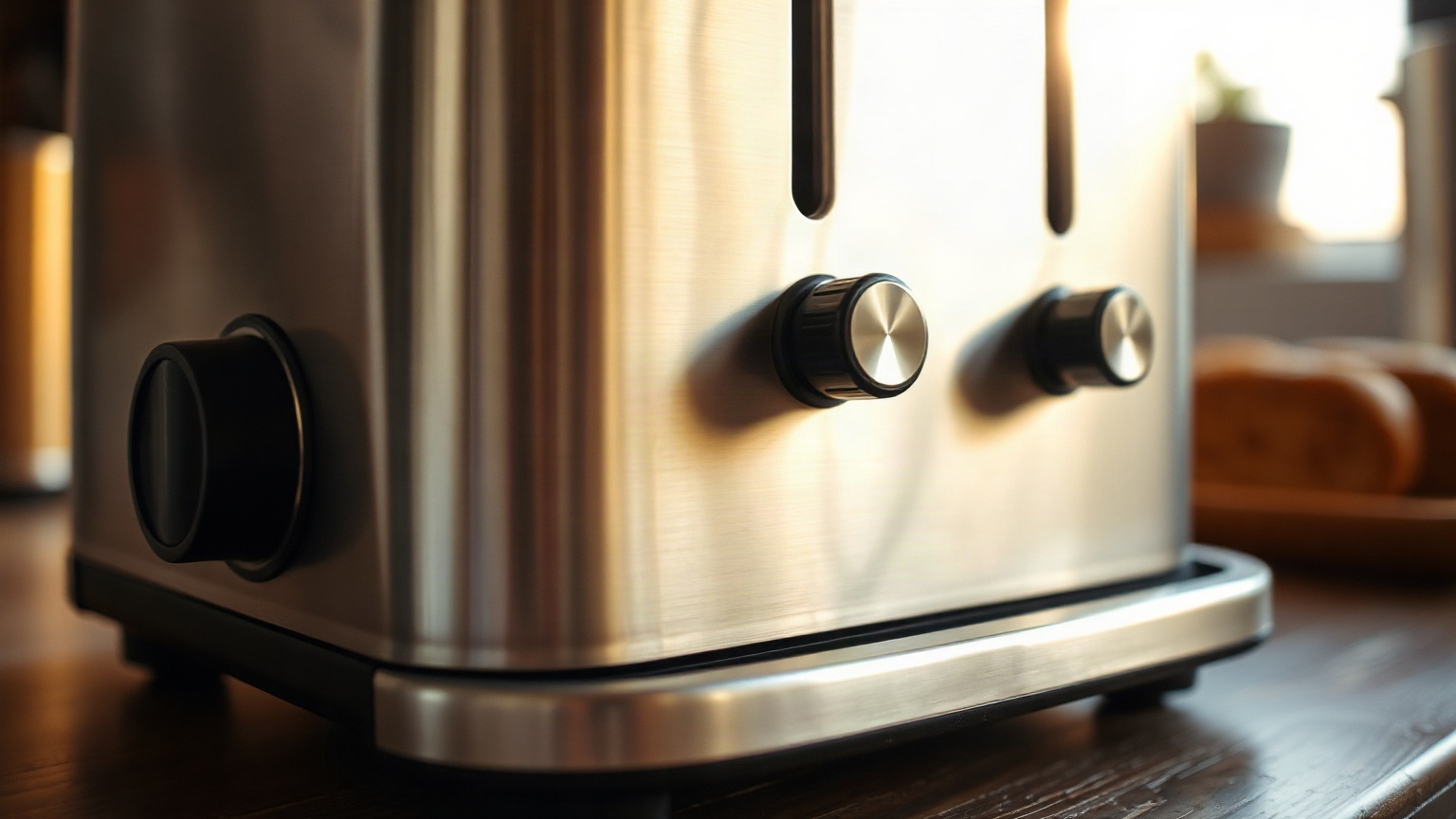
Not all 4-slice toasters are equal — which sounds obvious, but I genuinely didn’t think about it until I tested three different models side by side and got three completely different readings on my Kill A Watt meter. The biggest variables are the heating element type, the slot width, and whether the toaster has any kind of warming or defrost function that cycles additional elements.
Heating Element Type
Most consumer 4-slice toasters use nichrome wire elements — the classic coiled resistance wire that’s been in kitchen appliances for decades. These are cheap to produce and reliable, and they typically put toasters in the 1,200W–1,500W range. Some newer or higher-end models use quartz elements, which heat up faster and burn hotter. Those models often hit 1,600W to 1,800W. My personal experience: a quartz-element toaster I tested toasted sourdough a full 40 seconds faster than a nichrome model at the same browning setting, but it also pulled about 200W more during that time.
Slot Width and Capacity
Extra-wide slots (designed for bagels, Texas toast, or artisan loaves) mean more heating surface area, which means more wattage. A standard-slot 4-slice toaster might draw 1,200W. The same brand’s wide-slot version? Often 1,400W–1,500W. It’s not a dramatic difference, but it adds up if you’re trying to stay under a specific circuit load. If you have an older home with 15-amp kitchen circuits, this is actually worth checking — especially if the toaster shares an outlet strip with a coffee maker. (Don’t. Just don’t share that circuit.)
Browning Settings and Real-World Draw
Here’s something the spec sheet won’t tell you: most toasters don’t run at full rated wattage the entire time. The browning dial controls cycle time, not element temperature. So at setting 3 out of 7, the elements are still pulling their rated wattage — just for fewer seconds before they cut off. The nameplate wattage (that’s the number stamped on the bottom of the toaster) is the maximum draw. Actual energy consumed per slice depends heavily on how dark you like your toast. I’m a solid 4-out-of-7 person, for the record.
Wattage Comparison: 4-Slice Toasters vs. Other Kitchen Appliances
Putting the numbers in context helps. A lot of people are surprised that a 4-slice toaster actually pulls more power than a microwave running at medium power. Here’s how it stacks up against common kitchen appliances during active use:
| Appliance | Typical Wattage | Average Use Time Per Day | Est. Monthly Cost (at $0.16/kWh) |
|---|---|---|---|
| 2-slice toaster | 800W–1,100W | 3–5 min | ~$0.12–$0.18 |
| 4-slice toaster | 1,200W–1,800W | 3–6 min | ~$0.23–$0.35 |
| Microwave (medium) | 600W–1,000W | 5–10 min | ~$0.20–$0.40 |
| Toaster oven | 1,200W–1,800W | 15–30 min | ~$1.00–$2.60 |
| Coffee maker | 800W–1,500W | 5–10 min | ~$0.18–$0.45 |
| Electric kettle | 1,200W–1,500W | 3–5 min | ~$0.15–$0.25 |
The toaster oven comparison is the one that really jumps out. Both a 4-slice toaster and a toaster oven can draw the same peak wattage — but the oven runs much longer per use, making its monthly cost three to eight times higher. That’s not a knock on toaster ovens (I use mine constantly), just useful context. If you want more on how the two compare in terms of actual cooking performance, I’ve written about reheating food in a toaster oven and why it often beats the microwave.
The Real Monthly Cost: Running the Numbers Yourself
The formula is simple. Watts ÷ 1,000 = kilowatts. Multiply by hours of use, then multiply by your electricity rate (check your bill — it’s usually between $0.10 and $0.25 per kWh depending on where you live).
Example: a 1,500W toaster running for 4 minutes = 0.1 kWh per session. Three sessions a day = 0.3 kWh daily. Over 30 days: 9 kWh. At $0.16/kWh, that’s $1.44 per month. But honestly? Three full toasting cycles a day is a lot. A household of two adults probably does one or two on weekdays and a bit more on weekends. More realistic monthly figure: $0.40–$0.75.
People in California or Hawaii will see that number creep higher — electricity rates there can hit $0.30–$0.40/kWh, which nearly doubles everything. Still not a budget-breaking expense, but it changes the math if you’re running a small café or a bed and breakfast where the toaster is going constantly. The commercial-grade 1,800W units designed for foodservice can push $3–$5/month in those environments, which actually starts to matter when multiplied across a fleet of appliances.
The Edge Case: Defrost and Bagel Modes
Here’s something none of the other articles I’ve seen on this topic bother to mention: defrost mode. When a toaster runs a defrost cycle, it typically extends the toasting time by 50–100% to thaw the bread before browning. That means the heating elements are active for much longer — sometimes five to seven minutes instead of two to three. At 1,500W, a seven-minute defrost-and-toast cycle uses roughly 0.175 kWh. Still tiny in isolation, but if your household runs frozen waffles every morning on defrost mode, your monthly toaster energy cost could be two to three times the “normal” estimate. I found this out the hard way when I started testing my own toaster’s power draw after noticing the meter spike every morning during waffle week.
Does a 4-Slice Toaster Need Its Own Circuit?
Technically, no — not in most homes. A standard 15-amp, 120V kitchen circuit can handle up to 1,800W of continuous load. A 4-slice toaster drawing 1,500W fits that. Barely. The problem is that most kitchen circuits serve multiple outlets. If you’ve got a coffee maker, a toaster, and a blender all on the same 15-amp circuit and someone decides to run them simultaneously… that’s a tripped breaker. Or worse, if the wiring is old and the breaker is slow to respond.
The U.S. National Electrical Code actually recommends at least two small-appliance circuits for kitchen countertops — which most modern homes do have. But older construction? Not always. Worth checking. The U.S. Department of Energy’s appliance energy estimator is a useful tool if you want to tally up your total kitchen circuit load.
My practical advice: give the toaster its own outlet, not its own circuit. Keep it away from the coffee maker if they’re on the same 15-amp run. And please — no extension cords. A 1,500W draw through a cheap extension cord is a fire risk, full stop. If you’re shopping for a new 4-slice wide-slot toaster that fits in a specific kitchen layout, prioritize models with short, well-insulated power cords and a UL listing.
How to Check Your Own Toaster’s Actual Wattage
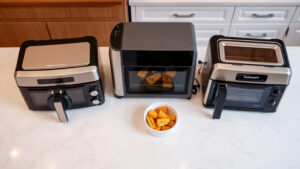
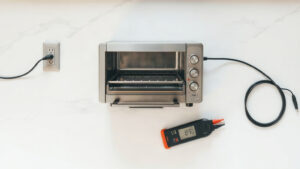
The nameplate on the bottom of the toaster gives you the maximum rated wattage. That’s accurate for what the toaster pulls when elements are fully active. But if you want real-world data, a Kill A Watt electricity monitor costs about $25 and plugs between the toaster and the wall outlet. It shows live wattage draw, cumulative kWh, and lets you calculate actual costs to the penny. Worth owning if you have any interest in knowing what your kitchen appliances actually cost to run. I’ve had mine for three years and use it constantly — it’s one of those tools that seems gimmicky until you actually plug something into it and realize your air fryer draws 1,750W and your toaster draws 1,480W and you’ve been running them simultaneously on the same counter circuit.
For reference, here’s what I measured on a Cuisinart CPT-440 (a 4-slice model I tested for several weeks): 1,476W peak draw, 1,458W average during a standard 3.5-minute toast cycle at setting 4. The nameplate said 1,500W — so pretty accurate, which isn’t always the case. Some toasters run 10–15% below their rated wattage in practice. Good to know if you’re tight on circuit capacity. For more on how heat interacts with toaster design, my breakdown of how hot a toaster gets goes deeper on the element and temperature side of things.
Final Thoughts
A 4-slice toaster’s wattage isn’t something most people need to obsess over. The monthly cost is low enough that it won’t move the needle on your electricity bill in any meaningful way — unless you’re in a high-rate state and using it heavily, or you’re running defrost mode constantly. What does matter is circuit safety (don’t stack high-draw appliances on one outlet), choosing a model with the right element type for your toasting speed preferences, and knowing that the nameplate wattage is a maximum, not a guaranteed constant.
If you want the best balance of toasting speed and energy efficiency, aim for a model in the 1,400W–1,500W range with nichrome elements. Quartz is faster but pulls more power and, in my experience, is a bit less forgiving on lighter breads. And if you’re ever curious whether a toaster oven might actually serve you better than a 4-slice pop-up, check out the best mini toaster ovens — some of them do both jobs surprisingly well. The Serious Eats toaster guide is also worth a read if you’re in the market for a new machine.
Frequently Asked Questions
How many watts does a 4-slice toaster use?
Most 4-slice toasters draw between 1,200 and 1,800 watts, with the majority of mid-range models landing at 1,400W to 1,500W during active toasting. The exact figure depends on the heating element type, slot width, and whether special modes like defrost are running. You can find the rated wattage on the label on the bottom of your specific model.
How much does it cost to run a 4-slice toaster every day?
At a typical U.S. electricity rate of $0.16 per kWh, running a 1,500W toaster for four minutes three times a day costs roughly $0.40 to $0.75 per month. Daily cost per session is around half a cent. Defrost cycles increase this because the elements stay on significantly longer — sometimes double the normal run time.
Can a 4-slice toaster trip a circuit breaker?
Yes, if it shares a circuit with other high-draw appliances. A 4-slice toaster pulling 1,500W plus a coffee maker pulling 1,200W totals 2,700W — which exceeds what a 15-amp, 120V circuit can safely handle continuously. Give the toaster its own outlet, and avoid running it simultaneously with other heating appliances on the same circuit run.
Is a 4-slice toaster more energy-efficient than a toaster oven?
For toasting bread, yes — significantly. Both appliances can draw similar peak wattage, but a toaster finishes in 2–4 minutes while a toaster oven takes 8–15 minutes for the same task. That shorter run time means far less energy consumed per slice. A toaster oven makes more sense for reheating, baking, or cooking — not for quick morning toast.
Does a higher-wattage toaster toast faster?
Generally yes, especially when comparing quartz-element models (which skew higher wattage) to standard nichrome-wire models. A 1,800W toaster can shave 30–60 seconds off a typical toast cycle compared to a 1,200W unit. Whether that speed difference matters in practice depends on your morning routine — for most households, a 1,400W to 1,500W model hits the right balance of speed and energy draw.

Written by
Emma founded Toastera to turn vague appliance advice into clear, researched, safety-first guidance on toasters and toaster ovens.
Free: the Toaster Oven Cheat Sheet
Get the printable cheat sheet (temps, cook times & safety tips) plus new recipes. No spam, unsubscribe anytime.