A toaster oven typically draws between 9 and 15 amps on a standard 120-volt circuit, depending on its wattage — most fall in the 1,200 to 1,800 watt range, which works out to 10 to 15 amps. On a 15-amp circuit, the NEC’s 80% continuous-load rule means you’ve got a safe ceiling of 12 amps (1,440 watts) for anything running longer than 3 minutes. Run a 1,800-watt toaster oven on that circuit while anything else is plugged in, and you’re asking for a tripped breaker.
Safety First: Never run a toaster oven on an extension cord or a power strip — both are fire hazards with high-wattage appliances. Always plug directly into a grounded wall outlet, check that your circuit isn’t already loaded with other appliances, and if your breaker trips repeatedly under normal use, have a licensed electrician inspect the circuit before continuing to use it.
Quick Facts: Toaster Oven Amps at a Glance
- Most toaster ovens pull 1,200–1,800 watts, which equals roughly 10–15 amps at 120V
- A 15-amp circuit’s safe continuous-use ceiling is 1,440 watts (12 amps) per NEC guidelines
- A 20-amp circuit’s safe ceiling is 1,920 watts — gives you actual breathing room with most models
- Toaster ovens should ideally run on a dedicated circuit, especially if they’re 1,500 watts or above
- Sharing a 15-amp circuit with a microwave or coffee maker is how breakers get tripped at 7am
The Basic Math: Watts, Amps, and Why It Actually Matters
The formula is simple: Amps = Watts ÷ Volts. In a standard US home, wall outlets run at 120 volts. So a 1,500-watt toaster oven draws 1,500 ÷ 120 = 12.5 amps. That’s it. No mystery.
Where people get confused is the difference between the circuit’s rated amperage and what it can safely handle continuously. A 15-amp breaker will technically allow 15 amps to flow. But the National Electrical Code says continuous loads — anything running for more than 3 minutes — shouldn’t exceed 80% of that rating. So 15 × 0.8 = 12 amps. That’s your actual usable ceiling for a toaster oven on a 15-amp circuit.
A 12.5-amp toaster oven on a 15-amp circuit is already over that threshold. Not by a ton. But enough that if anything else on the same circuit is drawing power simultaneously — a phone charger, a coffee maker, a small lamp — you could trip the breaker.
What “on the same circuit” actually means
This trips people up (no pun intended). The outlets in your kitchen don’t each get their own circuit. Multiple outlets often share one breaker. In a lot of older homes, the counter outlets in an entire kitchen run on a single 15-amp circuit. You’d never know unless you checked your panel. I definitely didn’t know this until my Breville Smart Oven kept killing the breaker every time I ran it while the coffee maker was going — both plugged into what I assumed were independent outlets, three feet apart on the same wall.
Toaster Oven Wattage by Model Type: A Realistic Comparison
Not all toaster ovens are created equal in terms of power draw. The compact 2-slice toasters are one thing. Full-size countertop convection ovens are another beast entirely.
| Toaster Oven Type | Typical Wattage | Amps Drawn (120V) | Safe on 15A Circuit Alone? |
|---|---|---|---|
| Compact / 2-slice style | 800–1,200W | 6.7–10A | Yes, with room to spare |
| Mid-size countertop (4-slice) | 1,200–1,500W | 10–12.5A | Yes, but don’t share the circuit |
| Large convection toaster oven | 1,500–1,800W | 12.5–15A | Borderline / not recommended |
| Air fryer toaster oven combo | 1,700–1,800W | 14.2–15A | No — needs a 20A dedicated circuit |
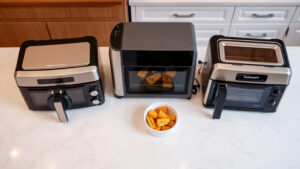
Air fryer toaster oven combos are the ones I’d really flag here. They max out around 1,800 watts pretty consistently. The Breville Smart Oven Air Fryer and similar models from Cuisinart pull close to that upper limit. Running one of those on a 15-amp circuit that’s shared with anything else is just a bad idea. I’ve seen it trip a breaker mid-bake on a chicken — annoying at best, a partially-cooked food safety issue at worst.
15-Amp vs. 20-Amp Circuit: Does It Actually Change Anything?
Yes. A 20-amp circuit’s continuous-use ceiling is 1,920 watts (20 × 0.8 × 120). That covers even a 1,800-watt toaster oven running at full blast, with 120 watts of breathing room. It won’t win you any headroom if you’re also running the microwave, but for the toaster oven alone, a 20-amp circuit is the right answer.
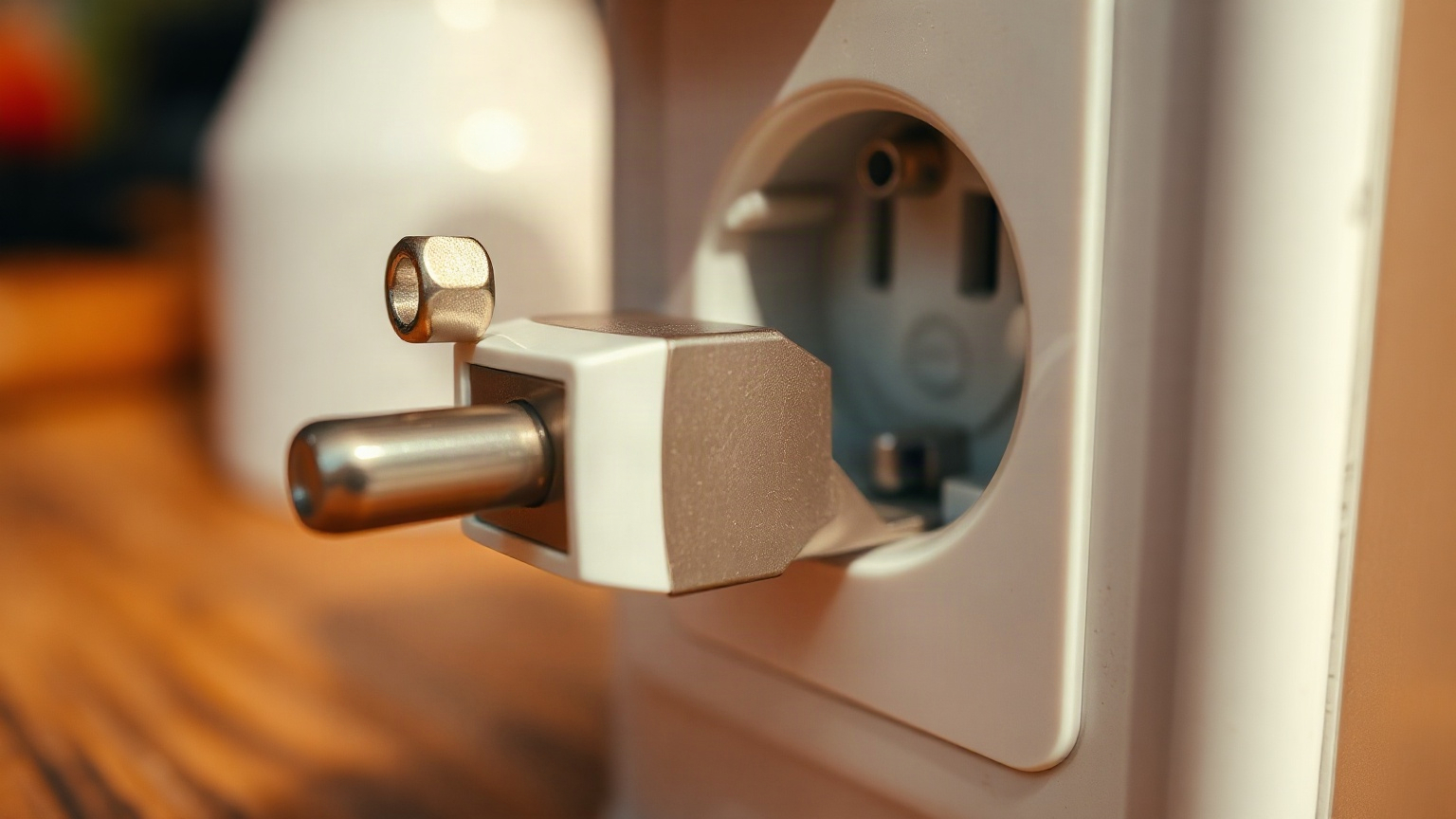
How do you tell if you have a 20-amp circuit? Look at the outlet. A 20-amp outlet has one slot that’s T-shaped — it looks like a regular slot with a small horizontal notch off the side. A 15-amp outlet has two plain vertical slots. Also check your breaker panel: the breaker will be labeled 15A or 20A.
Modern kitchens built to recent code are supposed to have at least two 20-amp small appliance circuits for counter use. A lot of older homes don’t. If your kitchen is pre-1990s and you’ve never had it updated, there’s a reasonable chance you’re running everything off 15-amp circuits.
Should you get a dedicated circuit for your toaster oven?
If you’re running anything 1,500 watts or above regularly, a dedicated circuit makes sense. Not a legal requirement for toaster ovens the way it is for built-in ranges, but a smart one. Electricians typically charge $100–$250 to run a new dedicated circuit depending on your panel setup and how far the run is. If you’re constantly tripping breakers or you’ve got a high-powered air fryer oven, it’s worth the call.
For more context on how toaster oven heat output relates to its power draw, check out how hot a toaster gets — the wattage and the temperature ceiling are more connected than most people think.
Real-World Scenarios: What Will Actually Trip Your Breaker
Let me be specific, because the abstract stuff is less useful than just knowing what combinations cause problems.
Scenario 1: Toaster oven + coffee maker on a 15-amp circuit
A standard drip coffee maker draws around 800–1,200 watts. Add a 1,500-watt toaster oven and you’re looking at 2,300–2,700 watts combined — well over what a 15-amp circuit can safely handle. This will trip the breaker. It’s probably the most common kitchen breaker scenario in existence.
Scenario 2: Toaster oven + microwave on a 15-amp circuit
Microwaves pull 1,000–1,200 watts typically. Stack that on top of a 1,500-watt toaster oven and you’ve got a problem. This is exactly why the NEC recommends (and most local codes require) that microwaves be on their own dedicated circuit. If yours isn’t, you’re relying on the universe being kind to you.
Scenario 3: Toaster oven alone on a 15-amp circuit, under 1,440 watts
A compact or mid-size toaster oven in the 1,000–1,200 watt range running solo on a 15-amp circuit? Totally fine. You’ve got margin. A phone charger or LED lamp on the same circuit won’t hurt anything. This is the scenario where people stress unnecessarily.
For context on how I actually use my toaster oven daily without issues, the reheating food in a toaster oven guide covers settings I rely on almost every day — and most of that usage is well under peak wattage anyway, since reheating doesn’t require full-blast heat.
The edge case almost nobody mentions: startup surge
When a toaster oven first kicks on, the heating elements pull a brief inrush of current that can be 15–30% higher than steady-state draw. It lasts a fraction of a second, and most breakers have enough thermal lag to ignore it. But if your breaker is already old, already warm from previous loads, or is a cheaper brand with tighter tolerances, that inrush can be what finally tips it over. This is why a toaster oven on a circuit that “should technically handle it” sometimes still trips the breaker. The steady-state numbers work out on paper — the surge is the problem.
What to Do If Your Toaster Oven Keeps Tripping the Breaker
First: stop resetting and immediately running the same load. Repeatedly tripping and resetting a breaker stresses it. Breakers degrade. Some older ones eventually fail to trip at all, which is actually dangerous.
Second: figure out what else is on that circuit. Unplug everything on those counter outlets and run only the toaster oven. If it trips alone, the appliance might be faulty or the circuit/breaker might be undersized or aging. If it doesn’t trip alone, you’ve found your problem — too many things sharing one circuit.
Third: if you need more capacity, look into having a dedicated 20-amp circuit added. It’s not a huge job for an electrician, and if you’re spending money on a quality large countertop convection toaster oven, it deserves a circuit that can actually run it properly.
For anyone still shopping, there are some genuinely good options in the compact category that stay well under 1,500 watts — the best mini toaster ovens list covers several that would be perfectly comfortable on a shared 15-amp circuit.
One thing worth checking with any older appliance: the U.S. Consumer Product Safety Commission maintains a recall database. If your toaster oven is tripping breakers and also smells odd or runs hotter than normal, it’s worth a quick lookup before assuming it’s just a circuit issue.
The Bottom Line
A toaster oven on a 15-amp circuit can work — but only if the wattage stays at or below 1,440 watts and nothing else significant is drawing from that circuit at the same time. Anything 1,500 watts and up really belongs on a 20-amp circuit, ideally a dedicated one. The math isn’t complicated: amps equals watts divided by volts, and the 80% rule is there for a reason.
If you’ve got a compact model pulling 1,000–1,200 watts, don’t stress about it. If you’ve got a full-size air fryer toaster oven running at 1,800 watts, pay attention to what else is on that circuit. The difference between a tripped breaker and a smooth breakfast is usually just knowing your numbers — and keeping an eye on what’s plugged in where.
And grab a plug-in watt meter if you really want to know exactly what your specific model pulls. A Kill-A-Watt meter runs about $20–$30 and will tell you actual real-world draw, not just what’s printed on the label. Manufacturers rate at peak; actual draw during normal use is often a bit lower. It’s one of those tools I wish I’d bought earlier.
Frequently Asked Questions
How many amps does a toaster oven draw on a 15 amp circuit?
Most toaster ovens draw between 10 and 15 amps at 120 volts, depending on their wattage (typically 1,200–1,800 watts). On a 15-amp circuit, the safe continuous-use limit is 12 amps (1,440 watts) per NEC guidelines. A toaster oven rated above 1,440 watts should ideally run on a 20-amp or dedicated circuit to avoid nuisance tripping.
Can I run a toaster oven and microwave on the same 15 amp circuit?
No — not safely. A microwave typically draws 1,000–1,200 watts and a toaster oven 1,200–1,800 watts, which together far exceeds the 1,800-watt maximum of a 15-amp circuit, let alone the 1,440-watt continuous-use safe ceiling. Running both simultaneously will almost certainly trip the breaker, and doing it repeatedly stresses the breaker itself.
Does a toaster oven need a dedicated circuit?
It’s not required by code the way a built-in range or dishwasher is, but a dedicated circuit is strongly recommended for any toaster oven rated at 1,500 watts or higher. Without one, you’re relying on nothing else drawing power from the same circuit while the oven runs, which is hard to guarantee in a busy kitchen.
How do I know if my kitchen outlet is on a 15 amp or 20 amp circuit?
Look at the outlet itself: a 20-amp outlet has one T-shaped slot (a regular slot with a small horizontal notch), while a 15-amp outlet has two plain vertical slots. You can also check your breaker panel — each breaker is labeled with its amperage rating. If you’re still unsure, an electrician can confirm it in minutes.
Why does my toaster oven keep tripping the breaker even when nothing else is on?
The most likely causes are that the toaster oven’s wattage exceeds the circuit’s continuous-load rating, or the breaker itself is aging and has become sensitive. There’s also a startup inrush current — a brief spike when the heating elements first energize — that can trip marginal or worn breakers. If the oven trips the breaker consistently while running solo, have an electrician check both the appliance and the circuit.

Written by
Emma founded Toastera to turn vague appliance advice into clear, researched, safety-first guidance on toasters and toaster ovens.
Free: the Toaster Oven Cheat Sheet
Get the printable cheat sheet (temps, cook times & safety tips) plus new recipes. No spam, unsubscribe anytime.