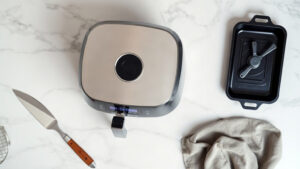
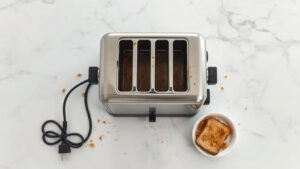
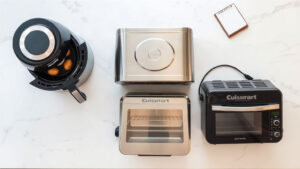
Running a toaster oven and microwave on the same circuit will almost certainly trip your breaker — and possibly damage one or both appliances. A typical microwave pulls 1,000–1,500 watts, and a toaster oven pulls another 1,200–1,800 watts, which together can easily exceed the 1,920-watt safe capacity of a standard 15-amp kitchen circuit. The practical implication: unless you’re on a 20-amp dedicated circuit and you’re careful about overlapping use, you’re asking for trouble.
Safety First: Running high-wattage appliances on an overloaded circuit is a genuine fire risk, not just a nuisance. A repeatedly tripped breaker is your panel trying to protect you — if it trips frequently and you reset it without fixing the root cause, you risk overheating the wiring inside your walls. If your breaker trips more than once or twice, stop, unplug both appliances, and call a licensed electrician before using them on that circuit again.
Key Takeaways
- A 15-amp circuit maxes out at 1,800 watts (safely) — most microwaves and toaster ovens together blow past that combined.
- A 20-amp circuit gives you 2,400 watts total (1,920 watts at the safe 80% rule), which is tight but sometimes workable if you don’t run both simultaneously at full power.
- The NEC (National Electrical Code) recommends dedicated circuits for high-draw kitchen appliances — a microwave especially.
- Running one appliance at a time on a shared circuit is safer, but not guaranteed to be problem-free depending on what else is on that circuit.
- Older homes are far more likely to have undersized circuits in the kitchen — worth checking before assuming you’re fine.
The Math Behind the Circuit — Why This Gets Dicey Fast
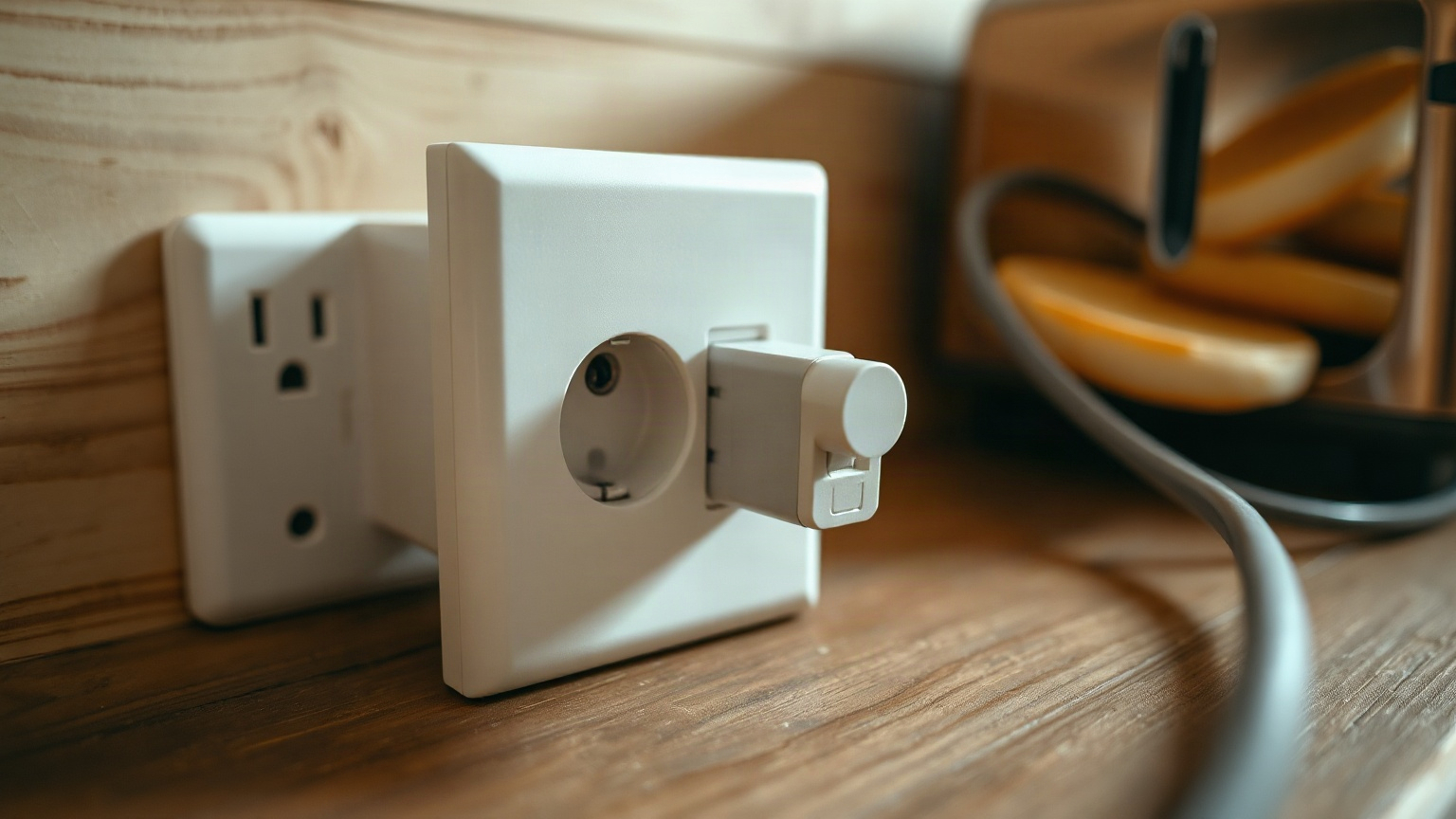
Let me just run through the numbers, because this is where most people go wrong. They think “it’s just two appliances” without actually adding up the wattage.
Circuit capacity is based on amperage and voltage. In the US, standard household outlets run on 120 volts. The formula is Watts = Amps × Volts. So a 15-amp circuit can theoretically handle 1,800 watts (15 × 120). A 20-amp circuit can handle 2,400 watts. But here’s the thing — electricians use the 80% rule, meaning you should only load a circuit to 80% of its rated capacity for continuous loads. That drops your safe limits to 1,440 watts on a 15-amp circuit and 1,920 watts on a 20-amp circuit.
Now look at what these appliances actually draw:
| Appliance | Typical Wattage Range | Peak Draw |
|---|---|---|
| Countertop Microwave (mid-size) | 900–1,200W | Up to 1,500W |
| Toaster Oven (standard) | 1,200–1,500W | Up to 1,800W |
| Toaster Oven/Air Fryer Combo | 1,500–1,800W | Up to 1,800W |
| Over-the-Range Microwave | 1,000–1,650W | Up to 1,800W |
Add a standard 1,000-watt microwave and a 1,200-watt toaster oven together: that’s 2,200 watts. On a 15-amp circuit, you’ve blown past the safe limit by over 750 watts. Even on a 20-amp circuit, you’re at 2,200 watts against a 1,920-watt safe threshold. It’s close. Way too close.
What Actually Happens When You Overload a Circuit
The breaker trips. That’s the best-case outcome, honestly. The breaker is doing its job — it detects excess current and cuts power before the wiring overheats. Annoying? Yes. But better than the alternative.
The first time I plugged my Breville toaster oven and my old countertop microwave into the same outlet strip in my previous apartment, I didn’t even get through defrosting a chicken breast before everything went dark. Classic. Took me three trips to the breaker box before I figured out that both appliances were on the same 15-amp kitchen circuit — along with the refrigerator and a small coffee maker. The whole circuit was basically already near capacity before I added anything.
Worse outcomes exist, though. If you have an older home with outdated wiring, a breaker that’s worn out and trips slowly, or aluminum wiring (more common pre-1973), the wiring inside your walls can get dangerously hot before the breaker responds. That’s the scenario you actually want to avoid. This is not hypothetical — the U.S. Consumer Product Safety Commission links thousands of residential electrical fires annually to overloaded circuits.
Can a Shared Circuit Ever Work?
Technically, yes — under a narrow set of conditions. If you’re on a 20-amp circuit, never run both appliances at full power simultaneously, and nothing else of consequence is on that circuit, you might get away with it. The key word there is “might.” Realistically, most people don’t know exactly what else is sharing their kitchen circuits, and they don’t manually stagger their appliance use.
Running the microwave first, waiting for it to finish, then starting the toaster oven? That avoids the simultaneous draw problem. But it only takes one moment of forgetting — the microwave running while you preheat the toaster oven — and your breaker trips again. Or worse, it doesn’t, because it’s a slow-responding older breaker. I’d rather not gamble on that.
What the NEC Actually Says (And Why Most Kitchens Fall Short)
The National Electrical Code requires at least two 20-amp small appliance branch circuits in kitchens. These are meant to supply countertop receptacles — not dedicated to any single appliance, just appropriately sized. Microwaves are a special case: the NEC specifically recommends that microwaves rated above 300 watts get their own dedicated 20-amp circuit. Lots of manufacturers actually require it in their installation instructions, which means your warranty could be voided if you don’t wire it correctly.
Over-the-range microwaves almost always require a dedicated circuit — if you’re wiring an OTR unit, don’t share that circuit with anything. Period. Even the installation manual for a basic 1,000-watt OTR unit will tell you this directly.
Toaster ovens don’t have the same code requirement, but given their wattage, it’s not a bad idea to treat them like a dedicated circuit appliance too — especially if you’re using an air fryer/toaster oven combo, which typically draws even more power than a standard toaster oven.
How to Find Out What’s on Your Circuit
Your breaker panel should have labels — though in my experience, those labels range from “partially helpful” to “completely useless.” The better method: get a cheap plug-in circuit breaker finder (usually $20–$30 on Amazon) and trace every outlet on the circuit you’re using. Plug in a lamp or radio to each outlet, then flip breakers until you find the one that controls all of them. Write it down. That list of outlets is your circuit.
Once you know what’s sharing the circuit, add up the realistic wattage of everything that could run at once. If that number regularly exceeds 1,920 watts on a 20-amp circuit (or 1,440 watts on a 15-amp), you’ve got a problem that only a dedicated circuit or some deliberate appliance juggling can solve.
The Edge Case Most Articles Miss: What Happens During the Preheat Cycle
Here’s something I haven’t seen addressed anywhere else. Toaster ovens draw their maximum wattage during the preheat phase — not during cooking. When you first switch on a toaster oven and it’s ramping up to 400°F, every heating element is on simultaneously, pulling full rated power. Once it reaches temp, the elements cycle on and off to maintain heat, so the actual average draw drops.
If your microwave happens to be running exactly when your toaster oven kicks into a preheat cycle, the momentary combined draw can be significantly higher than the appliances’ rated wattages suggest — because there’s often a startup surge too. We’re talking potentially 10–20% above the rated wattage for a few seconds. That’s usually what causes the breaker trip even when the numbers look borderline-okay on paper.
This is also why some people report that their toaster oven and microwave “work fine together most of the time” but trip the breaker occasionally. It’s not random. It’s happening at the overlap of a preheat cycle and a microwave running at full power. Understanding how hot toaster heating elements actually get and what that means for electrical draw can help you plan this better.
Practical Solutions That Actually Work
Option 1: Get a Dedicated Circuit Installed
The clean solution. Have an electrician run a dedicated 20-amp circuit to each appliance. It’s not cheap — usually $150–$400 per circuit depending on your panel location and how easy it is to run the wire — but it’s the permanent fix. No more tripped breakers, no more worrying about what else is running. If you’re doing a kitchen renovation anyway, do this. Just do it.
Option 2: Stagger Your Appliance Use
Not glamorous, but workable. Finish the microwave, then start the toaster oven. Or vice versa. Never overlap. This requires discipline — the kind of discipline that evaporates when you’re rushing to get dinner on the table — but it does prevent tripped breakers on a shared circuit.
Option 3: Use a Lower-Wattage Setting
Microwaves let you run at 50% or 70% power — that actually reduces their draw proportionally. If you’re reheating food in the toaster oven at a lower temp (say, 300°F instead of 450°F), the toaster oven draws less power too. Combined, this can keep you under the circuit limit. It’s a compromise, not a solution. But it’s better than nothing.
Option 4: Move One Appliance to a Different Circuit
If you have outlets in adjacent rooms or on different circuits, moving one appliance there is an easy fix. Run an extension cord? Generally not recommended for high-wattage appliances — but a properly rated appliance cord (14-gauge minimum for 1,500 watts) used temporarily while you sort out a proper solution isn’t the worst thing in the world. Just don’t make it permanent. And make sure you’re using a heavy-duty 14-gauge appliance extension cord rated for the load, not a cheap dollar-store power strip.
If you’re shopping for a toaster oven and want to compare models by wattage before buying, check out our guide to the best mini toaster ovens — some compact models draw noticeably less power than full-size units, which matters if you’re on a tight circuit. And if you need a good toaster oven air fryer combo, wattage specs are right there in the product listing — always check before you buy.
Bottom Line
Can you technically run a toaster oven and microwave on the same circuit? Sometimes. Should you? Not really, no. The math doesn’t favor it, the NEC recommends against it for the microwave specifically, and the preheat surge issue means it’ll trip your breaker at inconvenient moments even when the average wattage looks acceptable on paper.
The right answer is a dedicated circuit for the microwave at minimum. If you’re renovating or doing any electrical work, get one for the toaster oven too. If neither of those is an option right now, stagger your use and stay aware of what else is on the circuit. And if your breaker keeps tripping — stop resetting it and call an electrician. That’s the one piece of advice I’d give anyone who’s frustrated with this exact problem.
Frequently Asked Questions
Can I run a toaster oven and microwave on the same circuit at the same time?
Running both simultaneously is very likely to trip a 15-amp breaker, and risky even on a 20-amp circuit depending on what else is on the line. Combined wattage typically falls between 2,000–3,000 watts, which exceeds safe circuit capacity at 80% load. If you must use both, do it sequentially — finish one before starting the other.
Does a microwave need a dedicated circuit?
The NEC recommends a dedicated 20-amp circuit for microwaves rated above 300 watts — which is basically every microwave made in the last 30 years. Many manufacturers require it in their installation instructions, and an over-the-range microwave almost always mandates one. Without a dedicated circuit, you risk tripped breakers and potentially voided warranties.
What size circuit do I need for a toaster oven?
Most toaster ovens require a 15-amp or 20-amp circuit, with larger units and air fryer combos landing firmly in the 20-amp category. A dedicated 20-amp circuit is ideal if you’re using a full-size or combination unit that pulls 1,500 watts or more. Sharing that circuit with other high-draw appliances isn’t recommended.
Why does my breaker keep tripping when I use my toaster oven?
Your toaster oven likely shares a circuit with other appliances that together exceed the breaker’s safe capacity — or the toaster oven alone is pulling too much during its preheat cycle. Check what else is on the same circuit and calculate the combined wattage. If the breaker trips repeatedly, have an electrician evaluate whether a dedicated circuit or panel upgrade is needed.
Can I plug a toaster oven into an extension cord?
Not with a standard extension cord — the wiring in most household extension cords isn’t rated for 1,500+ watts of continuous draw and can overheat. If you need to temporarily extend your reach, use a heavy-duty appliance extension cord rated at 14 AWG or thicker and listed for the wattage you need. Treat it as a short-term fix, not a permanent setup.

Written by
Emma founded Toastera to turn vague appliance advice into clear, researched, safety-first guidance on toasters and toaster ovens.
Free: the Toaster Oven Cheat Sheet
Get the printable cheat sheet (temps, cook times & safety tips) plus new recipes. No spam, unsubscribe anytime.