Cook frozen Brussels sprouts in an air fryer at 390°F for 18–20 minutes total, shaking the basket halfway through. That temperature gives you enough heat to blast off surface moisture and get real browning on the cut sides without turning the outsides to charcoal. Figure on about 18 minutes if your sprouts are small, closer to 22 if they’re large or your machine runs cool.
Safety First: Air fryer baskets and the sprouts themselves get extremely hot — above 390°F at the surface. Use silicone-tipped tongs (not bare hands) to shake or remove sprouts, and keep your face away from the steam that escapes when you pull the basket. Set the unit on a heat-safe surface at least 6 inches from walls and never leave it unattended at high heat with fatty or oily ingredients.
Quick Facts: Frozen Brussels Sprouts in the Air Fryer
- Temperature: 390°F (200°C) is the sweet spot — hot enough to brown, not so hot they burn before thawing
- Total cook time: 18–22 minutes depending on sprout size and air fryer model
- Shake or flip: at the halfway mark, every time — this is non-negotiable for even browning
- Do NOT thaw first: cooking from frozen produces better texture than thawing, which makes them waterlogged
- Season after, not before: oil and salt applied mid-cook (after the first shake) stick better and burn less
I’ve made these probably forty times at this point. The first batch I ever did came out sad and steamy — pale, soft, vaguely sulfurous. Took me two more tries to figure out I was using too low a temp and seasoning at the wrong moment. Here’s what actually works.
Why Frozen Brussels Sprouts Are Actually Great in an Air Fryer
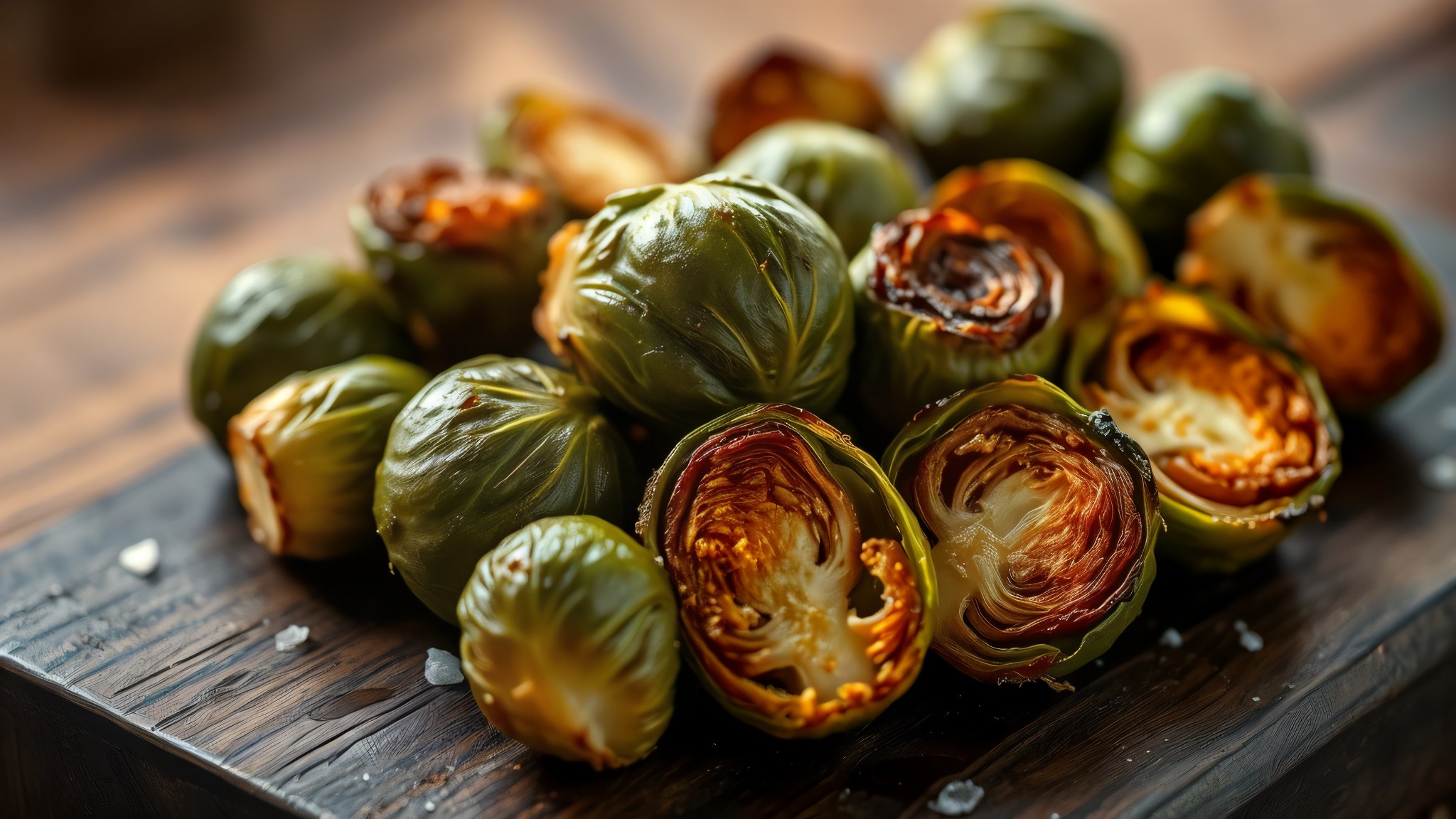
Fresh Brussels sprouts get a lot of credit, but frozen ones have a real advantage: they’re already blanched. That pre-cooking means the interior gets tender faster, so by the time the outside is caramelized, the inside isn’t raw and bitter. Honestly, for a weeknight side dish, frozen is often the better call.
The trap people fall into is thawing them first. Don’t. A thawed Brussels sprout releases a small flood of water the moment it hits the hot basket, and you end up steaming the things instead of roasting them. Straight from the freezer — that’s the move. The intense heat of the air fryer evaporates that surface ice almost immediately, and then the browning starts.
The other advantage of frozen over fresh for this specific application is consistency. Every sprout is roughly the same size (they’re graded before freezing), which matters a lot for even cooking. With fresh sprouts you’re often trimming and halving to compensate for wildly different sizes. Frozen bags mostly do that work for you.
The Exact Temperature and Time (With a Real Comparison)
Most recipes cluster around 390–400°F. After testing both, I land on 390°F as the better choice for frozen (not fresh) sprouts specifically. At 400°F the outer leaves can go from nicely crispy to acrid before the interior has fully thawed. At 390°F you get a slightly longer runway — the inside has time to soften while the outside develops real color.
| Temperature | Total Time | Result | Best For |
|---|---|---|---|
| 375°F | 22–25 min | Soft, lightly browned | People who want tender, not crispy |
| 390°F | 18–22 min | Crispy outside, tender inside | Most frozen sprout situations — my default |
| 400°F | 15–18 min | Very crispy, some leaf char | Small sprouts, preheat lovers, high-BTU machines |
| 410°F+ | 12–15 min | Burnt outer leaves likely | Not recommended for frozen |
My personal machine is a basket-style 5-quart air fryer, and it runs slightly hot. I set it to 390°F and my first batch came out perfectly at 19 minutes. My neighbor’s older oven-style air fryer needed the full 22. Know your machine. If you’ve been using yours for a while, you probably already have a sense of whether it overcooks or undercooks relative to recipes.
Step-by-Step Method
Preheat your air fryer to 390°F for 3 minutes. Yes, preheating matters here — dropping frozen food into a cold basket extends cook time unevenly and you lose that initial blast of heat that drives off surface moisture.
Add the frozen sprouts directly to the basket in a single layer. Or close to it. Overlapping a little is fine; stacking them three deep is not. A 10-ounce bag fits comfortably in a 5-quart basket.
Cook for 10 minutes. Pull the basket, shake it firmly (use silicone-tipped tongs if you want to actually flip them), then drizzle lightly with olive oil and add salt. This is the moment to season. The sprouts are partially cooked, the surface is no longer icy, and the oil will actually stick and brown rather than just dripping to the bottom and smoking.
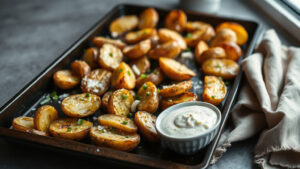
Return the basket and cook another 8–12 minutes, checking at 8. You’re looking for deep green color, browned cut sides, and some crispy outer leaves. Pull one out and bite it. That’s the only real test.
What If You Have an Oven-Style Air Fryer or Toaster Oven?
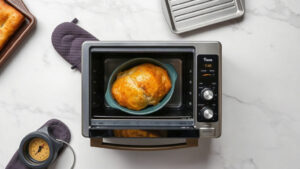
Oven-style air fryers (the kind with a door and racks instead of a pull-out basket) circulate air differently. You’ll generally need 2–3 extra minutes, and you’ll want to use the top rack position to keep the sprouts close to the heating element. If you’re using a toaster oven with an air fry setting, the principle is the same — 390°F, check at 20 minutes. The best mini toaster ovens with air fry modes handle this just fine, though the smaller cavity means you can’t cook more than about 8 ounces at once without crowding.
Seasoning: When and What
The mid-cook seasoning approach above is the one I’d stick with. But here are some combinations worth trying once you’ve got the basic method down:
- Simple: olive oil, flaky salt, black pepper — this is the default for a reason
- Balsamic: drizzle balsamic vinegar in the last 4 minutes of cooking, not earlier (it burns fast)
- Parmesan: add grated parm in the final 3 minutes — it melts onto the cut sides and gets a little crispy
- Spicy: toss with garlic powder and red pepper flakes at the halfway shake
One thing I’d skip: any sauce that contains a lot of sugar (teriyaki, sweet chili) applied before the final few minutes. Sugar scorches at these temperatures. Add sweet sauces only in the last 2–3 minutes, or just toss after cooking.
For reference, Serious Eats has a good breakdown of why high-heat roasting transforms Brussels sprouts — the Maillard reaction and caramelization of cut surfaces is really what we’re chasing here, and the air fryer does it faster than an oven because of the concentrated circulating heat.
Edge Cases and Troubleshooting
Most recipes don’t mention these. They should.
Your Sprouts Are Coming Out Soggy
Usually a crowding problem or a temp problem. If the basket is packed, moisture has nowhere to escape and you get steam instead of roast. Cook in batches. Also check whether your air fryer has a gap between the basket and the drip tray — if water accumulates there during cooking, it can create steam from below. Some machines handle this better than others.
The Outer Leaves Are Burning Before the Insides Are Done
Your machine probably runs hot, or you have a brand with very large sprouts. Try 380°F and add 3–4 minutes. Alternatively, cook at 390°F for the first 10 minutes, then drop to 370°F for the second half. You lose a little crispiness on the outside but you won’t have that bitter charred leaf issue.
Cooking More Than One Bag at Once
This is the edge case every other recipe ignores. If you’re doubling the batch — say, 20 ounces instead of 10 — you almost certainly need to cook in two separate rounds. Two bags at once means crowding, uneven heat, and the steam problem above. I know it’s tempting to just pile them in. Don’t. The second batch stays warm on a plate covered with foil while the first finishes.
If you’re feeding a crowd and reheating is acceptable, you can also reheat food in a toaster oven at 375°F for 5–6 minutes to revive the crispiness on earlier batches. Not perfect, but it works reasonably well.
What About Brussels Sprouts That Come Pre-Seasoned or in Sauce?
Those bags with garlic butter or glaze already on the sprouts are a different animal. They tend to smoke at 390°F because of the added fat and sugar content. I’d drop to 370°F and check at 15 minutes. The USDA recommends vegetables reach an internal temp of at least 165°F if they were handled with any protein-based sauces, though for plain vegetables that’s less of a concern — you’re really cooking to texture.
You can find more guidance on safe cooking temperatures at USDA.gov, though for straight vegetable cooking the visual and texture cues are your main guide.
Getting Consistently Crispy Results Every Time
A few small habits that make a real difference:
- Always preheat. Cold-start cooking adds time unevenly.
- Pat the basket dry before adding frozen food if there’s condensation from a previous cook — it’s a minor thing but it matters.
- Don’t use cooking spray directly on the heating element or coils — it leaves residue that’s hard to clean and can smoke. A light mist on the sprouts themselves is fine.
- If your sprouts are particularly large (the kind where each one is nearly golf-ball size), halve them before cooking. Cut side down in the basket, then flip at the shake.
- Check at 18 minutes, not 20. The difference between perfectly done and overdone is about two minutes in a hot air fryer.
I also keep a quick-read thermometer nearby not for food safety purposes (these are vegetables) but because checking the internal temp — you want around 195–200°F inside for that soft, almost creamy core — is a more reliable indicator than timing alone when you’re using an unfamiliar machine. It sounds excessive. It’s actually just faster than guessing.
Final Thoughts
Frozen Brussels sprouts in the air fryer are genuinely one of the better uses of the appliance — fast, nearly hands-off, and producing results that would have taken 30+ minutes in a conventional oven. The setup is simple: 390°F, preheat first, season at the halfway shake, total time around 18–22 minutes. That’s really it.
Where people go wrong is low temperature, overcrowding, or trying to thaw first. Avoid those three things and you’ll get crispy, caramelized sprouts basically every time. My first batch was terrible. Yours doesn’t need to be.
Frequently Asked Questions
What temperature do you air fry frozen Brussels sprouts at?
390°F (200°C) is the right temperature for frozen Brussels sprouts in an air fryer. It’s hot enough to drive off the surface moisture from the ice and develop real browning on the cut sides, without burning the outer leaves before the interior thaws. At 400°F you risk charring the leaves on some machines before the core is done.
How long do frozen Brussels sprouts take in the air fryer?
Plan on 18–22 minutes total at 390°F, split roughly in half with a shake in the middle. Small sprouts from a standard 10-ounce bag are usually done at 18–19 minutes. Larger sprouts, or an oven-style air fryer that runs slightly cooler, can need the full 22. Check at 18 minutes and go from there — they move fast in the final few minutes.
Should I thaw frozen Brussels sprouts before air frying?
No. Cook them straight from frozen. Thawing releases water that creates steam in the basket, which prevents browning and leaves you with soft, pale sprouts instead of crispy ones. The air fryer’s high circulating heat handles the ice quickly, and going in frozen actually produces better texture than thawed.
Why are my air fryer frozen Brussels sprouts coming out soggy?
Sogginess is almost always a crowding or temperature issue. Too many sprouts in the basket trap steam and prevent the hot air from circulating properly around each one — cook in a single layer, and do two batches if needed. Also check that your temperature is actually at 390°F and not lower; many machines run 10–15°F under their displayed setting.
Can I cook frozen Brussels sprouts in a toaster oven with an air fry setting?
Yes, and the method is nearly identical. Use 390°F, place the sprouts on the top rack position (closest to the element), and add 2–3 minutes to your total cook time since oven-style machines typically circulate air less aggressively than basket fryers. A toaster oven’s smaller capacity also means you shouldn’t cook more than about 8 ounces at once without crowding the tray.

Written by
Emma founded Toastera to turn vague appliance advice into clear, researched, safety-first guidance on toasters and toaster ovens.
Free: the Toaster Oven Cheat Sheet
Get the printable cheat sheet (temps, cook times & safety tips) plus new recipes. No spam, unsubscribe anytime.