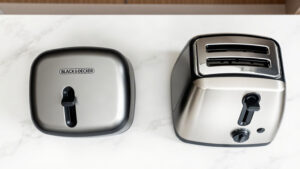
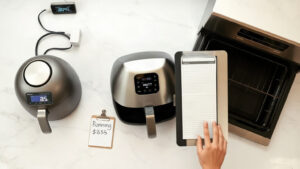
For small meals, an air fryer uses significantly less electricity than a full-size oven — typically 50–75% less energy per cooking session. The main reason is simple physics: a smaller cavity heats up faster and loses less heat to the surrounding air. In real-world terms, cooking a batch of chicken thighs in an air fryer might cost you 3–5 cents, while the same meal in a standard electric oven can run 15–25 cents or more.
Safety First: Air fryers and ovens both operate at high temperatures and draw significant electrical current. Never plug an air fryer into an extension cord or power strip — always use a dedicated wall outlet rated for the appliance’s wattage. Keep the appliance at least 6 inches from walls and cabinets during use, and never leave either appliance unattended when cooking fatty foods, which can cause flare-ups or smoke.
Quick Facts: Air Fryer vs. Oven Energy Use
- A full-size electric oven typically draws 2,000–5,000 watts; most air fryers pull 1,200–1,800 watts.
- Preheat time matters a lot — ovens can take 10–15 minutes, air fryers usually 2–3 minutes (some need none at all).
- At the U.S. average electricity rate of roughly 16 cents per kWh, running a 1,500-watt air fryer for 20 minutes costs about 8 cents. A 3,000-watt oven for 30 minutes costs about 24 cents.
- Gas ovens can complicate the comparison — they’re often cheaper per BTU, depending on your local gas rates.
- For small meals (1–2 servings), the air fryer wins on cost almost every time. For large batch cooking, the gap narrows considerably.
What the Wattage Numbers Actually Mean
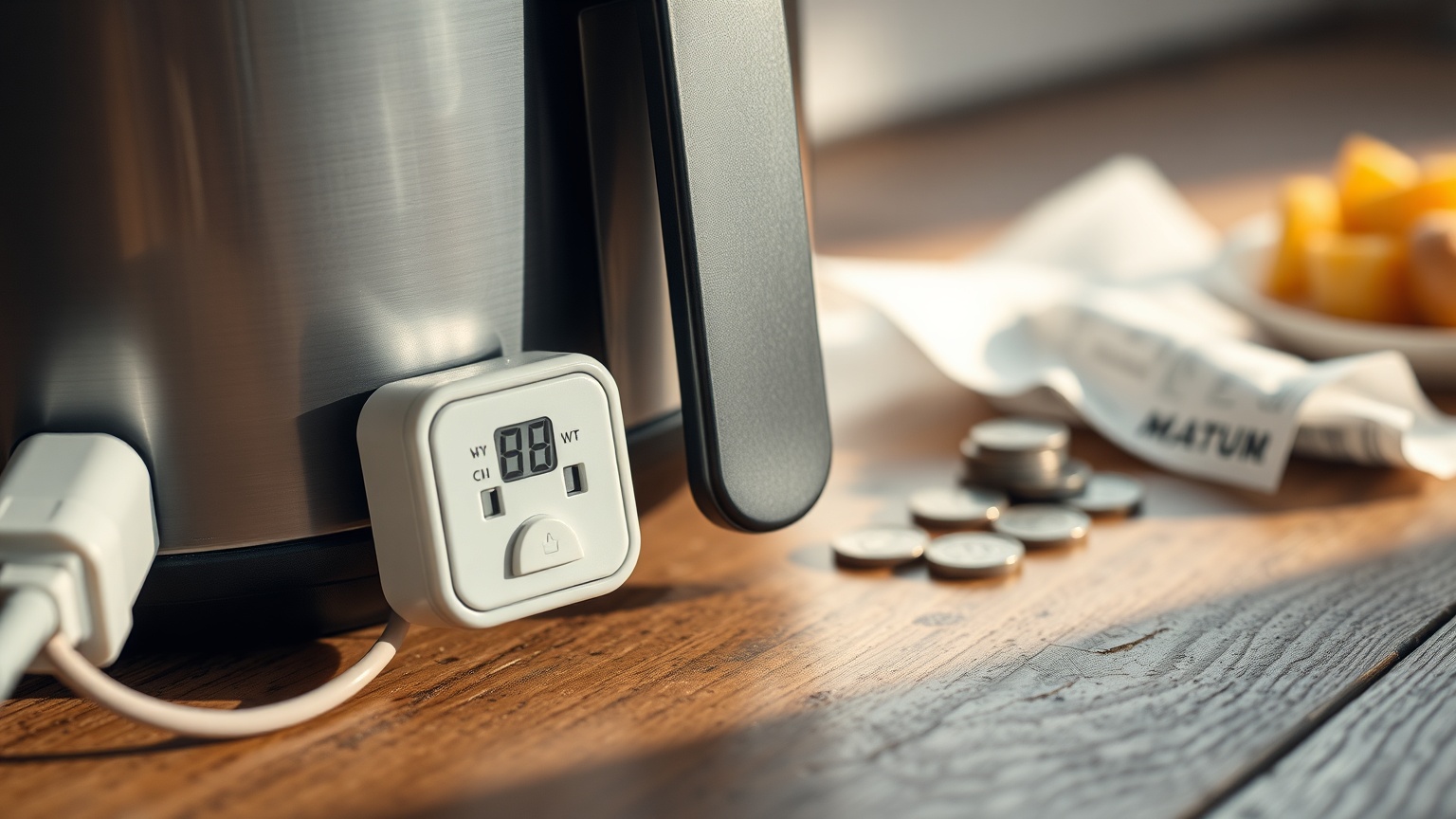
Wattage alone doesn’t tell the whole story, but it’s a good starting point. My air fryer — a mid-range 1,700-watt model — draws less than half the power of my oven at peak draw. But here’s the thing people usually skip: the oven runs at full power for longer, because it’s fighting to heat a much larger space. My oven cavity is roughly 5 cubic feet. The air fryer basket? Maybe 4–5 quarts. You’re heating about a tenth of the volume.
The math gets more interesting when you factor in preheat time. My oven takes about 12 minutes to reach 400°F. The air fryer hits 400°F in around 3 minutes — and some models barely need preheating at all. That 9-minute difference is pure wasted electricity. About 0.45 kWh just to warm up empty space before the food even goes in.
Here’s a comparison that puts it in concrete terms:
| Appliance | Typical Wattage | Preheat Time to 400°F | Est. Energy for 20-Min Cook | Est. Cost (at $0.16/kWh) |
|---|---|---|---|---|
| Full-Size Electric Oven | 3,000–5,000W | 10–15 min | ~1.2–1.5 kWh | ~19–24 cents |
| Air Fryer (mid-size) | 1,200–1,800W | 2–3 min | ~0.4–0.6 kWh | ~6–10 cents |
| Toaster Oven (convection) | 1,200–1,800W | 4–5 min | ~0.5–0.7 kWh | ~8–11 cents |
| Gas Oven | ~18,000 BTU burner | 10–12 min | ~0.2 therms | ~24 cents (varies widely) |
That’s a rough but honest comparison. Your actual costs depend on your utility rate, your specific appliance, and how often the heating element cycles on and off during cooking.
My Real-World Test: Chicken Thighs, Two Ways
I got a little obsessive about this last winter and decided to actually track it with a plug-in energy monitor (a Kill A Watt meter, specifically). The meal: four bone-in chicken thighs, seasoned the same way, cooked to 165°F internal temp.
In the air fryer, at 390°F for 22 minutes (flipping once at 12 minutes), the meter logged 0.52 kWh total — including a brief 2-minute preheat. Cost at my rate: about 8 cents. The thighs came out great. Crispy skin, juicy inside.
Same thighs in the oven at 425°F for 35 minutes, plus the 13-minute preheat: 1.34 kWh total. About 21 cents. The oven results were also fine, but not noticeably better. In fact, the skin was slightly less crispy because the oven doesn’t circulate air the same way.
So: 8 cents vs. 21 cents. A 13-cent difference sounds small. But if you cook like this four nights a week, that’s roughly $27 a year in savings just on that one meal type. Not life-changing, but not nothing either.
One thing that tripped me up early on: I kept air frying at the same temperatures my oven recipes called for. Don’t do that. Air fryers run hot and circulate air aggressively, so I generally drop the temp by 25°F and check the food a few minutes early. Takes some adjustment. Worth it.
When the Air Fryer Doesn’t Win
This is the edge case most articles skip, and it’s real. The air fryer’s efficiency advantage shrinks — or disappears entirely — in a few specific situations.
Cooking for a Crowd
If you’re feeding four or more people, you’ll likely need to cook in multiple air fryer batches. Each batch means another heat cycle, more total runtime, and suddenly you’re using as much energy as the oven would have taken in one shot. I’ve made this mistake at Thanksgiving — I was so committed to the air fryer that I ran it four times in a row for Brussels sprouts while my oven sat cold. Net result: probably the same energy use, way more babysitting.
High-Moisture, Long-Cook Dishes
Braised meats, casseroles, anything that needs 90 minutes or more at low heat — the oven can actually be comparable or better here. The air fryer’s rapid circulation is counterproductive for low-and-slow cooking, and you may end up overcooking the exterior while waiting for the interior to catch up. The energy savings shrink fast when you’re running the air fryer at 300°F for an hour and a half.
Gas Oven Users in Areas with Cheap Natural Gas
This is worth saying plainly: if you have a gas oven and your gas rates are low, the financial case for switching to an air fryer gets murkier. Natural gas is often cheaper per unit of heat than electricity, especially in certain regions. The air fryer still wins on speed and convenience, but the cost savings may be minimal. Check your actual utility bills before assuming electric is expensive.
How Air Fryers Compare to Toaster Ovens (A Closer Contest)
The comparison against a full-size oven is almost unfair — of course a smaller appliance wins. The more interesting question is how an air fryer stacks up against a compact toaster oven with convection.
Honest answer: they’re close. A good convection toaster oven pulls similar wattage (1,200–1,800W), heats a slightly larger cavity, and takes a bit longer to preheat. The energy difference between a dedicated air fryer and a convection toaster oven for small meals is often just a few cents per session — not enough to drive a purchase decision.
Where the air fryer actually wins over a toaster oven is texture. That aggressive, high-velocity air circulation produces a crispiness that a convection toaster oven just doesn’t fully replicate, especially for frozen foods, wings, and anything breaded. And if you’re doing reheating small portions, either appliance smokes the full-size oven for energy efficiency.
If you’re shopping for something in the middle ground, look at air fryer toaster oven combos — they’ve gotten quite good and give you flexibility without buying two appliances.
Practical Tips for Cutting Electricity Costs on Small Meals
A few things I’ve learned that actually make a difference:
- Skip the preheat when you can. Many air fryer recipes don’t need it. I skip preheating for most frozen foods and anything that takes longer than 15 minutes — the food just starts cooking as the machine heats up. No noticeable difference in the result.
- Don’t overcrowd the basket. This one hurts efficiency more than people realize. Stuffing too much food in blocks airflow and makes the machine work harder, longer. Two small batches cooked properly often use less energy than one overfull basket that takes twice as long.
- Use the right size for the job. A compact 2-quart air fryer uses less electricity than a 6-quart model when you’re only cooking for one. Match the appliance size to your actual household needs.
- Time-of-use rates matter. If your utility offers off-peak pricing, running energy-heavy appliances at night can cut costs significantly — regardless of which appliance you use.
- Clean the basket regularly. Grease buildup makes the air fryer less efficient and is a fire risk. A clean basket means better airflow and faster cooking.
For a broader look at kitchen appliance energy use, the U.S. Department of Energy’s appliance energy guide has useful baseline data on cooking appliances that’s worth bookmarking.
The Bottom Line
For small meals — say, one to three servings — an air fryer genuinely does use less electricity than a full-size oven. Not a little less. Meaningfully less. The combination of lower wattage and dramatically shorter preheat and cook times adds up to real savings over time. My own metered tests showed a consistent 60–65% reduction in energy use per cooking session for the kinds of meals I make most often.
That said, it’s not a universal answer. Batch cooking, low-and-slow dishes, and cheap gas rates all narrow or eliminate the advantage. And if you’re comparing an air fryer to a convection toaster oven rather than a full-size oven, the gap is small enough that your cooking habits and kitchen space probably matter more than the energy math.
My personal take: I use the air fryer for probably 80% of my weeknight cooking now, and I’ve noticed the electricity bill difference is modest but real. The bigger benefit, honestly, is time — the thing is just faster. If energy efficiency is your main concern, pairing an air fryer toaster oven combo with smart cooking habits will get you most of the way there. And if you’re curious how a standard toaster oven fits into all this, check out our guide to the best mini toaster ovens for a side-by-side look at the options.
Frequently Asked Questions
Does an air fryer use less electricity than an oven for small meals?
Yes — for small meals, an air fryer typically uses 50–75% less electricity than a full-size electric oven. The savings come from lower wattage, faster preheat, and shorter total cook times. At average U.S. electricity rates, that’s roughly 13–16 cents saved per cooking session compared to a standard oven.
How much does it cost to run an air fryer per hour?
A typical 1,500-watt air fryer running for one full hour uses 1.5 kWh of electricity, which costs about 24 cents at the U.S. average rate of 16 cents per kWh. Most meals cook in 15–25 minutes, so the actual per-meal cost is usually under 10 cents. Larger 1,800-watt models cost slightly more, around 29 cents per hour at full power.
Is an air fryer cheaper to run than a gas oven?
It depends on your local gas and electricity rates, but in many cases they’re comparable. Natural gas is often cheaper per unit of heat than electricity, which can offset the gas oven’s higher energy draw. The air fryer’s speed advantage still saves time, but the dollar savings over a gas oven may be smaller than you’d expect — sometimes just a few cents per meal.
What wattage air fryer is most energy efficient?
For one to two people, a 1,200–1,500 watt air fryer in the 2–4 quart range is typically the most energy-efficient choice. Larger 1,700–1,800 watt models draw more power and make sense for 3–5 quart baskets, but for solo cooking they’re slightly wasteful. Match the basket size to your typical portion size and you’ll naturally land on the most efficient option.
Does an air fryer heat up faster than a regular oven?
Yes, significantly faster. Most air fryers reach 400°F in 2–4 minutes, while a standard electric oven takes 10–15 minutes to hit the same temperature. That 8–12 minute preheat difference represents a substantial chunk of the oven’s energy use before a single piece of food goes in — and it’s the main reason air fryers come out ahead on small-meal energy costs.
—
Written by
Emma founded Toastera to turn vague appliance advice into clear, researched, safety-first guidance on toasters and toaster ovens.
Free: the Toaster Oven Cheat Sheet
Get the printable cheat sheet (temps, cook times & safety tips) plus new recipes. No spam, unsubscribe anytime.