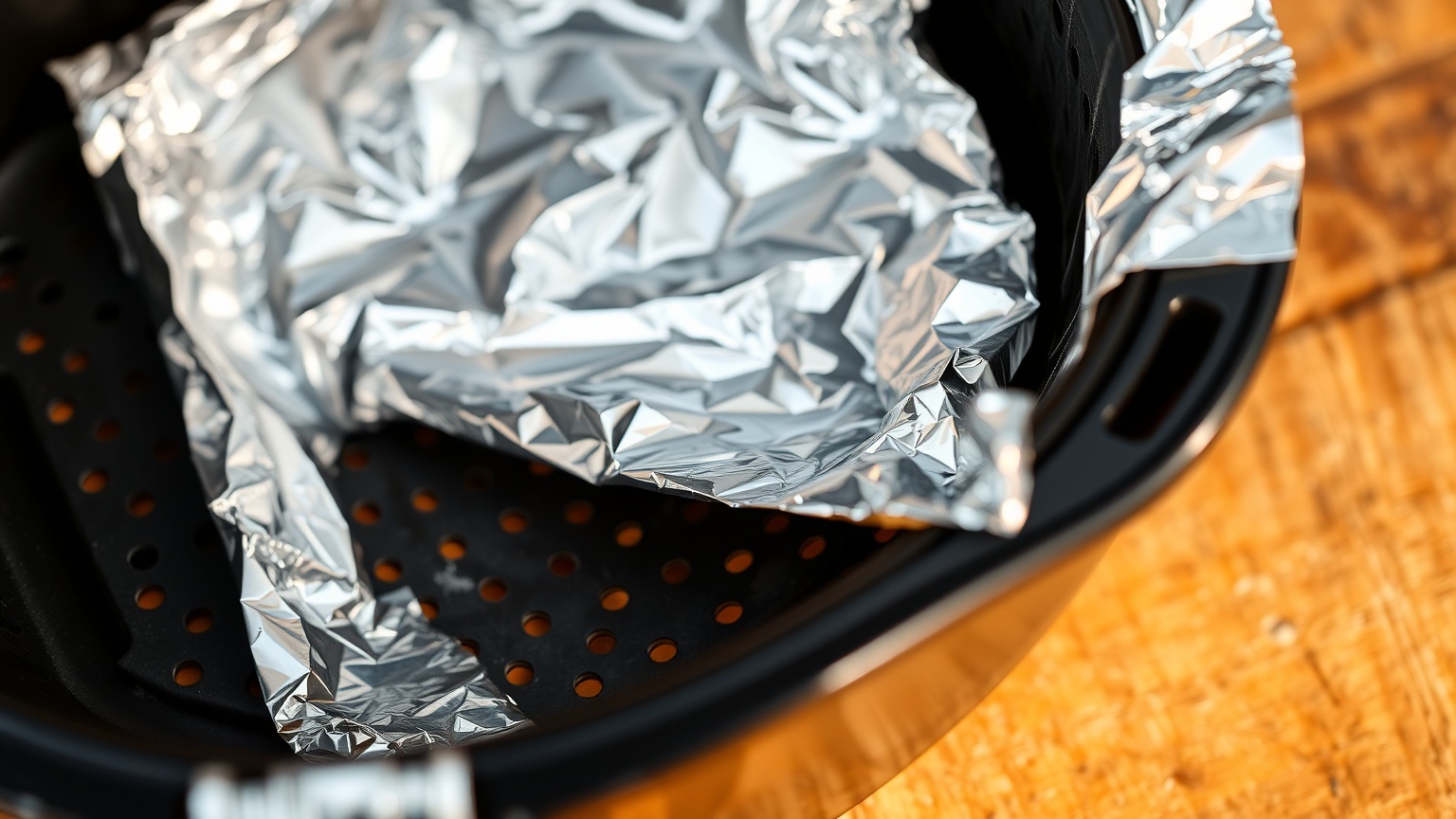
You can put aluminum foil in an air fryer basket, but only under specific conditions. Foil must never block the perforated bottom of the basket, never touch the heating element, and should only be used when there’s food sitting on top of it to weigh it down. Get any of those wrong and you’re looking at uneven cooking, a potential fire, or a ruined appliance.
Safety First: Loose aluminum foil in an air fryer basket can be pulled into the heating element by the high-speed fan, causing a fire or electrical damage. Always place food directly on top of foil before starting the machine — never run the air fryer with bare foil inside. If you smell burning or see sparks, turn the unit off immediately and unplug it.
Quick Facts: Aluminum Foil in an Air Fryer
- Air fryers circulate air at temperatures up to 400°F (some models reach 450°F) — aluminum foil is safe up to about 1,220°F, so heat isn’t the issue.
- The real risks are blocked airflow and foil contacting the heating element, not the foil melting.
- Acidic foods (tomatoes, citrus, vinegar-based marinades) can cause foil to leach small amounts of aluminum into food — parchment paper is the safer swap in those cases.
- Foil should never cover more than 50% of the basket floor — airflow from below is what creates that crispy texture.
- Parchment paper rated for high heat is a better default liner for most tasks; foil is better reserved for wrapping or shaping.
Why Airflow Is Everything in an Air Fryer
An air fryer is basically a compact convection oven with a much stronger fan. Hot air blasts down from the heating element above and circulates rapidly through and around whatever’s in the basket. That constant movement is what browns food fast and creates the crispy exterior people love. It’s not magic — it’s just physics.
The basket’s perforated bottom isn’t decorative. Air needs to move up through those holes from below. The moment you lay a sheet of foil across the whole basket floor, you’ve essentially created a solid pan. Airflow from underneath is gone. You’ll end up steaming your food instead of crisping it, and the machine will run hotter than it should because the air can’t circulate properly.
I learned this the hard way my first time using foil in my Cosori basket-style air fryer. I covered the entire bottom with foil to catch drips from some glazed chicken thighs. The chicken looked fine, but the skin was soft and pale — no crispiness at all. The drip-catching worked great, though, so there’s a version of this that makes sense. You just need to use a smaller piece and leave the edges of the basket open.
The Right Way to Use Foil in an Air Fryer Basket
Size and Placement
Cut your foil to cover roughly the center of the basket — not edge to edge. Leave at least an inch of clearance around the perimeter so air can still rise from below. I usually fold the edges up slightly to catch any drips, which helps without sealing off the whole bottom surface.
Always put the food on the foil before turning the air fryer on. That sounds obvious, but it matters. A bare sheet of foil in a running air fryer will flutter up toward the heating element within seconds. At 400°F, that’s a real problem.
When Foil Actually Makes Sense
There are situations where foil genuinely earns its place. Cooking anything with a sticky glaze (honey garlic shrimp, teriyaki salmon) can turn cleaning into a nightmare. A small sheet of foil under the food cuts that cleanup down to nothing. Same goes for anything you’re wrapping entirely — baked potatoes, corn on the cob, or small packets of vegetables with butter. Fully wrapping food in foil is fine as long as the packet isn’t blocking airflow around it.
Foil also works well for shaping a makeshift barrier if you’re cooking two things that need to stay separate — though at that point, you’re probably better off with an actual air fryer divider insert.
When to Skip the Foil Entirely
Frozen fries, chicken wings, anything breaded — don’t bother with foil. Those foods need airflow underneath to crisp properly. Foil under wings will give you soft, greasy skin instead of the crackling texture you’re after. Just let them sit directly on the basket.
Also skip foil if you’re cooking anything high in acid. Tomatoes, citrus-marinated fish, anything with balsamic or wine — the acid reacts with aluminum and can leave a slightly metallic taste. Serious Eats has noted this as a practical reason to keep parchment paper on hand as an alternative liner.
Foil vs. Parchment Paper: Which Should You Actually Use?
This is a genuine debate in air fryer circles. My take: parchment paper wins for everyday liner use. It doesn’t react with acidic foods, it still allows some airflow (especially the perforated parchment rounds sold specifically for air fryers), and it’s easier to handle without worrying about it touching a heating element.
Foil wins when you need to wrap food, shape a barrier, or want something more structurally rigid underneath a particularly messy item. It’s also better for foods where you want to reflect heat — wrapping a piece of fish in foil and cooking it at 375°F for 12-14 minutes essentially creates a little steam packet that keeps it moist. That’s a technique, not a workaround.
| Liner Type | Acidic Foods | Airflow Impact | Cleanup | Best Use Case |
|---|---|---|---|---|
| Aluminum Foil (partial) | Avoid | Moderate reduction | Excellent | Sticky glazes, wrapping |
| Aluminum Foil (full basket) | Avoid | Significant reduction | Excellent | Not recommended |
| Parchment Paper (solid) | Safe | Moderate reduction | Good | Baked goods, delicate fish |
| Perforated Parchment | Safe | Minimal reduction | Good | Best all-around liner |
| No liner | Safe | None | Harder | Wings, fries, anything crispy |
If you’re regularly using liners, perforated parchment liners sized for your basket are worth keeping in stock. They’re cheap, they work better than foil for most tasks, and they won’t accidentally slingshot into a heating element.
The Edge Case Nobody Mentions: Basket-Style vs. Oven-Style Air Fryers
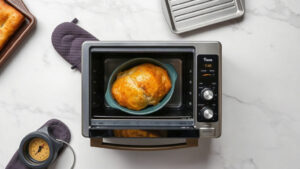
Most of the guidance about aluminum foil applies to basket-style air fryers — the kind where you pull out a drawer with a perforated basket inside. But oven-style air fryers (which look more like a small mini toaster oven with an air fry setting) behave a little differently.
In an oven-style air fryer, food usually sits on a wire rack or a perforated air fryer tray, and there’s often a drip tray below. You can line that drip tray with foil freely — it’s not in the airflow path and it makes cleanup trivially easy. That’s actually the ideal foil use case in these machines.
What you still can’t do in an oven-style air fryer: completely cover the wire rack or perforated tray with foil. Same airflow logic applies. And you need more clearance from the heating element in these models because the element is often closer to the rack. I’d say keep at least 2 inches of clearance in an oven-style unit.
This is also relevant if you’re reheating food in a toaster oven on an air fry setting — a loose sheet of foil on the rack is genuinely risky in those machines because the heating elements are right there.
A Few Practical Rules Worth Actually Remembering
After testing this across several machines, here’s what I’d actually tell a friend:
- Never run the air fryer with foil inside and no food on it. Not even for a minute.
- Keep foil away from the heating element — a minimum 2-inch gap is a reasonable rule of thumb.
- For anything acidic, swap to parchment. The metallic taste is subtle but real, especially with fish.
- If crisping is the goal, no liner is usually best. Foil and parchment both compromise texture to some degree.
- Wrapping food entirely in foil is fine — it’s essentially the same as cooking en papillote. Just make sure there’s airflow around the outside of the packet.
Also worth knowing: the FDA has acknowledged that aluminum can transfer into food during cooking, particularly with acidic or salty foods at high temperatures. It’s a small amount, and the current science doesn’t flag it as a major health concern for most people — but if you’re cooking acidic foods frequently in an air fryer, parchment is just the smarter default. The FDA’s guidance on aluminum cookware is worth a quick read if you want the specifics.
And if you’re not sure how hot your particular model actually runs — most basket air fryers top out at 400°F, but some reach 450°F — it’s worth checking. Understanding how hot these appliances actually get changes how you think about any liner material, foil included.
The Bottom Line
Aluminum foil in an air fryer basket isn’t inherently dangerous — it’s all about how you use it. Keep it small, keep food on top of it, keep it away from the heating element, and don’t expect it to do any favors for crispy foods. For sticky, wrapped, or messy items it genuinely helps. For everything else, perforated parchment or just bare basket is the better call.
The basket-style vs. oven-style distinction matters more than most guides acknowledge. Know which type you have, and the foil rules get a lot more intuitive from there.
Frequently Asked Questions
Can you put aluminum foil in an air fryer basket without it catching fire?
Yes, foil won’t catch fire on its own — aluminum has a melting point of around 1,220°F, far above anything an air fryer reaches. The fire risk comes from foil touching the heating element or being blown into it by the fan, not from the foil itself igniting. Always place food on the foil before turning the machine on.
Does aluminum foil affect cooking time in an air fryer?
It can, slightly. Foil under food blocks the airflow that normally comes up through the basket perforations, which can add 2-4 minutes to cook time and reduce crispiness on the bottom of the food. If you’re wrapping food completely in foil, expect to add a few minutes and check doneness with a thermometer rather than color.
Is it safe to use aluminum foil with acidic foods in an air fryer?
It’s not recommended. Acidic ingredients like tomatoes, citrus juice, and vinegar-based marinades react with aluminum and can cause small amounts of the metal to transfer into food, along with a faint metallic taste. Parchment paper is the better liner for acidic foods.
Can you use foil in the drip tray of an oven-style air fryer?
Yes, lining the drip tray of an oven-style air fryer with foil is one of the safest and most practical uses. The drip tray sits below the cooking rack and outside the main airflow path, so blocking it doesn’t affect cooking. It makes cleanup significantly easier, especially with fatty meats.
What’s better in an air fryer — aluminum foil or parchment paper?
Parchment paper, especially the perforated variety sized for air fryer baskets, is the better all-purpose liner. It doesn’t react with acidic foods, causes less airflow disruption than solid foil, and handles most everyday tasks well. Foil is more useful when you need to wrap food completely or create a rigid structure under something particularly messy.
—
Written by
Emma founded Toastera to turn vague appliance advice into clear, researched, safety-first guidance on toasters and toaster ovens.
Free: the Toaster Oven Cheat Sheet
Get the printable cheat sheet (temps, cook times & safety tips) plus new recipes. No spam, unsubscribe anytime.