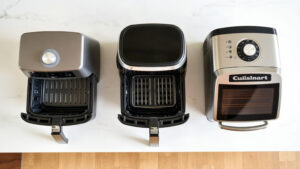
Yes, a convection toaster oven cooks faster than a regular toaster oven — typically 25–30% faster, thanks to a built-in fan that circulates hot air around the food. That moving air strips away the cool, moist layer that sits right next to the food’s surface, which is what slows cooking down in a still-air oven. In practice, that means a tray of roasted vegetables that takes 35 minutes in a standard toaster oven might be done in 24–26 minutes on convection.
Safety First: Toaster ovens run heating elements at temperatures up to 450°F–500°F and their exterior walls can get hot enough to cause serious burns on contact. Always use oven mitts when removing pans, keep the unit at least 4 inches from cabinet walls or anything flammable, and never leave it unattended when cooking fatty foods at high heat — grease can smoke or ignite quickly in a small enclosure.
Quick Facts
- Convection toaster ovens cook roughly 25–30% faster than conventional models at the same temperature setting.
- The standard rule of thumb: drop the temperature by 25°F or reduce cook time by about 20–25% when switching to convection — not both at once.
- Most convection toaster ovens cost $50–$150 more than a comparable standard model; premium models (Breville, Cuisinart) run $200–$350+.
- Convection is best for roasting, baking cookies, and crisping. It’s not ideal for custards, soufflés, or anything you don’t want a dry surface on.
- Air fryer toaster ovens are essentially high-powered convection ovens — same principle, faster fan speed, often a dedicated “air fry” mode.
How Convection Actually Works (And Why the Fan Matters)
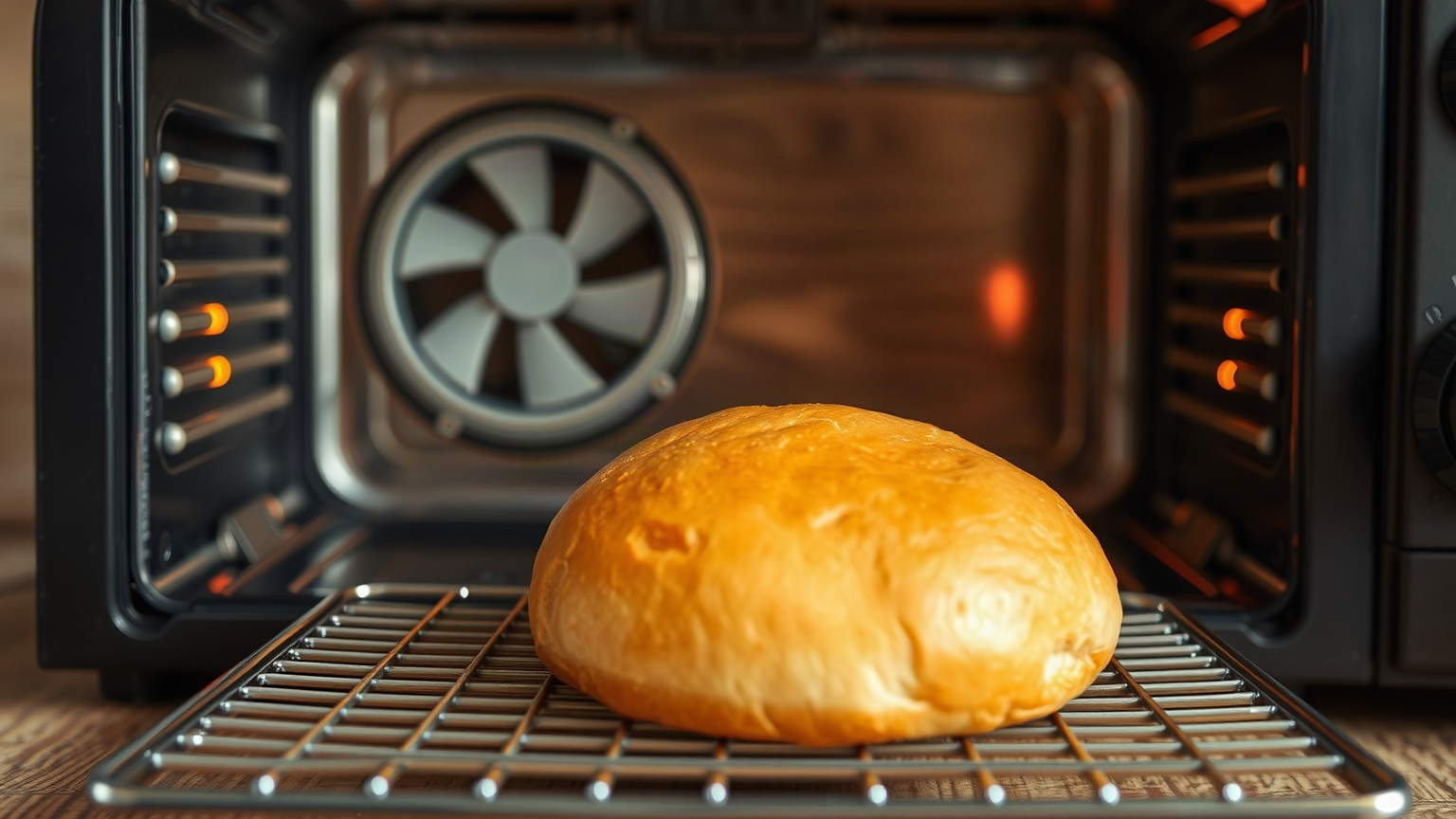
A regular toaster oven heats with radiant elements — usually two on top, two on the bottom — and then just… sits there. The air inside gets hot, but it doesn’t move. So you end up with hot spots near the elements and cooler zones in the middle, and food has to essentially wait for heat to slowly migrate inward.
Convection adds a small fan (usually at the rear of the unit) that keeps pushing that hot air across the food surface continuously. The result is that the thermal boundary layer — the thin film of cooler, steam-dampened air that clings to any food in a still oven — gets constantly disrupted. The food “sees” hotter air more of the time. It browns faster. It crisps up. And it finishes cooking sooner.
That’s not marketing. It’s basic heat transfer physics, and you can feel it immediately. First time I used convection for frozen fries, I pulled them out at the usual time and they were already past done. Lesson learned the hard way.
Actual Speed Comparison: Times and Temperatures
Numbers help here. I’ve run both modes on the same foods more times than I can count, so here’s what I’ve actually seen:
| Food | Regular Toaster Oven | Convection Toaster Oven | Time Saved |
|---|---|---|---|
| Frozen french fries (1 layer) | 22–25 min at 400°F | 16–18 min at 400°F | ~6–7 min |
| Roasted broccoli | 18–20 min at 425°F | 13–15 min at 425°F | ~5 min |
| Chicken thighs (bone-in) | 40–45 min at 375°F | 30–33 min at 375°F | ~10–12 min |
| Chocolate chip cookies (1 tray) | 12–14 min at 350°F | 10–11 min at 325°F | ~3–4 min |
| Frozen pizza (personal size) | 14–16 min at 400°F | 11–13 min at 375°F | ~3–4 min |
| Toasted bread (2 slices) | 4–5 min | 4–5 min | Negligible |
That last row is worth noticing. For plain toast, convection does almost nothing. The radiant heat is what toasts bread, not the air movement. So if toasting bread is 80% of what you’d use a toaster oven for, convection isn’t really buying you much.
Also worth flagging: preheating time is basically the same between the two. You’re still waiting 5–8 minutes to hit 400°F in most compact models. The speed difference only shows up during actual cooking, not during preheat. Some folks miss that distinction.
Foods Convection Helps (And a Few It Doesn’t)
When Convection Wins
Anything you want browned, crispy, or rendered needs convection. Roasted vegetables get caramelized edges instead of steamed-looking ones. Chicken skin actually crisps up instead of staying flabby. Cookies spread more evenly across the pan. Reheated pizza — and I’ll die on this hill — reheats dramatically better on convection than any other method. The crust goes crispy again rather than chewy-soft. For more on that, check out reheating food in a toaster oven properly.
Pork tenderloin, salmon fillets, sheet pan dinners, homemade granola — all love convection.
When Convection Is Actually Worse
This is the edge case almost no one talks about: convection can actively ruin delicate bakes. Custards, bread pudding, cheesecake — all rely on gentle, even, moist heat. Blow a fan on them and you get a cracked top and a rubbery edge. Same thing with a soufflé, though I’d argue making a soufflé in a toaster oven is already a questionable life choice.
Thin items can also over-brown on the outside before the inside is cooked. I’ve dried out more than one piece of fish by forgetting to drop the temp when switching to convection mode. The fix is simple — 25°F lower than the recipe says — but it takes a mental adjustment at first.
Lightweight things like parchment paper or thin aluminum foil can also get blown around by the fan if they’re not held down. I once found a piece of foil folded over onto my cookies mid-cook. Not the end of the world, but annoying.
Specific Models Worth Knowing About
If you’re shopping right now, here’s where I’d point you, depending on what you actually need.
| Model | Convection? | Capacity | Price Tier | Best For |
|---|---|---|---|---|
| Hamilton Beach 31123D | No | 6-slice | Budget (~$50–$70) | Basic toasting and reheating |
| Cuisinart TOA-60 | Yes + Air Fry | 6-slice | Mid-range (~$150–$200) | Everyday cooking, small households |
| Cuisinart TOA-70 | Yes + Air Fry | 8-slice | Mid-range (~$180–$230) | Families, larger sheet pans |
| Breville Smart Oven Air Fryer (BOV900) | Yes (Super/Regular) | 1 cu ft | Premium (~$300–$400) | Serious cooks, frequent use |
| Ninja Foodi XL Pro Air Oven | Yes | Extra-large | Mid-to-premium (~$220–$280) | Large batches, air frying families |
The Breville Smart Oven Air Fryer is genuinely the best toaster oven I’ve used if you cook real food regularly. It has two convection settings — “regular” and “super” — which matters because the fan speed affects how aggressive the air circulation is. The super convection mode is basically an air fryer. It’s not cheap, but it also doesn’t feel like a toaster oven. It feels like a second oven.
The Cuisinart TOA-70 is what I’d recommend to most people. It’s large enough to cook real meals, it has an air fry mode, and it doesn’t cost nearly as much as the Breville. The controls are a little clunky — physical dials rather than a digital interface — but honestly that makes it faster to operate day-to-day.
The Hamilton Beach is fine if you just want toast and to occasionally reheat pizza. Don’t spend extra on convection if that’s the use case. For small-kitchen options, there’s also a solid roundup of best mini toaster ovens that covers compact convection picks.
My honest verdict: if you cook at all — not just toast, but actual food — pay the extra for convection. The Cuisinart TOA-70 is where I’d start. If you’re a frequent cook who uses your toaster oven as a primary oven, go Breville and don’t look back.
Is the Price Difference Actually Worth It?
Honestly? For most people, yes. But only if you cook with it.
A no-frills convection toaster oven starts around $80–$100. A comparable regular toaster oven might be $50–$60. That’s maybe a $30–$50 gap at the low end, which is nothing if you use it three times a week. At the mid-range (Cuisinart-level), you’re paying an extra $60–$100 for convection plus air fry functionality. At the premium end, the Breville costs what it costs and you either want that level of precision or you don’t.
What actually determines whether it’s worth it is frequency of use and what you’re cooking. Using it to toast English muffins every morning? The cheap regular oven is fine. Using it to roast chicken thighs, reheat leftovers properly, bake cookies on a weeknight? Convection will make your food noticeably better and faster, and that adds up. Serious Eats has written extensively on how air circulation affects roasting results, and the data there aligns with everything I’ve seen in practice.
One thing nobody mentions: convection can also lower your electricity use slightly, because the shorter cook times mean the heating elements run for less total time. It’s not huge, but it’s not nothing over months of regular use.
You’ll also want a good toaster oven baking pan that fits your specific unit — most come with a mediocre tray and convection really rewards a proper, low-sided pan that lets air circulate underneath the food.
The Verdict
Convection toaster ovens do cook faster — consistently and meaningfully, not just technically. That 25–30% reduction in cook time is real, and so is the improvement in browning and crispiness. The tradeoff is a slightly higher price, one adjustment to your mental temperature model, and the occasional oversight with delicate recipes.
If you’re buying a toaster oven and you do any real cooking in it, spend the extra for convection. The Cuisinart TOA-70 is where I’d start for most households — solid capacity, air fry included, and a price that doesn’t require justification. If budget is tighter and you mostly reheat and toast, a standard model is fine and there’s no shame in that. And if you want to understand how the heating element side of things compares, it’s worth reading about how hot a toaster gets in different modes.
But for roasted vegetables, crispy chicken, and reheated pizza that actually tastes good? Convection. Every time.
Frequently Asked Questions
Does convection toaster oven cook faster than regular toaster oven?
Yes — convection toaster ovens cook approximately 25–30% faster than regular models at the same temperature, because the built-in fan continuously circulates hot air across the food’s surface. This reduces the insulating layer of cool air around the food, so heat transfers more efficiently. The difference is most noticeable with roasted meats and vegetables; for plain toast, the speed difference is negligible.
Do I need to adjust cooking times for a convection toaster oven?
What is the best convection toaster oven to buy?
The Breville Smart Oven Air Fryer (BOV900) is the best convection toaster oven for frequent cooks who want precise, consistent results — it has two fan speed settings and behaves like a real second oven. For most households, the Cuisinart TOA-70 is the better value: it’s large, includes an air fry mode, and costs significantly less. The right choice depends on how often you cook real meals versus just reheating things.
Is a convection toaster oven the same as an air fryer?
Functionally, yes — an air fryer is essentially a compact convection oven with a faster fan speed and a basket designed for airflow underneath the food. Many toaster ovens now include a dedicated air fry mode, which ramps the fan up to air fryer-level intensity. The main difference is that a standalone air fryer is typically smaller and heats up slightly faster, while a convection toaster oven offers more versatile cooking modes.
What foods should not be cooked in convection mode?
Custards, cheesecakes, soufflés, and bread pudding don’t do well in convection — the fan creates uneven surface drying that can crack or toughen these dishes. Delicate single-layer cakes can also over-brown on top before the center sets. For anything that relies on gentle, even, moist heat, switch to the standard (non-fan) mode.
Yes, and it’s one of the most common mistakes people make switching to convection. The standard adjustment is to either reduce the temperature by 25°F and keep the time the same, or keep the temperature and reduce cook time by about 20–25% — but not both at once. I’d recommend adjusting the time first and checking early, especially the first few times you cook a new recipe.

Written by
Emma founded Toastera to turn vague appliance advice into clear, researched, safety-first guidance on toasters and toaster ovens.
Free: the Toaster Oven Cheat Sheet
Get the printable cheat sheet (temps, cook times & safety tips) plus new recipes. No spam, unsubscribe anytime.