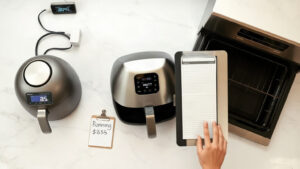
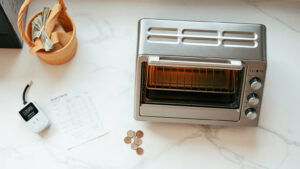
A standard 2-slice toaster draws between 6 and 10 amps at 120 volts, typically pulling around 800–1,200 watts during operation. On a 15-amp circuit, that’s well within the rated 1,800-watt capacity — but that number changes fast if you’re running other appliances on the same circuit. Toaster ovens are a different story entirely, and that’s where people get into trouble.
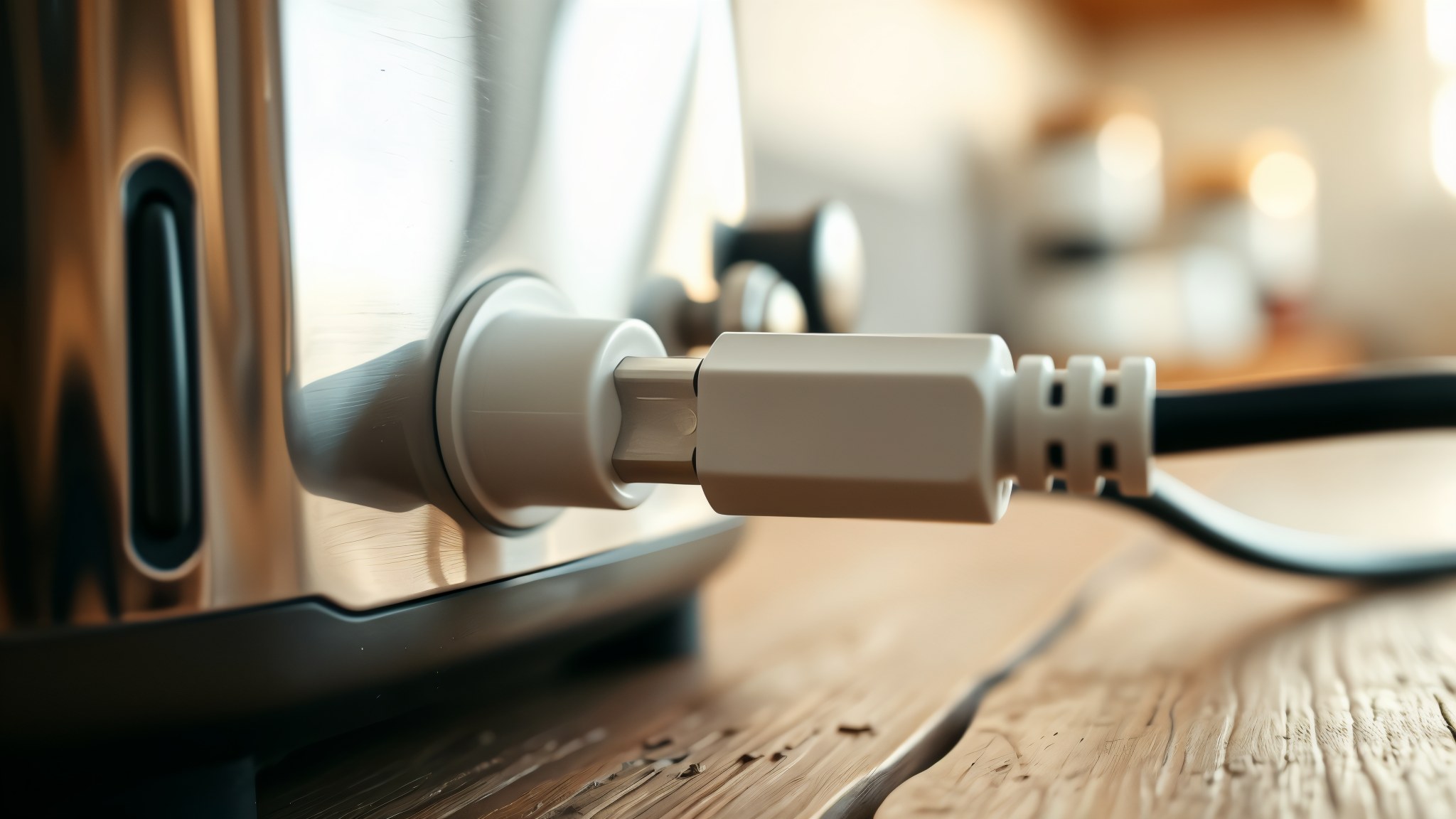
Safety First: Never run a toaster or toaster oven on an extension cord or power strip — these appliances draw sustained high amperage that can overheat undersized wiring and cause a fire. Always plug directly into a grounded wall outlet, and never leave a toaster oven unattended on a circuit shared with other high-draw appliances like a microwave or coffee maker.
Quick Facts: Toaster Amp Draw at a Glance
- A 2-slice pop-up toaster typically uses 800–1,200 watts, drawing 6.7–10 amps on a 120V circuit
- A 4-slice toaster usually runs 1,400–1,800 watts — that’s up to 15 amps, right at the circuit limit
- A toaster oven draws 8–15 amps depending on wattage (1,000–1,800W is the typical range)
- A 15-amp circuit is code-rated for a continuous load of 1,440 watts (80% of 1,800W) — not the full 1,800W
- Running a toaster and a coffee maker together on one 15-amp circuit is asking for a tripped breaker
The Basic Math: Watts, Volts, and Amps
The formula is simple: Amps = Watts ÷ Volts. In a standard U.S. home, your outlet runs at 120 volts. So a 1,200-watt toaster draws exactly 10 amps. A 1,800-watt toaster oven draws 15 amps. That’s literally the ceiling of a 15-amp circuit — and that’s before anything else is plugged in.
Here’s what tripped me up the first time I actually thought about this: the 15-amp rating on a circuit breaker is the maximum, not a safe sustained operating point. The National Electrical Code (NEC) requires that continuous loads — anything running longer than three hours — not exceed 80% of circuit capacity. For a 15-amp circuit, that’s 1,440 watts. A lot of toaster ovens at full power blow right past that.
Short-duration use (like a 2-minute toast cycle) is a different situation. Pop-up toasters are almost always fine on a 15-amp circuit because they’re done in under five minutes. Toaster ovens used for baking or roasting for 30–60 minutes? That’s a continuous load, and you should pay attention to what else is sharing that circuit.
Pop-Up Toasters vs. Toaster Ovens: Very Different Animals
Pop-Up Toasters
Most 2-slice toasters sit in the 800–1,200 watt range. My current daily driver is a Cuisinart 2-slice that pulls about 900 watts — I’ve measured it with a plug-in power meter and confirmed it peaks at around 7.5 amps. That’s totally manageable on a 15-amp circuit, even with a coffee maker running at the same time (most drip coffee makers pull 5–8 amps during heating). Still cutting it closer than I’d like, but it rarely trips anything.
4-slice toasters are where you start to sweat a little. Models like the Breville Die-Cast 4-Slice can hit 1,800 watts. That’s 15 amps — the full circuit capacity — for the duration of the toast cycle. Fine by itself. Dangerous if you also flip on the kettle.
Toaster Ovens
Toaster ovens span a much wider range: compact models start around 1,000 watts (8.3 amps), mid-size ones run 1,200–1,500 watts, and full-size countertop convection models like the Breville Smart Oven Pro or the Cuisinart Chef’s Convection can hit 1,800 watts — a full 15 amps.
The thing people miss with toaster ovens is that they cycle on and off to maintain temperature. So while you won’t constantly pull 15 amps for 45 minutes straight, you’ll spike to peak draw every time the heating element kicks back on. If you’re reheating food in a toaster oven at 350°F for 20 minutes, that cycling is continuous enough that you should treat it as a sustained high draw.
| Appliance Type | Typical Wattage | Amp Draw (120V) | Safe on 15A Circuit? |
|---|---|---|---|
| 2-Slice Pop-Up Toaster | 800–1,200W | 6.7–10A | Yes (alone or with low-draw items) |
| 4-Slice Pop-Up Toaster | 1,400–1,800W | 11.7–15A | Yes, but don’t add other appliances |
| Compact Toaster Oven | 1,000–1,200W | 8.3–10A | Yes, with caution |
| Mid-Size Toaster Oven | 1,200–1,500W | 10–12.5A | Yes, but keep circuit clear |
| Full-Size Toaster Oven | 1,500–1,800W | 12.5–15A | Ideally on a dedicated circuit |
| Microwave (mid-size) | 1,200–1,500W | 10–12.5A | Needs a dedicated circuit |
What Actually Happens on a 15-Amp Circuit
I’ve tripped the kitchen breaker exactly twice in this house. Both times, it was the toaster oven plus something else — once with a coffee maker, once when I forgot the slow cooker was running on the same wall. The breaker did its job. But it’s annoying, and if it happens repeatedly, that’s wear on the breaker over time.
The 80% rule matters here. A 15-amp, 120-volt circuit handles a maximum of 1,800 watts total — but for continuous loads, the NEC’s 80% guideline puts the practical limit at 1,440 watts. So if your toaster oven is pulling 1,500 watts and your coffee maker adds another 700 watts during its heating phase, you’ve got 2,200 watts on a circuit rated for 1,800. Breaker trips. No mystery there.
What about 20-amp circuits? Some kitchens — especially newer construction or renovated ones — have 20-amp circuits with the distinctive T-shaped neutral slot. Those handle 2,400 watts total, or 1,920 watts at the 80% continuous threshold. That’s a meaningful improvement if you’re running a high-wattage toaster oven. If your kitchen has a dedicated circuit for the countertop appliance area, that’s the right outlet to use for your 1,800-watt toaster oven. Check with your local electrical code resources if you’re ever unsure about your home’s setup.
The RV and Small Space Edge Case
This is one scenario most amp-draw guides skip entirely. If you’re using a toaster or toaster oven in an RV, a camper, or a tiny home with a 30-amp shore power hookup, the math changes. A 30-amp RV system runs at 120 volts, giving you 3,600 watts total — but that entire power budget has to cover your air conditioner, water heater, refrigerator, and everything else. An 1,800-watt toaster oven can eat half your available power on its own. Many full-timers specifically buy compact, lower-wattage toaster ovens (1,000W or under) just to avoid this. I’d steer toward something in the best mini toaster ovens category if you’re working with limited power.
Similarly, if you’re using a generator — say during a power outage — check the running wattage, not just the surge rating. A 2,000-watt portable generator cannot run an 1,800-watt toaster oven and anything else simultaneously. People learn this the hard way.
How to Find Your Toaster’s Actual Amp Draw
The spec label is on the bottom of every toaster or toaster oven — it’ll say something like “120V ~ 60Hz 1500W.” Divide the wattage by 120 and you’ve got your amp draw. A 1,500W toaster oven draws 12.5 amps. Done.
If you want to measure actual draw rather than rated wattage (which can differ), a Kill A Watt P3 electricity monitor costs about $25 and plugs between your outlet and the appliance. It shows real-time wattage and cumulative energy use. I use one regularly — the numbers are often a bit lower than the rated wattage because the element cycling means it’s not always at full draw.
One thing I’ve noticed: toaster ovens in preheat mode often pull their maximum rated wattage. Once they hit the set temperature and start cycling, actual average consumption drops noticeably. So the “worst case” amp draw is usually during the first few minutes of preheating. That’s worth knowing if you’re worried about a borderline circuit situation. For more on how those heating elements behave, see how hot a toaster gets — the temperature cycling and the amp draw are directly related.
Practical Tips for Safe Toaster Use on a 15-Amp Circuit
- Run your toaster or toaster oven alone on its circuit whenever possible — check which outlets share a breaker by flipping one and seeing what goes dark
- Never daisy-chain a toaster oven through a power strip, even a “heavy duty” one — most strips aren’t rated for sustained 15-amp loads
- If your breaker trips repeatedly, don’t just reset it and move on — figure out what’s sharing that circuit
- For toaster ovens over 1,500 watts, seriously consider asking an electrician about adding a dedicated 20-amp circuit — it’s not that expensive and solves the problem permanently
- In an RV or generator setup, stick to toaster ovens under 1,200 watts, or use a regular pop-up toaster instead
The Bottom Line
A standard pop-up toaster is basically a non-issue on a 15-amp circuit. 800 to 1,200 watts, short run time, no drama. A full-size toaster oven at 1,800 watts is a different situation — it’s sitting right at the ceiling of a 15-amp circuit, and the second you add a coffee maker or microwave to the mix, you’re over the limit.
The fix is simple: know what’s on your circuit, use the appliance alone when it’s running at high wattage, and if you’re constantly tripping breakers, get a dedicated circuit installed. For most people with a mid-size toaster oven and a bit of awareness about what else is plugged in, a 15-amp circuit works just fine. You don’t need to rewire your kitchen. You just need to not run the toaster, the coffee maker, and the microwave all at once — which, honestly, isn’t a bad idea regardless.
Frequently Asked Questions
How many amps does a toaster use on a 15-amp circuit?
A standard 2-slice toaster draws 6.7 to 10 amps at 120 volts (800–1,200 watts), which is well within the 15-amp limit. A 4-slice toaster can push up to 15 amps at full wattage, so it should run alone on that circuit. The key issue isn’t the toaster itself — it’s what else is sharing the circuit at the same time.
Can I run a toaster oven on a 15-amp circuit?
Yes, but it depends on the wattage. A compact 1,000–1,200 watt toaster oven draws 8.3–10 amps and works fine on a 15-amp circuit as long as you’re not running other high-draw appliances on the same breaker. A full-size 1,800-watt model draws the full 15 amps, so it really should be the only thing running on that circuit — or ideally on its own dedicated 20-amp circuit.
What happens if a toaster draws too many amps?
The circuit breaker trips, cutting power to that circuit. That’s the breaker doing exactly what it’s supposed to do — protecting the wiring from overheating. If it trips repeatedly under the same conditions, you’ve got a sustained overload situation that needs to be addressed by redistributing appliances across circuits, not by resetting the breaker and hoping for the best.
Does a toaster oven need a dedicated circuit?
It’s not always required by code, but it’s strongly recommended for any toaster oven rated at 1,500 watts or higher. The NEC doesn’t mandate a dedicated circuit for portable countertop appliances the way it does for built-in ranges, but running a high-wattage toaster oven on a shared kitchen circuit is a reliable way to trip breakers. If you use your toaster oven heavily, a dedicated 20-amp circuit is worth the investment.
How many watts can a 15-amp circuit handle continuously?
Technically, a 15-amp circuit at 120 volts has a maximum capacity of 1,800 watts. However, the NEC’s 80% rule means continuous loads — anything running for more than three hours — should not exceed 1,440 watts on a 15-amp circuit. For a toaster oven running a long bake cycle, treat 1,440 watts as your practical ceiling to stay within safe limits.

Written by
Emma founded Toastera to turn vague appliance advice into clear, researched, safety-first guidance on toasters and toaster ovens.
Free: the Toaster Oven Cheat Sheet
Get the printable cheat sheet (temps, cook times & safety tips) plus new recipes. No spam, unsubscribe anytime.