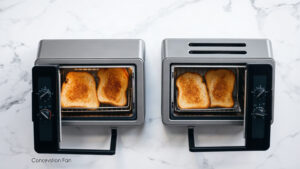
Running a toaster oven costs between $2 and $16 per month, depending on the wattage of the unit and how often you use it. A typical 1,200-watt toaster oven running for 30 minutes a day at the U.S. average electricity rate of $0.16 per kWh works out to roughly $3 to $5 per month. That’s a fraction of what a full-size oven costs to operate, which makes toaster ovens one of the more economical kitchen appliances you can own.
Safety First: Toaster ovens draw significant electrical current and generate intense heat. Never plug a toaster oven into an extension cord or power strip — always use a grounded wall outlet rated for the appliance’s wattage. Keep the unit at least 4 inches away from walls, cabinets, and curtains. Never leave it unattended while in use, and always unplug it when not in use to reduce fire risk from faulty heating elements or residual heat.
Key Takeaways
- Most toaster ovens cost $2–$16 per month to run, depending on wattage and usage frequency.
- A 1,200-watt toaster oven used 30 minutes daily costs roughly $3.50/month at the U.S. average electricity rate.
- Toaster ovens use 50–75% less energy than a conventional oven for small meals and reheating tasks.
- Higher-wattage convection models (1,800W+) can cost up to $16/month if used heavily.
- You can meaningfully reduce running costs by using convection mode, preheating less, and keeping the interior clean.
The Real Math: How to Calculate Your Toaster Oven’s Monthly Cost
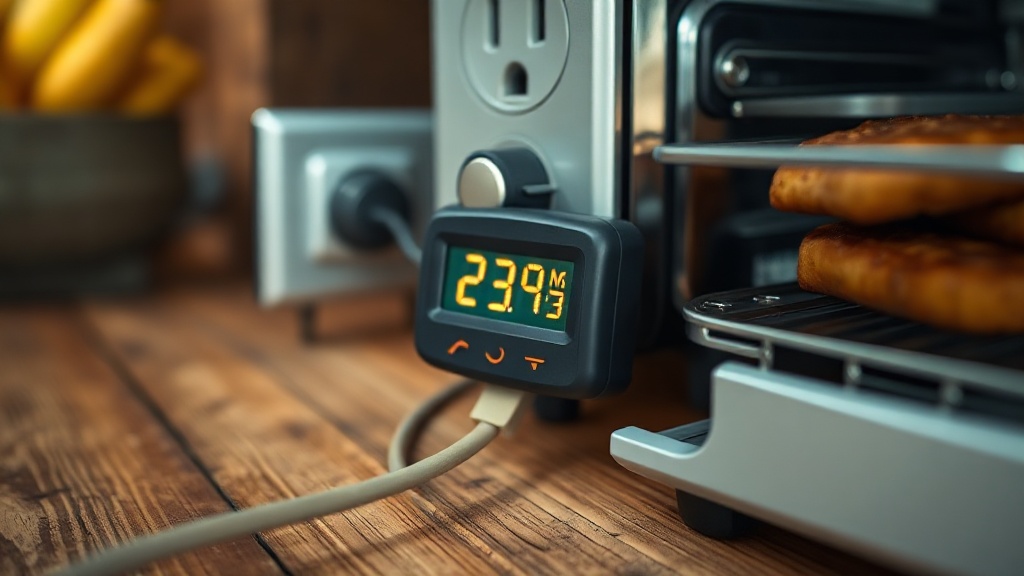
The formula is simple. Take your toaster oven’s wattage, divide by 1,000 to get kilowatts, multiply by hours used per day, then multiply by your electricity rate (in kWh) and by 30 days. It looks like this:
(Watts ÷ 1,000) × Hours Per Day × kWh Rate × 30 = Monthly Cost
So a 1,500-watt toaster oven running 45 minutes a day at $0.16/kWh would cost: (1,500 ÷ 1,000) × 0.75 × 0.16 × 30 = $5.40/month. That’s not a lot. But if you’ve got one of those big countertop convection units cranked to 1,800 watts and you’re using it twice a day? You’re looking at closer to $13–$16/month. Still manageable, but worth knowing.
Your local electricity rate matters a lot here. The U.S. average hovers around $0.16/kWh, but states like California and Hawaii can hit $0.28–$0.40/kWh. If you live in a high-rate state, double those numbers and they still hold up better than a full oven — but they’re not trivial anymore.
Toaster Oven Wattage vs. Monthly Cost: A Comparison
Not all toaster ovens are built the same. A compact two-slice unit sits at around 700–900 watts. A mid-size 4-slice model usually lands at 1,200–1,500 watts. And the big countertop convection ovens — the ones that can roast a whole chicken — pull 1,500–1,800 watts. Here’s how those numbers translate to real monthly costs at typical usage (30 minutes/day) and the U.S. average rate of $0.16/kWh:
| Toaster Oven Type | Wattage | Daily Use (30 min) | Monthly Cost ($0.16/kWh) |
|---|---|---|---|
| Compact 2-slice | 700W | 0.35 kWh | ~$1.68 |
| Standard 4-slice | 1,200W | 0.60 kWh | ~$2.88 |
| Mid-size convection | 1,500W | 0.75 kWh | ~$3.60 |
| Large countertop oven | 1,800W | 0.90 kWh | ~$4.32 |
| Large oven (1hr/day heavy use) | 1,800W | 1.80 kWh | ~$8.64 |
| Full-size conventional oven | 2,400W+ | 1.20 kWh | ~$5.76+ |
And yes — that last row is there on purpose. A standard electric oven can actually cost more per month than a heavy-use toaster oven, especially since a full oven takes much longer to heat up and loses more heat through its larger cavity. For most everyday cooking tasks, a toaster oven wins on efficiency every time. Check out our picks for the best mini toaster ovens if you want a compact, lower-wattage option that keeps running costs down.
Toaster Oven vs. Regular Oven: Which Costs More to Run?
A conventional electric oven typically runs at 2,000–5,000 watts, and that’s before factoring in preheating. Preheating a full oven to 375°F takes about 15 minutes and uses roughly 0.5–0.8 kWh before you’ve cooked a single thing. A toaster oven hits temperature in 5 minutes or less and has a much smaller space to heat. That’s a real difference.
The U.S. Department of Energy confirms that toaster ovens use roughly one-third to one-half the energy of a full-size oven for comparable cooking tasks. That matters if you’re cooking solo meals, reheating leftovers, or making toast. You wouldn’t fire up a full oven to reheat food in a toaster oven-sized portions — so why not just use the toaster oven?
Gas ovens complicate the comparison a bit, since gas rates vary wildly. But in most U.S. markets, a toaster oven still wins or ties on operating cost for tasks under 45 minutes. Beyond that, the math gets murkier.
What Actually Drives Your Monthly Toaster Oven Bill
How Long You Use It Each Day
This is the biggest lever. Someone who toasts bread in the morning (6–8 minutes) and reheats dinner once (15–20 minutes) is using their toaster oven maybe 25 minutes a day total. That’s a very different bill than someone who bakes cookies, roasts vegetables, and makes pizza — pulling 60–90 minutes of daily use. The math scales linearly. Double the use time, double the cost.
Your Electricity Rate
If you pay $0.12/kWh (common in the Southeast U.S.), your costs are noticeably lower than someone in Massachusetts paying $0.28/kWh. Check your electricity bill — the rate per kWh is right there on the statement. Plug your actual number into the formula above and you’ll get a much more accurate monthly estimate than any generic calculator.
Whether You Use Convection Mode
Convection mode circulates hot air with a fan, which cooks food faster — usually 25% quicker than conventional heat. That’s counterintuitive, but convection mode can actually lower your total energy use because cook time drops. A 20-minute bake at 375°F in convection might get done in 15 minutes. And those 5 saved minutes add up.
Appliance Age and Condition
Older toaster ovens with degraded heating elements work harder to maintain temperature, which pulls more power over time. A dirty oven with baked-on grease also loses efficiency — the heating elements have to fight through residue. Keeping your unit clean and well-maintained isn’t just about hygiene. It actually affects how efficiently it runs. A good toaster oven cleaning kit can help maintain peak efficiency and keep the interior in good shape.
Tips to Lower Your Toaster Oven’s Running Costs
You won’t cut your bill to zero, but a few habits can shave real dollars off each month. These aren’t tricks — they’re just smart practices that happen to save energy.
- Use convection mode when possible. It reduces cook time, which reduces total energy draw. Most recipes adapt easily — just drop temperature by 25°F and check for doneness a few minutes early.
- Don’t preheat longer than needed. Most toaster ovens reach target temperature in 4–6 minutes. There’s no benefit to running it empty for 15 minutes.
- Batch your cooking. If you’re already running the oven for pizza, throw in a tray of vegetables at the same time. You’re paying for that heat anyway — use it.
- Keep the door closed. Every time you open it, heat escapes and the element has to work harder to recover. Use the light and window to check on food instead.
- Use the right cookware. Dark metal pans absorb heat more efficiently than light-colored pans, meaning your food cooks faster. A well-fitted toaster oven baking pan also maximizes airflow and reduces cook time compared to oversized pans that crowd the interior.
- Unplug when not in use. Some toaster ovens draw a small standby current even when off. It’s minimal — usually under 1 watt — but over a year it adds up slightly.
For a deeper look at how your toaster oven’s heating elements compare to other appliances, check out our article on how hot a toaster gets — the temperature dynamics are surprisingly relevant to understanding energy use.
Is a Toaster Oven Worth the Monthly Cost?
At $2–$8/month for most households, the answer is almost always yes. A toaster oven replaces or reduces your use of a full-size oven, which costs significantly more to run per session. It handles an impressive range of cooking tasks — from toast and bagels to roasted chicken thighs and baked cookies. And it does all of it in less time, with less preheating, and with less wasted heat dumped into your kitchen (which matters in summer when your AC has to compensate).
The cost of running a toaster oven is genuinely one of the least compelling reasons not to own one. Even at California electricity rates, a mid-size toaster oven used daily costs less per month than a couple of cups of coffee. The more relevant question isn’t whether you can afford to run one — it’s whether you’re getting the most out of it. Batch cook. Use convection. Match your cookware to the task. And you’ll get excellent results at a monthly cost that barely registers on your electricity bill.
Frequently Asked Questions
How much electricity does a toaster oven use per hour?
A typical 1,200-watt toaster oven uses 1.2 kWh per hour of continuous operation. At the U.S. average rate of $0.16/kWh, that’s about $0.19 per hour. Most people use their toaster oven for 20–45 minutes per session, so the actual per-session cost is usually $0.06–$0.14.
Does a toaster oven use more electricity than a microwave?
Yes — a toaster oven typically uses more electricity than a microwave for the same task. Microwaves run at 600–1,200 watts but cook food much faster, so total energy per task is often lower. A toaster oven wins on food quality (browning, crisping) but costs slightly more per use than a microwave for quick reheating jobs.
How much does it cost to run a toaster oven every day?
Running a 1,200-watt toaster oven for 30 minutes daily costs approximately $0.10–$0.14 per day at average U.S. electricity rates. That adds up to roughly $3–$4 per month. Heavy daily use (60+ minutes) on a 1,500–1,800 watt unit can push daily costs to $0.25–$0.35.
Is it cheaper to use a toaster oven or a full-size oven?
A toaster oven is cheaper for most everyday cooking tasks — typically 50–75% less expensive to operate than a full-size electric oven for meals that take under an hour. The savings come from lower wattage, faster preheating, and a smaller cavity that holds heat more efficiently. For large roasts or full sheet pans of food, the full oven may be the better tool regardless of cost.
Does leaving a toaster oven plugged in use electricity?
A toaster oven in standby mode draws very little power — typically less than 1 watt — so the cost of leaving it plugged in is negligible (under $0.50/year for most units). That said, unplugging it when not in use is still a good safety habit, since faulty heating elements or internal components can occasionally cause issues even when the unit is “off.”
The Bottom Line
Running a toaster oven costs most households somewhere between $2 and $8 per month under normal use. High-wattage units used heavily can push toward $12–$16/month, but that’s still competitive with — or cheaper than — a full-size oven doing the same work. The exact number depends on your unit’s wattage, how long you run it each day, and what you pay for electricity in your area.
Use the formula. Check your electricity bill for your rate. Plug in your numbers. And if you’re shopping for a new unit and want to keep costs low, look for a compact or mid-size model in the 1,000–1,500 watt range with convection — you’ll get great cooking performance without the higher energy draw of the big countertop units. A well-chosen toaster oven wire rack can also help you maximize cooking efficiency by improving air circulation around your food, cutting cook times slightly. Small details, real savings.

Written by
Emma founded Toastera to turn vague appliance advice into clear, researched, safety-first guidance on toasters and toaster ovens.
Free: the Toaster Oven Cheat Sheet
Get the printable cheat sheet (temps, cook times & safety tips) plus new recipes. No spam, unsubscribe anytime.