To toast bread evenly in a 4-slice toaster, use the middle browning setting, let the toaster preheat for one cycle before your actual toast, and rotate the bread slices to different slots if one side of the appliance runs hotter. A 4-slice toaster’s heating elements typically reach between 300°F and 500°F depending on the browning level selected — and uneven heat distribution between slots is one of the most common reasons you end up with pale patches. Understanding how your specific toaster behaves takes about five minutes and saves every piece of toast after that.
Safety First: Never leave a toaster unattended while in use, and always keep it at least 4 inches from walls, curtains, or paper towels. Crumbs accumulate in the tray and around the heating elements — a full crumb tray is a fire hazard. Unplug the toaster before cleaning, shaking out crumbs, or inspecting slots. Never insert metal utensils into the slots, even when the toaster is off and unplugged.
Key Takeaways
- 4-slice toasters heat unevenly by design — the outer slots often get less radiant heat than the inner ones.
- Running one empty “warm-up” cycle before your first real toast dramatically improves browning consistency.
- Bread thickness, moisture content, and slot position all affect how evenly your toast comes out.
- Most even-browning issues are fixable without buying a new toaster — it just takes a few small adjustments.
- Cleaning your crumb tray weekly keeps heating elements working at full efficiency.
Pale on one side. Burnt in the middle. One perfect slice, one disaster. If you’ve been fighting your 4-slice toaster every morning, you’re not imagining things — the problem is real, and it’s fixable. This guide covers exactly why uneven toasting happens and what you can actually do about it before your next breakfast.
Why 4-Slice Toasters Toast Unevenly in the First Place
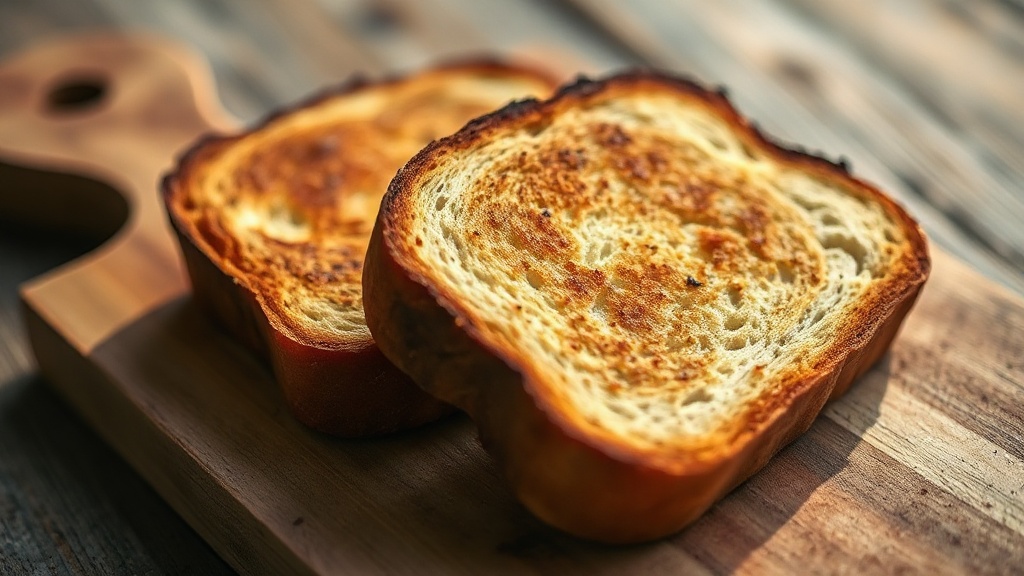
Here’s something the box doesn’t tell you: most 4-slice toasters share heating elements between slots. The two inner slots are typically separated by a shared element, while the outer slots each have their own wall element on one side and share the inner element on the other. That means the inner slots often get more radiant heat overall. And if one element is even slightly less efficient than the others — from age, crumb buildup, or manufacturing variation — you’ll see the results immediately on your bread.
On top of that, a cold toaster toasts differently than a warm one. The first batch of the morning almost always comes out lighter than the second, because the elements haven’t fully expanded and reached operating temperature yet. This is physics, not a defect.
Bread itself is also part of the equation. Bread with high moisture content (fresh-baked, artisan loaves, or anything stored in a humid environment) takes longer to brown. Dense bread like sourdough or rye toasts differently than a thin sandwich slice. And slightly frozen bread — pulled from the freezer — behaves completely differently from room-temperature bread. Most toasters have a “frozen” setting for exactly this reason.
The Shared Element Problem
In a typical 4-slot toaster, there are three heating elements: one on the far left outer wall, one shared between slots 1 and 2, one shared between slots 3 and 4, and one on the far right outer wall. Wait — that’s four. But many budget models cut it down to three by making the center element do double duty. This is why the middle two slots frequently outperform the outer two.
You can learn about how hot a toaster gets and why temperature variation across elements matters so much for getting consistent browning. It’s genuinely useful context.
The Warm-Up Cycle Trick (And Why It Works)
The single most effective thing you can do for more even toast is run one empty toasting cycle before you put your bread in. Set the browning dial to medium, press the lever down with nothing in the slots, and let it run a full cycle. This brings the elements to operating temperature so that when your actual bread goes in, it gets consistent heat from the very first second.
It sounds fussy. But it takes 90 seconds and it works. Serious Eats has written about the science of perfect toast, and preheating is consistently one of the biggest variables in getting a uniform result.
If running an empty cycle feels wasteful, just toast your second batch first — it’ll come out better, and by the time you make the “real” breakfast toast, the toaster is already warm. Either way, you’re working with the physics rather than against them.
Slot Rotation: The Move Nobody Talks About
If you always put the same bread in the same slot, you’ll always get the same uneven result. Rotating which slots you use is one of those small habits that actually changes things.
For a 4-slice toaster, try this pattern: on the first cycle, put your bread in slots 1 and 3 (or 2 and 4). On the next use, switch to the opposite pair. Over time, you even out the wear on the elements too, which helps them last longer and perform more consistently.
If you’re toasting just two slices in a 4-slot toaster, always use the middle two slots. The inner elements are almost always hotter and more reliable, and positioning the bread centrally between them gives you the most exposure to radiant heat on both faces of the slice.
What to Do If One Slot Is Noticeably Weaker
Run a simple test. Toast four identical slices of white sandwich bread at the medium setting, one per slot, all at the same time. When they pop up, lay them out in order and compare. If one slot consistently produces a lighter result, label it with a piece of tape on the outside of the toaster. Now you know to set that slot’s browning dial slightly higher, or to swap the bread around at the halfway point.
You can’t toast halfway through a cycle in most 4-slot models — but you can pop the lever up manually, flip or rotate the bread, and push it down again. It adds maybe 30 seconds and fixes the problem.
Browning Settings, Bread Types, and Getting the Dial Right
Most toasters use a dial numbered 1–7 or a light-to-dark range. Medium is usually around 3–4 on a 7-point scale. But “medium” on your toaster and “medium” on someone else’s toaster are not the same thing — these are relative scales tied to the specific wattage and element configuration of each appliance.
Here’s a quick reference for common bread types and where to start:
| Bread Type | Recommended Setting (1–7 scale) | Notes |
|---|---|---|
| Thin white sandwich bread | 3 | Browns fast; watch for burning |
| Whole wheat or multigrain | 3–4 | Denser; slightly more time needed |
| Sourdough (thick slices) | 4–5 | High moisture; needs longer cycle |
| Rye or pumpernickel | 4–5 | Dark to start; hard to judge color |
| Frozen bread | 4–5 (use frozen setting) | Use the defrost/frozen button if available |
| Bagels or English muffins | 4 | Use bagel setting to toast cut side only |
And if your toaster doesn’t have a bagel setting, you can manually flip the bagel in the slot so the cut side faces the element directly. Not elegant, but it works.
Bread Thickness and Slot Fit
Thick-cut artisan bread that barely fits in the slot is going to toast unevenly because it’s pressing against one element and pulling away from the other. If your toaster has wide slots (most modern 4-slice toasters with wide slots accommodate up to 1.5-inch slices), you’ll get more clearance and more even browning. But even then, try to center the bread in the slot manually when you lower the lever.
Keeping Your Toaster Clean for Consistent Results
A dirty toaster isn’t just a fire risk — it’s a performance problem. Crumbs that accumulate under the elements act as insulation and can create hot spots or uneven heat distribution. If your toast has been getting worse over time and you haven’t cleaned the appliance in months, that’s almost certainly the cause.
Pull out the crumb tray once a week, shake it over the sink, and wipe it down. Every month or so, unplug the toaster, hold it over the sink, and gently shake it upside down to dislodge anything stuck to the element area. Don’t rinse it with water. Don’t use a wet cloth near the heating elements. A dry pastry brush works great for loosening stubborn crumbs inside the slots.
Clean elements = consistent heat. It’s that simple. And if you want a toaster cleaning brush set designed specifically for this job, they’re inexpensive and worth keeping in the drawer next to your toaster.
The Food Network has a solid rundown on how to clean a toaster safely that’s worth reading if you’ve never done it properly before.
When the Toaster Itself Is the Problem
Sometimes you do everything right and the toast is still uneven. If your toaster is more than five years old and the problem has gradually gotten worse, a failing element is likely to blame. Elements degrade over time — they develop resistance variations that cause hot and cold spots, and there’s no user fix for that.
But before you replace it, consider whether a toaster oven might serve you better. A good toaster oven gives you far more control over browning — you can set an actual temperature, use the broil setting for targeted top-down heat, and toast much more evenly across larger batches. If you do a lot of cooking beyond just bread, check out our list of the best mini toaster ovens for a sense of what’s out there at every price point.
And if you’re reheating leftovers in addition to toasting bread, a toaster oven is genuinely better for that too — here’s more on reheating food in a toaster oven so it comes out right.
The Bottom Line on Even Toast
Getting evenly toasted bread from a 4-slice toaster isn’t complicated, but it does require paying attention to a few things at once: your toaster’s hot slots, the warm-up cycle, the right setting for your bread type, and keeping the crumb tray clean. None of it takes much effort once it’s part of your routine.
Run that warm-up cycle. Use the middle slots when you’re only toasting two. Clean the tray weekly. If your toaster is old and struggling, trust your instincts — it might just be time for a replacement. But try these fixes first. You might be surprised how much better your current toaster can actually perform.
Frequently Asked Questions
How hot does a toaster get inside the slots?
A toaster’s heating elements typically reach between 300°F and 500°F (150°C–260°C) depending on the browning level you select. The air inside the slot is slightly cooler than the element itself, but the surface of the bread can reach around 300°F at medium settings. This is why bread transforms so quickly — it’s direct radiant heat, not convection. You can read more about how hot a toaster gets on our dedicated breakdown.
Why does my 4-slice toaster toast unevenly?
Uneven toasting in a 4-slice toaster is usually caused by shared heating elements between slots, crumb buildup near the elements, or toasting in a cold appliance before it’s reached operating temperature. The outer slots often get less heat than the inner slots because of how elements are shared. Running a warm-up cycle and rotating which slots you use are the two fastest fixes.
Is it safe to leave a toaster plugged in all the time?
Leaving a toaster plugged in is generally safe when it’s not in use, but unplugging it is the safer habit. Faulty wiring, power surges, or crumb buildup near elements can create fire risk even when the toaster is idle. Most fire safety organizations recommend unplugging small appliances when not in use, especially overnight.
Can I toast frozen bread in a 4-slice toaster?
Yes — most 4-slice toasters have a frozen bread or defrost setting that runs a longer, lower-heat cycle to thaw and toast simultaneously. If yours doesn’t have that setting, use one level higher than you would for fresh bread and expect the cycle to take slightly longer. Don’t try to force frozen bread into a toaster slot — let it sit at room temperature for two minutes first if it’s too stiff to fit.
How often should I clean my 4-slice toaster?
Clean the crumb tray at least once a week if you use your toaster daily. A full interior clean — where you unplug the toaster and shake it out over the sink — should happen every two to four weeks. Neglecting this leads to uneven toasting performance and, more seriously, increases the risk of a crumb fire near the heating elements.
—
Written by
Emma founded Toastera to turn vague appliance advice into clear, researched, safety-first guidance on toasters and toaster ovens.
Free: the Toaster Oven Cheat Sheet
Get the printable cheat sheet (temps, cook times & safety tips) plus new recipes. No spam, unsubscribe anytime.