A toaster’s heating elements reach between 300°F and 550°F (149°C–288°C) depending on the setting and model, though the bread itself tops out around 300°F–310°F on the surface. The elements get hotter than the toast because most of that heat radiates outward rather than transferring entirely into the bread. In practical terms, setting 3 or 4 on a standard 6-setting toaster is where most bread hits that golden-brown sweet spot — anything past 5 and you’re gambling.
Safety First: Toaster heating elements operate at extremely high temperatures — up to 550°F — and the metal slots and outer casing can get dangerously hot to the touch. Never insert metal utensils to retrieve stuck bread while the toaster is plugged in. Keep the toaster at least 4 inches from cabinets and curtains, and never leave it running unattended if you’re using a high setting with thin or buttered bread, which can ignite faster than you’d expect.
Quick Facts: Toaster Temperatures at a Glance
- Standard pop-up toaster heating elements: 300°F–550°F depending on setting
- Toast surface temperature: roughly 300°F–310°F even on max settings (bread acts as its own heat buffer)
- Toaster ovens: 150°F (Warm) up to 450°F–500°F (Broil)
- The numbers on a pop-up toaster dial represent time, not temperature — the element stays the same heat regardless
- A toaster oven’s “Keep Warm” setting runs 130°F–180°F; the “Toast” setting typically kicks elements up to 400°F–450°F
Pop-Up Toasters: What Those Numbers Actually Mean
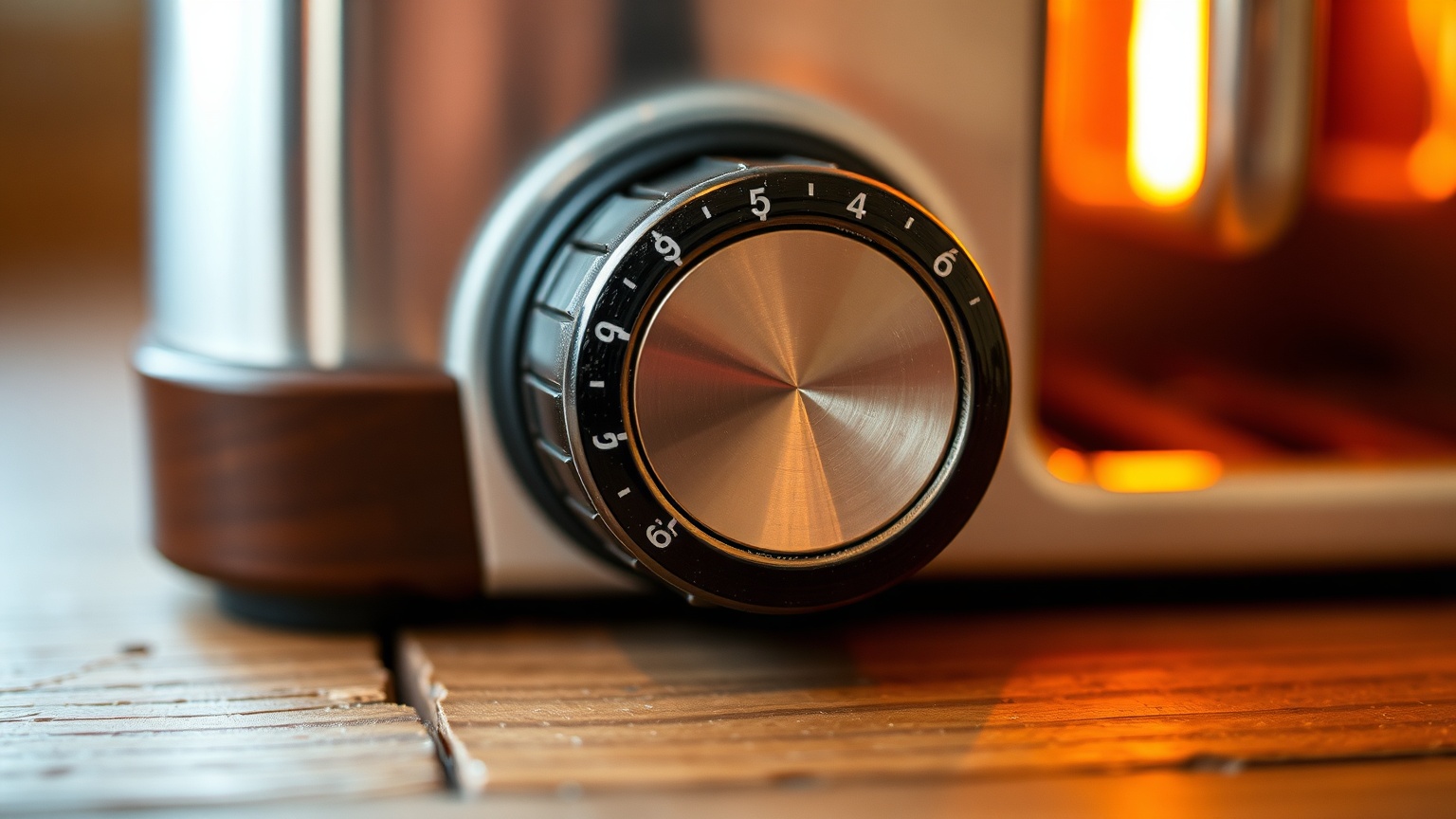
Here’s the thing that surprised me when I first started paying close attention to my toaster: the dial isn’t a temperature dial. It’s a timer. The heating elements in a pop-up toaster run at a fixed wattage — typically between 800 and 1,500 watts — and they get hot immediately, almost regardless of where you set the dial. What changes is how long the bread sits in that heat before the mechanism trips and pops it up.
So setting 1 means a very short toast cycle. Setting 6 means the bread stays down longer. The elements themselves are scorching either way. This is why you can get unevenly toasted bread if your toaster is old and the timer mechanism has worn out — the problem usually isn’t heat, it’s timing.
I learned this the hard way with a cheap two-slice toaster I bought years ago. Setting 2 on that machine was what setting 4 was on my old Cuisinart. No standardization across brands. None. So when someone asks “what setting should I use?” the honest answer is: it depends on your specific toaster, the bread thickness, and whether the bread is frozen or room-temperature.
Approximate Element Temperatures by Setting (Pop-Up Toaster)
These are approximate figures based on infrared thermometer readings and published wattage data. Because the element temperature is relatively constant and the setting just controls duration, the numbers below reflect how hot the element surface gets and the estimated bread surface temp at the end of each cycle.
| Setting (1–6 scale) | Approx. Cycle Time | Heating Element Temp | Bread Surface Temp (est.) | Result |
|---|---|---|---|---|
| 1 | 30–45 sec | ~300°F–350°F | ~150°F–180°F | Barely warmed, no browning |
| 2 | 50–70 sec | ~350°F–400°F | ~200°F–230°F | Light golden, soft center |
| 3 | 75–95 sec | ~400°F–430°F | ~250°F–270°F | Medium toast, slight crisp |
| 4 | 95–120 sec | ~430°F–470°F | ~270°F–295°F | Classic golden-brown |
| 5 | 120–150 sec | ~470°F–510°F | ~295°F–310°F | Dark, crunchy, some char |
| 6 | 150–180 sec | ~510°F–550°F | ~305°F–315°F | Very dark, borderline burnt |
Notice how the bread surface temperature plateaus around 300°F–315°F even when the elements are pushing 550°F. That’s not a fluke. Bread’s moisture content keeps the interior cooler and limits how hot the crust can get — it’s the same reason boiling water stays at 212°F no matter how high you crank the burner. Once the moisture is gone, though, the surface can spike fast. That’s your burn risk on high settings.
For more background on how hot a toaster gets at the element level, I’ve covered that in more detail separately.
Toaster Ovens: A Completely Different Animal
Toaster ovens actually have temperature settings — real ones, not just timers. This makes them far more predictable and, honestly, more useful for anything beyond basic bread. My countertop Breville gets used more than my full-size oven probably 5 days out of 7.
Keep Warm: 130°F–180°F
The Warm or Keep Warm setting runs 130°F to 180°F depending on the brand. Only the top element usually activates. This is enough to keep a plate of dinner rolls or leftover pizza from going cold but not enough to crisp anything up. Oster, Hamilton Beach, and Breville all land in this range — I checked mine with an oven thermometer and it sat steady at 155°F on the warm setting.
Don’t expect this setting to kill bacteria. The USDA’s food safety guidance is clear that foods need to be held at 140°F or above to stay out of the danger zone. Warm settings are borderline — fine for a short hold, not for leaving food sitting for an hour.
Bake: 250°F–450°F
Bake mode is what most people use most often. Top and bottom elements run together, and the thermostat regulates temperature. At 350°F it’ll bake a small batch of cookies. At 425°F you’re roasting vegetables. The usable range for baking is really 300°F up to 450°F — below that you’re creeping back toward warm, above that you’re getting into broil territory.
One thing I’d mention: toaster ovens preheat fast (usually 5–8 minutes to 350°F) but their thermostats can run hot or cold by 25°F–50°F. An oven thermometer is cheap and I keep one in mine permanently. Worth the $10. If you’re doing real baking, check out Serious Eats’ toaster oven testing — their temperature accuracy findings matched my own experience pretty well.
Toast: 400°F–450°F
The Toast setting in a toaster oven runs hotter than you might guess — typically 400°F to 450°F with both elements at full power. The difference from Bake is that Toast usually runs the elements without the thermostat cycling on and off; it just blasts until the built-in timer finishes. Faster, crustier result. My personal preference is the Toast setting for thick sourdough and the Bake setting for English muffins, where I want them heated through rather than just surface-crisped.
Broil: 450°F–500°F+
Broil runs the top element only, usually at full blast — 450°F to 500°F and sometimes a bit beyond. This is where you’re melting cheese on a sandwich, finishing a gratin, or getting a sear on thin steak. Don’t walk away. Ever. I’ve charred more than one batch of cheese toast by stepping out of the kitchen for “just a minute.”
If you want to know about reheating food in a toaster oven effectively across these settings, I’d start there before experimenting with broil.
The Edge Case Nobody Talks About: Frozen Bread
Most articles about toaster temperatures skip this entirely. Frozen bread changes everything.
When you put frozen bread in a pop-up toaster, the bread’s surface temperature starts from well below 32°F. The element doesn’t know that. It runs the same cycle. The result? The crust can char before the center even thaws. This is why most toasters have a Frozen/Defrost setting — it typically extends the cycle time by 30–50% while keeping element temperature identical. You’re not adding heat; you’re adding time so the center can catch up.
In a toaster oven, frozen bread actually does better on Bake at 350°F than on the Toast setting. The lower, more sustained heat gives the interior time to warm through. I put frozen waffles on a wire rack at 350°F for 8 minutes and they come out better than using the Toast setting every time. Crispier outside, not doughy in the middle. Small thing, but it matters.
A good toaster oven wire rack helps here too — elevating the food lets air circulate underneath and speeds even heating from frozen.
Wattage, Heat, and Why Cheap Toasters Disappoint
A 750-watt toaster and a 1,500-watt toaster both reach high element temperatures — but the higher-wattage one gets there faster and recovers faster between slices. If you’ve ever toasted two batches back-to-back and noticed the second batch comes out darker, that’s residual heat. The element and the metal housing are already warm, so the second cycle effectively runs hotter.
Cheap toasters at 800 watts or below often have thinner elements that heat unevenly — you get one stripe of dark and one stripe of pale. I tested a $15 no-name toaster a while back and the temperature variation across the slot was nearly 100°F side to side. Not great. Paying $40–60 for a mid-range model with consistent element wiring makes a noticeable difference in output quality.
For toaster ovens, 1,200 watts is really the minimum for anything useful. Most decent countertop models run 1,400 to 1,800 watts. If you need a toaster oven baking pan to go with a new oven, look for ones rated to 450°F — some nonstick coatings start releasing compounds above that temperature and you don’t want that near food.
Also worth checking: the best mini toaster ovens if you’re working with limited counter space. Some compact models hit the same temperature range as full-size units but preheat in half the time.
What This Means For Your Daily Toast
For a standard pop-up toaster with a 1–6 dial, I’d put my everyday setting at 3 for regular sandwich bread and 4 for thicker slices or whole grain. High-sugar breads like brioche or raisin bread burn fast — I’ll drop to 2 and watch it. For a toaster oven, 400°F on the Toast setting for 4–5 minutes handles most bread well. Bagels I do cut-side down on the wire rack at 375°F for about 6 minutes.
The temperatures aren’t magic numbers. They’re a starting point. Your bread thickness, your specific machine, even the humidity in your kitchen on a given day can shift the result a little. But now at least you know what’s actually happening inside the machine — and why setting 6 isn’t always six times hotter than setting 1.
Frequently Asked Questions
How hot does a toaster get?
The heating elements inside a pop-up toaster reach 300°F to 550°F depending on the setting and wattage of the model. The bread itself typically reaches a surface temperature of around 300°F–310°F at maximum settings, because moisture in the bread limits how hot the crust can get. The metal exterior of the toaster can also get quite hot during operation — enough to cause burns if touched.
What do the numbers on a toaster mean?
The numbers on a toaster dial control the length of the toasting cycle, not the temperature. A higher number means the bread stays in the toaster longer before the mechanism pops it up. The heating elements run at roughly the same temperature regardless of setting — it’s exposure time that determines how dark your toast gets.
What temperature does a toaster oven toast at?
A toaster oven’s Toast setting typically runs between 400°F and 450°F with both elements at full power. Some models use a timed cycle rather than a thermostat on Toast mode, which means the elements run continuously until the timer ends. For most bread, this produces results in 4–6 minutes depending on slice thickness and starting temperature.
Is it safe to leave a toaster plugged in?
Leaving a toaster plugged in when not in use is generally low-risk if the toaster is in good condition and sitting clear of flammable materials. However, toaster fires do happen — usually from crumb buildup or stuck bread — so unplugging when not in use is the safer habit. Always empty the crumb tray regularly and never use a toaster with a frayed cord or a mechanism that doesn’t pop up reliably.
What is the keep warm setting temperature on a toaster oven?
The Keep Warm setting on most toaster ovens runs between 130°F and 180°F, with only the top heating element active. This is enough to prevent food from going cold over a short period but sits at the low end of food-safe holding temperatures. For food safety, the USDA recommends holding hot foods at 140°F or above — so the warm setting is best used for short holds, not extended storage.
—
Written by
Emma founded Toastera to turn vague appliance advice into clear, researched, safety-first guidance on toasters and toaster ovens.
Free: the Toaster Oven Cheat Sheet
Get the printable cheat sheet (temps, cook times & safety tips) plus new recipes. No spam, unsubscribe anytime.