A toaster’s heating elements reach temperatures between 300°F and 600°F depending on the browning setting, and uneven toasting happens when one side’s element is weaker, dirty, or positioned differently than the other. This creates a hot side and a cool side inside the slot, so your bread comes out dark on one face and pale on the other. The fix is usually simple — a good cleaning or a new toaster — but knowing exactly why it happens helps you decide which solution makes sense.
Safety First: Never insert metal objects, knives, or skewers into a toaster to dislodge crumbs or adjust heating elements — even when unplugged, residual charge can remain in the capacitors. Always unplug your toaster and let it cool completely for at least 30 minutes before cleaning or inspecting the interior. Keep the toaster away from water and never operate it near a sink or with wet hands. If you smell burning plastic or see sparking, unplug immediately and do not use it again until inspected by a qualified repair technician.
Key Takeaways
- Uneven toasting is most often caused by crumb buildup insulating one heating element or a failing element on one side of the slot.
- Toaster heating elements typically operate between 300°F and 600°F — even small obstructions create big temperature differences side-to-side.
- Cleaning the crumb tray and slot interior every 2–4 weeks resolves the problem in most cases.
- Bread position, slot width, and bread thickness all affect how evenly heat reaches the surface.
- If cleaning doesn’t fix it, an uneven browning pattern almost always means a failing element — and it’s usually cheaper to replace the toaster than to repair it.
How a Toaster Actually Works (And Why One Side Burns)
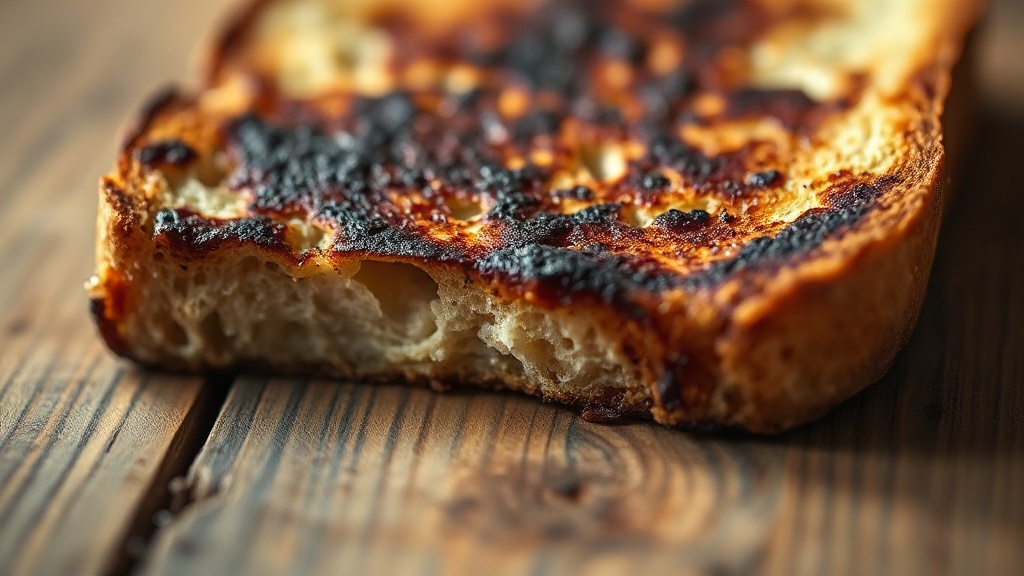
Most pop-up toasters use nichrome wire coiled around a mica sheet on each side of the bread slot. When you push the lever down, electricity flows through those wires, resistance heats them to glowing orange, and radiant heat browns the bread. Simple enough. But here’s the thing — both elements have to be working at exactly the same output for browning to be equal on both sides. The moment one element runs even slightly cooler, you get that annoying half-burnt, half-pale result.
It’s worth understanding that the elements on the outer walls of a two-slice toaster are technically shared between adjacent slots. So on a two-slot toaster, the center divider has an element on each face. The outer walls only have one face each. This geometry matters because it means the outer wall elements often run a little differently from the inner ones. And that’s one reason you might notice the side of bread facing the outer wall browns differently from the side facing the center.
You can learn more about the exact temperatures involved in our deep dive on how hot a toaster gets, but the short version is: the difference between “perfect toast” and “charcoal” can be as little as 30–40 seconds at these temperatures. So minor element inconsistencies have a noticeable real-world effect.
The Most Common Causes of One-Sided Burning
Crumb Buildup on the Heating Elements
This is the number one culprit. Crumbs fall into the slot and collect around the lower heating elements. When one element gets coated with crumb debris, it doesn’t radiate heat as efficiently. The crumbs essentially act as insulation on one side of the bread but not the other. You end up with perfectly toasted on the clean side and pale or even unevenly colored on the crumb-coated side.
The fix: pull out the crumb tray and empty it. Then — with the toaster unplugged and completely cool — turn it upside down over a trash can and gently shake it. A soft pastry brush works well for sweeping debris away from the element wires without bending anything. Don’t use water inside the slot. Ever.
A Failing or Degraded Heating Element
Nichrome wire degrades over time. Hot-cold cycling, physical stress, and years of use all gradually increase a wire’s resistance unevenly — which means some sections heat up more than others, or one element runs cooler than it should. If you look into the slot when the toaster is running (not with your face directly over it — just a quick sideways glance) you should see both sides glowing orange with roughly equal brightness. If one side looks dimmer or has dark sections, the element is failing.
At that point, cleaning won’t help. Element replacement is technically possible but it’s fiddly work that usually isn’t cost-effective on a $25–$50 toaster. A new two-slice toaster with even browning is almost always the more practical path.
Bread Position and Slot Fit
Thick bread that barely fits in the slot will press against one element and hold itself away from the other. The side touching the element gets scorched; the side with the air gap barely toasts. Artisan loaves, Texas toast, and thick-cut sourdough are repeat offenders here.
Try a toaster with wider slots — many newer models offer slots up to 1.5 inches wide. Or use a toaster oven instead, where the bread sits flat on a rack with even heat from above and below. Our roundup of the best mini toaster ovens has solid options if you regularly deal with thick bread.
The Toaster Is Sitting on an Uneven Surface
It sounds too simple to be real, but a toaster tilted even a few degrees shifts how the bread leans in the slot. The bread presses toward one element and away from the other. Since radiant heat intensity drops off quickly with distance, even a small lean translates to noticeably different browning. Check that your toaster is sitting flat. Rubber feet wear out and sometimes one foot compresses more than the others.
Toaster Temperature and Browning: A Quick Comparison
Not all toasters run at the same wattage or temperature range. Here’s how common types compare, which affects how much a failing element or crumb blockage actually matters in practice:
| Toaster Type | Typical Wattage | Est. Element Temp | Uneven Browning Risk |
|---|---|---|---|
| Basic 2-slice pop-up | 800–1,000W | 300°F–450°F | High (close element-to-bread distance) |
| Wide-slot 2-slice | 900–1,200W | 350°F–500°F | Medium (more airflow, less pressing) |
| 4-slice pop-up | 1,400–1,800W | 300°F–500°F | High (shared center elements) |
| Toaster oven | 1,200–1,800W | 200°F–450°F (dial) | Low (convection/broil distributes heat) |
| Convection toaster oven | 1,500–1,800W | 150°F–500°F | Very Low (fan circulates heat evenly) |
As you can see, convection toaster ovens are the most consistent. But if you’re attached to your pop-up toaster, keeping it clean is the single biggest factor in even browning.
How to Fix Uneven Toasting: A Practical Step-by-Step
Step 1: Clean the Toaster Thoroughly
Unplug it. Wait at least 30 minutes for the elements to cool. Remove and empty the crumb tray — wash it with dish soap and dry it completely before reinserting. Turn the toaster upside down over a trash can and shake gently. Use a soft, dry pastry brush to sweep debris away from the wires. Do not use a vacuum with strong suction directly on the element wires; you can knock them out of alignment.
Step 2: Test It With the Same Bread
After cleaning, toast a slice at the setting you normally use. Check both sides. If the browning is now even, crumb buildup was the problem. If it’s still uneven, move to step 3.
Step 3: Inspect the Elements Visually
Plug it back in and start a toast cycle. From the side — never directly above — glance at both elements. They should both glow orange with similar brightness. Dark sections or a clearly dimmer element on one side confirm a failing element. At this point, replacement is your best option.
Step 4: Consider Switching to a Toaster Oven
If you consistently have thick bread or like to toast bagels, English muffins, or anything with an irregular surface, a toaster oven is genuinely better at even browning. You can even use the broil function, which mimics the direct radiant heat of a pop-up toaster but with more control. Check out our guide on reheating food in a toaster oven to get the most from one if you make the switch. A toaster oven wire rack at the right height position makes a real difference for browning evenness.
When Should You Just Replace the Toaster?
If your toaster is more than 5–7 years old and cleaning didn’t fix the problem, just replace it. Honestly. The internal components degrade, the element insulation breaks down, and the thermostat (if it even has one) drifts out of calibration. Repairing a sub-$50 toaster rarely makes financial sense, and aging appliances with electrical faults are a fire risk you don’t need in your kitchen.
But if the toaster is newer — under 2 years old — uneven browning is sometimes a manufacturing defect. Check if it’s under warranty. Many brands offer a 1–2 year warranty on toasters, and one-sided burning that starts immediately is a classic defect claim. According to Serious Eats’ toaster testing, even browning is one of the most important performance metrics and a key differentiator between budget and mid-range models.
The Bottom Line
One-sided burning almost always comes down to one of three things: crumb buildup insulating an element, a failing element that no longer heats evenly, or bread that doesn’t fit the slot properly. Start with a thorough cleaning. Check that the toaster is sitting level. If the problem persists after cleaning, visually inspect the elements during a toast cycle. And if one side is clearly dimmer or has dead sections, it’s time for a new toaster.
The good news? This is one of the easier kitchen appliance problems to diagnose and fix. A clean toaster sitting flat on your counter with appropriately sized bread should give you even, consistent browning every time. And if it doesn’t — now you know exactly where to look.
Frequently Asked Questions
Why does my toaster burn one side of the bread but not the other?
The most common cause is crumb buildup around one heating element, which acts as insulation and reduces heat output on that side. A failing heating element that no longer glows at full brightness is the other frequent culprit. Clean the crumb tray and interior first; if the problem continues, visually inspect both elements during a toast cycle to see if one side is dimmer than the other.
How hot does a toaster get inside the slot?
The heating elements inside a pop-up toaster reach between 300°F and 600°F depending on the browning setting and the toaster’s wattage. The air inside the slot gets somewhat cooler than the element surface itself, typically 200°F–400°F at bread level. That range is why small differences in element output or bread positioning create such noticeable browning differences.
Can I fix my toaster’s uneven browning without replacing it?
Yes, if the cause is crumb buildup or bread positioning — both of which are fixable. Unplug the toaster, let it cool, remove and clean the crumb tray, and shake out debris from the slot with a soft brush. If the problem is a failing heating element, replacement parts are available but the repair is rarely cost-effective compared to buying a new toaster.
Is it safe to leave a toaster plugged in all the time?
Technically toasters draw minimal standby power when not in use, but leaving them plugged in permanently does increase fire risk — especially if crumb trays are full or the appliance is older. The U.S. Fire Administration recommends unplugging small kitchen appliances when not in use. A toaster with crumb buildup near hot elements is a legitimate fire hazard, so keeping it clean and unplugging it after use is the safest practice.
Does bread thickness affect how evenly a toaster browns?
Thick bread pressed against one element will scorch on that side while the opposite side barely toasts, because the air gap between bread and element changes the heat intensity dramatically. Wide-slot toasters (1.25–1.5 inch slots) handle thick-cut bread better by allowing more even heat distribution. For very thick slices or irregularly shaped bread like bagels and English muffins, a toaster oven gives more consistent results.

Written by
Emma founded Toastera to turn vague appliance advice into clear, researched, safety-first guidance on toasters and toaster ovens.
Free: the Toaster Oven Cheat Sheet
Get the printable cheat sheet (temps, cook times & safety tips) plus new recipes. No spam, unsubscribe anytime.