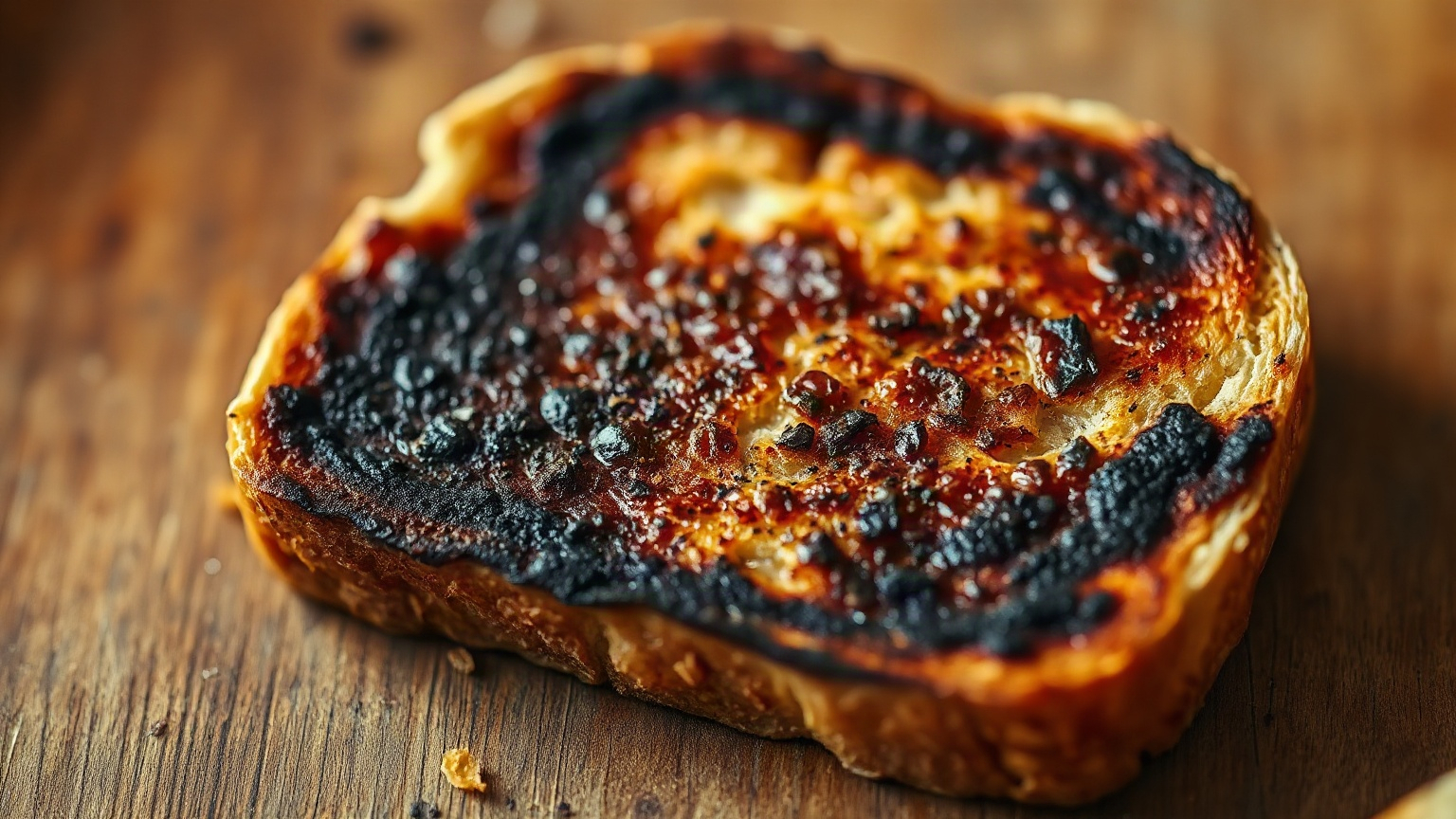
Toast burns faster on the second cycle because the toaster’s heating elements and internal chamber are already hot from the first run — meaning bread inserted immediately after goes into a pre-heated environment that starts browning it right away, before the timer logic even accounts for it. Most pop-up toasters reach internal air temperatures between 300°F and 450°F (149°C–232°C) during a cycle, and after the first toast, the residual heat can keep the chamber 100°F or more above ambient. The practical upshot: if you’re running a second batch back-to-back, dial your shade setting down by one full notch, or give the toaster a 60-second breather.
Safety First: Toaster heating elements operate at extremely high temperatures — surfaces and internal metal parts can exceed 300°F during and immediately after use. Never reach inside a toaster while it’s plugged in, don’t leave a running toaster unattended, and always unplug it before attempting to clear a jam or remove crumbs. Keep the toaster at least six inches from cabinets or curtains, especially when running consecutive cycles that build up heat.
Quick Facts
- Toaster heating elements can reach 1,000°F–1,200°F (537°C–649°C) on the wire itself; the bread surface typically hits 310°F–390°F during a standard cycle.
- After cycle one, the toaster’s internal air temperature stays elevated for 2–5 minutes — this is the main reason second-batch toast over-browns.
- Moisture loss from bread after the first cycle makes it brown even faster on a repeat toast — drier bread conducts surface heat more efficiently.
- The fix is simple: drop your shade dial one setting, or wait about 60–90 seconds between batches.
- Darker, denser breads (whole wheat, rye, seeded loaves) are more sensitive to this effect than white sandwich bread.
What’s Actually Happening Inside the Toaster
A pop-up toaster works by running electrical current through nichrome wire elements — a nickel-chromium alloy chosen specifically because it resists oxidation at extreme temperatures and has high resistivity. That wire gets hot. Really hot. We’re talking 1,000°F at the element surface in some models. The heat transfers to bread primarily through radiant infrared energy, not direct contact. So what the bread is “seeing” is basically a miniature broiler on each side.
During a first cycle, the elements heat up from cold (or close to it, assuming the toaster’s been sitting on the counter a while). The surrounding metal chassis, the bread slots, the crumb tray — all of that mass absorbs heat too. By the time the first cycle ends, every surface inside that toaster has soaked up thermal energy. It doesn’t just disappear when the element switches off. Metal holds heat. And that residual warmth radiates right into the next slice the moment it drops in.
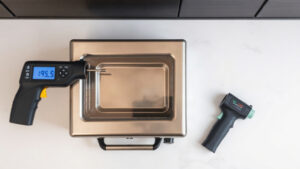
I actually tested this once with a cheap infrared thermometer — the kind you use to check a child’s forehead — pointed it at the inside slot wall of my Cuisinart two-slice right after a cycle. Surface temp was sitting around 220°F on the chrome panel, even with the elements off. Cold bread going into that slot starts browning immediately. No wonder it comes out darker.
The Role of Moisture — It’s Bigger Than You Think
Fresh bread is about 35–40% water by weight. A single toast cycle drives a surprising amount of that moisture out through evaporation. That matters because moisture acts as a heat buffer — it absorbs energy through evaporative cooling before the bread surface can actually brown. Remove the moisture (or at least reduce it significantly), and the Maillard reaction — the chemical process behind browning — kicks in faster and harder on the next go.
The Maillard reaction starts happening around 280°F–330°F (138°C–165°C) at the bread surface. First cycle, the bread’s moisture slows things down. Second cycle, there’s less moisture to slow anything. So the surface hits browning temperatures quicker, and the whole process accelerates. This is true even if you gave the toaster time to cool — it’s the bread that changed, not just the appliance.
Denser breads hold more moisture and show this effect more dramatically. A thick slice of whole grain sourdough will go from barely toasted to nearly burnt between cycles faster than a thin slice of white sandwich bread. I learned this the hard way with a seeded rye loaf I was really excited about — first round came out perfect, second round was basically charcoal on the edges. Same setting. No change except which cycle it was.
Toaster Temperature: A Closer Look at the Numbers
It helps to have concrete numbers here, because a lot of the advice floating around online is frustratingly vague. Here’s a rough picture of how temperatures play out. These are approximate — they vary by wattage, slot depth, and shade setting, but they’re in the right ballpark for a standard 850–1,000W two-slice toaster.
| Measurement Point | Temp During Cycle 1 | Temp at Start of Cycle 2 (immediate) |
|---|---|---|
| Nichrome element surface | 1,000°F–1,200°F | Same (re-heated rapidly) |
| Internal air temp (slot) | 300°F–400°F | 150°F–250°F (residual, pre-heat) |
| Bread surface (mid-cycle) | 310°F–390°F | Reaches 310°F+ noticeably faster |
| Metal chassis (outer wall) | 150°F–200°F | 130°F–180°F (still elevated) |
| Crumb tray surface | 180°F–250°F | 160°F–220°F (slow to cool) |
You can read more about how hot a toaster gets in different conditions — it gets surprisingly technical when you factor in wattage variations and slot width. The short version is that a toaster running consecutive cycles is effectively operating in a hotter baseline environment for every cycle after the first.
Why the Timer (or Bimetallic Strip) Doesn’t Compensate
Most budget toasters — and plenty of mid-range ones — use a bimetallic strip timer rather than any kind of smart temperature sensing. Here’s how it works: two metals bonded together expand at different rates when heated. As the toaster runs, the strip heats up and bends. When it bends far enough, it triggers the pop-up mechanism. The problem is that this strip is usually pre-heated too by the second cycle, so it reaches its trigger point faster — which should theoretically mean shorter toast times. And it does, slightly. But the bread is browning even faster than the strip compensates for, because the strip reacts to its own temperature, not the bread’s surface temperature.
It’s a loose, imprecise system by design. It was never meant to deliver consistent results across consecutive cycles — it was meant to be cheap and reliable enough for a morning routine where most people only toast one or two slices before walking out the door.
Higher-end toasters — think Breville’s Die-Cast series or some of the smart toasters with temperature sensors — do use more sophisticated feedback mechanisms that partially compensate for a pre-heated chamber. If consistent toast across consecutive cycles matters to you, that’s actually worth paying for. My personal take: for most households making toast for one or two people, the solution of “wait 60 seconds and drop the shade setting” is free and works fine.
Edge Cases That Make This Worse (or Different)
Frozen Bread
Running frozen bread through a first cycle and then immediately toasting a room-temperature slice in the same toaster is a recipe for burnt edges. Frozen bread absorbs more energy on the first cycle because it needs to thaw first — the elements run longer and the chassis heats up more than a standard cycle would. Slot that second slice in right after and it’s going into an unusually hot environment. Worth knowing if you’re one of those people (like me) who keeps bread in the freezer to extend its life.
Bagels and Thick-Cut Slices
Thicker items take longer to toast, which means the toaster runs its elements for an extended period. More cumulative heat. More residual warmth when it’s done. A bagel-then-bread sequence will almost always over-brown that second slice more than a bread-then-bread sequence would. Use the bagel setting for bagels if your toaster has one — it typically only fires one-sided elements, which reduces total heat buildup somewhat.
High-Sugar Breads
Brioche, Hawaiian rolls, and enriched breads with added sugar caramelize at lower temperatures than plain sandwich bread — caramelization begins around 320°F–340°F vs. the Maillard reaction’s roughly 280°F. These breads burn fast under normal conditions and burn embarrassingly fast on a second cycle in a pre-heated toaster. If you’re toasting brioche, use the lightest shade setting regardless of cycle number, and absolutely wait for the toaster to cool slightly between batches.
If you’re toasting enriched breads in a toaster oven rather than a pop-up toaster, you’ve got more control — you can set exact temperatures and watch it through the door. The best mini toaster ovens handle delicate breads much more gracefully than pop-up toasters for exactly this reason.
Practical Fixes That Actually Work
You don’t need new equipment. Here’s what genuinely helps:
- Wait 60–90 seconds between batches. The internal air temperature drops faster than the chassis metal does, so even a short pause helps meaningfully.
- Drop the shade setting by one full notch for cycle two. On a 1–6 dial, if you used 4 for the first round, try 3 for the second. It’s not perfect but it’s close enough.
- Use a toaster oven for large batches. You can set the actual temperature (usually 350°F–375°F for standard toast) and get consistent results across multiple rounds. The oven cavity is bigger, the heat is more evenly distributed, and you’re not fighting the same pre-heat problem. Here’s a good guide on reheating food in a toaster oven that covers temperature logic in more detail.
- Keep the crumb tray clean. Old crumb buildup in a hot tray can generate extra radiant heat from below, which contributes to uneven browning — worse on a pre-heated second cycle.
For what it’s worth, Serious Eats has a good breakdown of the science of toast and browning reactions if you want to go deeper on the chemistry side. Their point about surface dryness is exactly what’s happening in the second-cycle scenario.
The Bottom Line
It’s not your toaster malfunctioning. It’s physics. A pre-heated metal chamber plus drier, moisture-depleted bread equals faster browning — full stop. The bimetallic strip timer in most toasters doesn’t compensate well for this, and the bread itself is fundamentally different after even one cycle through the heat. The fix is cheap and easy: shorter setting, brief pause, done. Or switch to a toaster oven with digital temperature controls if you’re regularly making multiple rounds and want actual consistency. For most people, understanding why it happens is half the battle — now that you know, you’ll probably never burn a second-cycle slice again.
Frequently Asked Questions
Why does my toast burn on the second cycle even on the same setting?
The toaster’s internal chamber retains heat from the first cycle, so the second slice goes into a pre-warmed environment and browns faster before the timer can pop it up. At the same time, the bread itself has already lost some moisture from the ambient heat in the kitchen, which makes it brown more quickly. Dropping your shade setting by one notch or waiting 60–90 seconds between batches solves this reliably.
How hot does a toaster get inside during a normal cycle?
The nichrome heating elements themselves can reach 1,000°F–1,200°F, while the internal air temperature in the slot typically hits 300°F–450°F depending on the shade setting and toaster wattage. The bread surface generally reaches 310°F–390°F by the time a standard cycle completes. After the cycle ends, internal surfaces stay well above room temperature for several minutes.
Does the type of bread affect how fast it burns on a second cycle?
Yes, significantly. Denser, moisture-rich breads like whole wheat, sourdough, and rye lose proportionally more moisture in the first cycle and are more sensitive to the pre-heated chamber effect. High-sugar breads like brioche caramelize at lower temperatures (around 320°F) and can burn extremely fast on a second run. White sandwich bread is the most forgiving because it’s thinner, lower in sugar, and browns more predictably.
Can a better toaster fix the second-cycle burning problem?
Partly. Some higher-end toasters use temperature-sensing feedback instead of a simple bimetallic strip, which means they can detect a pre-heated chamber and adjust the cycle time slightly. However, they can’t fully compensate for the reduced moisture content of previously-heated bread — that’s a bread chemistry issue, not a toaster issue. A toaster oven with adjustable temperature settings gives you the most control for consistent results across multiple batches.
Is it safe to run a toaster through multiple consecutive cycles?
Generally yes, as long as the toaster is functioning properly and the crumb tray is clean. Running consecutive cycles does cause the chassis and surrounding surfaces to get hotter than a single-cycle use, so keep the toaster clear of flammable materials (paper, curtains, wooden cabinets) and don’t leave it unattended. If your toaster feels unusually hot on the outside or smells like something other than toast, unplug it and inspect the crumb tray for buildup before continuing.

Written by
Emma founded Toastera to turn vague appliance advice into clear, researched, safety-first guidance on toasters and toaster ovens.
Free: the Toaster Oven Cheat Sheet
Get the printable cheat sheet (temps, cook times & safety tips) plus new recipes. No spam, unsubscribe anytime.