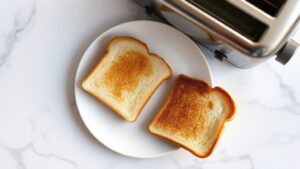
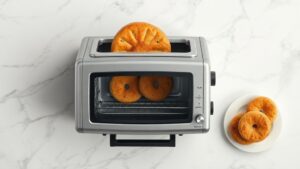
A toaster’s heating elements reach temperatures between 1,000°F and 1,200°F (538°C–649°C) during normal operation. When your bread browns unevenly — one side dark and crispy, the other barely touched — it almost always means one heating element is weaker than the other, or there’s a physical blockage affecting heat distribution. This is a fixable problem, and in most cases you won’t need a new toaster.
Safety First: Never insert metal objects, knives, or utensils into your toaster to dislodge crumbs or debris — even when it’s unplugged, bent internal wires can cause dangerous arcing when the toaster is next used. Always unplug your toaster and let it cool completely for at least 15 minutes before cleaning or inspecting heating elements. If you notice sparking, burning smells, or visible wire damage, stop using the toaster immediately and replace it.
Key Takeaways
- Uneven toasting is most commonly caused by a failing or partially dead heating element on one side of the toaster.
- Crumb buildup beneath the bread slot is a surprisingly common culprit — it blocks radiant heat from reaching the bread evenly.
- Toaster slots are designed for standard bread thickness; thick artisan slices pressed against one side will always brown unevenly.
- Most uneven toasting issues can be resolved by cleaning the crumb tray, repositioning the bread, or adjusting your toasting setting.
- If a heating element has completely failed, the toaster should be replaced — internal repairs on pop-up toasters are not safe for home DIY.
How a Toaster Actually Heats Your Bread
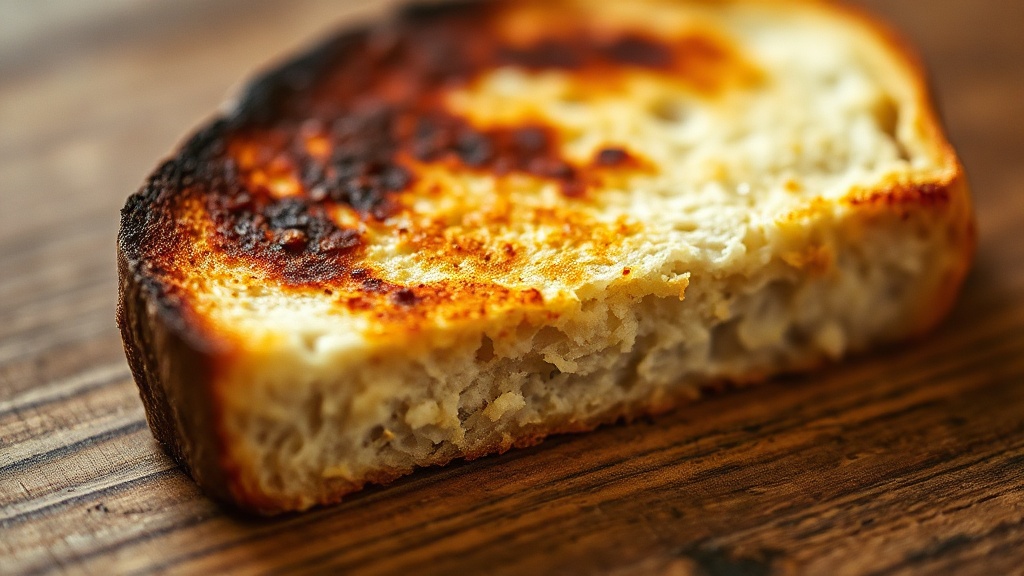
Before you can fix the problem, it helps to understand what’s happening inside that little slot. A standard pop-up toaster uses nichrome wire heating elements — thin, coiled wires that glow orange-red when electricity runs through them. These elements line both sides of each bread slot. The idea is that both sides heat to roughly the same temperature simultaneously, browning your bread evenly on each face.
The browning itself is a chemical reaction called the Maillard reaction — the same process that browns a steak or a cookie. It kicks in at around 280°F–330°F (138°C–165°C) on the surface of the bread. So while the elements are running at over 1,000°F, your bread surface only needs to hit a fraction of that to brown. You can learn more about how hot a toaster gets in our detailed breakdown.
When one side of the bread is much darker than the other, it means the heat reaching that side is significantly higher — or the heat on the other side is significantly lower. Both scenarios have causes, and most of them are addressable.
The Most Common Reasons for Uneven Toasting
1. A Failing or Partially Dead Heating Element
This is the number one cause. Heating elements don’t always die all at once. They degrade gradually, and a partially failed element will produce less heat than its partner on the opposite side. You’ll usually be able to see this — when you drop your bread in and look down into the slot (without touching anything), one side should glow a consistent orange-red. If it looks patchy, dim, or has sections that aren’t glowing at all, that element is on its way out.
Budget toasters — anything under $30 — are especially prone to this after a year or two of daily use. The nichrome wire simply wears out. And unfortunately, replacing an individual heating element in a pop-up toaster isn’t something you should attempt at home. The internal wiring is tightly packed and the risk of creating a new fault is high. If the element is dead, the toaster’s time has come.
2. Crumb Buildup Inside the Toaster
Crumbs are sneaky. They accumulate inside the toaster housing and on the crumb tray, and over time they can pile up high enough to physically block radiant heat from reaching the lower portion of your bread on one side. If you’ve never emptied your crumb tray, go do it right now. You’ll probably be shocked by what’s in there.
But crumbs can also stick to the heating elements themselves. When that happens, the element in that area burns hotter (because the crumb acts as an insulator trapping heat) and can scorch the bread right next to it. This is also a fire risk — dried crumbs in contact with a 1,000°F element is exactly the scenario you want to avoid.
Fix: Unplug the toaster, let it cool, remove and empty the crumb tray, then gently shake the toaster upside down over a trash can to dislodge anything stuck to the walls or elements. That’s it. Don’t use water. Don’t use a vacuum with metal attachments. Clean the crumb tray itself with a damp cloth, dry it completely, and slide it back in.
3. The Bread Is Touching One Side of the Slot
This one gets overlooked constantly. Pop-up toaster slots are typically 1 inch to 1.25 inches wide. Standard sandwich bread fits comfortably. But thicker artisan loaves, homemade bread, or sourdough? They press against one wall of the slot. The side touching the element gets scorched from direct contact heat. The other side gets normal radiant heat. Result: one side burned, one side pale.
The fix is simple — use a toaster with a wider slot, or look for a wide slot toaster designed for thick bread. Many modern 2-slice and 4-slice toasters advertise 1.5-inch slots specifically for this reason. Check yours before you assume the toaster is broken.
4. Inconsistent Power Supply or Wattage Issues
Standard pop-up toasters run between 800 and 1,800 watts. Cheaper toasters at the lower end of the wattage range tend to heat less evenly because there simply isn’t enough power to bring both elements to the same temperature at the same rate. If you’ve always had uneven results with a particular toaster and it’s never been great, wattage could be part of the picture.
Here’s a quick comparison of how toaster wattage relates to toasting performance:
| Toaster Type | Typical Wattage | Toasting Evenness | Best For |
|---|---|---|---|
| Budget 2-slice | 800–900W | Often uneven | Occasional light use |
| Mid-range 2-slice | 1,000–1,200W | Generally consistent | Daily household use |
| High-end 2-slice | 1,400–1,800W | Very even | Frequent use, thick bread |
| 4-slice toaster | 1,400–1,800W | Varies by model | Families, high volume |
| Toaster oven (toast mode) | 1,200–1,800W | Excellent | Versatile, thick slices, bagels |
Toaster ovens — even compact ones — tend to toast more evenly than pop-up toasters because their elements are spaced further from the bread and heat circulates more freely. If uneven toasting keeps frustrating you, it might be time to explore a toaster oven as a replacement. Check out our picks for the best mini toaster ovens if counter space is limited.
How to Diagnose Your Specific Problem
Run through these steps before assuming the worst.
- Visual check: Plug in the toaster, start a toasting cycle, and carefully look down into the slot from above (don’t touch anything). Both sides should glow evenly. Dark patches or completely unlit sections = element problem.
- Crumb check: Remove the crumb tray. If it’s full or has debris stuck to it, clean it before drawing any other conclusions.
- Bread fit check: Look at your bread in the slot before toasting. Is it pressed against one wall? Is there visible clearance on both sides?
- Rotation test: Toast a slice, then flip it and toast it again. If the same physical side of the bread is always darker, the bread is the issue (thicker on one end). If the same side of the toaster always produces the darker side, it’s the toaster.
- Age check: How old is the toaster? Most pop-up toasters are designed for 3–5 years of daily use. Beyond that, element degradation is normal.
Practical Fixes That Actually Work
Clean It First, Always
It sounds basic, but a thorough cleaning fixes uneven toasting more often than you’d expect. Empty the crumb tray, shake out the housing, and wipe down the exterior. Do this every two weeks if you use your toaster daily. Serious Eats has a solid guide on cleaning kitchen appliances safely that’s worth bookmarking.
Adjust Your Toasting Technique
If the toaster itself is working correctly but results are still uneven, try toasting at a slightly lower setting for longer. A lower heat setting runs the elements at reduced power, which can actually improve evening out the heat distribution. Also, try rotating the bread 180 degrees halfway through the toasting cycle on models with a cancel/lift lever — it’s old-school, but it works.
Switch to a Toaster Oven for Difficult Items
For thick sourdough, bagels, English muffins, or anything that keeps toasting unevenly, a toaster oven is the better tool. You can place bread directly on a toaster oven wire rack and the top and bottom elements heat the bread from both directions simultaneously. The results are genuinely more consistent. And toaster ovens handle reheating so much better anyway — take a look at our guide to reheating food in a toaster oven for ideas beyond just toast.
Know When to Replace
If you’ve cleaned the toaster, the bread fits properly, and one side still toasts darker every single time — and you can see that one heating element isn’t glowing fully — replace the toaster. There’s no safe DIY fix for a damaged nichrome element inside a pop-up toaster. The Food Network’s small appliance safety guidelines recommend discarding any toaster with visible element damage or erratic heating behavior. Don’t try to limp a damaged toaster along — it’s not worth the fire risk.
Wrapping Up
Uneven toasting is annoying, but it’s rarely mysterious. The cause is almost always one of four things: a degraded heating element, crumb buildup, bread that’s too thick for the slot, or a low-wattage toaster that never had great heat distribution to begin with. Start with a good cleaning, check the fit of your bread, and do the rotation test to figure out whether it’s the toaster or the bread. If the element is clearly failing, don’t mess around — replace the toaster. Modern mid-range toasters are affordable, and the difference in toasting performance between a $25 unit and a $60 unit is genuinely significant. Your morning toast deserves better than a coin flip.
Frequently Asked Questions
Why does my toaster burn one side of the bread but not the other?
This almost always means one heating element is weaker than the other due to age or partial failure. It can also happen when crumbs accumulate on one side of the slot, blocking even heat distribution. Do a visual check — look down into the slot during toasting and see if both sides glow evenly.
How hot does a toaster get inside?
The nichrome heating elements inside a toaster reach between 1,000°F and 1,200°F (538°C–649°C) during normal operation. The surface of the bread only needs to reach around 300°F–330°F (149°C–165°C) to trigger the Maillard browning reaction. The toaster exterior typically stays around 150°F–200°F during use, which is still hot enough to cause burns.
Can I fix a toaster with uneven heating myself?
You can fix crumb-related issues yourself by cleaning the crumb tray and shaking out debris — always with the toaster unplugged and cooled. But replacing or repairing a damaged heating element inside a pop-up toaster is not a safe DIY task. If the element itself is failing, the toaster should be replaced.
Is it safe to leave a toaster plugged in all the time?
It’s generally safer to unplug your toaster when it’s not in use. A plugged-in toaster with crumb buildup poses a low but real fire risk, and some components can draw a small amount of standby current. Most fire safety organizations recommend unplugging small kitchen appliances between uses as a standard precaution.
Why does my new toaster toast unevenly?
A brand-new toaster toasting unevenly is most often a slot-fit issue — the bread is touching one wall of the slot, which causes that side to brown faster from direct contact. It could also be a defective unit, which happens occasionally with budget models. Try a different slice of bread with a thinner profile, and if the problem persists, contact the manufacturer about a warranty replacement.
—