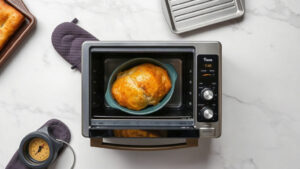
The Cuisinart TOA-60 and TOA-65 are nearly identical air fryer toaster ovens with one real difference: the TOA-60 uses manual dials, while the TOA-65 has a digital touchscreen interface with preset cooking functions. Both share the same 1800-watt motor, 0.6 cubic foot interior, and air fry capability, so the choice basically comes down to whether you prefer turning knobs or tapping buttons. That said, there are a few smaller details worth knowing before you spend the money.
Safety First: Both the TOA-60 and TOA-65 reach internal temperatures up to 450°F and their exterior surfaces get hot during use. Keep at least 5 inches of clearance on all sides, never place either unit under upper cabinets while air frying (steam and heat need somewhere to go), and always use oven mitts when pulling out the rack or baking pan. Don’t leave either model unattended on a high-heat air fry cycle.
Key Takeaways
- The TOA-60 is fully manual (dials); the TOA-65 is digital with a touchscreen and 5 preset one-touch functions (wings, fries, nuggets, pizza, and frozen snacks).
- Both models share the same 1800-watt power, 0.6 cu ft capacity, and temperature range of 80°F–450°F.
- The TOA-65 has 13 cooking functions vs. the TOA-60’s 7, adding dehydrate, proof, and low convection among others.
- The TOA-65 typically runs $20–$40 more at retail, though sale prices narrow that gap frequently.
- Neither model includes a grill plate — that’s the TOA-70’s territory.
The Interface Difference Is the Main Story
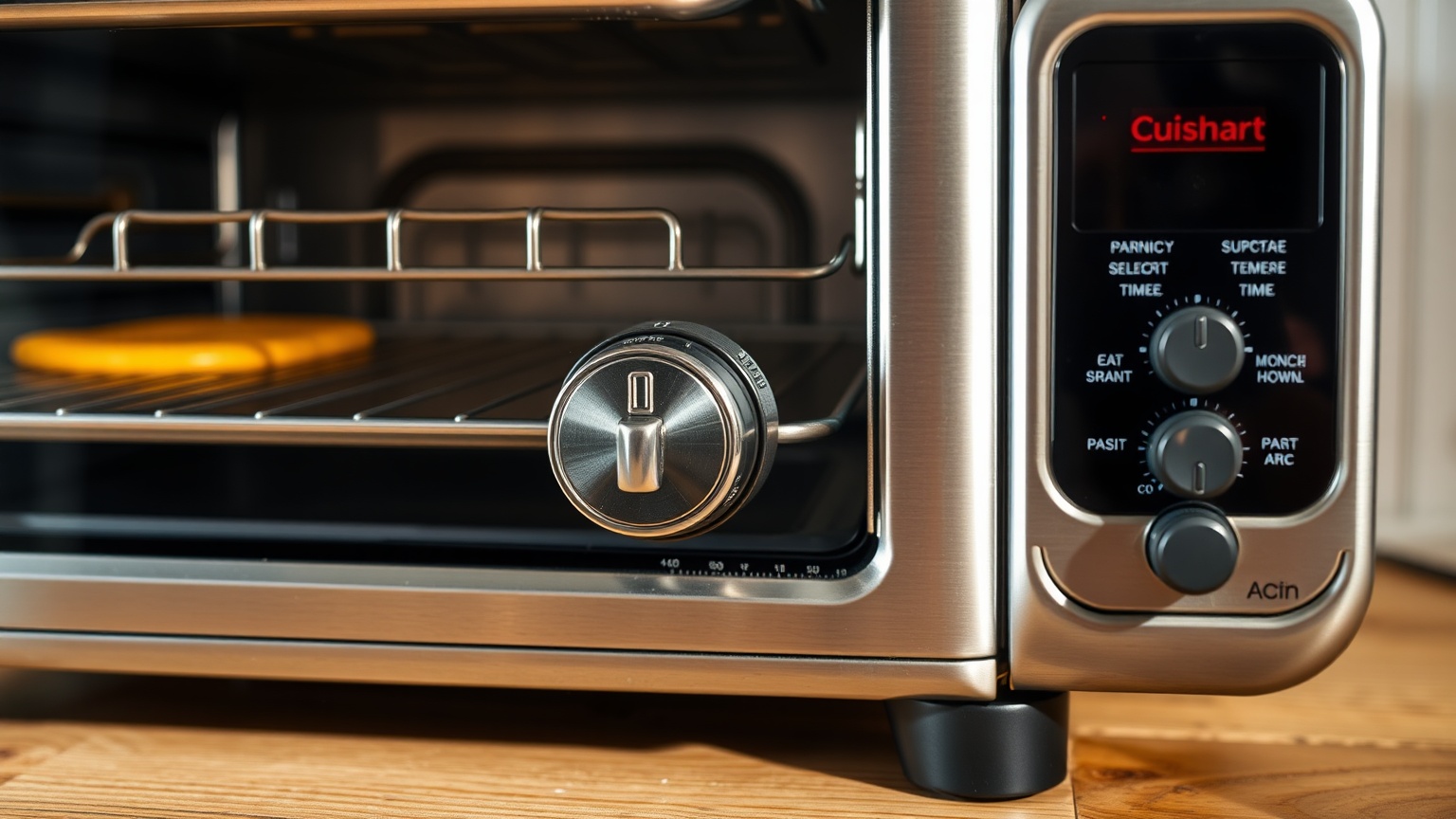
I’ll be direct: this is where the two models actually diverge. The TOA-60 has three physical dials — one for function, one for temperature, and one for time. The TOA-65 replaces all of that with a digital display and touch-sensitive buttons. Neither approach is objectively better. It really depends on your kitchen habits.
I’ve used both. My honest take? The dials on the TOA-60 feel more satisfying in the moment. You reach over, twist a knob, done. The TOA-65 touchscreen is perfectly responsive, but I found myself accidentally changing the temperature a couple of times when I was wiping the panel down mid-cook. Minor annoyance, but real. The screen also shows remaining cook time more clearly, which is nice when you’re across the kitchen.
One thing nobody mentions: the TOA-60’s dial timer only goes up to 60 minutes. If you’re slow-roasting something or running a long dehydrate cycle, you’ll need to reset it. The TOA-65’s digital timer goes to 24 hours. That’s a meaningful difference if you use the dehydrate function regularly.
Cooking Functions: 7 vs. 13
The TOA-60 covers the basics: air fry, convection bake, convection broil, bake, broil, warm, and toast. That’s a solid lineup for most households.
The TOA-65 adds dehydrate, proof (for bread dough), low convection, speed convection, and the five one-touch presets I mentioned. Those presets are genuinely convenient — tap “Wings,” and the oven sets itself to 400°F for 26 minutes with the fan running. Not adjustable within the preset, which bugs some people, but for a quick weeknight meal it’s fine.
Does the Dehydrate Function Actually Work?
Yes, surprisingly well. The TOA-65 runs dehydrate at a low 100°F–175°F range using gentle convection. I dried apple slices at 135°F for about 6 hours and they came out properly leathery, not burned. You’d want a toaster oven dehydrator rack set to do multiple layers at once, though — the single included rack limits your batch size.
The TOA-60 can’t do this natively. You could theoretically set it to its lowest temperature and run it, but there’s no dedicated dehydrate mode and the timer cap at 60 minutes makes it impractical.
The Proof Setting — More Useful Than It Sounds
The proof function on the TOA-65 holds a steady 80°F–100°F, which is exactly what bread dough needs to rise. I’ve used my oven’s “proof” setting before and it’s always too warm and dries out the surface. The TOA-65’s version is more controlled. If you bake bread even occasionally, this is a legitimately useful addition. The TOA-60 doesn’t have it.
Side-by-Side Specs
| Feature | TOA-60 | TOA-65 |
|---|---|---|
| Interface | Manual dials | Digital touchscreen |
| Wattage | 1800W | 1800W |
| Capacity | 0.6 cu ft | 0.6 cu ft |
| Temperature Range | 80°F–450°F | 80°F–450°F |
| Cooking Functions | 7 | 13 |
| One-Touch Presets | None | 5 (wings, fries, nuggets, pizza, snacks) |
| Max Timer | 60 minutes | 24 hours |
| Dehydrate Function | No | Yes (100°F–175°F) |
| Proof Function | No | Yes (80°F–100°F) |
| Included Accessories | Baking pan, oven rack, air fry basket | Baking pan, oven rack, air fry basket |
| Interior Light | No | No |
| Typical Retail Price | ~$160–$180 | ~$180–$220 |
One thing both models share that surprises people: no interior light. For ovens in this price range, that feels like an oversight. You can’t see what’s happening inside without opening the door.
What They Have in Common (Which Is Most Things)
Same footprint: 15.5 x 16 x 14 inches. Same stainless steel exterior. Same 13-inch pizza capacity. Same included accessories. The air fry basket is identical in both, and it works the same way — you’re pulling it out and shaking it halfway through just like any air fryer. The convection fan placement is the same, the heating element configuration is the same, and from everything I can tell, the actual cooking performance is essentially identical when you’re running comparable functions.
If you want to know how hot a toaster oven gets at its peak, both of these cap at 450°F — which is plenty for most things including pizza, roasted vegetables, and crispy chicken thighs.
For reheating leftovers, both handle it equally well. I almost always use 325°F convection bake for about 8–10 minutes rather than the “warm” setting, which tends to dry things out. If you want more detail on that, I wrote about reheating food in a toaster oven specifically.
Edge Cases Worth Thinking About
Here’s something none of the other reviews seem to mention: the TOA-60’s manual dials actually have an advantage in power outage scenarios. If your kitchen loses power briefly and comes back, the TOA-65 resets to its default state — you lose your settings and remaining cook time. The TOA-60 just stays wherever the dials are. Not a huge deal, but if you live somewhere with occasional power flickers, it’s mildly annoying to reprogram a digital unit mid-roast.
Another edge case: cleaning. Both have the same non-stick interior, but the TOA-65’s digital panel requires more care. You can’t wipe it down aggressively with a wet cloth. A slightly damp microfiber works fine, but I’ve heard from people who’ve gotten moisture into the panel and caused button sensitivity issues. Hasn’t happened to me personally, but it’s something to keep in mind if you’re the type to really scrub your appliances.
Also worth saying: neither of these is the right choice if grill marks matter to you. For that, you’d want to look at the TOA-70. And if you’re on a tight budget or limited on counter space, our roundup of best mini toaster ovens has some solid alternatives under $100.
For more on what air frying and convection cooking actually do to food — the science behind why things get crispier — Serious Eats has a thorough breakdown that’s actually worth reading.
Which One Should You Buy?
Get the TOA-60 if you cook simple things and don’t want to fuss with digital menus. It’s reliable, easy to use without any learning curve, and slightly cheaper. The dials are intuitive in a way a touchscreen never quite is at 7am before coffee.
Get the TOA-65 if you actually want the dehydrate or proof functions, like the idea of one-touch presets, or cook long enough that the 60-minute timer cap on the TOA-60 would bother you. The extra $20–$40 is genuinely justified if you’ll use those functions. If you won’t, it isn’t.
Both will last you years if you don’t line the bottom with foil (it blocks airflow and messes with cooking) and you keep the crumb tray clean. A good toaster oven baking pan replacement set is worth having on hand too — the included pan shows wear after heavy use and a fresh one makes a real difference for even browning.
My personal setup: I’ve been running the TOA-65 for about a year and a half. I use the dehydrate function maybe once a month, the presets more often than I expected, and the proof function every couple of weeks. If I didn’t bake bread, I’d probably have just grabbed the TOA-60 and been completely happy.
The Bottom Line
These two ovens cook identically on their shared functions. The TOA-60 is simpler and slightly cheaper. The TOA-65 adds digital controls, a longer timer, and genuinely useful functions like dehydrate and proof that the TOA-60 doesn’t have. Pick based on your actual cooking habits, not the feature count. More functions you won’t use just means more buttons to ignore.
Frequently Asked Questions
What is the difference between the Cuisinart TOA-60 and TOA-65?
The main difference is the interface and number of cooking functions. The TOA-60 has manual dials and 7 functions; the TOA-65 has a digital touchscreen, 13 functions, 5 one-touch presets, and a 24-hour timer. Both share the same 1800W power output, 0.6 cu ft capacity, and 80°F–450°F temperature range, so actual cooking performance on shared functions is essentially the same.
Is the Cuisinart TOA-65 worth the extra money over the TOA-60?
Does the Cuisinart TOA-65 have a dehydrate function?
Yes. The TOA-65 includes a dedicated dehydrate mode that runs between 100°F and 175°F using low convection. It’s effective for fruit, herbs, and jerky, though you’ll get better capacity results with an additional rack since the unit only comes with one. The TOA-60 does not have a dehydrate function.
Can the Cuisinart TOA-60 or TOA-65 replace a full-size oven?
For most everyday cooking tasks — roasting vegetables, baking a 13-inch pizza, air frying chicken, toasting — yes, they can handle it. They’re not practical replacements for large batch cooking or anything requiring more than about 0.6 cubic feet of interior space. Think of them as high-performing supplements to a full oven, not full substitutes.
What accessories are included with the Cuisinart TOA-60 and TOA-65?
Both models include the same three accessories: a baking pan, a wire oven rack, and an air fry basket. Neither includes a grill plate — that’s specific to the TOA-70. If you want to expand what you can cook, a toaster oven wire rack or extra baking pan is an easy addition.
It’s worth $20–$40 more if you’ll actually use the dehydrate function, proof setting, or one-touch presets. If your cooking is mostly air frying, baking, and broiling, the TOA-60 does all of that equally well at a lower price. The TOA-65’s extra functions are real and useful — they’re just only worth paying for if they match how you actually cook.
—
Written by
Emma founded Toastera to turn vague appliance advice into clear, researched, safety-first guidance on toasters and toaster ovens.
Free: the Toaster Oven Cheat Sheet
Get the printable cheat sheet (temps, cook times & safety tips) plus new recipes. No spam, unsubscribe anytime.