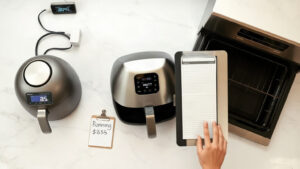
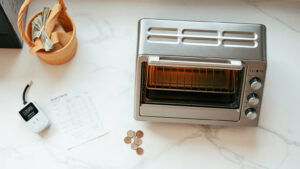
A toaster’s heating elements reach between 1,000°F and 1,200°F (538°C–649°C) at peak operation, though the air temperature inside the toaster slot sits closer to 300°F–500°F (149°C–260°C). The elements are that extreme because they need to transfer heat quickly via infrared radiation, not just warm the air. In practice, that means your bread goes from cold to golden in 60–90 seconds — and it also means you really don’t want to reach inside a running toaster.
Safety First: Toaster heating elements exceed 1,000°F during normal use. Never insert metal utensils, your fingers, or any foreign object into a toaster slot while it’s plugged in — even if it’s not actively toasting. Always unplug before attempting to clear a jam or shake out crumbs. Keep the toaster at least 4 inches from cabinets and curtains. A toaster fire can ignite crumb buildup in seconds; empty the crumb tray weekly.
Quick Facts: Toaster Internal Temperatures at a Glance
- Pop-up toaster heating elements: 1,000°F–1,200°F (538°C–649°C)
- Air temperature inside the toast slot: roughly 300°F–500°F (149°C–260°C)
- Toaster oven interior (set at 350°F): typically reads 320°F–370°F — the thermostat overshoots and recovers in cycles
- Exterior surface of a pop-up toaster during use: 150°F–200°F (65°C–93°C) — hot enough to burn skin on contact
- Bread’s surface hits approximately 300°F–350°F before it browns; the Maillard reaction kicks in around 280°F–330°F
How a Pop-Up Toaster Actually Heats Up
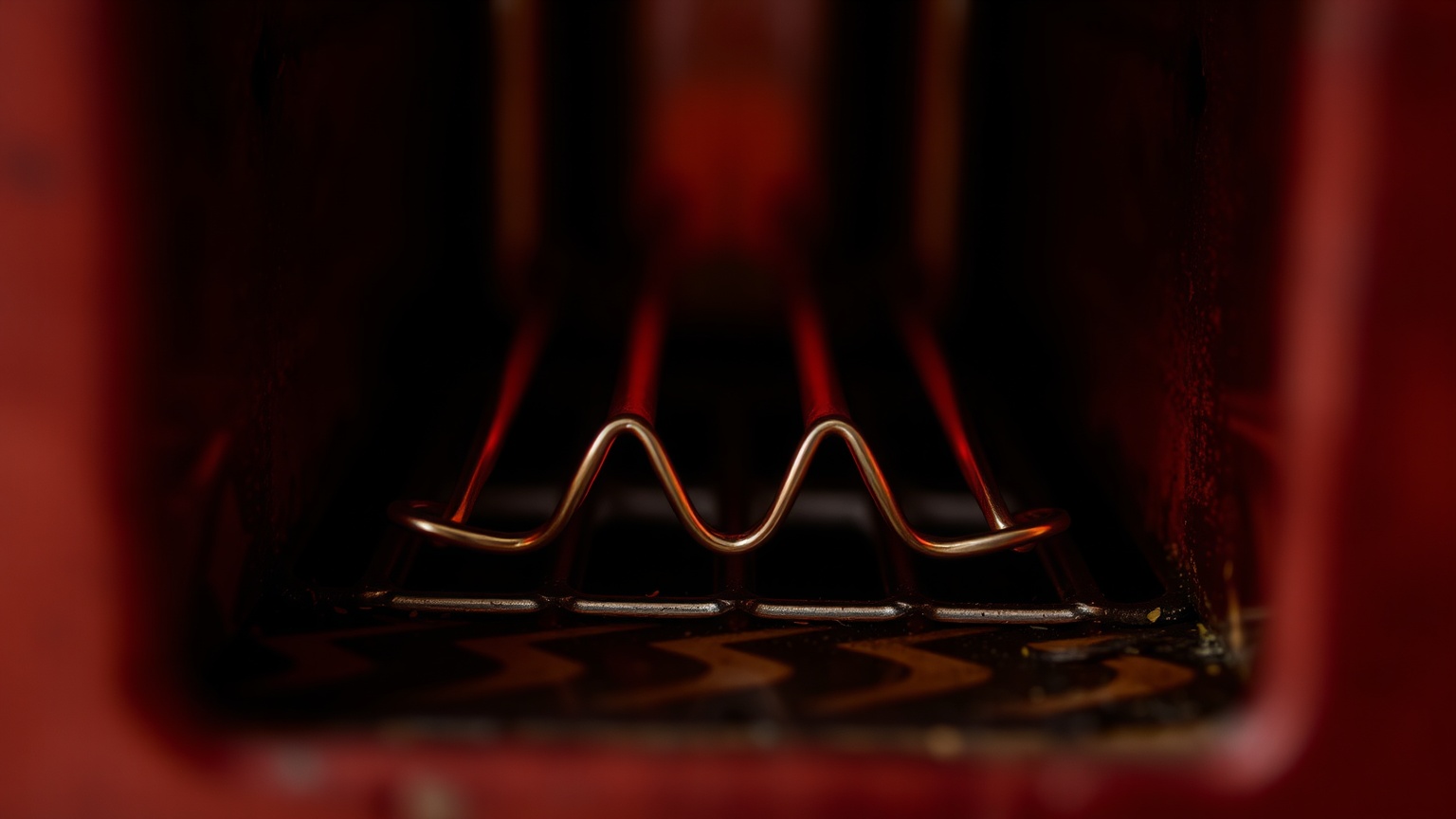
Here’s something that surprised me the first time I thought about it: the heating element in a toaster isn’t trying to bake your bread. It’s radiating. The nichrome wire coils glow orange-red and emit infrared radiation that hits the bread’s surface directly, which is why toast can go from pale to burnt shockingly fast if you walk away.
Nichrome (nickel-chromium alloy) is the go-to material for these elements because it handles the thermal expansion and contraction of thousands of heat cycles without failing. It’s also highly resistive, meaning it converts electrical energy into heat very efficiently. A 900-watt toaster running for 90 seconds is doing a lot of work in a small space.
The elements themselves glow somewhere around 1,000°F–1,200°F. But that doesn’t mean the air inside the slot reaches that temperature. Air is a poor conductor compared to direct radiation, so the slot air lands in the 300°F–500°F range depending on the shade setting you’ve chosen and how long the cycle runs. Still very, very hot. But a different kind of hot than the element itself.
What the Shade Dial Actually Controls
The shade dial doesn’t change the temperature of the elements. It adjusts the duration of the cycle. On a setting of 2 or 3, the timer cuts the power before the bread surface has absorbed enough energy to fully brown. On 5 or 6, the cycle runs longer, the surface reaches 310°F–350°F, and you get full Maillard browning. Burn it, and the surface carbons are forming above 400°F.
I typically run my own toaster at setting 3 for sliced sourdough — setting 4 goes just a hair past what I want. It took me embarrassingly long to figure out the dial was about time, not heat level. Once you know that, it changes how you troubleshoot uneven toasting entirely.
Pop-Up Toaster vs. Toaster Oven: Very Different Heat Profiles
A toaster oven operates on a fundamentally different principle. Yes, it also uses heating elements, but it’s trying to heat an enclosed air space to a specific target temperature — much more like a small conventional oven. The temperature range on most toaster ovens runs from about 150°F on a “warm” setting up to 450°F–500°F at maximum. Some convection toaster ovens go to 500°F or even 550°F.
The catch? Toaster oven thermostats are not precision instruments. I’ve tested my Cuisinart at a nominal 350°F and watched an oven thermometer swing between 325°F and 385°F within the same 10-minute window. That’s a 60-degree spread. It’s normal. The element cycles on and off to maintain the average, so you get these temperature pulses. If you’re baking something delicate, a good toaster oven thermometer is not optional.
For more on getting the most out of a toaster oven’s temperature settings, my article on reheating food in a toaster oven covers the practical side of matching temperature to food type.
Convection Mode Changes the Feel of the Heat
Convection adds a fan that moves the hot air around. You’ll often see the recommendation to reduce convection temps by 25°F versus a standard setting. That’s because moving air transfers heat to food more efficiently than still air — the surface of whatever you’re cooking hits temperature faster. So a convection setting of 325°F will brown a piece of toast faster than a still-air setting of 350°F. Not obvious, but important if you’re baking on a toaster oven baking pan and wondering why things are browning on the bottom before the top is done.
Temperature Comparison Table: Toasters and Toaster Ovens
| Heat Source / Setting | Temperature Range | Notes |
|---|---|---|
| Pop-up toaster heating element | 1,000°F–1,200°F (538°C–649°C) | Direct infrared radiation; not air temp |
| Pop-up toaster interior air (slot) | 300°F–500°F (149°C–260°C) | Varies by shade setting and cycle length |
| Pop-up toaster exterior surface | 150°F–200°F (65°C–93°C) | Hot enough for skin burns |
| Toaster oven — Warm setting | 150°F–200°F (66°C–93°C) | Holding temp only |
| Toaster oven — Toast/Bake setting | 300°F–425°F (149°C–218°C) | Most common cooking range |
| Toaster oven — Max setting | 450°F–550°F (232°C–288°C) | Some convection models only |
| Toaster oven element itself | Up to 900°F–1,000°F (482°C–538°C) | Lower than pop-up; longer cycles |
| Bread surface at full Maillard brown | 280°F–350°F (138°C–177°C) | Surface temp, not interior |
What Happens to the Outside of the Toaster?
People underestimate how hot the exterior gets. I’ve touched the side of my pop-up toaster mid-cycle without thinking — once. The exterior shell on most pop-up toasters hits 150°F–200°F during normal operation. That’s well above the 131°F threshold where prolonged skin contact causes a burn. Stainless steel bodies get hotter than plastic ones because metal conducts heat more readily.
Toaster ovens run even hotter on the outside. The door glass on a cheap toaster oven can reach 200°F–250°F. The back and sides can hit similar numbers. This is a real concern for kitchen placement — don’t shove a toaster oven against a cabinet wall, and keep it clear of paper towels, wood surfaces, and anything flammable. I learned this the hard way when I noticed discoloration on the underside of my cabinet after a few months of use. Now there’s a ceramic tile under it and 6 inches of clearance on each side.
An Edge Case Most Articles Miss: Cold Start vs. Warm Toaster
Here’s something I haven’t seen addressed anywhere: the first slice and the second slice don’t toast the same. When you run a second cycle right after the first, the toaster’s interior is already preheated. The air temperature in the slot starts higher than it did on the cold first run, so the second piece of bread will brown faster — sometimes noticeably so — even on the same shade setting.
If you’re making toast for a group and running cycle after cycle, you might want to drop the shade setting by half a notch on subsequent rounds. Or just watch the first batch out of any given set. Bagels especially — they take longer on a cold toaster, then come out almost too dark on a warm one at the same setting. This thermal accumulation effect is real and under-discussed.
Toaster ovens don’t have this problem in the same way because they’re thermostat-controlled — the oven compensates for pre-existing heat by simply cycling the element on less. Still, preheating matters. A toaster oven that’s been cold-started might undershoot temperature for the first 3–5 minutes, which affects the bottom crust on bread or pizza if you start baking immediately. I always give mine about 5 minutes once it signals it’s ready, especially for anything on a toaster oven wire rack.
According to Serious Eats, preheating matters significantly for any baking application — even in a small countertop oven. The principle is the same whether you’re using a full-size range or a 6-slice toaster oven.
Is It Safe to Leave a Toaster Plugged In?
Technically, a pop-up toaster draws negligible power when not in a cycle — the heating elements are only active when you push the lever down. But there’s still a residual electrical connection. And toaster fires don’t only happen during use; crumb buildup can smolder after a cycle ends if there’s enough debris. The USDA and fire safety agencies generally recommend unplugging small appliances when not in use.
Personally, I unplug my pop-up toaster when I’m not using it. It takes two seconds and I’m not interested in finding out the hard way. The toaster oven stays plugged in because it’s harder to reach the outlet, but the crumb tray gets emptied every week without fail.
For a full look at safe toaster placement and heat output context, check out our piece on how hot a toaster gets — it covers the surface temperature side in more detail. And if you’re shopping for a compact option, our best mini toaster ovens guide has picks that balance heat performance and safety features.
The Bottom Line
The numbers matter here. A pop-up toaster’s elements hit 1,000°F–1,200°F — that’s not a typo. The air in the slot runs 300°F–500°F depending on settings. Your toaster oven swings in a 50–60 degree range around whatever temperature you set. None of this is dangerous if you treat the appliance with basic respect, but it does explain why a dropped piece of bread can ignite, why the sides get untouchably hot, and why your second round of toast always comes out darker than the first.
Know the temps, adjust for them, and clean the crumb tray. That’s basically all there is to it.
Frequently Asked Questions
How hot does a toaster get inside?
The heating elements inside a pop-up toaster reach 1,000°F–1,200°F (538°C–649°C) during a normal cycle. The air temperature inside the toast slot is lower, typically 300°F–500°F (149°C–260°C), because air doesn’t absorb radiant heat as efficiently as the bread surface does. Both temperatures are hot enough to cause serious burns instantly.
What temperature does a toaster oven reach?
Most toaster ovens are adjustable from around 150°F (warm/hold) up to 450°F–500°F at maximum heat, with some convection models reaching 550°F. The actual internal air temperature fluctuates 25°F–50°F above and below the set point as the element cycles on and off. Using an independent oven thermometer is the best way to know what temperature you’re actually cooking at.
Is it safe to leave a toaster plugged in?
A toaster draws very little power when idle, but it remains a fire risk if crumbs accumulate in the tray and smolder after a cycle. Fire safety organizations recommend unplugging toasters when not in use. At minimum, empty the crumb tray weekly and never leave a toaster running unattended.
Why does my second piece of toast always come out darker?
This happens because the toaster’s interior is already warm from the first cycle. The air temperature inside the slot starts higher, so the same shade setting results in a longer effective exposure to heat. Dropping the shade dial by half a setting on consecutive cycles usually fixes this, especially with bagels or thick bread.
How hot does the outside of a toaster get?
The exterior surface of a pop-up toaster typically reaches 150°F–200°F (65°C–93°C) during operation — hot enough to cause a burn with sustained contact. Stainless steel models conduct heat more to the surface than plastic ones. Toaster oven doors and side panels can reach 200°F–250°F, which is why clearance from cabinets and flammable surfaces is important.

Written by
Emma founded Toastera to turn vague appliance advice into clear, researched, safety-first guidance on toasters and toaster ovens.
Free: the Toaster Oven Cheat Sheet
Get the printable cheat sheet (temps, cook times & safety tips) plus new recipes. No spam, unsubscribe anytime.