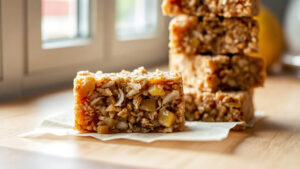
Yes, you can use parchment paper in a toaster oven — but only under specific conditions. Most parchment paper is rated to 420–450°F, and toaster ovens can easily exceed that if you’re not careful, which is where things go wrong. Keep the temperature at or below 400°F, never let the paper touch the heating elements, and skip it entirely if you’re using the broil setting.
Safety First: Parchment paper left too close to a toaster oven’s exposed heating elements can scorch, smolder, or ignite. Always keep the paper fully tucked under your food, trim it so it doesn’t hang over the edges of the pan, and never use parchment on the broil setting or above 400°F. If you smell burning paper, turn off the oven immediately.
Quick Facts
- Most parchment paper has a heat limit of 420–450°F; Reynolds Kitchens specifically advises against using their parchment in toaster ovens at any temperature.
- Toaster ovens can hit 450–500°F near the heating elements, even when set to 375°F on the dial.
- Safe use is possible at 400°F or below, with the paper completely covered by food and trimmed to fit the pan.
- Broil mode = no parchment. Ever. The radiant heat is simply too intense and too direct.
- Silicone baking mats and unglazed ceramic tiles are the safest long-term alternatives.
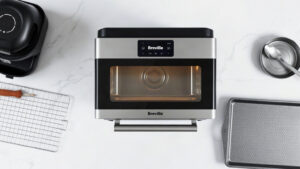
I’ll be honest — the first time I used parchment in my Breville Mini Smart Oven, I didn’t trim the paper. Set it to 375°F to bake some salmon. Within about eight minutes, the corner of the parchment that was sticking out past the pan had curled up toward the top element and turned a deep, alarming brown. Nothing caught fire, but it was close enough to rattle me. Since then, I’ve gotten a lot more deliberate about how I use it.
Why Toaster Ovens Are Riskier Than Full-Size Ovens
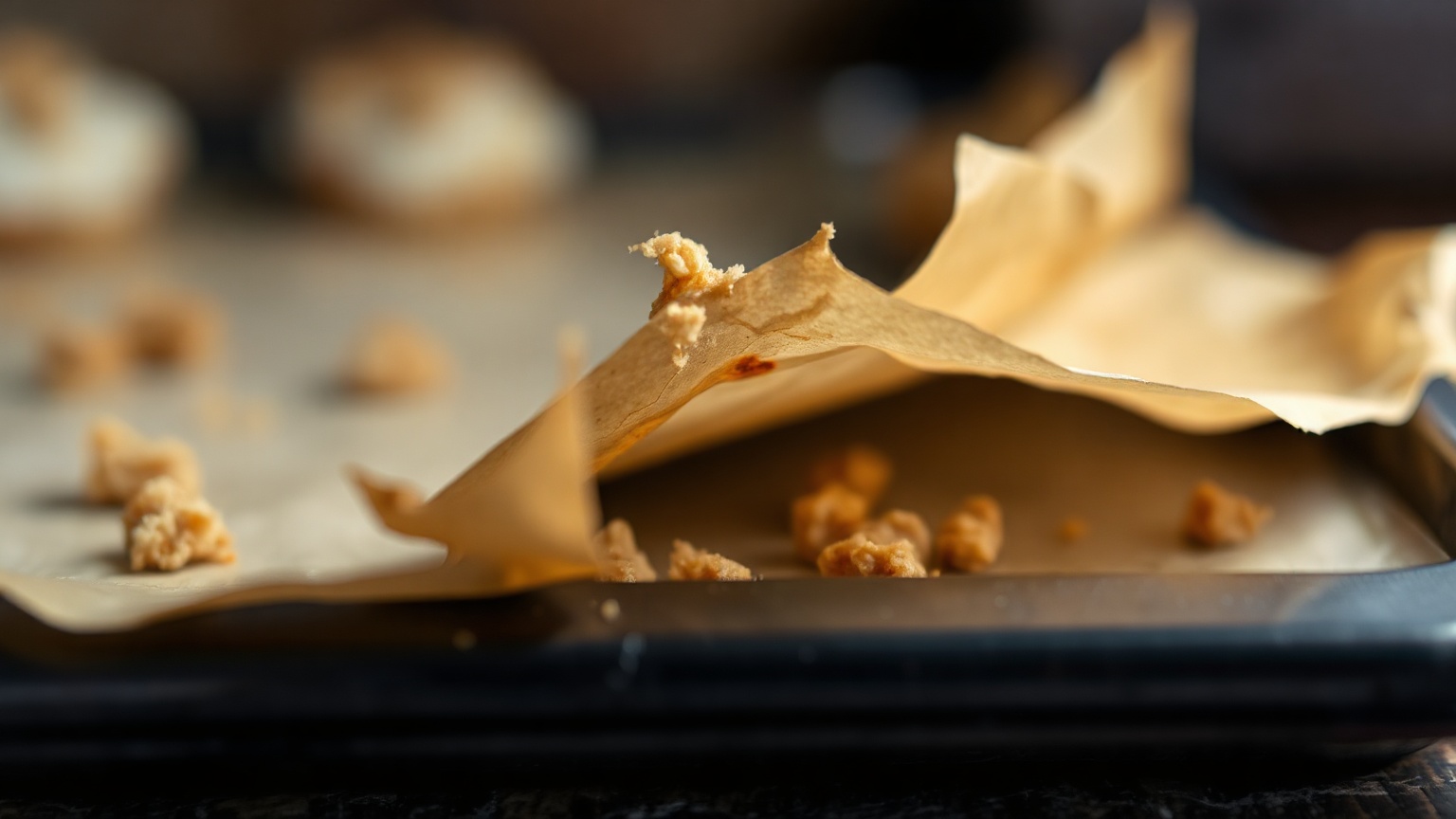
The core problem is proximity. In a standard full-size oven, you’ve got eight to twelve inches between your baking rack and the top broil element. In most toaster ovens, that gap is three to five inches, sometimes less. The heating elements — usually exposed nichrome coils or quartz tubes — radiate intense heat, and any paper that drifts upward or overhangs the pan is basically sitting in their direct path.
There’s also something worth understanding about how toaster ovens cycle. They overshoot. A toaster oven set to 350°F might spike to 400°F or higher during the initial heating cycle before the thermostat cuts power. I’ve verified this with an oven thermometer in three different machines — the Cuisinart TOA-60, a basic Hamilton Beach, and my current Breville. All of them ran 25–50°F hot at some point during a preheat. That matters when you’re relying on a paper product that has a fixed temperature ceiling.
You can read more about how hot a toaster gets in general — the same thermal dynamics apply to toaster ovens, just in an even more confined space.
What Parchment Paper Manufacturers Actually Say
Reynolds Kitchens is the big name here, and their official stance is that you should not use their parchment paper in a toaster oven. Full stop. Their reasoning lines up with what I described above — the proximity to heating elements makes it too unpredictable. Other brands like If You Care (their unbleached parchment is rated to 425°F) don’t explicitly ban toaster oven use, but they do warn against contact with open flames or broiling elements, which in a toaster oven amounts to the same thing.
The FDA classifies parchment paper as generally safe for oven use, but “oven use” in that context means a conventional full-size oven, not the hot little box on your countertop. Serious Eats has a good breakdown of parchment vs. silicone mats for baking, and while they’re not specifically addressing toaster ovens, the temperature ratings they cite are exactly the ones you need to keep in mind.
Temperature Guide: When Parchment Is (and Isn’t) Safe
Here’s a table I put together based on my own testing and the published specs for common parchment brands. The “safe” designation assumes the paper is properly trimmed and fully weighted down by food.
| Toaster Oven Setting | Approximate Actual Temp | Parchment Safe? | Notes |
|---|---|---|---|
| Toast / Broil | 450–500°F+ | No | Direct radiant heat, too dangerous |
| Bake at 425°F | 440–475°F | No | Exceeds most parchment ratings |
| Bake at 400°F | 415–440°F | Borderline | Only if paper is fully covered by food |
| Bake at 375°F | 390–420°F | Usually OK | Trim paper, monitor closely |
| Bake at 350°F or lower | 360–390°F | Yes | Safest range; still trim the paper |
| Warm / 200–250°F | 200–270°F | Yes | No meaningful risk at this range |
My personal cutoff is 375°F. Above that, I switch to a silicone baking mat designed for toaster ovens or just use a well-greased nonstick toaster oven baking pan. Less fuss, zero anxiety.
How to Use Parchment Paper Safely If You Choose To
Trim It to Fit Inside the Pan
The paper should sit inside the pan, not draped over the edges. I cut mine so there’s about a half-inch of clearance on all sides from the pan rim. That way there’s no loose edge to curl up toward the elements. Sounds fussy, but it takes thirty seconds and it’s genuinely the most important step.
Always Have Food on Top of It
Don’t slide a bare sheet of parchment into a hot toaster oven thinking you’ll place food on it after. The paper needs to be weighted down before the heat starts doing its thing. Even a light food item — thin fish fillets, a few cookies — is enough to keep the paper from lifting and contacting an element.
Preheat Without the Paper
This is a habit I picked up after the salmon incident. I preheat the toaster oven, then place my food on parchment on a cold pan, and slide the whole thing in once the oven’s already at temperature. Skips the temperature spike phase entirely. Not strictly necessary at 350°F, but worth doing at 375°F and above.
Keep Your Eyes on It
Toaster ovens are small and fast. Don’t set a 25-minute cookie timer and walk away. Check at the 10-minute mark. If the parchment edges are darkening, that’s your sign to either remove the paper or accept that something went wrong. A slightly darkened edge isn’t necessarily dangerous, but browning paper means it’s close to its limit.
The Better Alternatives (And One Edge Case Nobody Mentions)
Silicone baking mats — Silpat being the most well-known — are rated to 480°F and handle toaster oven heat without complaint. They’re reusable, they don’t shift around, and honestly they release baked goods better than parchment anyway. If you’re baking cookies in a toaster oven more than occasionally, a mat cut to fit your pan is worth owning. I’ve had mine for four years.
Aluminum foil works as a liner but it’s not a direct substitute — it won’t prevent sticking the way parchment does. For roasting vegetables or catching drips, it’s fine. For cookies or delicate items, less so.
Now, the edge case nobody seems to talk about: convection mode. Most mid-range toaster ovens have a convection fan, and when it’s running, it creates airflow inside the cavity. That airflow can physically lift an improperly secured sheet of parchment even at safe temperatures like 350°F. I found this out making roasted chickpeas — the paper fluttered up and the chickpeas scattered everywhere. Annoying, not dangerous, but still. In convection mode, you need the paper to be firmly held down by a reasonably heavy food item or a rack placed on top. Lightweight foods on a convection setting are exactly when parchment becomes unpredictable.
If you’re reheating food in a toaster oven, parchment is usually fine since reheating temps are typically well under 350°F. But if your leftover pizza goes in at 400°F, skip the parchment and use foil or nothing.
And if you’re in the market for a machine that gives you better temperature control in the first place, our guide to the best mini toaster ovens has some solid options with reliable thermostats — which makes the whole parchment question easier to manage. Food Network also has a useful primer on parchment paper use that covers general oven baking, worth reading if you want background on why parchment behaves the way it does.
The Bottom Line
Parchment paper in a toaster oven isn’t automatically dangerous, but it’s not automatically safe either. The margin for error is smaller than in a full-size oven, the heating elements are closer, and the ovens run hotter than their dials suggest. At 350–375°F with properly trimmed paper that’s covered by food? You’re almost certainly fine. At 425°F with a loose overhang near the top element? That’s where things go sideways.
My honest take: for everyday toaster oven baking, a silicone mat is just a better tool. Parchment has its place, and I still use it sometimes, but not when I’m cooking above 375°F or using convection, and never on broil. Know the limits, stay within them, and you won’t have a problem.
Frequently Asked Questions
Can parchment paper catch fire in a toaster oven?
Yes, it can — parchment paper’s ignition point is around 451°F, and toaster ovens can exceed that near the heating elements even at lower dial settings. The risk is highest when paper overhangs the pan or contacts an exposed element directly. Keep it trimmed, keep it covered by food, and stay below 400°F to avoid this.
What temperature is safe for parchment paper in a toaster oven?
Most parchment paper is rated to 420–450°F, but given that toaster ovens often run 25–50°F hotter than their set temperature, staying at or below 375°F is the practical safe limit. At 400°F you’re in borderline territory — it may be fine, but it requires the paper to be completely covered by food and properly trimmed.
Is it safe to use parchment paper in a toaster oven on the broil setting?
No. Broil mode generates intense direct radiant heat from the top element, regularly exceeding 500°F, which is well above any parchment paper’s safe operating range. Use foil (loosely tented if needed) or nothing on the pan when broiling in a toaster oven.
What can I use instead of parchment paper in a toaster oven?
A silicone baking mat cut to fit your pan is the best substitute — it’s rated to 480°F, reusable, and releases food cleanly. A nonstick wire rack works well for items that benefit from airflow underneath. Aluminum foil is an option for catching grease or drips, though it won’t prevent sticking the way parchment or silicone does.
Can I use parchment paper in a toaster oven when using convection mode?
You can, but convection’s internal airflow makes it riskier because it can lift unsecured paper even at moderate temperatures. If you use parchment in convection mode, make sure your food is heavy enough to hold it flat throughout the cook — lightweight items like thin vegetables or crackers may not be enough. A silicone mat is a much better choice for convection baking.
—
Written by
Emma founded Toastera to turn vague appliance advice into clear, researched, safety-first guidance on toasters and toaster ovens.
Free: the Toaster Oven Cheat Sheet
Get the printable cheat sheet (temps, cook times & safety tips) plus new recipes. No spam, unsubscribe anytime.