Most 4-slice toasters cannot toast two different browning levels at the same time — unless the model has two independent control zones, which only some do. Single-dial 4-slice toasters apply one setting across all four slots simultaneously. If yours has dual controls (one knob or panel per pair of slots), then yes, you can run each side at a completely different browning level at the same time.
Safety First: Never leave a toaster unattended while in use, and keep it at least 4 inches away from curtains, paper towels, and cabinet overhangs. Toaster heating elements reach 300–400°F internally — crumb trays that aren’t emptied regularly are a genuine fire risk. Always unplug before cleaning or clearing a jam. Never use a metal utensil inside a slot to retrieve stuck toast; tip the toaster over a sink instead.
Quick Facts
- 4-slice toasters come in two types: single-zone (one dial controls all four slots) and dual-zone (two independent control panels, one per pair of slots).
- Only dual-zone models can toast two different browning levels simultaneously — and they’re more common than most people realize, especially in the $40–$80 price range.
- Browning level dials don’t set a temperature — they adjust how long the heating elements stay on, typically between 45 seconds and 3.5 minutes depending on setting.
- Even on dual-zone toasters, both zones usually share the same wattage pool, so running both sides simultaneously can slightly extend toast time on each side.
- The “bagel” button found on many 4-slice toasters heats only the inner-facing elements — it doesn’t change the browning level independently per slot.
I’ve been testing toasters in my kitchen for a few years now, and this question trips people up constantly — including me, the first time I bought a 4-slicer and assumed the two dials worked like separate appliances. They don’t always. Here’s what’s actually going on inside those controls.
The Two Types of 4-Slice Toasters (and Why It Matters)
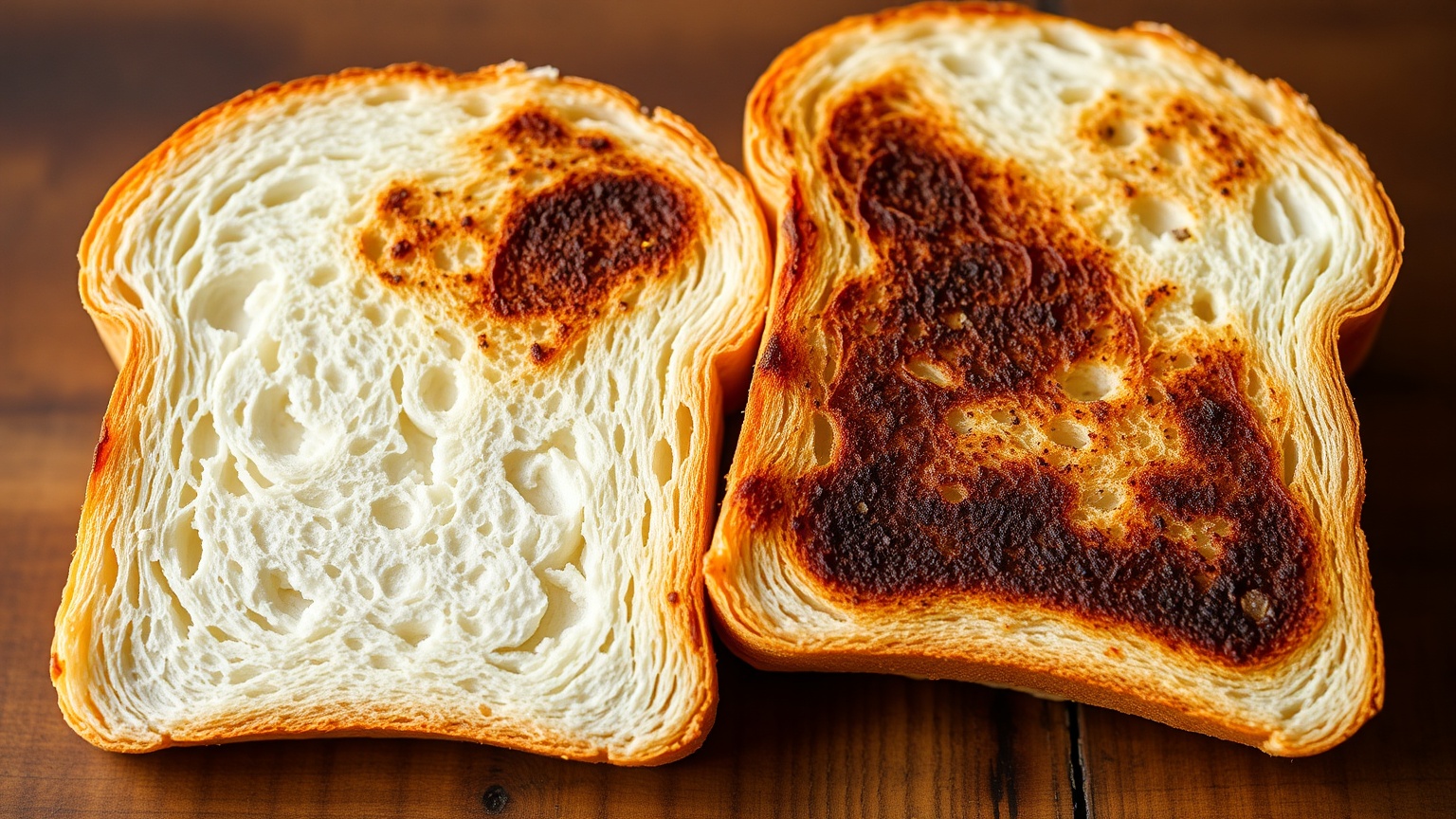
Walk into any kitchen store or scroll through Amazon and you’ll see 4-slice toasters lumped together as if they’re all the same. They’re not. The single most important thing to check before you buy — or before you assume you can run two browning levels — is whether your model has one shared control or two separate ones.
Single-Zone Toasters
These have one dial, one lever, one cancel button. All four slots fire together at the same browning level for the same duration. You cannot run slots 1 and 2 at level 3 while slots 3 and 4 run at level 6. It’s one setting, four slots, done. Budget 4-slice toasters — especially anything under $35 — almost always fall into this category. The Cuisinart CPT-142, for instance, has a single browning dial that governs all four slots at once.
Dual-Zone Toasters
These split the four slots into two pairs — left pair and right pair — each with its own lever, dial, and cancel button. You load your bagel on the left at setting 4 and your kid’s white bread on the right at setting 2, press both levers down, and each side toasts independently. Brands like Breville, Hamilton Beach, and KitchenAid have offered dual-zone 4-slice models for years. The dual-zone 4-slice toasters on Amazon now cover a pretty wide price range, from about $45 up to $150+.
My personal pick for households where people genuinely disagree on toast darkness (every household, basically) is a dual-zone model. My partner likes barely-golden toast that I would describe as “aggressively underdone.” I like it dark enough to have structural integrity. A dual-zone toaster is the only peaceful solution we’ve found.
What the Browning Dial Actually Does
This surprises a lot of people: the browning level dial on a toaster doesn’t change the temperature of the heating elements. The elements run at roughly the same heat regardless of what setting you choose — typically between 300°F and 400°F at the element surface, which you can read more about in our deep look at how hot a toaster gets. What the dial actually controls is time. Specifically, it adjusts a bimetallic strip (in older analog toasters) or a timer circuit (in digital ones) that determines how long the elements stay energized before popping the lever up.
At setting 1 on most toasters, you’re looking at roughly 45–60 seconds of toasting. At setting 6 or 7 (the darkest end of most dials), that stretches to 3–3.5 minutes. Setting 3 or 4 — which is what I default to for standard sandwich bread — usually runs about 90 seconds to 2 minutes. These aren’t universal numbers; they’ll vary by brand and wattage, but they’re a reasonable ballpark from my own stopwatch testing.
Why This Matters for Dual-Zone Operation
Because browning is about time, not temperature, running two zones simultaneously is totally safe electrically. The two pairs of slots just time out at different intervals. The left side might pop up at 90 seconds on setting 3, while the right side keeps going until 2 minutes 45 seconds on setting 6. No conflict, no drama.
What does happen — and this is something the product listings don’t mention — is a slight power draw effect. Most 4-slice toasters are rated at 1,400–1,800 watts total. When both zones run at once, they’re sharing that wattage. On some models, I’ve noticed toast takes about 10–15 seconds longer per side compared to running just one zone. Not a big deal. But if you’re timing breakfast to the minute, it’s worth knowing.
Browning Level Comparison: Single-Zone vs. Dual-Zone
| Feature | Single-Zone 4-Slice | Dual-Zone 4-Slice |
|---|---|---|
| Independent browning per pair of slots | No | Yes |
| Separate levers/buttons | No — one lever for all | Yes — one per pair |
| Typical price range | $20–$45 | $45–$150+ |
| Can run only 2 slots at once? | No — all 4 fire together | Yes — activate one zone only |
| Wattage (typical) | 1,400–1,500W | 1,500–1,800W |
| Good for households with different preferences? | Not really | Yes |
How to Tell What Type You Have Right Now
Don’t dig out the manual. Just look at the toaster. If there’s one dial and one lever for all four slots, it’s single-zone. If there are two dials and two levers — usually with slots clearly grouped in pairs, often with a slight physical gap between them — it’s dual-zone. Some models label the zones “A/B” or “left/right” on the control panel.
The first time I bought a 4-slice toaster, I assumed the two dials were just redundant — like a visual design thing. I set them both to the same number out of habit and never questioned it. It wasn’t until I actually read why the two levers existed that I realized I’d been ignoring half the functionality for six months. Not my finest hour.
If you’re shopping for a new one specifically because you want dual browning control, check the product description for the phrases “independent controls,” “two separate toasting zones,” or “dual control.” If those words aren’t there, assume it’s single-zone and verify before buying. The 4-slice toasters with independent browning controls are usually easy to spot once you know what to look for.
The Edge Case Nobody Talks About: The Bagel Button
Most people assume the bagel function gives you a totally separate control mode. It doesn’t — not in the way you might hope. On a standard 4-slice toaster with a bagel button, pressing it cuts power to the outer-facing heating elements so only the inner elements (the ones facing the cut side of the bagel) actively toast. The outer element stays on at a lower level, or sometimes off entirely, just to warm the outside without crisping it.
Here’s the edge case: if you put bagels in one pair of slots and regular bread in the other on a dual-zone toaster, can you use the bagel function on just one side? On some models, yes — the bagel button applies per zone. On others, pressing bagel affects all four slots. Check your model. This matters if you’re making a bagel for yourself and plain toast for someone else at the same time.
According to Serious Eats’ toaster reviews, one of the most underrated features in mid-range 4-slice toasters is exactly this kind of zone-specific function control — and it’s one of the first things their testers check. I’d agree. It’s the detail that separates a genuinely useful dual-zone toaster from one that’s dual-zone in name only.
Practical Tips for Getting the Most Out of Your 4-Slice Toaster
A few things I’ve learned from actually using these daily rather than just reading spec sheets:
- Start one setting lower than you think. Every toaster I’ve tested runs hotter than the dial implies, especially when it’s been used back-to-back. If you want medium toast, start at 3, not 4. Reheat cycles especially — the second round always browns faster.
- Thicker bread needs more time, not higher settings. Artisan sourdough sliced thick should go on a higher number (5–6), but if you’re getting very dark outsides and cold-ish middles, you’re better off running a lower setting twice than blasting it once at 7.
- Don’t toast frozen bread at the same setting as fresh. Frozen slices need about 1.5x the time. Most toasters have a dedicated frozen setting that adds roughly 30–45 seconds automatically. Use it.
- If you only need two slices, use just one zone. On dual-zone models, activating only one pair of slots concentrates the full wattage into that zone — toast comes out slightly faster and occasionally more evenly in my experience.
- Empty the crumb tray weekly. It takes 20 seconds and meaningfully reduces the smell (and fire risk) that comes from accumulated crumbs hitting the heating element. I know everyone skips this. Don’t.
And if you ever want to get more creative with toasted and reheated foods beyond basic bread, it’s worth considering whether a small toaster oven might serve you better for some tasks — our guide on reheating food in a toaster oven covers where slot toasters fall short and a countertop oven picks up the slack.
The Bottom Line
Whether a 4-slice toaster can handle two different browning levels at once comes down entirely to the model you own. Single-zone models can’t — full stop. Dual-zone models can, and they work well for it, with the minor caveat that running both zones simultaneously may add 10–15 seconds to each side’s toast time. If your household regularly wants different toast darkness levels at the same meal, a dual-zone 4-slice is genuinely worth the extra $15–$30 over a basic single-dial model. It’s one of those features you never knew you needed until you use it every morning.
If you’re in the market and want more options that go beyond a standard slot toaster, our roundup of the best mini toaster ovens includes some compact models that handle toast, bagels, and a lot more — handy if you’re working with a small kitchen and want more flexibility than a standard toaster gives you.
Frequently Asked Questions
Can a 4-slice toaster toast two different browning levels at once?
Yes, but only if the toaster has two independent control zones — one dial and lever per pair of slots. Single-zone 4-slice toasters apply one browning setting to all four slots simultaneously, so you can’t split the levels. Check your toaster for two separate levers; if there’s only one, it’s a single-zone model.
Does the browning dial on a toaster control temperature?
No — the browning dial controls toasting time, not temperature. Heating elements run at roughly the same heat regardless of the dial position. A lower setting cuts power to the elements sooner (around 45–60 seconds), while a higher setting keeps them on longer (up to 3–3.5 minutes).
What’s the difference between a 2-slice and 4-slice toaster for speed?
A 4-slice toaster is not necessarily twice as fast as running a 2-slice toaster twice — they’re roughly equivalent in total throughput if you need four slices. A 4-slice toaster does all four in one cycle, while a 2-slice toaster needs two back-to-back cycles. The second cycle in a 2-slice toaster is actually slightly faster because the elements are already warm.
Can I use only two slots in a 4-slice toaster?
On a dual-zone 4-slice toaster, yes — you can activate just one of the two zones and leave the other empty, which is perfectly fine and sometimes gives slightly better results since the wattage concentrates into fewer slots. On a single-zone toaster, pressing the one lever activates all four slots’ heating elements regardless of whether you’ve put bread in all of them.
How do I know if my 4-slice toaster has independent controls?
Look for two separate levers, two separate browning dials, and two cancel buttons — one set for each pair of slots. Many dual-zone models also have a slight physical gap or raised divider between the two slot pairs on the chassis. If you see only one lever and one dial controlling all four slots, it’s a single-zone model.

Written by
Emma founded Toastera to turn vague appliance advice into clear, researched, safety-first guidance on toasters and toaster ovens.
Free: the Toaster Oven Cheat Sheet
Get the printable cheat sheet (temps, cook times & safety tips) plus new recipes. No spam, unsubscribe anytime.