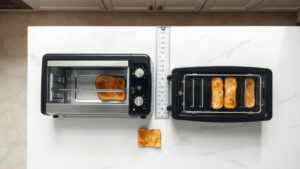
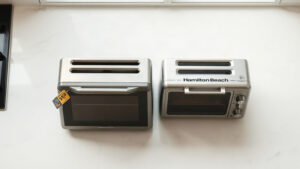
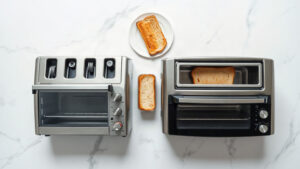
A 2-slice toaster should last between 6 and 10 years under normal use, though cheaper models often quit around the 3–5 year mark. The main culprits are the heating elements and the spring mechanism — both have a finite number of cycles. Buy quality once, and you’ll likely get a decade out of it; buy on price alone, and you might be back at the store in three years.
Safety First: A toaster that’s malfunctioning — sparking, smoking, or toasting unevenly on one side — should be unplugged immediately and not used again until inspected or replaced. Never stick anything metal inside a plugged-in toaster to dislodge stuck bread; unplug it first, every time. Crumb trays that overflow are a genuine fire risk, especially near curtains or wooden cabinets.
Quick Facts: 2-Slice Toaster Lifespan at a Glance
- Average lifespan: 6–8 years for mid-range models; up to 10+ years for premium builds like Dualit or Breville
- Budget toasters (under $25) often fail within 3–5 years, sometimes sooner
- Heating elements can complete roughly 10,000–15,000 toasting cycles before degrading noticeably
- The most common failure point is the spring/carriage mechanism, not the heating element itself
- Regular crumb tray cleaning is the single easiest thing you can do to extend lifespan
What Actually Wears Out Inside a Toaster
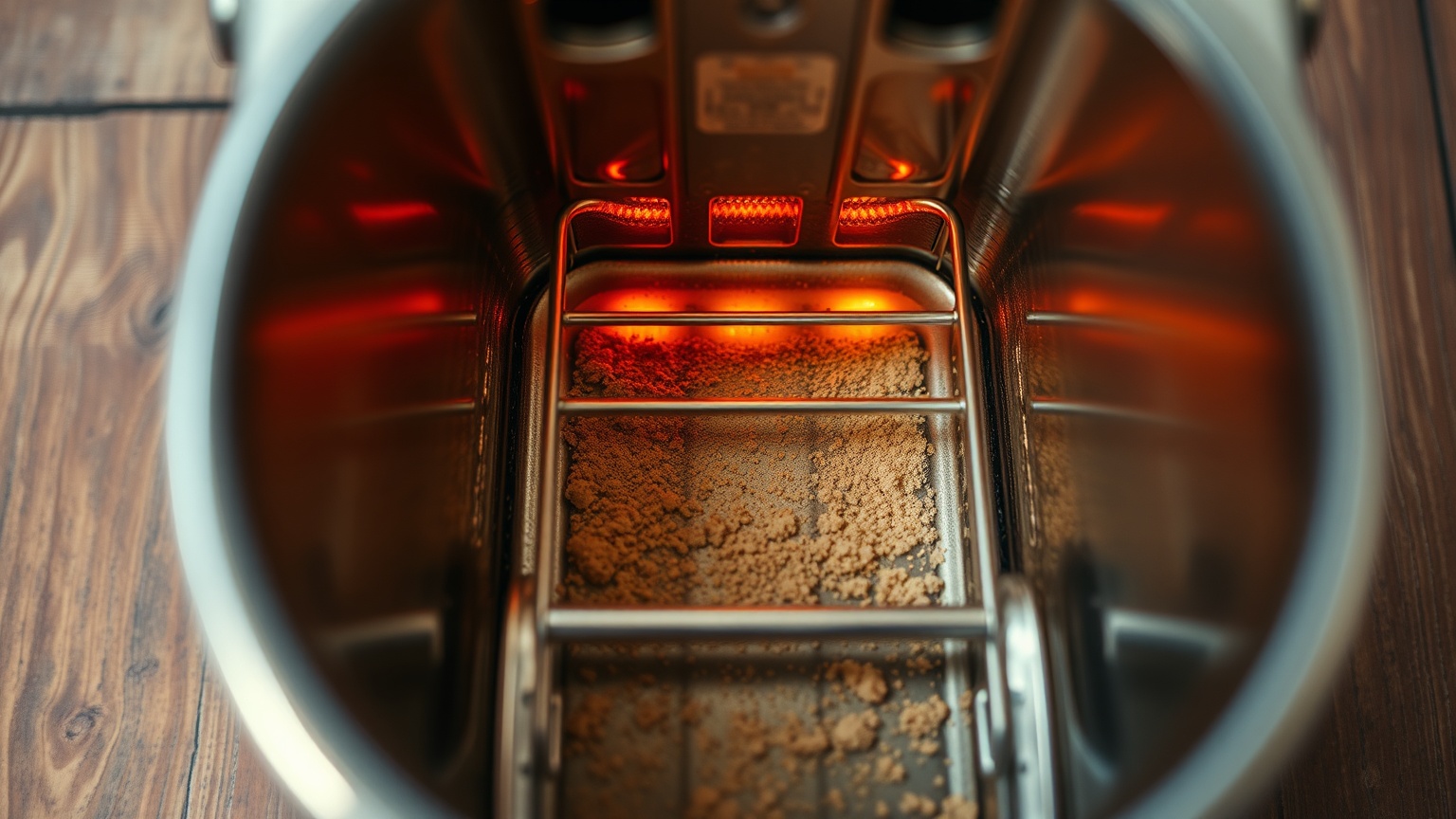
Most people assume the heating element is what dies first. It usually isn’t. In my experience — and I’ve gone through quite a few toasters on this kitchen counter over the years — the mechanical bits fail long before the nichrome wire does.
The Spring and Carriage Mechanism
That lever you push down every morning? It’s a spring-loaded carriage, and it takes a beating. The spring loses tension over time, so the carriage starts sticking partway down or shoots back up before the toast is done. I had a Black+Decker 2-slicer that did exactly this around year four — the bread would pop up after about 45 seconds, still pale as anything. You’d push it down again, it would pop again. Infuriating. That’s not an element problem; it’s a mechanical one, and it’s not worth repairing on a $35 toaster.
Heating Elements
The elements — thin coils of nichrome wire strung across a mica sheet — do eventually burn out, but they’re surprisingly resilient. They can handle internal temperatures of 300–400°F on a standard setting (here’s a breakdown of how hot a toaster actually gets). What kills them faster is moisture. If you’re toasting slightly damp bread, or if the toaster lives next to the kettle and gets hit with steam regularly, the elements corrode and degrade much faster than normal. One side going dark while the other barely browns is a classic element failure sign.
The Thermostat and Browning Control
The dial or shade selector tells the toaster when to shut off. On cheaper models, this is a bimetallic strip that bends with heat. Over thousands of cycles it loses calibration. You’ll notice the toaster burning bread on setting 3 when it used to take setting 5 to get the same result. That’s drift. It’s gradual, and people often don’t clock it until the toast is ruined.
How Toaster Price Affects How Long It Lasts
This is where I’ll be blunt: you really do get what you pay for, at least up to a point.
| Price Tier | Typical Brand Examples | Expected Lifespan | Build Quality Notes |
|---|---|---|---|
| Budget (under $25) | Hamilton Beach, Proctor Silex | 2–5 years | Thin steel, basic spring, limited cycles |
| Mid-range ($30–$70) | Black+Decker, Cuisinart, KitchenAid | 5–8 years | Better housing, more consistent elements |
| Premium ($80–$150) | Breville, De’Longhi | 7–12 years | Quartz elements, sturdier carriage |
| Professional/Repairable ($150+) | Dualit Vario | 15–20+ years | Replaceable elements, modular design |
The Dualit Vario is the edge case most comparison articles skip. It’s a commercial-heritage toaster designed so you can order replacement elements and swap them yourself. A coworker of mine has had one for 17 years and replaced the elements once. That’s a completely different product category from a $22 toaster — but it’s worth knowing it exists if you hate the idea of adding another appliance to a landfill every five years.
At the mid-range, I’d point you toward something in the Breville or Cuisinart 2-slice stainless toaster category. They’re not exciting purchases, but they’re ones you make once.
Clear Signs It’s Time to Replace Your Toaster
Some of these are obvious. Some people ignore them for way too long.
- Uneven toasting: One side consistently darker than the other, or pale patches across the bread face — that’s an element starting to fail
- The carriage won’t stay down: Or it drops without latching, or the toast ejects before browning starts
- Burning smell from the outside: A bit of smell inside is normal (crumbs burning off). Smell coming from the casing or vents is different — that’s plastic or wiring, not bread
- Sparking or flickering: Stop using it immediately. Full stop.
- It trips the circuit breaker: Occasionally in an older home? Maybe coincidence. Regularly? The toaster has a short.
Burning bread consistently on low settings even after you’ve cleaned the crumb tray is also a reliable tell. People adjust the dial down and down and down until they’re toasting on “1” to get medium toast, and they never quite register that the appliance has been slowly miscalibrating for a year.
What You Can Do to Actually Make It Last Longer
There’s no magic here. But there are a few habits that genuinely make a difference.
Clean the Crumb Tray (More Than You Think You Need To)
Most people clean it when it’s visibly overflowing. You should be doing it every week or two if you use the toaster daily. Accumulated crumbs sitting below the elements don’t just smell — they can ignite. They also hold moisture, which accelerates element corrosion. Pull the tray, shake it over the sink, wipe it down. Takes 90 seconds. According to fire safety guidance from the USDA’s food safety resources, crumb management in countertop appliances is one of the most overlooked kitchen fire prevention steps.
Where You Keep It Matters
Steam kills toasters slowly. Keeping yours directly beside the kettle or right below an over-sink cabinet means every boil pushes moisture into the slots. Move it a foot or two. I know that sounds fussy, but I moved mine away from the kettle about two years into owning a Cuisinart and the crumb tray rust I used to see every few months stopped appearing. Small thing, real difference.
Don’t Force Oversized Bread
Thick artisan loaves jammed into a standard slot put lateral stress on the carriage guides. Over time that bends them. If you’re a sourdough household, honestly just look at a mini toaster oven instead — they handle thick slices without any strain and do a lot more besides.
Unplug It When Not in Use
Yes, this also extends component life slightly by reducing standby heat cycling. More practically, it prevents the rare but real risk of a fault causing a fire when you’re not home. I unplug mine every time. Old habit. Worth having.
Is It Ever Worth Repairing a Broken Toaster?
Almost never, with one exception.
For a standard mid-range or budget toaster, the labor cost of a repair (or your own time, if you’re doing it) plus any parts typically exceeds the replacement cost of an equivalent new model. The internal components aren’t designed to be user-serviceable. There are no replacement springs available at the hardware store for your specific Black+Decker model.
The exception is that Dualit Vario I mentioned. Dualit sells element kits for around $25–$35, and their design is genuinely meant to be taken apart. If you bought one of those and an element goes — fix it. Everything else? Replace it and buy slightly better next time.
If you’re shopping for a replacement and considering upgrading to something with more versatility, the long-slot or wide-slot 2-slice toasters have gotten genuinely good at this price point and handle bagels and thick bread far better than the old narrow designs. Also worth reading up on reheating food in a toaster oven if you’re considering the switch from a slot toaster — it changes how you use the kitchen.
When to Replace vs. When to Wait
Here’s my honest take: if your toaster is under five years old and only mildly misbehaving — slight unevenness, crumb tray a bit warped — clean it thoroughly, adjust your usage, and give it another season. If it’s past seven years and showing multiple symptoms, just replace it. The math doesn’t favor waiting on a $40–$60 appliance.
If it’s sparking, burning from the casing, or tripping the breaker? Replace it today. Not next week.
Frequently Asked Questions
How long should a 2-slice toaster last before replacing?
A 2-slice toaster typically lasts 6–8 years with regular daily use, and up to 10 years or more for premium models like Breville or Dualit. Budget models under $25 often show failure signs within 3–5 years. The spring mechanism and element calibration are usually the first things to go, not the elements themselves.
What are the signs a toaster needs to be replaced?
The clearest signs are uneven browning (one side consistently darker), the carriage lever not staying down, burning smells coming from the casing rather than the bread, and visible sparking. If the toaster is tripping your circuit breaker regularly, stop using it immediately — that indicates an internal fault.
Is it safe to leave a toaster plugged in all the time?
Technically a toaster draws minimal standby power and won’t cause problems most of the time. That said, a toaster with worn internal components — frayed wiring, a faulty thermostat — poses a genuine fire risk if left plugged in unattended. Unplugging between uses is the safest habit, especially in older toasters.
How many cycles does a toaster heating element last?
A nichrome heating element in a standard 2-slice toaster is generally rated for roughly 10,000 to 15,000 cycles before showing degraded performance. At two slices per day, that’s roughly 13–20 years of element life — which means the mechanical components almost always fail well before the elements do.
Does a more expensive toaster actually last longer?
Yes, up to a meaningful point. Mid-range toasters ($40–$80) reliably outlast budget models by several years due to better spring mechanisms and more consistent elements. Above $80, you’re also getting build quality that affects longevity — but the biggest jump in real-world lifespan is from “budget” to “mid-range,” not from mid-range to premium.

Written by
Emma founded Toastera to turn vague appliance advice into clear, researched, safety-first guidance on toasters and toaster ovens.
Free: the Toaster Oven Cheat Sheet
Get the printable cheat sheet (temps, cook times & safety tips) plus new recipes. No spam, unsubscribe anytime.