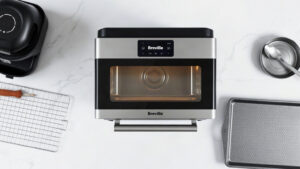
Most toaster ovens need at least 4 inches of clearance on each side, 4–6 inches at the back, and a full 12 inches of open space above the unit. These aren’t arbitrary numbers — toaster ovens vent heat aggressively from the sides and top, and without adequate airflow, that heat has nowhere to go except into your cabinets, walls, or whatever unlucky thing is sitting next to it. Get the spacing wrong and you’re looking at scorched cabinet interiors, tripped breakers, or worse.
Safety First: Toaster ovens reach internal temperatures of 450°F or higher and their exterior surfaces — including the sides and top — can become dangerously hot during use. Never operate a toaster oven in an enclosed cabinet, directly under upper cabinetry without adequate overhead clearance, or pressed against any flammable surface like wood shelving or paper towels. If you smell burning plastic or see discoloration on nearby surfaces, turn the unit off immediately and reassess your placement.
Quick Facts: Toaster Oven Clearance at a Glance
- Sides: minimum 4 inches, ideally 6 inches if your model has side vents
- Back: 4–6 inches from any wall or backsplash
- Top: at least 12 inches of open vertical space — this one surprises most people
- Front: 12 inches of door-swing clearance so you can safely pull racks out
- Below: always use the included drip tray on a heat-resistant surface — never directly on wood
Why Clearance Numbers Vary So Much by Model
Here’s something that genuinely annoyed me the first time I was setting up a toaster oven: the manual said one thing, online forums said something different, and the manufacturer’s website listed different specs than what was printed in the box. That’s not an accident. Clearance requirements actually vary a fair amount depending on where your specific model vents its heat.
Some toaster ovens vent primarily from the back. Others vent heavily from the top. A few — usually the compact, budget models — vent out the sides, which is honestly the most annoying configuration if you’ve got limited counter space. And then there are combination venting units (most of the bigger air fryer toaster oven hybrids) that push heat in multiple directions simultaneously.
So before you trust any generic number, including mine, flip your manual open and look for the ventilation diagram. It’s usually a small line drawing buried near the “Important Safety Information” section that nobody reads until something smells wrong. If you’ve lost the manual, most brands post PDFs on their support pages.
The Models That Need Extra Side Clearance
Larger capacity units — anything marketed as a “full-size” countertop oven or a toaster oven air fryer combo — typically have more powerful heating elements and circulate more air. The Breville Smart Oven Air Fryer is a good example. It’s a genuinely excellent machine, but it runs hot on the exterior and Breville specifically calls for more clearance than a basic 4-slice toaster oven. Same goes for the Cuisinart TOA-60 and similar high-wattage units — give those at least 5–6 inches on each side.
The Overhead Clearance Problem Nobody Talks About
This is the one that catches people off guard. Twelve inches above the top of the unit sounds like a lot, and on a typical kitchen counter with upper cabinets hanging 18 inches above the countertop surface, it’s… almost impossible without some planning.
Standard upper cabinet height is usually 18 inches above the counter. Your toaster oven might be 14–16 inches tall. Do that math and you’ve got maybe 2–4 inches of clearance above a large unit if you just shove it under the cabinets. That is not enough. Not even close.
I made this mistake myself with a mid-size convection toaster oven. After about a week of regular use, I noticed the underside of my cabinet had developed a faint yellowing — not charred, but clearly heat-stressed. Moved the oven to an open counter spot with a full foot of overhead clearance and the problem stopped immediately. You can also choose a compact model specifically because it fits your available vertical space — that’s a completely legitimate reason to downsize.
The practical fix most people land on: position the toaster oven at the end of the counter where there’s no upper cabinet overhead, or on a rolling cart or island. Neither solution is glamorous, but both are safe.
Side and Back Clearance: A Closer Look at the Numbers
Side Clearance
Four inches is the floor. It’s the minimum most manufacturers publish, and it assumes your side vents aren’t completely obstructed. In practice, six inches is more comfortable — especially if you’re ever planning to run the oven at high temperatures (400°F+) for extended periods like roasting or reheating dense foods that take 20–30 minutes.
And yes, the side of a toaster oven gets hot enough to burn you if you accidentally brush against it mid-cook. I’ve done it. It’s not a fun surprise. Six inches also just makes the oven easier to use day-to-day — you’re not reaching over a neighboring appliance every time you adjust the temperature dial.
Back Clearance
Four to six inches from the back wall or backsplash. Tile backsplashes handle heat better than painted drywall or wood, but neither should be in direct contact with a running oven. If your backsplash is directly behind the unit with no gap, slide it forward. The cord usually needs a few inches of routing space anyway, so you’re typically forced to leave some gap — just make sure it’s actually 4+ inches and not the inch or two the cord happens to create.
What About Clearance Below the Oven?
This one’s often ignored entirely. The oven itself should sit on a heat-resistant surface. A silicone heat-resistant mat under the unit is a smart investment — cheap, protects your countertop from heat damage and the inevitable drips, and makes cleaning up crumbs dramatically easier. Don’t run a toaster oven directly on a wood butcher block or a laminate countertop you care about. Those surfaces will eventually show the damage.
Clearance by Toaster Oven Size: A Reference Table
Because the specific numbers differ by unit size, here’s a breakdown. These are general guidelines — always cross-check your specific manual.
| Oven Size / Type | Side Clearance | Back Clearance | Top Clearance | Front Clearance |
|---|---|---|---|---|
| Compact (2-slice capacity) | 4 inches | 4 inches | 12 inches | 10–12 inches |
| Mid-size (4-slice / 0.5–0.8 cu ft) | 4–5 inches | 4–5 inches | 12 inches | 12 inches |
| Large (6-slice / 0.9–1.2 cu ft) | 5–6 inches | 5–6 inches | 12–15 inches | 14–16 inches |
| Air Fryer / Convection Combo | 6 inches | 6 inches | 15 inches | 16+ inches |
The front clearance number matters more than people think. You need to be able to pull the rack out without burning your arm on the door, and without the rack sliding forward and dumping your food. For full-size units, 16 inches of clear counter space in front is not excessive.
The Edge Cases Most Guides Skip
Placing a Toaster Oven Inside a Cabinet or Appliance Garage
Appliance garages — those little roll-top cabinet sections some kitchens have built in — seem like the perfect toaster oven home. They’re not. Most are completely enclosed when in use, which eliminates the overhead and side clearance entirely. Even if you leave the door open while cooking, the walls of the cabinet are still inches from the unit on three sides. This is how cabinet fires start. If you want to hide the toaster oven away, a lower cabinet with a pull-out shelf is marginally better, but still requires venting cutouts to be safe. Genuinely? Just leave it on the counter.
Toaster Ovens on Open Shelving or Baker’s Racks
Open metal wire shelving is actually a decent option if your counter space is genuinely maxed out. Metal doesn’t trap heat, and the open structure allows airflow above and around the unit. Just verify the shelf is rated for the weight of your oven (some larger units hit 20+ pounds) and that whatever’s stored on the shelf above it is heat-tolerant. Paper products, plastic containers, cookbooks — all of those need to be well above that 12-inch clearance line. Check out what Serious Eats recommends for small kitchen appliance organization if you’re working with a really tight setup.
Using a Toaster Oven in a Rental or Dorm
A lot of people run toaster ovens in dorm rooms or small apartment kitchens where the counter is limited and there’s no good spot that meets all the clearance requirements. Here’s the honest take: a compact unit on an open-surface table or desk, positioned away from walls and curtains, with nothing above it, is safer than a large oven crammed under a low shelf. Size down if the space demands it. The best mini toaster ovens are specifically designed for tight quarters and tend to run cooler on the exterior than their full-size counterparts.
One Test I’d Recommend Before You Call It Good
After you’ve positioned your toaster oven with proper clearance, run it at 400°F for 20 minutes — no food, just an empty test run. Then carefully (carefully) feel the surfaces around it: the countertop surface a few inches from the unit, the nearby wall or backsplash, and the cabinet or shelf above. Everything should feel warm at most, not hot. If any surrounding surface is hot to the touch, you need more clearance. This is the same test I ran after the yellowing-cabinet incident, and it’s a fast way to confirm your setup before it becomes a problem rather than after.
For context on just how hot these appliances actually get on their surfaces, the exterior panels of a full-size toaster oven can hit 150–200°F during a high-temp cook. That’s well above the threshold for scorching wood or discoloring paint.
Final Thoughts
The clearance numbers aren’t complicated: 4–6 inches on the sides, 4–6 inches at the back, and a full 12 inches (minimum) above the top. The overhead clearance is the one people consistently underestimate, and it’s the one most likely to cause real damage over time. A proper toaster oven rack setup inside the unit matters too — using the right rack position reduces how hard the appliance has to work and keeps external temps slightly lower.
Take 10 minutes to measure your spot before you set the oven down permanently. It’s genuinely one of those five-minute tasks that prevents a really bad afternoon. And if your current placement doesn’t meet clearance specs, move the oven — you don’t have to redesign your kitchen, you just have to find a better counter spot or a decent cart. That’s it.
Frequently Asked Questions
How much clearance does a toaster oven need on each side?
A toaster oven needs at least 4 inches of clearance on each side, though 6 inches is recommended for larger units or any model with side vents. This gap allows heat to escape safely without scorching adjacent surfaces or trapping hot air around the appliance.
Can I put a toaster oven under a cabinet?
You can, but only if there’s at least 12 inches of vertical space between the top of the toaster oven and the underside of the cabinet. Most standard kitchen setups leave 18 inches above the counter, which works for compact units but is dangerously tight for full-size or air fryer combo ovens that stand 14–16 inches tall.
Is it safe to use a toaster oven against a wall?
No — a toaster oven should have 4–6 inches of clearance from the back wall at minimum. Placing it flush against a wall blocks the rear vents on many models and allows heat to build up against the wall surface, which can damage paint, drywall, or tile grout over time and creates a fire risk with prolonged use.
How much clearance does a toaster oven need above it?
At least 12 inches of open space above the top of the unit is the standard guideline. Larger convection or air fryer models may require up to 15 inches. This overhead clearance is the most commonly underestimated measurement and is responsible for most heat-related cabinet damage in home kitchens.
Can I put a toaster oven inside a cabinet or appliance garage?
Operating a toaster oven inside an enclosed cabinet or appliance garage is not safe. Even with the door open during use, the enclosed walls on three sides eliminate the clearance needed for proper heat dissipation. This setup traps heat, can damage cabinetry, and poses a real fire risk with repeated use.

Written by
Emma founded Toastera to turn vague appliance advice into clear, researched, safety-first guidance on toasters and toaster ovens.
Free: the Toaster Oven Cheat Sheet
Get the printable cheat sheet (temps, cook times & safety tips) plus new recipes. No spam, unsubscribe anytime.