The numbers on a toaster oven dial represent temperature settings, not time — typically ranging from around 150°F at the low end to 450°F or higher at the top. Unlike a pop-up toaster (where the numbers do control timing), a toaster oven dial works like a conventional oven thermostat. That distinction matters a lot if you’ve ever wondered why your baked potato came out half-raw on setting 3.
Safety First: Toaster ovens reach internal temperatures of 450°F or higher and their exterior surfaces get dangerously hot during use. Never leave one unattended at high heat settings, keep flammable materials at least 6 inches away from all sides, and always use oven mitts when reaching inside. If you smell burning or see smoke, switch the unit off at the dial and unplug it before opening the door.
Quick Facts: Toaster Oven Dial Numbers at a Glance
- Toaster oven dials control temperature, typically 150°F–450°F (some models go to 500°F).
- A mid-range setting of around 350°F is what most baking recipes assume when they say “moderate oven.”
- The same numbered setting on different brands can vary by as much as 25–40°F — always use an oven thermometer to verify.
- Pop-up toaster numbers work completely differently: they measure toast time, not temperature. Don’t conflate the two.
- Most toaster oven thermostats cycle on and off to hold temperature — so the heating element isn’t always running at full power.
I’ve had more than a few burned batches of cookies because I trusted the dial number without checking what temperature it actually corresponded to. Once I started keeping a cheap oven thermometer inside, a lot of things clicked into place. Here’s what I’ve learned from actually cooking in these machines — not just reading the manual.
Toaster Oven vs. Pop-Up Toaster: Completely Different Systems
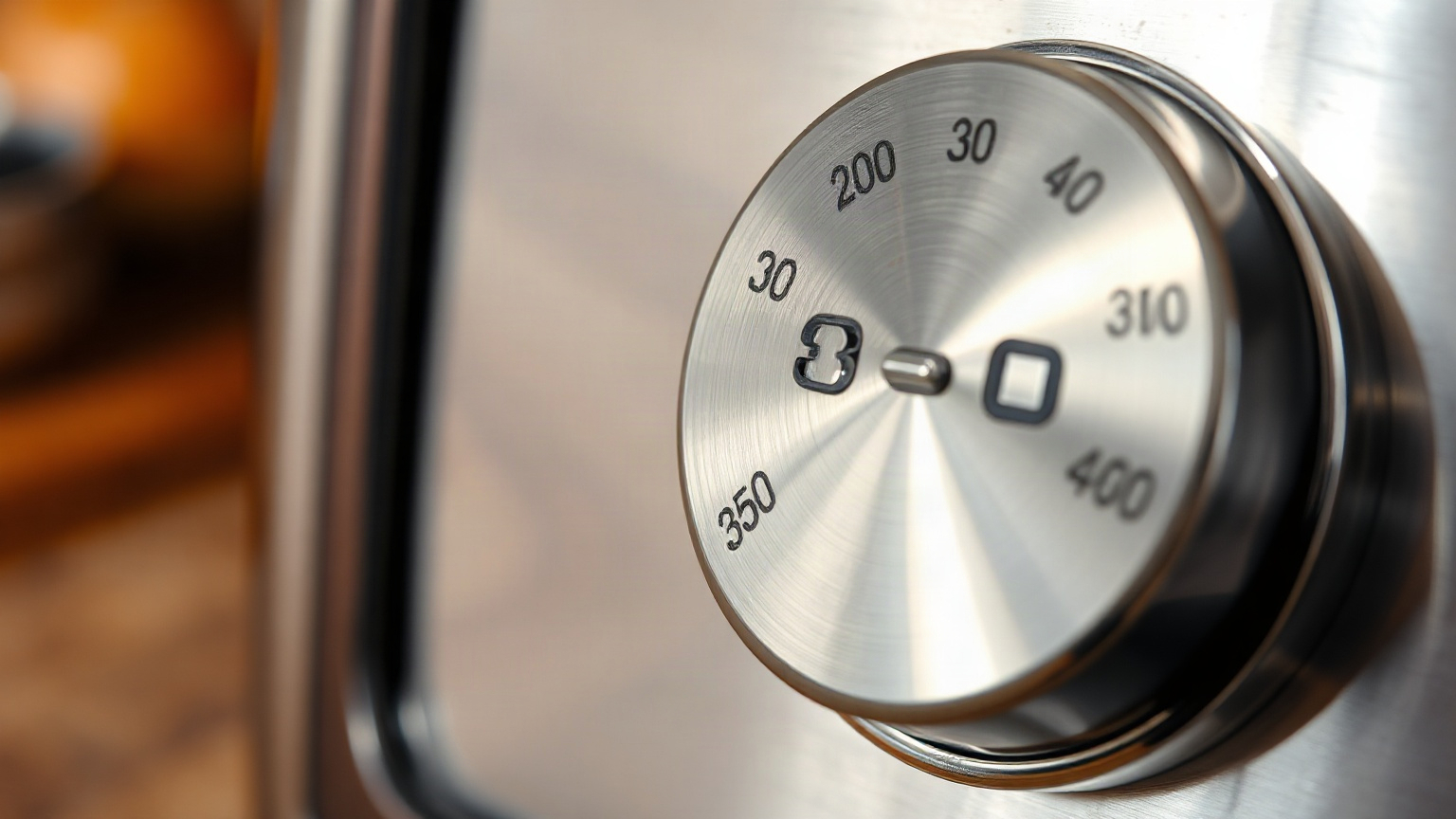
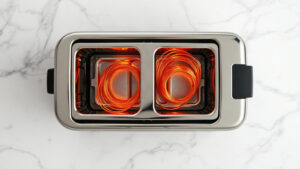
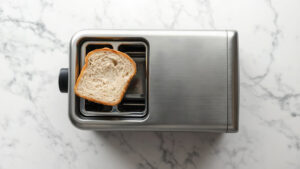
This is the confusion that trips up almost everyone. On a classic pop-up toaster, the dial really does control time. The mechanism uses a bimetallic strip that bends as it heats up — the higher the number, the longer the bread stays down before the strip curves enough to trigger the release. So a “5” on your pop-up toaster means more time toasting, which means darker bread. The heating element itself runs at roughly the same temperature regardless of where you set the dial. You can read more about how hot a toaster gets if you want the full breakdown on pop-up models.
A toaster oven is different. It has a thermostat. The dial tells the machine what internal air temperature to maintain, and a sensor cuts power to the heating elements when that temperature is reached, then switches them back on when it drops. It’s basically a small conventional oven, just with faster preheat times and less insulation.
So when your toaster oven dial says “350,” it means 350°F. Not 350 seconds. Not level 3.5 out of 10. Actual degrees Fahrenheit.
What Each Temperature Range Actually Does to Your Food
Not all heat is the same. A toaster oven at 200°F is doing something fundamentally different from one at 425°F, and understanding that helps you stop guessing and start cooking on purpose.
Low Settings: 150°F – 250°F
This range is mostly for keeping food warm or very slow drying. At 170°F, you can hold cooked chicken without it overcooking. At 200°F, you can dry herbs, make beef jerky (though it takes a few hours), or keep a casserole warm while you wait for guests. Some people use this range to proof bread dough if they’re in a cold kitchen. I’ve done that with a bowl of dough covered in a damp cloth sitting on the rack — works surprisingly well.
Not glamorous. But useful.
Moderate Heat: 300°F – 375°F
This is where most baking happens. Cookies, muffins, quick breads, small casseroles. The Maillard reaction — the browning that creates flavor — kicks in noticeably above 300°F, which is why food starts to smell and taste better at these temperatures rather than just getting cooked through. At 325°F you’ll get gentle, even browning. At 375°F things start moving faster and edges crisp up more.
For reheating leftovers, 325°F–350°F is my default. It’s hot enough to actually heat through without turning everything rubbery. Detailed notes on that approach are over in our guide on reheating food in a toaster oven if you want specifics.
High Heat: 400°F – 450°F
Roasting vegetables, crisping up chicken thighs, baking pizza. At 400°F, a tray of broccoli florets will get nicely charred edges in about 18–20 minutes. At 425°F, frozen french fries actually crisp rather than steam. And 450°F is the sweet spot for pizza — the crust gets some color on the bottom before the toppings overcook.
Fair warning: toaster ovens get smoky fast at high temps if there’s any grease or crumbs on the tray or the bottom of the oven. Clean it before you crank it up.
Maximum Settings: 475°F – 500°F+
Not all toaster ovens go this high. The ones that do — usually the larger convection models — can handle things like broiling steaks, finishing a gratin, or attempting a bread crust. The broil setting (which many models label separately from the temperature dial) often bypasses the thermostat entirely and just runs the top elements at full power. That’s a different beast from a temperature dial at 500°F, so check your manual to see which is which.
Why the Same Number Means Different Things on Different Ovens
Here’s the thing nobody tells you: toaster oven thermostats are not lab-calibrated instruments. They’re functional, cheap, and often off by a meaningful amount.
I tested three different toaster ovens sitting in my kitchen against a standalone oven thermometer. Set each to 350°F, waited 15 minutes, and checked the reading. The Cuisinart ran hot at 372°F. An older Hamilton Beach unit sat at 338°F. And a mid-range Breville came in at 354°F — close enough. That’s a 34-degree spread across three machines, all set to the exact same dial position. That kind of variance matters for baking, where precision actually counts.
The fix is easy: get an oven thermometer. A basic one costs around $8–12 and fits right on the rack. Keep it in there permanently. Once you know your oven runs 15°F hot, you just compensate. I’d much rather know the actual number than guess.
A hanging oven thermometer designed for toaster ovens is worth having if you do any actual cooking in yours rather than just reheating leftovers.
| Dial Setting | Approximate Temp (°F) | Best Uses | Watch Out For |
|---|---|---|---|
| Warm / 1 | 150–200°F | Keeping food warm, proofing dough | Food sitting too long, bacterial growth |
| Low / 2–3 | 250–300°F | Slow cooking, drying herbs | Very slow browning — food can dry out |
| Medium / 4–5 | 325–375°F | Baking cookies, casseroles, reheating | Check early — toaster ovens run fast |
| High / 6–7 | 400–425°F | Roasting veg, pizza, chicken | Smoke from crumbs/grease at this heat |
| Max / 8–10 | 450–500°F | Broiling, crisping, bread crusts | Very easy to burn smaller items |
The Edge Case Nobody Mentions: Convection Mode Changes Everything
If your toaster oven has a convection setting, the temperature on the dial is technically still correct — but it doesn’t behave the same way as in a standard (non-convection) oven. Convection circulates air with a fan, which transfers heat to food faster and more evenly. As a general rule, you should reduce the dialed temperature by 25°F or cut the cooking time by about 15–20% when switching to convection mode.
Most recipe writers assume a standard static oven. So if a cookie recipe says 375°F for 12 minutes, and you’re using convection at 375°F, they’ll be done in maybe 9–10 minutes and potentially darker than you wanted. I’ve been caught out by this more than once. It’s an easy adjustment once you know about it, but virtually no one mentions it when explaining dial numbers.
Also worth knowing: the USDA recommends internal food temperatures for safety (165°F for poultry, 145°F for whole cuts of beef and pork), and those targets don’t change based on what oven you’re using. The dial controls the ambient air temp, but you still need a meat thermometer to know when protein is actually safe to eat. Oven temp and food internal temp are two completely separate things. Here’s the USDA’s guidance on safe cooking temperatures if you want the official numbers.
If you’re shopping for a toaster oven with solid convection performance, our list of the best mini toaster ovens covers the models worth considering. Some of those have genuinely good convection fans; others are basically decorative.
Getting the Most Out of Your Toaster Oven Dial
A few practical habits that actually matter:
- Preheat it properly. A toaster oven reaches temperature faster than a full-size oven — usually 5–8 minutes — but it still needs to preheat. Putting food in cold throws off your timing.
- Don’t crowd the rack. Toaster ovens have less interior volume, so heat circulation is more sensitive to blocking. Use a proper toaster oven wire rack that fits your model so airflow isn’t cut off by a too-large pan.
- Check earlier than you think. Toaster ovens brown fast, especially at the top element. A dish that takes 30 minutes in a full-size oven might only need 20–22 minutes in a toaster oven.
- Watch the proximity to elements. Toaster oven heating elements are close to the food. At 450°F, the top of a puff pastry can go from golden to black in about 90 seconds if it’s sitting too close to the element. Use the middle rack position unless you specifically want broiling effect from above.
And if you’re baking anything that requires even heat on the bottom — sheet pan cookies, a small roasting pan — get a toaster oven baking pan that matches your oven’s interior dimensions. A pan that’s too large blocks the element; one that’s too small lets heat roll right past the food unevenly.
Wrapping Up
The dial on your toaster oven is a temperature control, full stop. It’s not abstract, it’s not a scale from 1–10 of “toastiness,” and it’s not the same as the timing dial on a pop-up toaster. Once you treat it like what it actually is — a thermostat — and back it up with a cheap oven thermometer to account for the calibration drift that almost every model has, you’ll cook better food with fewer surprises. The numbers aren’t mysterious. They just needed a bit of context.
Frequently Asked Questions
What do the numbers on a toaster oven dial mean?
The numbers on a toaster oven dial represent temperature in degrees Fahrenheit (or Celsius on some models), typically ranging from around 150°F to 450°F or higher. Unlike a pop-up toaster — where numbers control time — a toaster oven’s dial works like a conventional oven thermostat. Setting the dial to 375°F tells the oven to maintain 375°F inside the cooking chamber.
Are toaster oven dial temperatures accurate?
Most toaster oven thermostats are off by anywhere from 10°F to 35°F, and that variance changes between individual units even of the same model. The only reliable way to know your oven’s actual temperature is to use a standalone oven thermometer placed on the rack. Once you know your oven’s offset, compensating for it takes about two seconds.
What temperature should I use for baking in a toaster oven?
Most baking recipes work at 325°F–375°F in a toaster oven, the same temperature they’d call for in a full-size oven. Because toaster ovens are smaller and often have less consistent heat distribution, it’s smart to start checking your food about 5 minutes earlier than the recipe suggests. If you’re using convection mode, reduce the temperature by 25°F or shorten the cook time by around 15%.
What’s the difference between toaster oven numbers and pop-up toaster numbers?
On a pop-up toaster, the numbers control how long the bread stays down before it pops up — so higher numbers mean longer toasting time and darker results, while the heating element temperature stays roughly constant. On a toaster oven, the numbers are actual temperature settings managed by a thermostat. They operate on completely different principles, so don’t apply logic from one to the other.
How hot does a toaster oven get at its maximum setting?
Most consumer toaster ovens max out at 450°F on the temperature dial, though some larger convection models go up to 500°F. The broil setting, if your model has one, typically bypasses the thermostat and runs the heating elements at full power — which can generate temperatures higher than the dial indicates. Exterior surfaces also get very hot at max settings, so use oven mitts and keep clearance around the unit.

Written by
Emma founded Toastera to turn vague appliance advice into clear, researched, safety-first guidance on toasters and toaster ovens.
Free: the Toaster Oven Cheat Sheet
Get the printable cheat sheet (temps, cook times & safety tips) plus new recipes. No spam, unsubscribe anytime.