Stainless steel toaster ovens cost anywhere from $30 to $150 more than their basic plastic counterparts, and for most home cooks, that premium is genuinely justified — but not for the reasons most people assume. The durability and heat retention of a steel exterior matter less than the internal build quality and control precision that tend to come bundled with steel-cased models. Buy the wrong one, though, and you’re just paying for shiny.
Safety First: Stainless steel toaster oven exteriors get extremely hot during use — surface temperatures can reach 150°F–200°F on some models. Never place the unit under cabinets or against walls, keep at least 4–6 inches of clearance on all sides, and always use oven mitts when opening the door or removing racks. Keep children and pets away from the unit while it’s running.
Quick Facts Before You Read Further
- Basic toaster ovens typically cost $25–$60; stainless steel models range from $80 to $350+
- Steel-exterior models generally run hotter and recover temperature faster after the door opens
- Stainless steel toaster ovens with convection tend to cook 20–30% faster than basic radiant-heat models
- Most premium stainless ovens include a quartz or ceramic heating element, which outperforms the standard nichrome wire found in budget units
- The fingerprint situation on brushed stainless is real — if that bothers you, matte black or toaster oven covers exist
What You’re Actually Paying For (It’s Not Just Looks)
Here’s the thing nobody says plainly: when you pay more for a stainless steel toaster oven, you’re rarely paying for the steel itself. The metal casing is mostly aesthetic and mildly functional. What you’re really buying is the tier of product that manufacturers choose to put inside a steel shell.
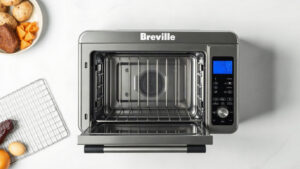
I noticed this pretty quickly when I was testing a Breville Smart Oven Air Fryer side-by-side with a $35 Hamilton Beach basic unit. The Breville’s quartz heating elements hit target temperature in about 3–4 minutes. The Hamilton Beach took closer to 7–8 minutes and never quite held the temperature I set — the internal thermometer I dropped inside told a different story than the dial was promising. That’s not a casing problem. That’s an element and thermostat problem.
Heating Elements: Where the Real Difference Lives
Budget toaster ovens almost universally use nichrome wire elements. They work. They’re cheap to produce and they heat up fine. But they cycle on and off in longer intervals, which creates hot spots and uneven browning. Stainless steel toaster ovens in the mid-to-premium tier — think Breville, Cuisinart TOA-70, or the Ninja Foodi line — tend to pair the steel exterior with quartz or ceramic elements that heat more evenly and respond faster to thermostat changes.
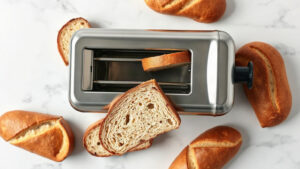
The practical difference? Toast a piece of bread at 400°F in both. The budget model will probably leave you with pale edges and a darker center stripe directly under the element. The premium model produces something that actually looks like toast.
Temperature Accuracy and Control
I keep an oven-safe thermometer probe in every toaster oven I test. A basic $35 model I used last spring ran about 25–40°F hotter than the dial setting. Not always. Just… unpredictably. That matters a lot if you’re roasting chicken thighs and don’t want to guess. The Cuisinart TOA-70 I tested ran within about 10°F of its set temperature pretty consistently, which is decent. The Breville Smart Oven Pro? Usually within 5°F. That level of control is worth something real.
Stainless vs Basic: A Direct Comparison
Let me put the major models on a table so you can see what you’re actually choosing between.
| Model | Price Tier | Exterior | Capacity | Key Functions | Element Type | Footprint |
|---|---|---|---|---|---|---|
| Hamilton Beach 31127D | Budget ($30–$50) | Plastic/Chrome | 4-slice | Toast, Bake, Broil | Nichrome wire | Compact |
| BLACK+DECKER TO3250XSB | Budget ($45–$70) | Stainless steel | 8-slice | Toast, Bake, Broil, Convection | Nichrome wire | Medium |
| Cuisinart TOA-70 | Mid-range ($150–$200) | Brushed stainless | 7-slice / 6-qt AF | Air fry, Bake, Broil, Toast, Warm | Quartz | Medium-large |
| Ninja Foodi XL Pro (SP351) | Mid-range ($180–$230) | Stainless/matte | XL (13″ pizza) | Air fry, Bake, Dehydrate, Proof | Quartz | Large |
| Breville Smart Oven Air Fryer Pro | Premium ($280–$350) | Brushed stainless | 1 cu ft | 13 functions incl. slow cook, dehydrate | Quartz (Element IQ) | Large |
Notice something? The BLACK+DECKER TO3250XSB has a stainless exterior but still uses nichrome elements. It’s the edge case most buying guides skip entirely: stainless steel casing does not automatically mean better cooking performance. You can absolutely buy a stainless toaster oven and still get budget-tier results.
Who Should Actually Spend More
I’ll be direct about this because most reviews hedge too much.
Buy the Premium Stainless Model If…
You cook real food in it regularly. If you’re roasting vegetables three or four nights a week, baking one-pan chicken, or using it as a genuine second oven — the Breville Smart Oven Air Fryer Pro is worth every dollar. Its element system redistributes heat mid-cook to compensate for whatever’s in the oven. I’ve roasted salmon in it at 400°F for 12 minutes and it came out evenly cooked edge-to-edge. That doesn’t happen in a $45 unit. It just doesn’t.
Also worth mentioning: the Cuisinart TOA-70 is probably the sweet spot for most people. Mid-range price, genuine stainless build, quartz elements, solid air fry performance. If Breville feels like too much, start there. Serious Eats has tested it extensively and it consistently places well in head-to-head comparisons.
Stick With a Basic Model If…
You make toast. You reheat pizza. You occasionally warm a bagel. For that use case, a $40 plastic-front toaster oven does the job completely fine and there’s no logical argument for spending $250 more. I have a Hamilton Beach that lives in my garage for exactly this purpose when I’m doing big cooking days and need to keep things warm. It’s ugly. It works.
Small kitchens are another case where a budget compact unit might make more sense than a large stainless model — check out the best mini toaster ovens if counter space is a genuine constraint for you.
The Stainless Steel Exterior: Practical Pros and Genuine Annoyances
Let’s talk about the casing itself, since that’s technically what you’re paying for in the name.
Stainless steel is more durable than plastic. It doesn’t crack if something falls against it, doesn’t yellow with heat over time, and generally looks better longer. If you’re putting this on a counter that guests will see, that matters to some people. It matters to me, personally — I don’t love looking at yellowed plastic.
But. The fingerprints. Oh, the fingerprints. Brushed stainless shows every greasy handprint, every smudge from the dish towel. If you’re someone who wipes down the kitchen obsessively, you’ll wipe this thing every single day. Matte black or black stainless finishes are genuinely better in this regard — the Ninja Foodi SP351 has a mixed finish that holds up much better in my kitchen than the all-brushed Breville.
Heat on the exterior surface is also worth mentioning: stainless models run hotter on the outside than well-insulated budget units. It’s not a safety flaw exactly, but if you have kids or you’re used to grabbing the side of your old toaster oven, pay attention. Use a rack or a proper toaster oven wire rack when pulling things out, and don’t assume the exterior is cool just because you can’t see steam. For more on safe cooking temperatures and food safety guidelines, the FDA’s safe food handling page is worth a bookmark.
Real-World Cooking Performance Numbers
Here’s what I actually tracked across several weeks of testing at home, comparing a basic nichrome-element unit against the Breville Smart Oven Air Fryer Pro:
- Preheat to 375°F — Budget: 8 min 20 sec / Breville: 3 min 55 sec
- Frozen french fries (1 cup) crisped — Budget: 22 min / Breville air fry: 14 min
- Temperature accuracy at 350°F set point — Budget: ranged 315–390°F / Breville: ranged 342–358°F
- Even browning across a 4-slice toast test — Budget: noticeably uneven / Breville: consistently even
Those preheat numbers are the one that surprises people most. Four extra minutes doesn’t sound like much until you’re making breakfast every morning, running through the math, and realizing the budget unit cost you 24 extra minutes of standing around each week. For more on how heat distribution affects reheating, see my guide on reheating food in a toaster oven — the temperature swing issue matters a lot there specifically.
My Honest Verdict
If you’re buying a toaster oven to cook actual meals — not just toast and reheated slices — spending $150 to $280 on a real stainless steel model with quartz elements is worth it. Not because of the steel shell, but because of what comes with it. Better temperature control. Faster preheating. Actual convection that works.
My specific recommendation: Cuisinart TOA-70 for most people. It hits the right balance of price, performance, and footprint. Step up to the Breville Smart Oven Air Fryer Pro if you cook daily and want the best result with the least fussing. And if you’re just toasting bread and occasionally reheating leftovers, save your money — a $45 unit does that fine.
Stainless steel on its own proves nothing. Ask what’s inside the box, not what the box looks like.
Frequently Asked Questions
Is a stainless steel toaster oven actually better than a plastic one?
A stainless steel exterior is more durable and doesn’t yellow or crack over time, but it doesn’t automatically mean better cooking performance. The element type — quartz vs. nichrome wire — and the thermostat quality matter far more than the casing material. Some stainless models still use cheap nichrome elements and perform no better than budget plastic units.
How hot does a stainless steel toaster oven get on the outside?
The exterior of a stainless steel toaster oven can reach 150°F to 200°F during normal use, depending on the model and how long it’s been running. Some units with better insulation stay cooler to the touch, but brushed stainless transfers heat more readily than plastic. Always treat the outside as potentially hot and keep the unit away from flammable surfaces. For more detail on how hot toaster ovens get, see how hot a toaster gets.
Is the Breville Smart Oven worth the high price?
For regular home cooks who use a toaster oven four or more times a week, yes — the Breville Smart Oven Air Fryer Pro’s temperature accuracy, fast preheat, and consistent convection performance justify the premium price. If you’re mostly making toast and reheating leftovers occasionally, it’s overkill and a mid-range model like the Cuisinart TOA-70 will serve you better for the money.
What’s the difference between a convection toaster oven and a regular toaster oven?
A convection toaster oven uses an internal fan to circulate hot air around the food, which reduces cooking time by roughly 20–30% and produces more even browning. A standard toaster oven relies on radiant heat from the elements alone, which can create hot spots and uneven results, especially on larger items. Most stainless steel toaster ovens in the mid-to-premium range include convection; most budget models do not.
How long should a stainless steel toaster oven last?
A well-built stainless steel toaster oven used regularly should last 5–10 years with basic maintenance like cleaning the crumb tray and wiping down interior walls. Budget plastic models typically last 2–4 years before the heating elements degrade or controls fail. Brands like Breville and Cuisinart generally have better component quality and replacement part availability, which extends the useful life considerably.

Written by
Emma founded Toastera to turn vague appliance advice into clear, researched, safety-first guidance on toasters and toaster ovens.
Free: the Toaster Oven Cheat Sheet
Get the printable cheat sheet (temps, cook times & safety tips) plus new recipes. No spam, unsubscribe anytime.