Toaster heating elements work by converting electrical energy into heat through a process called resistive heating — electricity passes through a high-resistance wire (usually nichrome), the wire resists the flow, and that resistance generates temperatures between 300°F and 500°F (150°C–260°C) at the element itself. The heat then radiates outward as infrared energy, which is what actually browns your bread. Understanding this changes how you use your toaster, because the browning isn’t really about heat conduction — it’s about radiation exposure time and distance.
Safety First: Toaster heating elements reach over 300°F and stay dangerously hot for several minutes after the toaster shuts off. Never reach inside a toaster slot with metal utensils — even with the toaster unplugged, residual heat can cause burns. Always unplug before cleaning or attempting to dislodge stuck bread. Keep toasters at least six inches from curtains, paper towels, or cabinet undersides. Crumb trays that aren’t emptied regularly are a genuine fire risk.
Quick Facts: Toaster Heating Elements
- Most toaster heating elements are made from nichrome wire — an alloy of roughly 80% nickel and 20% chromium — because it resists oxidation at high heat and doesn’t require an insulating coating.
- A standard two-slice toaster draws between 800 and 1,500 watts. Higher wattage generally means faster preheat, not necessarily hotter toast.
- Toaster elements heat up in roughly 3–5 seconds. That near-instant response is why toasters don’t need a preheat cycle.
- The Maillard reaction — the chemical process that actually browns bread — begins around 280°F (138°C) on the bread’s surface.
- Quartz heating elements (found in some toaster ovens) emit infrared wavelengths that penetrate food slightly deeper than traditional nichrome coil elements.
What Toaster Heating Elements Are Actually Made Of
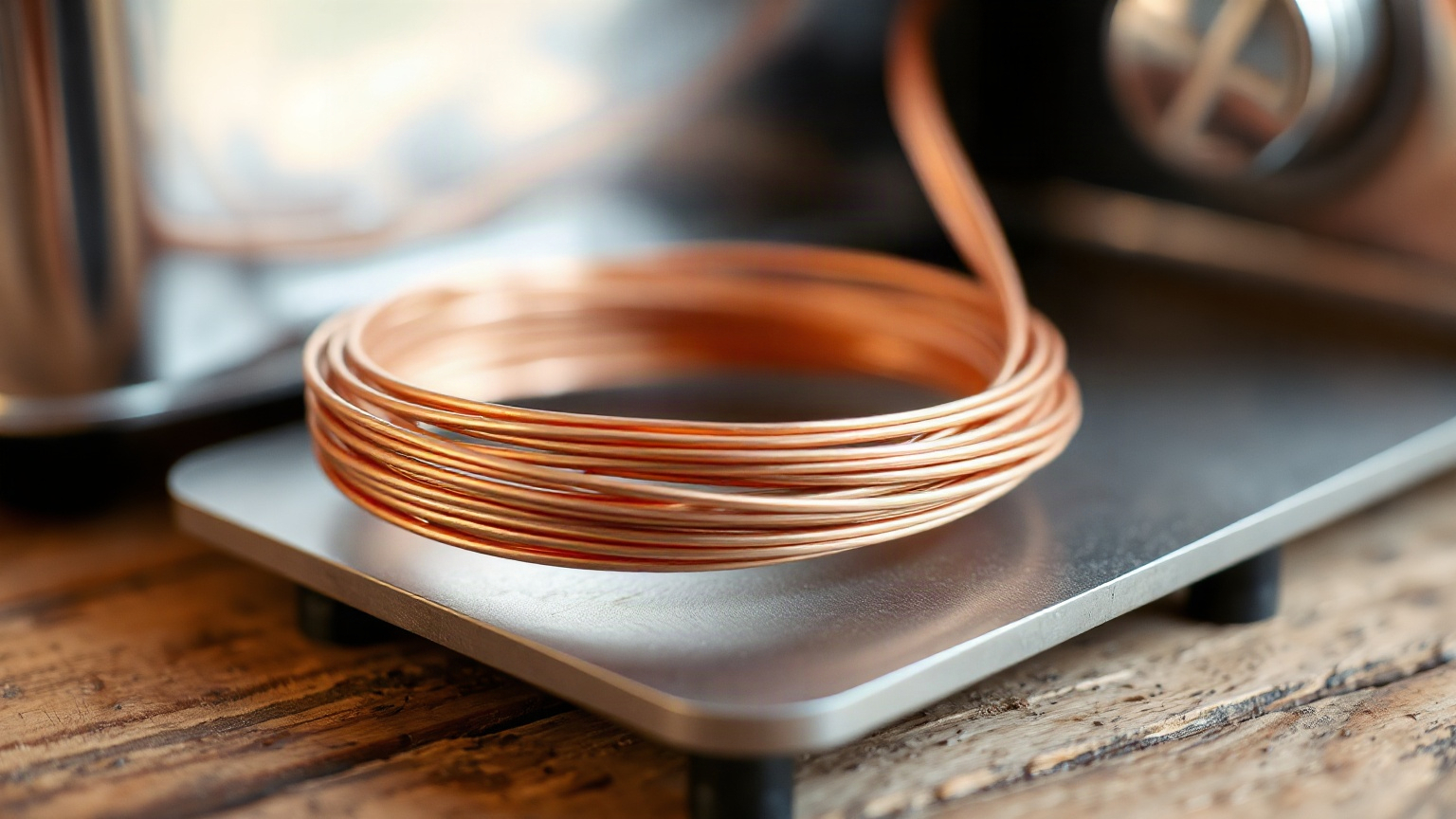
The wire inside your toaster is almost certainly nichrome. It has been the go-to since the early 1900s and there’s a good reason for that — it holds up. A lot of metals that conduct electricity well (copper, aluminum) would oxidize and degrade quickly the moment you exposed them to the temperatures a toaster runs at repeatedly, day after day. Nichrome forms a thin chromium oxide layer on its surface that actually protects the wire from further oxidation. It essentially self-seals.
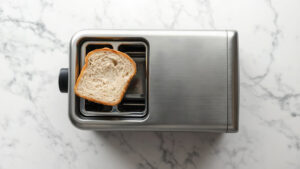
The wire is wound into a tight coil and typically threaded through mica sheets — that pale, semi-translucent material you can see inside a toaster slot if you look closely. Mica is an excellent electrical insulator that also handles heat without warping. The coiled wire sits against the mica panels on either side of each bread slot, so the bread is flanked by two radiating surfaces rather than just one.
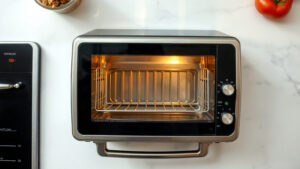
Some higher-end toaster ovens use quartz tubes instead of open nichrome coils. The nichrome wire is still inside, but it’s enclosed in a quartz glass tube. Quartz heats up faster than a ceramic or metal enclosure would, and it emits a slightly different infrared spectrum — closer to the near-infrared range, which penetrates food surfaces more efficiently. I’ve cooked with both, and I’ll say quartz elements feel more aggressive for the first 30 seconds. Not necessarily better, just different. For quartz toaster ovens, the preheat is genuinely faster — I’ve measured about 90 seconds to 350°F on a Breville versus 3–4 minutes on a standard coil model.
The Physics Behind Resistive Heating (Without the Boring Parts)
Here’s the core mechanic. When current flows through a conductor, some energy is lost as heat because electrons collide with the atoms of the material as they move through it. In a material with low resistance (like copper wire), this loss is minimal — which is why copper is used in household wiring. You don’t want your walls getting warm. But nichrome has high resistance, so those collisions are frequent and energetic. The wire gets hot fast.
The amount of heat produced follows Joule’s Law: P = I²R. Power equals current squared times resistance. Double the resistance, double the heat output. This is why you can control toaster intensity by adjusting how long the elements run (which is what your shade dial actually does on most models) rather than changing the temperature itself. The element runs at the same temperature regardless of the setting. It just stays on longer for darker toast.
That surprised me when I first learned it, honestly. I assumed darker settings meant hotter elements. Nope. Same heat, more time. Which is why thick bread on a dark setting can sometimes come out dark on the outside and still slightly doughy in the middle — the radiation browns the surface faster than the heat can penetrate inward.
How Infrared Radiation Does the Actual Work
The heated nichrome element radiates infrared energy. Infrared is just electromagnetic radiation at wavelengths longer than visible light — you can’t see it, but you feel it as radiant warmth (the same sensation as standing near a campfire without touching the flames). This radiation travels through the air in the toaster slot and is absorbed by the bread’s surface. That absorbed energy raises the surface temperature of the bread rapidly, which triggers the Maillard reaction above 280°F and caramelization of sugars above roughly 320°F.
This is different from conduction (direct contact heat) or convection (hot air circulation). It’s more like a very contained broiler. Which, incidentally, is exactly why the distance between bread and element matters. Bread that sits lower in a wide toaster slot gets less intense radiation per square inch than bread right up against the element. This shows up as uneven browning — darker patches where the bread surface was closest to the wire coils. I’ve seen this constantly with thinner sandwich bread in a slot designed for thicker Texas toast.
How the Toaster’s Thermostat and Timer Control the Whole Process
Most pop-up toasters don’t use a thermostat in the way an oven does. They use a bimetallic strip. Two metals bonded together with different thermal expansion rates — when the strip heats up, it bends, and eventually that bend trips a latch that releases the bread carriage (the thing that springs up) and cuts power to the elements. Your shade dial physically adjusts how far the strip needs to bend before it trips. Further bend = longer time on = darker toast.
There’s an edge case here that almost nobody talks about: this system is ambient-temperature sensitive. If your kitchen is cold — say, early morning in winter when the kitchen is 60°F — the bimetallic strip starts from a lower baseline. It takes slightly longer to bend far enough to trip the latch. Your toast comes out darker than it would at the same setting in a warm kitchen. I noticed this one January morning when I burned sourdough on a setting I’d used fine for months. Drove me a little crazy until I figured out what was happening. The fix is either dialing back one notch in cold conditions or just watching the first slice.
Higher-end toasters and most toaster ovens use electronic timers or actual temperature sensors, which sidestep this problem entirely. For details on how hot a toaster gets across different models and settings, that breakdown is worth reading.
Toaster Heating Elements: Wattage and Temperature Comparison
Not all toasters run equally hot or use the same wattage. Here’s a practical breakdown across common toaster types:
| Toaster Type | Typical Wattage | Element Temp Range | Toast Time (Medium Setting) | Element Type |
|---|---|---|---|---|
| 2-slice pop-up toaster | 800–1,000W | 300°F–450°F | 90–120 seconds | Nichrome/mica |
| 4-slice pop-up toaster | 1,200–1,800W | 300°F–450°F | 90–120 seconds | Nichrome/mica |
| Toaster oven (standard) | 1,200–1,500W | 250°F–450°F | 4–6 minutes | Nichrome coil |
| Toaster oven (quartz) | 1,500–1,800W | 250°F–500°F | 3–5 minutes | Quartz/nichrome |
| Convection toaster oven | 1,500–1,800W | 250°F–500°F | 3–5 minutes | Quartz or coil + fan |
The toaster oven takes longer than a pop-up toaster not because its elements are cooler, but because the heating chamber is larger and the bread isn’t as close to the elements. Worth keeping in mind when you’re reheating food in a toaster oven — the extra space actually helps with more even heating for things like pizza slices or leftovers.
What This Means for How You Should Toast
Knowing how heating elements work has actually changed small habits of mine. A few things I do differently now:
- Let the toaster warm up on the first slot. The first slice you toast always comes out slightly lighter than the second, because the slot and the mica panels absorb heat initially. By the second slice, the toaster’s running hotter internally. I always do a test slice of something I don’t care about, or I dial up half a notch for that first piece.
- Thicker bread needs time, not a darker setting. Because the setting controls duration and not temperature, cranking the dial darker on thick bread just burns the outside. Better to do two toast cycles on a medium setting — once forward, once back. Sounds fussy, but it works.
- Frozen bread is its own situation. Most toasters have a frozen setting that just extends the element run time by roughly 50%. At 1,000W for a standard cycle, that’s an extra 45–60 seconds. The science makes sense — the bread needs time to thaw before browning can start. Using that frozen setting consistently is worth it.
- In a toaster oven, rack position changes everything. Moving the rack one slot closer to the top element turns your toast from lightly golden to deeply browned in the same amount of time. The inverse-square law is real — halve the distance to the element and you quadruple the radiant energy hitting the bread surface. Using a good toaster oven wire rack at the right height is more important than fiddling with the temperature dial.
For anyone looking at different oven models with varying element configurations, this guide to the best mini toaster ovens gets into how element placement differs across units and why it matters for browning evenness.
The food science behind toast browning at Serious Eats is also a genuinely interesting read if you want to go further down the Maillard reaction rabbit hole — the chemistry of what happens to proteins and sugars at the bread’s surface is more complex than most people expect.
When Heating Elements Fail — and What to Watch For
Nichrome wire is durable, but it doesn’t last forever. The most common failure is a broken element — the wire either corrodes through (rare but possible in humid environments) or develops a physical break from repeated expansion and contraction cycles. When one element fails in a two-slot toaster, you’ll notice one side of the bread toasting unevenly or not at all on that side. It’s usually not worth repairing a cheap toaster for this — replacement elements exist but the labor makes it economically questionable.
A different failure mode is crumb buildup near active elements. Crumbs are a fire risk, not just a hygiene issue. They can ignite if they contact or sit very close to a glowing element. Empty the crumb tray weekly if you use your toaster daily. Some people think it’s fine to leave it for months. It’s not.
One edge case that rarely gets mentioned: hard water deposits. If you live somewhere with very hard tap water and you have a toaster oven where steam from food (or from a water tray you add for certain baking) is common, mineral deposits can build up on quartz elements over time and cause uneven heating or element degradation. The fix is a diluted white vinegar wipe-down — but only after the toaster has cooled completely and is unplugged. Basic, but I’ve seen people skip both of those conditions.
The Bottom Line
The mechanics of a toaster heating element are genuinely elegant for how simple they are. High-resistance wire, a bit of mica, and infrared radiation — and you get something that browns bread in under two minutes and has worked basically the same way for over a century. Knowing this stuff isn’t just trivia. It explains why your first slice comes out lighter, why cold kitchens affect your results, and why moving a rack up an inch can make a real difference in a toaster oven. Small adjustments, better toast.
Frequently Asked Questions
How hot does a toaster get?
The heating elements inside a pop-up toaster reach between 300°F and 500°F (150°C–260°C) depending on the model and setting. The bread surface itself typically hits around 300°F–350°F during a standard toast cycle — hot enough to trigger the Maillard reaction but not so hot that the interior of the bread dries out completely. The exterior of the toaster chassis stays much cooler, though still warm enough to cause discomfort if touched during operation.
What material are toaster heating elements made of?
Most toaster heating elements are made from nichrome wire, an alloy of approximately 80% nickel and 20% chromium. Nichrome is chosen because it has high electrical resistance (which converts current to heat efficiently), resists oxidation at high temperatures, and doesn’t require a protective coating. Some premium toaster ovens use nichrome wire enclosed in quartz glass tubes for faster heating and a different infrared emission profile.
Is it safe to leave a toaster plugged in?
A toaster doesn’t draw power when it’s not in use, so leaving it plugged in isn’t an immediate electrical hazard in most cases. However, a crumb-filled toaster left plugged in near flammable materials is a genuine fire risk — a power surge or faulty bimetallic strip could activate the elements unexpectedly. Unplugging when not in use is the safer habit, and it costs you nothing.
Why does my toaster brown unevenly?
Uneven browning usually comes down to two things: the bread’s distance from the heating elements varies across the surface (common in wide slots with thin bread), or one of the heating elements is failing and not producing consistent heat. Cold-start conditions — toasting the very first slice in a cold toaster — also produce lighter results on one side. Try centering bread in the slot and running a warm-up cycle if evenness really matters to you.
How long do toaster heating elements last?
Nichrome heating elements are quite long-lived under normal use — most toasters will function for 5 to 10 years before element failure becomes an issue. The failure rate accelerates if crumbs are allowed to build up and contact the elements, if the toaster is used in very humid conditions, or if it’s subjected to physical impact. For toaster ovens used heavily for baking and roasting (not just toast), element lifespan is typically in the 3–7 year range depending on frequency of use and how well the unit is maintained.

Written by
Emma founded Toastera to turn vague appliance advice into clear, researched, safety-first guidance on toasters and toaster ovens.
Free: the Toaster Oven Cheat Sheet
Get the printable cheat sheet (temps, cook times & safety tips) plus new recipes. No spam, unsubscribe anytime.