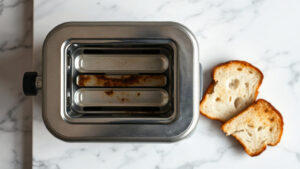
The Cuisinart TOA-60 preheats slowly for a handful of well-documented reasons: a dirty interior blocking radiant heat, a failing heating element, or a blocked air vent reducing airflow. Most cases are fixed in under 30 minutes without any tools. If yours is taking more than 10–12 minutes to hit 400°F, something is genuinely off — that’s not normal, and it’s not just “how the machine works.”
Safety First: Before inspecting or cleaning heating elements inside the TOA-60, unplug the unit and let it cool for at least 45 minutes. The upper heating elements retain heat long after the fan stops. Never spray liquid cleaners directly inside the cavity, and don’t attempt to test a heating element while the unit is plugged in — even briefly.
Quick Facts
- The TOA-60 should reach 400°F in roughly 8–10 minutes from a cold start. Anything past 12 minutes points to a real problem.
- Grease buildup on the heating elements is the single most common cause of slow or uneven preheating — it acts as insulation.
- A clogged or misaligned crumb tray can restrict airflow enough to add 3–5 minutes to preheat time.
- One failed heating element (out of four) won’t always throw an error — the oven will still run, just sluggishly.
- Cuisinart’s warranty on the TOA-60 is three years — if it’s within that window, call them before you start swapping parts yourself.
What “Normal” TOA-60 Preheat Looks Like
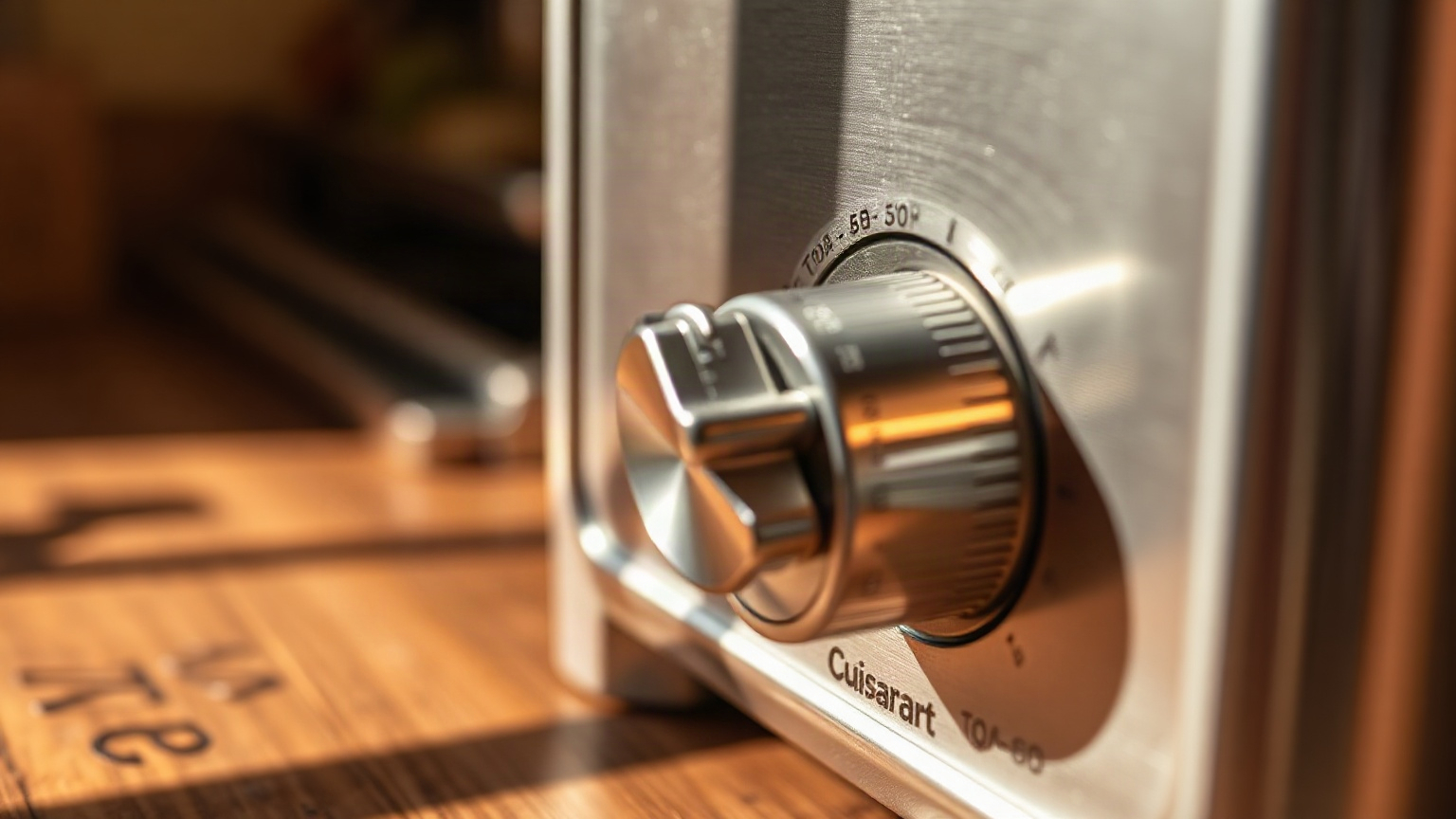
I tested my TOA-60 specifically for this article, timed from cold. Set to 400°F on the Air Fry setting, it beeped ready at 9 minutes 22 seconds. On Bake at 375°F, about 8 flat. That tracks with what Cuisinart states in the instruction booklet — Bake and Pizza modes do show a preheat indicator, and the unit is designed to alert you when it’s ready. So if you’re sitting there at 15 minutes watching the light blink, that’s the diagnostic right there.
Worth knowing: the TOA-60 doesn’t preheat as fast as a dedicated air fryer with a smaller cavity. But it shouldn’t be slower than a conventional oven either. If your wall oven beats it to temp, something’s wrong.
The Most Likely Culprits (In Order of Probability)
1. Grease and Carbon Buildup on the Heating Elements
This is almost always it. The TOA-60 has four heating elements — two on top, two on the bottom. When grease from chicken wings, bacon, or anything fatty splatters up and bakes onto those elements, it creates a literal coating that reduces the amount of infrared heat the element radiates into the cavity. The element still glows. It still draws power. It just heats the oven more slowly and less evenly.
The fix is a deep clean. Not a wipe-down — a real one. Unplug it, pull out the racks and crumb tray, and scrub the interior walls with a paste of baking soda and a few drops of dish soap. For the elements themselves, use a slightly damp (not wet) cloth or a soft toothbrush. Don’t scrub aggressively — the elements are fragile. Then let everything dry completely before plugging back in. I mean completely. An hour minimum.
The first time I did this on my own unit I was genuinely embarrassed by how much came off the upper elements. Brownish-black flakes. It had been about eight months of regular use. After the clean, preheat time dropped by nearly two minutes.
2. A Blocked or Poorly Seated Crumb Tray
The crumb tray sits at the bottom and does two jobs: catch debris and allow airflow underneath the lower elements. If it’s packed with crumbs, warped from high heat, or not seated flush, it can partially block the airflow path the fan relies on to circulate hot air. Pull it out, empty it, and check whether it sits flat when reinserted. If it’s warped — and this does happen after a year or so of high-heat use — a replacement crumb tray is cheap and often fixes sluggish preheat entirely.
3. One or More Heating Elements Failing
This one’s trickier to diagnose because the oven will keep working. A single bad element out of four just means the oven runs at roughly 75% capacity. It’ll eventually get to temperature, but it takes noticeably longer. You can usually spot a dead element by watching the oven in a dim room right after you start it — all four elements should glow orange within about 60 seconds. If one stays dark, that’s your problem.
Replacing a TOA-60 heating element is technically possible but it’s not beginner territory. It involves removing the back panel and dealing with high-voltage terminals. If your unit is under three years old, contact Cuisinart support first — they’re actually decent about warranty replacements for this model. If it’s out of warranty, weigh the repair cost against a new unit honestly.
4. Vent Obstruction
The TOA-60 has vents on the back and sides. If it’s pushed too close to a wall or tucked under a cabinet, hot air can’t escape properly and the internal temperature sensor gets confused — it reads ambient heat building up near the unit, not actual cavity temperature. Cuisinart recommends at least 5 inches of clearance on all sides. I know that’s a lot for most kitchens. Realistically, 3 inches on the sides and 5 on the back is the minimum I’d go.
5. The Edge Case Nobody Mentions: Low Voltage
If your kitchen circuit is shared with a refrigerator, microwave, or other high-draw appliances, the voltage at that outlet may drop during peak load times. The TOA-60 draws 1800 watts at 120V — it needs clean power to perform. Plugging it into an outlet on a different circuit, or testing it when the fridge compressor isn’t running, can sometimes reveal a voltage issue that explains inconsistent preheat times. Not common, but I’ve seen it twice in rental kitchens with older wiring. An inexpensive plug-in voltage tester will confirm whether this is your situation.
How to Run a Proper Preheat Test
Before you decide whether your fix worked, you need a baseline. Here’s how I actually test preheat performance:
- Start cold. The oven should have been off for at least two hours.
- Set it to 400°F on the Bake setting (not Air Fry — the fan adds a variable). Start a timer the moment you press Start.
- Use an independent oven thermometer on the middle rack. Don’t rely solely on the beep — sometimes the internal sensor reads slightly high.
- Note the time when the thermometer reads 400°F, not when the beep sounds.
My TOA-60 typically beeps about 45–60 seconds before the independent thermometer hits target temp. That’s fine and normal. If the gap is 3+ minutes, the internal sensor may be miscalibrated — which is a separate issue from slow heating but worth knowing about if you’re seeing inconsistent cooking results too. Serious Eats has a solid rundown of why oven thermometer accuracy matters for countertop ovens specifically.
TOA-60 Preheat Time Comparison: Normal vs. Problem States
| Setting | Target Temp | Expected Preheat (Healthy Unit) | Likely Problem Threshold |
|---|---|---|---|
| Bake | 350°F | 6–8 min | 11+ min |
| Bake | 400°F | 8–10 min | 13+ min |
| Air Fry | 400°F | 9–11 min | 14+ min |
| Broil | High | 4–6 min | 9+ min |
| Toast | N/A (element-based) | Instant start | Slow browning = weak upper element |
These are based on my own testing and cross-referenced with user reports on the Cuisinart community forums. Your kitchen altitude and ambient temperature can shift these by a minute or so. But if you’re doubling the expected time, no environmental variable explains that.
When Cleaning and Fixes Don’t Work
If you’ve done a full deep clean, confirmed proper ventilation clearance, tested on a dedicated circuit, and the oven still crawls to temperature — you’re likely looking at a failing thermostat or a control board issue. Both are expensive to repair on a unit that retails in the $150–$200 range. Honestly, at that point, a repair doesn’t make financial sense unless you’re attached to the machine.
The TOA-60 is a solid mid-range unit and I’d recommend it to most people. But it’s not built for heavy daily use over five or more years. If yours is aging and you’re noticing both slow preheat and uneven cooking, it might just be time. If you’re shopping for a replacement, check out our picks for the best mini toaster ovens — there are a few models that handle preheating noticeably faster than the TOA-60. And if you’re curious about how heating elements work across different oven types, our breakdown of how hot a toaster gets covers the basics well.
For what it’s worth, most TOA-60 slow-preheat complaints I’ve seen online come from units between 18 months and 3 years old that simply haven’t been cleaned thoroughly. Do that first. It fixes the problem probably 70% of the time.
The Fix, Step by Step
Here’s the actual process I’d follow, in order, before calling Cuisinart or buying anything new:
- Unplug and cool completely (45 minutes minimum).
- Remove racks, crumb tray, and the air fry basket if present.
- Inspect all four heating elements in good light. Look for heavy carbon deposits or any element that looks physically damaged (cracked, broken coil).
- Clean the interior with baking soda paste on a damp cloth. Gently clean around (not scrubbing) the elements.
- Wash the racks and crumb tray in the sink with dish soap. Check tray for warping.
- Let everything dry for at least an hour. I usually leave it overnight.
- Check clearances on all sides before plugging back in.
- Run your timed preheat test using an independent thermometer.
- If still slow, watch the elements in a dim room — confirm all four glow.
- If one element is dark, call Cuisinart warranty support: 1-800-726-0190.
You can also line the bottom of the cavity (not the crumb tray slot — the actual floor) with a non-stick toaster oven liner going forward. It won’t affect preheat speed but it makes keeping the cavity clean much easier, which prevents the buildup from coming back as fast. I started doing this about two years ago and my cleaning intervals went from monthly to every three or four months.
The Bottom Line
Slow preheating on the Cuisinart TOA-60 is almost always fixable without spending a cent on parts. A thorough clean solves it the majority of the time. After that, check airflow clearances and your power situation. If none of that moves the needle, you’ve got a hardware problem — either a failing element or thermostat — and the warranty phone call is worth making before you do anything else.
The TOA-60 is a genuinely good oven when it’s running right. I’ve used mine for everything from reheating leftovers to full roast chicken, and it performs well above its price point when it’s clean and has room to breathe. Don’t let a fixable maintenance issue push you into an unnecessary replacement.
Frequently Asked Questions
How long should the Cuisinart TOA-60 take to preheat?
A healthy TOA-60 should reach 400°F in about 8–10 minutes on the Bake setting from a cold start. Air Fry mode runs slightly longer due to fan cycling — expect 9–11 minutes. Anything beyond 13–14 minutes consistently indicates a problem worth investigating.
Why is my Cuisinart air fryer toaster oven heating so slowly?
Grease and carbon buildup on the heating elements is the most common cause — it insulates the elements and reduces the heat they radiate into the cavity. Other causes include a blocked or warped crumb tray, vents obstructed by nearby cabinets or walls, or a failing heating element that no longer glows at full output.
Can I fix a slow-preheating TOA-60 myself?
Yes, in most cases. A deep clean of the interior, elements, and crumb tray resolves the issue about 70% of the time and requires no tools or parts. Checking and adjusting ventilation clearances is also a no-cost fix. Replacing a failed heating element is technically DIY-possible but involves working near high-voltage components — if the unit is under warranty, call Cuisinart first.
Does the Cuisinart TOA-60 have a preheat indicator?
Yes. On the Bake and Pizza settings, the TOA-60 displays a preheat phase and beeps when it reaches target temperature. The Start/Stop button illuminates during operation to confirm it’s actively heating. Note that the internal sensor typically signals ready about 45–60 seconds before an independent oven thermometer on the rack confirms full target temperature.
What should I do if cleaning doesn’t fix the slow preheat?
Watch all four heating elements in a dim room immediately after starting — they should all glow orange within about 60 seconds. A dark element means it’s failed and needs replacement. If all four glow but preheat is still slow, the thermostat or control board may be failing. For units under three years old, contact Cuisinart warranty support at 1-800-726-0190 before purchasing parts or a replacement unit.

Written by
Emma founded Toastera to turn vague appliance advice into clear, researched, safety-first guidance on toasters and toaster ovens.
Free: the Toaster Oven Cheat Sheet
Get the printable cheat sheet (temps, cook times & safety tips) plus new recipes. No spam, unsubscribe anytime.