A toaster oven is generally safer than a microwave for everyday use in terms of fire risk from certain foods and materials, but microwaves have a strong safety edge in other areas — particularly around unattended operation and radiation concerns that, frankly, turned out to be overblown. Neither appliance is dangerous when used correctly. The real answer depends on what you’re cooking and what specific risks matter most to your household.
Safety First: Toaster ovens reach internal temperatures of 450°F or higher and their exterior walls, door glass, and rack can cause serious burns on contact. Never leave a toaster oven running unattended with fatty foods or parchment paper inside — both are legitimate fire risks. Keep at least 4 inches of clearance on all sides, and always use oven mitts rated for high heat, not thin kitchen towels.
Quick Facts: Toaster Oven vs. Microwave Safety
- Toaster ovens operate between 150°F and 500°F using exposed heating elements — which means burn and fire risk is real and proximity-dependent.
- Microwaves use non-ionizing radiation at 2.45 GHz, which the FDA has regulated since 1971. There is no credible evidence of harm from a properly functioning microwave.
- Toaster ovens use roughly 1,200–1,800 watts; microwaves typically run 600–1,200 watts, making microwaves the more energy-efficient option for quick reheating tasks.
- Fires from toaster ovens are most commonly caused by crumb tray buildup, parchment paper too close to elements, and fatty foods splattering onto heating coils.
- Microwaves carry specific risks that toaster ovens don’t: superheating liquids, metal arcing, and uneven heating that can leave food dangerously undercooked in spots.
I’ve had both appliances running on my kitchen counter for years. Burned myself on the toaster oven door twice. Never once had an issue with the microwave beyond a soup explosion I’d rather not talk about. Both have their failure modes. Let’s go through them properly.
How Each Appliance Actually Works — and Why It Matters for Safety
Toaster Ovens: Heat You Can See and Feel
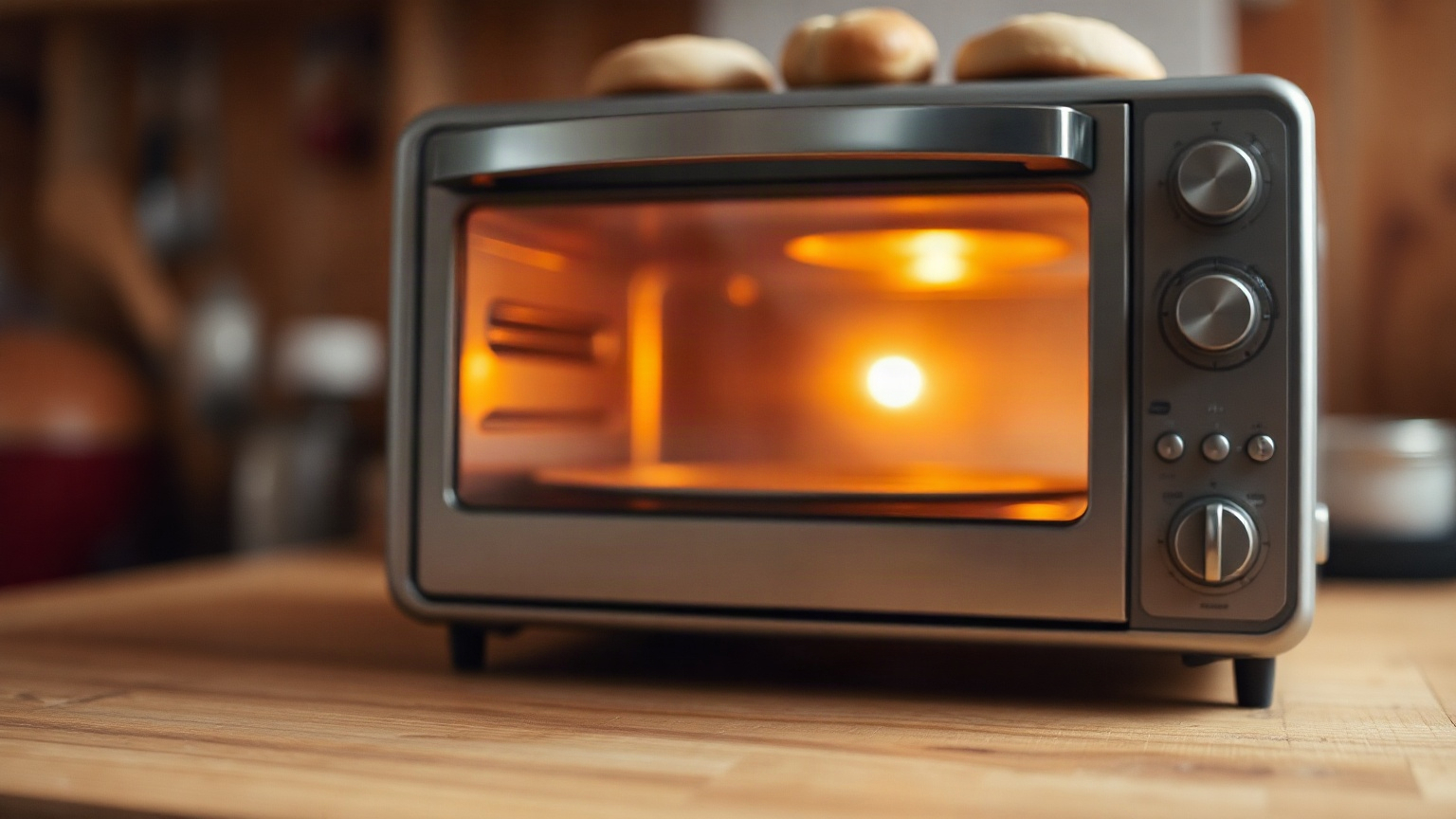
A toaster oven heats food using resistive heating elements — metal coils or quartz rods that glow red-hot and radiate infrared energy directly onto food. The oven cavity itself gets hot. The door gets hot. The rack gets hot. You can read more about how hot a toaster gets internally, but the short version is that temperatures at the element surface can exceed 500°F even when the dial is set to 400°F.
This is conventional heat. Intuitive, predictable, and great for crisping. But it creates a genuine burn hazard for anyone who reaches in carelessly. Kids and older adults are especially at risk. The exterior of most mid-range toaster ovens also gets warm enough to be uncomfortable to touch during extended use — some run hotter than others. My Breville gets noticeably hotter on the outside than my old Hamilton Beach did.
Microwaves: Non-Ionizing Radiation That Isn’t the Boogeyman
Microwaves work by emitting radio waves that excite water molecules in food, generating heat from the inside out. The waves themselves are non-ionizing — meaning they don’t have enough energy to break chemical bonds or damage DNA the way X-rays or gamma rays do. The FDA has required shielding standards since the early 1970s, and a microwave with a sealed door and intact seal is not a radiation hazard.
The risks that do exist are more mundane. Superheated liquids — particularly plain water heated past boiling point in a very smooth container — can erupt violently when disturbed. I’ve seen this happen with a mug of water my partner left in too long. Not a burn from the microwave itself. A burn from the water. That distinction matters when you’re thinking about which appliance is “safer.”
The Real Safety Comparison: Risk by Risk
| Safety Factor | Toaster Oven | Microwave |
|---|---|---|
| Burn risk (surface) | High — door, rack, walls get very hot | Low — exterior stays mostly cool |
| Fire risk | Moderate — crumb buildup, parchment, grease | Low — mostly limited to metal/foil arcing |
| Uneven cooking (food safety) | Low — consistent radiant heat | Moderate — cold spots can leave pathogens alive |
| Radiation exposure | None | Negligible — FDA-regulated since 1971 |
| Unattended use risk | Higher — should not leave running unsupervised | Lower — auto-stops, less fire risk |
| Safe for children to use | Risky without supervision | Generally safer with basic guidance |
| Food safety (reheating) | Excellent — reaches temp throughout | Variable — requires stirring and standing time |
Fire Risk: Where Toaster Ovens Need More Respect
This is the area where toaster ovens genuinely lose points. The crumb tray is the biggest culprit — built-up grease and crumbs sitting inches from a glowing element is a fire scenario, not just a cleaning annoyance. I clean mine every two weeks, sometimes more often if I’ve been doing a lot of bacon or anything with a marinade. It takes about 90 seconds. Not doing it is genuinely risky.
Parchment paper is trickier. Most brands say it’s oven-safe to 420°F or 425°F. Toaster ovens with the element close to the food surface can expose the paper to temperatures well above that near the edges. I’ve had parchment brown at the corners inside my toaster oven on a 425°F setting. Never caught fire, but I switched to a nonstick toaster oven baking pan for high-heat jobs after that.
Aluminum foil, used correctly and not touching the walls or elements, is fine. Don’t let anyone scare you otherwise. But foil balls, crinkled foil near elements, or foil covering the rack completely — those are problems.
Food Safety: The Edge Case Everyone Misses
Here’s the thing almost none of the comparison articles talk about: microwaves heat unevenly, and that unevenness isn’t just about cold bites — it’s a genuine food safety issue with certain proteins. The USDA recommends covering food and allowing standing time when reheating in a microwave specifically because cold spots can allow bacteria to survive even when the outer layer of food is steaming hot.
Toaster ovens don’t have this problem in the same way. Reheating food in a toaster oven produces more even internal temperatures — especially in denser foods like casseroles, stuffed peppers, or thick cuts of leftover meat. Slower, yes. But the heat distribution is more reliable for food safety purposes.
Everyday Use: Which One Is Actually Safer for Your Household?
It depends a lot on who’s using the appliance and how. Here’s how I’d break it down.
If you have young kids who use the kitchen independently, the microwave is the safer choice. The exterior doesn’t get dangerously hot, the door isn’t a burn hazard, and the auto-shutoff means the worst-case scenario is a mess, not a fire. A toaster oven in that situation needs a lock or a rule about adult supervision.
If you’re reheating dense foods regularly — meat, rice dishes, anything you’re genuinely worried about getting to safe temperature throughout — the toaster oven wins on food safety grounds. It’s slower, but the even heat means you’re not playing hot spot roulette.
For someone living alone or cooking for one or two adults who know their way around a kitchen, I’d honestly say they’re about equal in practice. The risks are different, not unequal. My personal bias is toward the toaster oven because I think the food comes out better — but I’m not going to pretend that’s purely a safety argument.
If space is a concern, the best mini toaster ovens take up surprisingly little counter space while still giving you proper convection heat. Some are genuinely compact enough to sit next to a microwave without taking over the kitchen.
The Specific Models Worth Considering
If you’re choosing a toaster oven with safety as a priority — automatic shutoff, cool-touch door glass, stable feet — a few models come up consistently.
The Breville Smart Oven Air Fryer Pro has a proper cool-touch door handle and auto-shutoff. It’s premium-priced, but the build quality shows in the details. The Cuisinart TOA-70 is mid-range, solid, and has a timer with auto-shutoff — good pick if you don’t want to spend Breville money. The Hamilton Beach models at the budget end are fine for basic use, though the exterior does run warmer than I’d like and the door isn’t as well-insulated.
For a toaster oven wire rack replacement — something worth having on hand, since the originals warp over time — make sure you get one sized for your exact model. Generic racks that don’t sit flat are a spill hazard.
Practical Safety Habits That Actually Make a Difference
Both appliances are safe when maintained and used correctly. That caveat matters more than any inherent design difference.
For toaster ovens: clean the crumb tray regularly, don’t leave them running unattended with anything that drips fat, keep clearance on all sides (4 inches minimum, more is better), and replace the appliance if the door seal or hinges are compromised. Also — and this caught me off guard the first time — don’t put plastic containers near or on top of a running toaster oven. The top surface gets hot enough to soften some plastics. Found that out the hard way with a cutting board.
For microwaves: don’t heat water in smooth, new containers without a wooden stir stick or microwave-safe object inside to prevent superheating. Stir food midway through. Check that the door seal is intact — a warped or cracked door seal on a microwave is a reason to replace the unit, not to keep using it. And obviously, no metal. Even small amounts of aluminum foil can arc badly in some microwaves.
Serious Eats has a solid rundown of microwave safety specifics worth reading if you want to go deeper on the science of superheating and what containers are actually microwave-safe.
The Honest Answer
A toaster oven is not categorically safer than a microwave. What it is: more intuitive about its risks. You can see the heating elements. You can feel the heat. The danger signals are obvious in a way that microwave risks — uneven heating, superheating, arcing — aren’t always visible until something goes wrong.
Microwaves have one major perception problem that isn’t supported by evidence: the radiation fear. That’s mostly noise. The actual risks — food not reaching safe temperature throughout, superheated liquids — are mundane and very manageable with basic habits.
Pick based on what you’re actually cooking and who’s in your kitchen. For households with children using appliances independently, lean microwave. For food safety and even reheating, lean toaster oven. For most adults who know how to use a kitchen, honestly — own both and use each for what it does well.
Frequently Asked Questions
Is it safe to use a toaster oven every day?
Yes, daily use is completely fine as long as you’re maintaining it properly. Clean the crumb tray at least weekly, keep clearance around the unit, and don’t leave it running unattended with fatty foods inside. Daily use doesn’t meaningfully accelerate wear on a decent-quality model.
Can a toaster oven cause a fire?
It can, and the most common causes are crumb buildup in the tray, grease from fatty foods dripping onto the heating elements, and parchment paper or paper towels placed too close to the element. These are all preventable with basic maintenance and not using the wrong materials inside the oven cavity.
Are microwaves actually safe to use?
Yes. Microwaves emit non-ionizing radiation that cannot damage DNA or cause cancer — this has been studied extensively since the 1970s. The FDA requires shielding that makes leakage from a properly functioning microwave negligible. The real risks are about food handling: uneven heating and superheated liquids, both of which are manageable with basic technique.
Which uses more electricity, a toaster oven or a microwave?
Toaster ovens typically draw 1,200–1,800 watts and run longer to complete cooking tasks. Microwaves use 600–1,200 watts and work much faster, so per task they usually consume significantly less electricity. For quick reheating jobs, a microwave is the more energy-efficient choice by a meaningful margin.
Is a toaster oven safe to leave on while you’re in another room?
Technically most modern toaster ovens have timer-based auto-shutoff, but leaving one running unattended — especially with anything fatty or with parchment paper inside — is not a habit worth developing. Briefly stepping away is different from leaving the house or going to sleep with it on. Treat it more like a stovetop burner than a slow cooker in terms of supervision.

Written by
Emma founded Toastera to turn vague appliance advice into clear, researched, safety-first guidance on toasters and toaster ovens.
Free: the Toaster Oven Cheat Sheet
Get the printable cheat sheet (temps, cook times & safety tips) plus new recipes. No spam, unsubscribe anytime.