Set your toaster oven to convection roast at 400°F (205°C), and most vegetables will be done in 20–25 minutes with properly browned edges and tender centers. The convection fan circulates hot air continuously, which pulls surface moisture away from the vegetables faster than a static oven ever could. That’s what gives you actual caramelization instead of soggy, steamed pieces that just sit there looking sad.
Safety First: Toaster ovens reach temperatures up to 450°F and their exterior walls, door, and rack can cause serious burns on contact. Always use silicone oven mitts when inserting or removing pans, keep the toaster oven at least 4 inches from walls and cabinets, never leave it unattended at high heat with oily vegetables (grease splatter is a real fire risk), and make sure your baking pan fits without touching the heating elements.
Quick Facts: Convection Roasting Vegetables in a Toaster Oven
- Best temperature: 400°F on convection roast (not convection bake)
- Typical roasting time: 20–30 minutes depending on vegetable density, with a flip at the halfway point
- Convection cuts roasting time by roughly 25% compared to a conventional toaster oven setting
- Preheat fully — at least 5 minutes — before the pan goes in
- Cut pieces to similar sizes (about 1 inch) so everything finishes at the same time
What the Convection Setting Actually Does (And Why It’s Different)
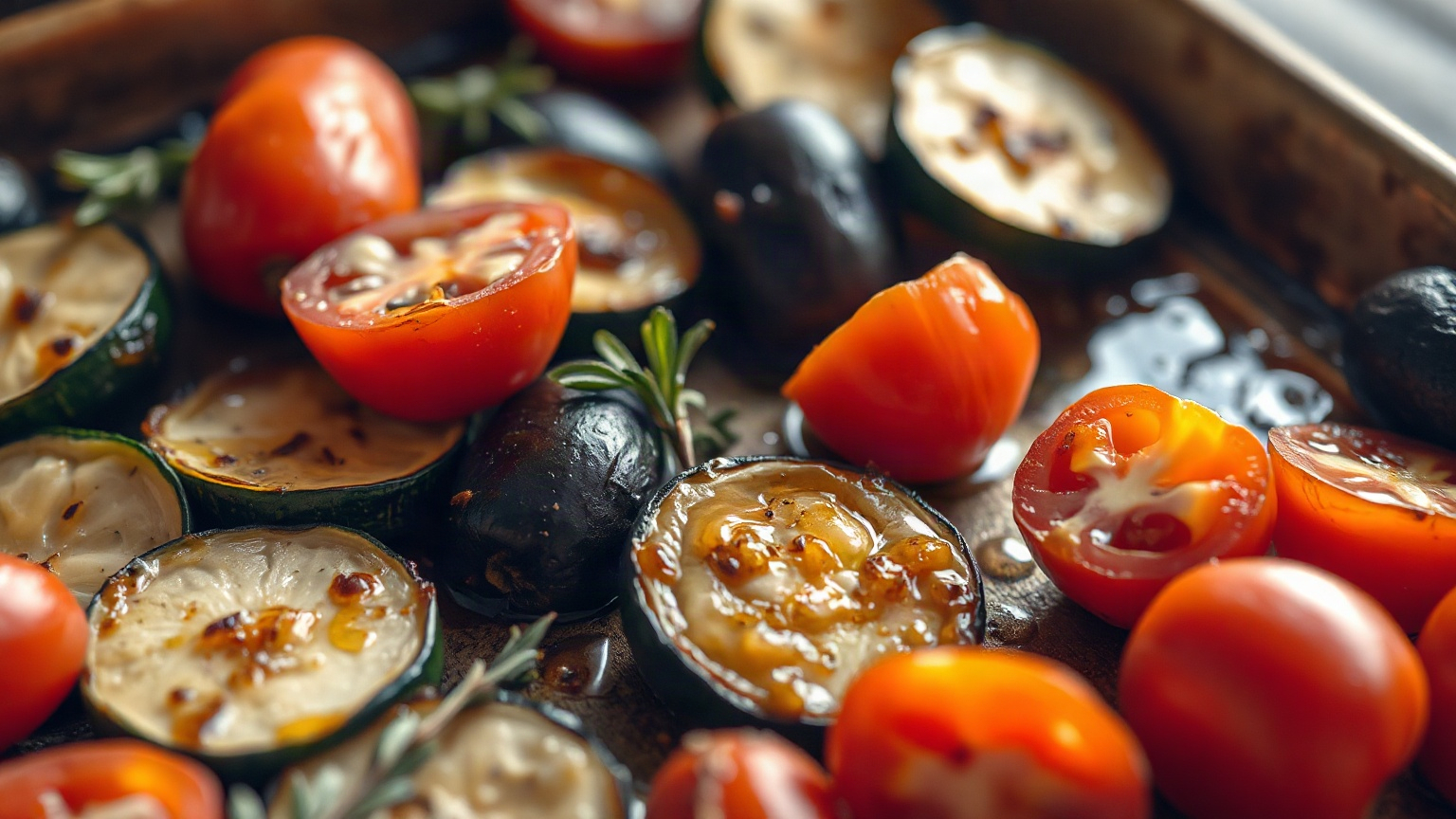
Here’s the thing most toaster oven guides skip over: there’s a meaningful difference between convection bake and convection roast, and choosing the wrong one will leave you with vegetables that are cooked but not roasted. Convection bake runs the fan at lower temperatures and is designed for even, gentle heat — great for muffins, not great for broccoli you want to have some char on it.
Convection roast uses higher heat settings (usually 375°F–450°F) alongside the fan, and on many toaster ovens it also cycles the top broil element on intermittently. That combination of circulating hot air plus radiant heat from above is what actually browns the surface of vegetables. The fan does the heavy lifting by constantly replacing the thin layer of cooled, steam-saturated air that forms right around your food. Without it, that layer acts like a little insulating jacket, slowing browning and encouraging steaming instead.
I didn’t fully appreciate this until I roasted a sheet of zucchini on convection bake by accident — it came out limp and pale. Same vegetable, same oil, same temperature the next night on convection roast: completely different result. Golden edges, slightly chewy in the best way.
The Right Temperature and Time for Different Vegetables
400°F is my default. It’s hot enough to brown without scorching, and the convection fan keeps things moving so you don’t get cold spots on a small rack. That said, not every vegetable behaves the same way — dense root vegetables need more time, and delicate ones like asparagus or cherry tomatoes can go from perfect to wrecked in under five minutes if you’re not paying attention.
| Vegetable | Temp (Convection Roast) | Time | Notes |
|---|---|---|---|
| Broccoli florets | 400°F | 18–22 min | Flip once; edges should char slightly |
| Brussels sprouts (halved) | 400°F | 22–28 min | Cut-side down first for browning |
| Carrots (1-inch pieces) | 400°F | 25–30 min | Denser; may need extra 5 min |
| Zucchini (half-moons) | 400°F | 15–20 min | High water content — don’t overcrowd |
| Asparagus (thin spears) | 400°F | 10–14 min | Watch closely after 10 min |
| Cherry tomatoes | 375°F | 15–20 min | Lower temp prevents bursting too early |
| Sweet potato (1-inch cubes) | 400°F | 28–35 min | Flip twice; these take longest |
| Cauliflower florets | 425°F | 20–25 min | Higher temp = better caramelization |
A note on cauliflower specifically: it benefits from going a little hotter, 425°F, because it has less natural sugar than something like carrots and needs the extra heat to get any color. At 400°F it just sort of… sits there.
The One Thing That Trips Everyone Up First
Overcrowding the pan. I know everyone says this, and I still do it when I’m tired and just want dinner done. But in a toaster oven especially, where you’re working with a smaller cavity and a fan that can only do so much, piling vegetables on top of each other defeats the whole point. The steam has nowhere to go. You’ll end up with braised vegetables, which, fine, but that’s not what we’re here for.
Leave actual space between pieces. If you’ve got a lot to roast, do two rounds or use a toaster oven wire rack that lets you stack in a way that still allows airflow. A single layer with small gaps between pieces is non-negotiable if you want browning.
How to Set Up Your Toaster Oven for Convection Roasting
Step 1: Preheat Properly
Minimum 5 minutes of preheat. Some toaster ovens — especially older or cheaper models — will claim they’re ready when they’ve barely hit 300°F internally. Give it a real 5–8 minutes. If you have an oven thermometer, use it. I was genuinely surprised the first time I checked mine: the display said 400°F but the internal temperature was closer to 360°F until about the 7-minute mark.
Step 2: Prep the Vegetables
Cut to roughly 1-inch pieces for most vegetables. Dry them well — pat with paper towels if they’ve been washed recently. Moisture on the surface is the enemy of browning. Toss with oil (1–2 tablespoons is usually enough for a standard toaster oven pan’s worth), salt, and whatever seasoning you want. I use avocado oil because it handles high heat without smoking, though regular olive oil is fine at 400°F for shorter roasting times. Serious Eats has a solid breakdown of why oil coverage matters for roasting if you want to go deeper on the science.
Step 3: Use the Right Pan
A dark-colored, rimmed toaster oven baking pan conducts heat better than a light-colored one and helps with bottom browning. The pan that came with your toaster oven is probably fine. What doesn’t work well is a glass dish — it holds moisture and cools the bottom surface of your vegetables instead of searing it. Avoid parchment paper when you’re going above 400°F; most parchment is rated to about 425°F and can brown or smoke at the edges.
Step 4: Select the Convection Roast Setting
Look for a button or dial labeled “Convection Roast” or just “Roast” on your toaster oven’s panel. On some models (Breville, Cuisinart, Ninja) these are distinct modes. On simpler toaster ovens, there may be only one convection setting — just a fan toggle. If that’s the case, turn it on, set the temperature to 400°F, and set the top/bottom elements to the standard bake position (not just broil). You’re simulating convection roast the best you can with what you have.
If you’re curious about how your specific toaster oven compares to others in terms of heat output and settings, check out our roundup of the best mini toaster ovens — some of the budget options have shockingly capable convection systems.
An Edge Case Most Guides Ignore: Frozen Vegetables
Nobody talks about this, but a lot of people try to roast frozen vegetables in their toaster oven on convection and wonder why they come out waterlogged. Here’s what’s happening: frozen vegetables release a significant amount of water as they thaw in the oven, and that steam has to go somewhere. On a full-size oven it usually evaporates fast enough. In the smaller, more enclosed space of a toaster oven, it can pool under your vegetables and effectively steam them.
The fix is to not defrost them first — counterintuitive, I know — but to roast them from frozen at a slightly higher temperature, 425°F, and give them more time (add about 10 minutes to your usual time). This lets the surface start browning before all the ice crystals fully release. Also spread them out even more aggressively than you would fresh vegetables. It’s not perfect — fresh will always beat frozen for texture — but it’s workable on a weeknight when that’s what you’ve got.
This same principle applies when you’re reheating food in a toaster oven: moisture management matters more in a small cavity than most people realize.
Common Mistakes and How to Actually Fix Them
Not flipping. You need to flip or toss your vegetables at least once, about halfway through cooking. The bottom of the pan gets hotter than the top airspace in most toaster ovens, and the underside of your vegetables will over-brown while the top stays pale if you don’t intervene. Set a timer. Don’t skip this.
Using too little oil. Under-oiled vegetables dry out before they brown. You want a light but thorough coating — every surface. Toss them in a bowl, don’t just drizzle oil on top and hope.
Mixing vegetables with wildly different cooking times on the same pan. Asparagus and sweet potato should not share a pan unless you’re okay pulling one out early. Either roast separately or add the faster vegetables partway through the cook time of the slower ones. According to the Food Network’s roasting guide, staging vegetables by density is one of the most consistently overlooked steps in home cooking.
Skipping seasoning until after. Salt draws out moisture. If you salt just before the pan goes in, it doesn’t have time to do anything problematic. But if you salt and then let the vegetables sit for 20 minutes before roasting, you’ll see visible liquid pooling — that’s water you’d rather have evaporating in the oven driving browning, not sitting in the bowl. Salt right before roasting.
Wrapping Up
Convection roasting in a toaster oven is genuinely one of the better uses for the appliance — the small cavity actually works in your favor here because the fan’s circulation is more intense relative to the cooking space. You get good browning faster than a full-size oven, with less energy wasted. The settings that matter are convection roast (not bake), 400°F as your baseline, a properly preheated oven, and a single-layer pan that isn’t overcrowded. Get those four things right and the vegetables will take care of themselves. Also flip them. Seriously, flip them.
If you want to see how your toaster oven’s internal temperature actually behaves — not just what the dial says — take a look at our notes on how hot a toaster gets and why that number matters more than most people think.
Frequently Asked Questions
What temperature should I use for convection roasting vegetables in a toaster oven?
400°F on the convection roast setting is the most reliable starting point for most vegetables. Dense vegetables like sweet potatoes or beets may need to go up to 425°F, while delicate ones like cherry tomatoes or thin asparagus do better at 375°F to avoid burning before they’re cooked through. Always preheat for at least 5 minutes before the pan goes in.
How is convection roast different from convection bake on a toaster oven?
Convection roast runs at higher temperatures and typically cycles in the top broil element to produce more surface browning and caramelization — exactly what you want for vegetables. Convection bake uses lower, more even heat designed for pastries and breads. Using convection bake for vegetables usually results in pale, softer pieces rather than the browned, slightly crispy edges you’re after.
How long does it take to roast vegetables in a convection toaster oven?
Most vegetables take 20–30 minutes at 400°F on convection roast, with a flip halfway through. Thin or high-moisture vegetables (asparagus, zucchini) finish closer to 15–20 minutes, while dense root vegetables can take 30–35 minutes. Convection is roughly 25% faster than a standard (non-fan) toaster oven setting, so adjust if you’re switching between modes.
Can I roast frozen vegetables in a convection toaster oven?
Yes, but you need to make adjustments. Roast frozen vegetables directly from frozen (don’t thaw first) at 425°F, spread in a single layer with more space between pieces than you’d use for fresh. Add about 10 minutes to the usual cooking time. Thawing before roasting releases too much water at once in the small toaster oven cavity, which causes steaming instead of browning.
Do I need to flip vegetables when using convection roast in a toaster oven?
Yes — flip or toss them once at the halfway point. Even with the fan circulating air, the bottom of the pan conducts direct heat more intensely than the airspace above, so the underside of your vegetables will over-brown while the top stays pale without a flip. Set a timer so you don’t forget, especially with faster-cooking vegetables.

Written by
Emma founded Toastera to turn vague appliance advice into clear, researched, safety-first guidance on toasters and toaster ovens.
Free: the Toaster Oven Cheat Sheet
Get the printable cheat sheet (temps, cook times & safety tips) plus new recipes. No spam, unsubscribe anytime.