A toaster sparking inside when bread goes in is almost always caused by crumbs or food debris making contact with the heating elements, which can reach between 750°F and 900°F (400°C–480°C). Less commonly, a frayed element wire, a faulty lever mechanism, or metallic residue from foil or metallic-coated bread bags touching the slots is the culprit. Either way, a spark is your toaster telling you something is wrong — and in most cases, you should stop using it until you’ve figured out which one.
Safety First: If your toaster is actively sparking, arcing, or producing a burning smell, unplug it immediately — do not just switch it off at the wall. Do not attempt to inspect the internal elements while it’s plugged in. Sparks near crumb buildup or plastic bread wrappers can ignite a kitchen fire within seconds. Keep a dry powder or CO₂ fire extinguisher within reach of your toaster area, and never use water on an electrical fire.
Quick Facts: Toaster Sparking Inside
- The most common cause of toaster sparks is crumb buildup touching heating elements — a problem that takes weeks to develop but seconds to become dangerous.
- Toaster heating elements operate at 750°F–900°F (400°C–480°C); even a single spark at that temperature is enough to ignite dry breadcrumbs.
- Metal contact with the slots — foil, metallic twist ties, or even some branded bread bags — causes immediate arcing and can permanently damage the element wiring.
- A one-time spark from crumbs after a deep clean is usually harmless; repeated sparking with a burning smell is not.
- A toaster that sparks regularly should be replaced, not repaired — internal element repairs are rarely cost-effective or safe for home users.
The Real Reasons Your Toaster Is Sparking
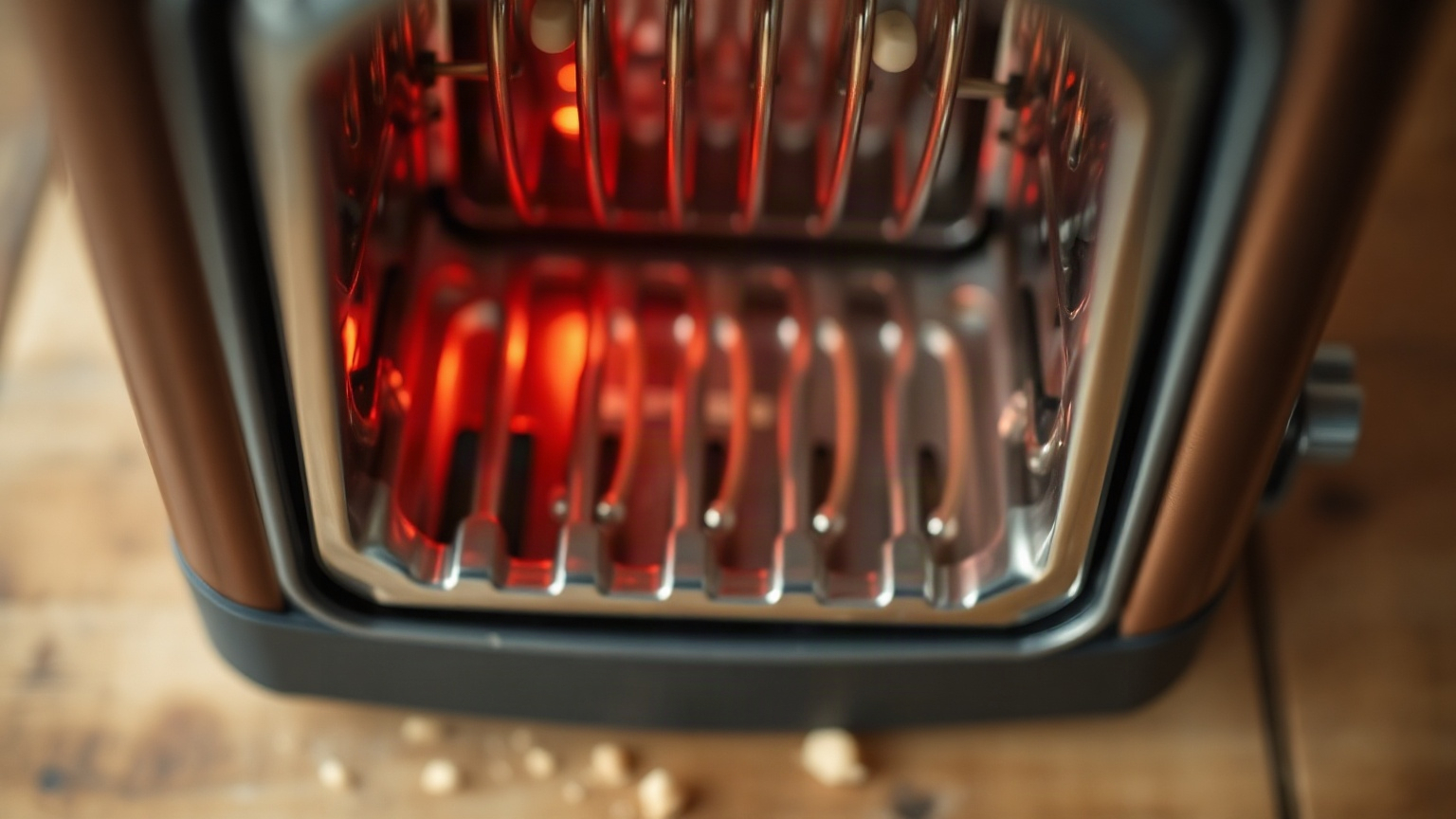
I’ve seen this happen more times than I’d like to admit, including once with a mid-range Cuisinart I’d owned for about eight months. Put in an English muffin, heard a sharp crack, and watched a small orange flash shoot up from the slot. Alarming. But once I understood what was actually happening inside, it made complete sense.
Crumb Buildup: The Most Likely Suspect
The number one cause. Crumbs fall through the bread slot, settle on the crumb tray (or just pile up in the bottom if yours doesn’t have one), and eventually accumulate close enough to the nichrome wire heating elements to catch. When bread first drops into a hot toaster, the movement can dislodge those crumbs and send them onto or between the elements. One brief contact. Spark.
The frustrating part is that the crumb tray gives people a false sense of security. You empty it occasionally, think you’re done, and forget that crumbs also pack into the channels and guides along the sides of the slot where no tray ever reaches. I’d recommend cleaning the interior of the slots themselves — with the toaster unplugged and completely cool — using a soft pastry brush every two to three weeks if you’re toasting daily.
Metal in or Near the Slots
This one catches people off guard. A metallic twist tie left clinging to the bread bag. A small scrap of aluminium foil from yesterday’s session. Even some commercial bread wrappers have a faint metallic lining that, if a strip gets dragged into the slot, will arc immediately. The spark here tends to be bigger and sharper than a crumb spark — more of a crack than a pop.
Check your bread bag before you load the toaster. Every time. It sounds paranoid until it isn’t.
A Damaged or Broken Heating Element
Toaster elements are thin nichrome wire wound around mica sheets. They’re surprisingly fragile for something that runs at nearly 900°F. If the wire has cracked, corroded, or partially broken — usually from physical impact or just age — the gap in the wire can arc when current flows across it. This produces sparks even with no food or crumbs present. That’s the key diagnostic: if you see sparking before the bread even reaches the bottom of the slot, or with an empty toaster, a broken element is almost certainly the cause.
At that point, the toaster should not be used again. Replacing a heating element in a pop-up toaster is technically possible but genuinely not worth the effort or risk — a new 2-slice pop-up toaster runs $25–$60 at most price points, and the repair parts alone can cost nearly that.
A Faulty Lever or Carriage Mechanism
Here’s an edge case the other articles don’t mention: the carriage mechanism itself can cause sparking. Some toasters use a solenoid or a small electromagnet to hold the carriage down during toasting. If the electrical contacts on that mechanism are worn or corroded, they can arc when the lever is depressed. The spark appears the instant you push the bread down — before the elements are even at full temperature. If that’s your experience, it’s specifically the switching circuit, not the element, and it still means the toaster is unsafe to keep using.
Is It Safe to Keep Using a Sparking Toaster?
Depends entirely on what’s causing it. Here’s my honest breakdown:
| Cause of Sparking | Immediate Danger Level | Safe to Continue Using? | Fix |
|---|---|---|---|
| Crumb buildup | Moderate | Not until cleaned | Deep clean, empty crumb tray, brush out slots |
| Metal contact (foil, twist tie) | High | No — inspect first | Remove metal debris, check element for damage |
| Broken heating element | Very High | No | Replace the toaster |
| Faulty lever/solenoid | High | No | Replace the toaster |
| First use after long storage | Low | Usually yes, after one supervised toast | Clean before use, toast once watching closely |
A single small spark from crumbs, followed by nothing — no smell, no repeat — is almost always benign. Toast something, watch it, and if it doesn’t happen again after a thorough clean, you’re probably fine. But repeated sparking, sparking with a burning electrical smell (distinct from burnt bread smell), or sparking with an empty slot? Stop using it that day.
For reference on just how hot those elements get, I’ve written about how hot a toaster gets in more detail — the numbers are higher than most people expect, and they help explain why crumb fires happen so fast.
How to Safely Inspect and Clean a Sparking Toaster
First rule: unplug it. Not “turn it off.” Unplug it, and let it sit for at least 20 minutes before you touch anything inside.
Step-by-Step Cleaning Process
- Remove the crumb tray, shake out the debris, and wash it with warm soapy water. Dry completely before reinserting.
- Turn the toaster upside down over a sink or large sheet of paper. Shake it gently — you’ll be surprised what falls out. I once got what looked like a full tablespoon of compressed crumb paste out of a toaster I thought was clean.
- Use a soft pastry brush or a clean, dry paintbrush to sweep along the inside of the bread slots. Work from top to bottom. Don’t use compressed air inside the toaster — it pushes crumbs into the element coils rather than out.
- Look inside with a flashlight. You’re checking for any visible breaks in the element wire (a gap or black scorched spot in the coil), and for any metallic debris.
- If you see a broken element — discontinuous coil wire, a scorched spot on the mica panel — stop here. The toaster needs replacing.
- If everything looks intact, plug it back in and run one empty toasting cycle on a medium setting while you watch. No sparks: you’re good. Any sparks on an empty toaster: unplug again, replace it.
One thing I’ve started doing that nobody told me: I keep a small dedicated cleaning brush next to my toaster on the counter. Takes about 45 seconds to run it through the slots after every fourth or fifth use. The kind of habit that sounds fussy until you’ve actually seen sparks shoot out of your toaster at 7am.
Preventing Toaster Sparks Long-Term
Most of this comes down to what you’re putting in the toaster and how often you’re cleaning it. Some specifics worth knowing:
Foods That Make Crumbing Worse
Dense seeded breads, crumpets, English muffins, and anything with a loose crust (sourdough with a thick ear, for instance) shed significantly more debris than standard sliced sandwich bread. If these are your daily toast, you need to clean the toaster twice as often. The Serious Eats team have written extensively about bread textures, and the same surface properties that make a good crumb for eating create more mess in the toaster.
Pastries, croissants, and anything with a sugar glaze are genuinely bad ideas in a pop-up toaster. The sugar caramelizes, sticks to the elements, and chars in a way that’s harder to clean than crumbs and more likely to cause repeat sparking. If you’re reheating pastries, a toaster oven is genuinely safer for that job. I’ve got more on that in this guide to reheating food in a toaster oven.
The Foil Rule
Never put foil in a pop-up toaster. Not a little bit to catch drips. Not to wrap a piece of bread for a “slower toast.” Foil in direct contact with energized elements will arc immediately, and it can weld itself to the wire or damage the mica panel in a way that makes the toaster unsafe even after the foil is removed. This is one of those rules with no exceptions.
When to Replace Instead of Clean
A toaster that sparks regularly despite being clean, that smells of burning plastic or metal rather than burnt bread, that makes clicking or arcing sounds without food in the slots, or that’s more than eight to ten years old with heavy use — replace it. The average lifespan of a pop-up toaster with daily use is roughly six to eight years before element degradation becomes a real concern. After that, you’re on borrowed time whether or not it’s visibly sparking.
If you’re in the market for an upgrade, my roundup of the best mini toaster ovens is worth a look — a compact toaster oven gives you more flexibility and tends to be easier to keep clean than a pop-up, which has always been a minor pet peeve of mine with the slot-style design.
When to Call It: Replacing Your Toaster
Some things are worth fixing. A toaster with electrical faults isn’t one of them — at least not at home, without the right equipment. If you’ve cleaned it thoroughly, removed any debris, and it still sparks, the repair cost (if you even found someone to do it) would exceed the cost of a new one. Budget toasters start around $20–$25. A decent mid-range one with a wide slot for artisan bread runs $45–$70. Even premium options from Cuisinart or similar brands stay under $100 for a four-slice model.
The U.S. Consumer Product Safety Commission tracks appliance fire data, and toasters and toaster ovens collectively account for roughly 700–1,000 house fires per year in the United States. That’s not a scare tactic — it’s just the honest reason a $40 replacement is a reasonable decision when your current toaster is behaving erratically. Some things aren’t worth nursing along.
The Bottom Line
A sparking toaster is almost never “fine.” It’s either telling you it needs a thorough clean, that you’ve accidentally dropped something metallic into the slot, or that the internal components are failing. The first two are fixable. The third isn’t — not practically, anyway.
Clean it first. Watch it carefully on a test run. If the sparking continues with an empty toaster, or if you can see visible damage to the element coil, unplug it and don’t look back. Eight years of daily toast is a good run. Let it retire.
Frequently Asked Questions
Why does my toaster spark when I put bread in?
Sparking when bread is inserted is almost always caused by crumbs on or near the heating elements being disturbed by the movement of the bread going in. It can also happen if there’s metallic debris — like a twist tie fragment or foil residue — in the slot that makes contact with the energized element. A one-time spark after months of cleaning neglect is usually crumbs; clean the toaster thoroughly and test again before making any decisions about replacing it.
Is it safe to use a toaster that sparks?
Not until you know the cause. A toaster that sparked once due to crumbs, and doesn’t spark again after cleaning, is generally safe to continue using. A toaster that sparks repeatedly, smells of burning electrical components, or sparks when the slot is empty should not be used — unplug it immediately and either have it assessed by a qualified electrician or replace it.
How hot do toaster heating elements get?
Toaster heating elements typically reach between 750°F and 900°F (roughly 400°C to 480°C) during normal operation. The exterior of the toaster stays much cooler — usually 150°F–200°F on the side panels — but the internal elements are hot enough to ignite dry breadcrumbs almost instantly. This is why crumb buildup is a genuine fire risk, not just a cleanliness issue.
Can a sparking toaster cause a fire?
Yes. A spark inside a toaster that contains dry crumbs or other combustible debris can ignite a fire quickly. The U.S. CPSC estimates toasters and toaster ovens cause several hundred residential fires per year. The risk is highest with heavy crumb buildup, but metallic debris arcing against elements is also a documented ignition source. Never leave a sparking toaster unattended.
How often should I clean my toaster to prevent sparking?
For daily toaster use, empty the crumb tray every one to two weeks and do a full slot-brush cleaning every two to three weeks. If you regularly toast dense, seedy, or crusty breads — sourdough, crumpets, English muffins — clean it weekly. A deeper inspection inside the slots with a flashlight every month or two lets you catch element damage early before it becomes a sparking problem.

Written by
Emma founded Toastera to turn vague appliance advice into clear, researched, safety-first guidance on toasters and toaster ovens.
Free: the Toaster Oven Cheat Sheet
Get the printable cheat sheet (temps, cook times & safety tips) plus new recipes. No spam, unsubscribe anytime.