Air fryers produce crispier frozen fish sticks than toaster ovens in most situations — but the gap is smaller than you’d think, and a toaster oven with a strong convection fan can close it considerably. The main difference is airflow speed: air fryers circulate hot air at a much tighter radius around the food, which pulls moisture off the breading faster and sets that crunch earlier. Practically, this means air fryer fish sticks are done in roughly 10–12 minutes at 400°F, while a toaster oven (convection on) needs closer to 14–18 minutes to hit comparable crispiness.
Safety First: Both air fryers and toaster oven run heating elements at extremely high temperatures — some toaster ovens reach 500°F internally. Never leave either appliance unattended while cooking frozen fish sticks or any high-fat breaded food, as grease splatter on the heating element can cause a small fire. Keep the crumb tray clean before every use, and always place the appliance at least 4–6 inches from cabinets or walls. Use oven mitts — the baskets and racks get far hotter than they look.
Quick Facts: Air Fryer vs Toaster Oven for Frozen Fish Sticks
- Air fryers cook frozen fish sticks roughly 30–40% faster than a conventional toaster oven setting, and about 15–20% faster than toaster oven convection mode.
- Both appliances should be set to 400°F for fish sticks — going lower produces steaming instead of crisping.
- A single layer is non-negotiable in either appliance; overlapping fish sticks guarantees a soggy patch every time.
- A light spray of cooking oil on the fish sticks bumps crispiness noticeably in both appliances, even though they’re already breaded.
- Toaster ovens win on batch size — a full-size model fits 12–16 fish sticks at once, versus 6–8 in a typical air fryer basket.
How Each Appliance Actually Works on Breaded Food
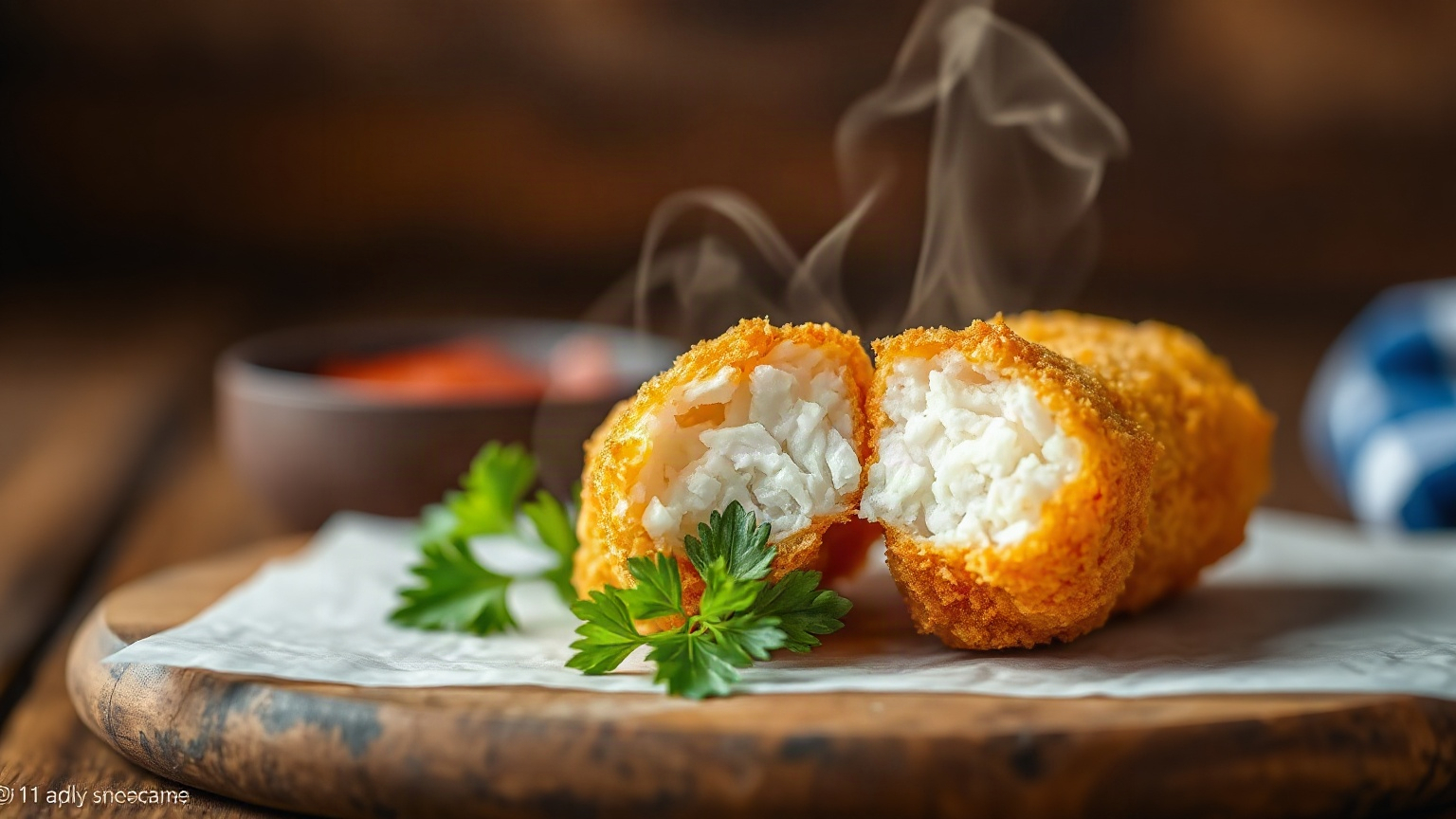
Here’s what’s physically happening when you cook a frozen fish stick: the breading has moisture trapped in it from freezing, and your job is to drive that moisture out fast enough that the coating crisps before the fish inside overcooks. That’s the whole game.
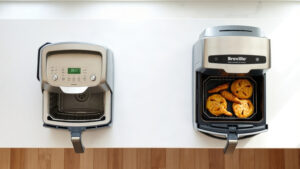
An air fryer is basically a small countertop convection oven with the fan crammed right above the food and the basket positioned so hot air can hit it from all angles at once. It’s a tight, violent little environment. The Ninja Foodi, for example, pushes air through a narrow chamber at high velocity — that means the surface of the breading is getting hammered with dry heat from the very first minute. Moisture has nowhere to go but out.
A toaster oven, even a good convection toaster oven like the Breville Smart Oven Air Fryer, has more internal volume. The fan exists, but it’s managing a bigger space. Air still circulates, but with less intensity per square inch of food surface. That’s not a flaw — it’s a design choice that benefits a lot of foods. Roasting vegetables, for instance, actually benefits from the gentler environment. Fish sticks, though? They want aggression.
The Actual Test: What I Found After Cooking Both Side-by-Side
I ran this test on a Tuesday afternoon with a box of Gorton’s Classic Fish Sticks (the regular ones, not the crunchy variety). Eight sticks in my Ninja AF101 air fryer, eight in my Breville Smart Oven Air Fryer Pro, both preheated to 400°F, both with a single light spritz of avocado oil spray.
At 10 minutes, I pulled the air fryer batch. Audible crunch when I bit in. The coating was genuinely golden, not pale tan, and the fish inside was flaky without being dry. I flipped them at the 5-minute mark, which I’d skipped the first time I ever made these and ended up with one very crispy side and one sad, steamed bottom. Don’t skip the flip.
The toaster oven batch needed 16 minutes. The result was also good — really good, actually — but not quite the same level of snap on the breading. A bit more uniform color across the whole stick, which looked nicer on a plate, but the texture was a hair softer. If someone served me those without the comparison, I’d have been happy. But next to the air fryer batch? Slight edge to the air fryer on crunch.
One thing I noticed: the toaster oven sticks were more forgiving on timing. I got distracted at 16 minutes and didn’t pull them until 18. Still fine. In the air fryer, going to 13–14 minutes started drying out the fish noticeably. So if you’re cooking for kids and multitasking, the toaster oven is more forgiving of a two-minute overshoot.
Specific Times, Temps, and Settings to Use
Air Fryer Settings for Frozen Fish Sticks
Preheat to 400°F. Cook time: 10–12 minutes, flipping once at the 5-minute mark. Don’t preheat and then let it sit — get the sticks in as soon as it signals ready. I’ve found that loading a cold basket into a preheated air fryer gives you that initial sear on the bottom coating immediately, which makes a real difference.
If your air fryer model runs hot (some do — the Cosori tends to cook faster than its dial suggests), start checking at 9 minutes. The sticks should be visibly golden, not pale. A quick press with tongs tells you a lot: resistance means crunch, a soft give means they need more time.
Toaster Oven Settings for Frozen Fish Sticks
Use convection mode if you have it — this is not optional if you care about crispiness. Set to 400°F, preheat fully, and place the fish sticks on a toaster oven wire rack elevated over the baking pan, not directly on the pan surface. This is the single biggest tip I’d give anyone who’s been getting limp fish sticks from a toaster oven — airflow under the stick matters as much as airflow over it.
Cook time: 14–18 minutes, flipping once at the 8-minute mark. If your toaster oven doesn’t have convection, add 3–4 minutes and accept slightly softer results. You can also check out the guide on reheating food in a toaster oven for more on getting the best out of standard toaster oven heat settings.
Comparing Popular Models: Which Should You Actually Buy?
If you’re deciding which appliance to get specifically for crispy frozen foods and you don’t already own one, here’s my honest take on the real contenders.
| Model | Type | Capacity | Best For | Price Tier | Crispiness Rating (Fish Sticks) |
|---|---|---|---|---|---|
| Ninja AF101 | Air Fryer | 4 qt (6–8 fish sticks) | Single servings, max crunch | Budget–Mid | ★★★★★ |
| Breville Smart Oven Air Fryer Pro | Toaster Oven + Air Fry | 1 cu ft (12–14 fish sticks) | Family batches, versatility | Premium | ★★★★½ |
| Cuisinart TOA-70 | Toaster Oven + Air Fry | 0.6 cu ft (8–10 fish sticks) | Mid-size households, countertop space savers | Mid-range | ★★★★ |
| Ninja Foodi Digital Air Fry Oven | Toaster Oven + Air Fry | Flips up to store flat (10–12 fish sticks) | Small kitchens needing both functions | Mid-range | ★★★★½ |
| Hamilton Beach 31123D | Toaster Oven (convection) | 6-slice capacity | Budget buyers, basic needs | Budget | ★★★ |
My honest pick: if crispy frozen foods are your primary goal and you cook for one or two people, get the Ninja AF101 and don’t overthink it. It’s compact, it’s fast, and for fish sticks specifically it just works. If you cook for a family and want one appliance that does everything — toast, bake, broil, roast, AND air fry — the Breville Smart Oven Air Fryer Pro is worth the premium price. The Ninja Foodi Digital Oven is a smart middle-ground if you have limited counter space but need more capacity than a standard air fryer basket.
The Hamilton Beach is fine for basic toasting and reheating, but I wouldn’t chase crispiness with it — the convection is weak compared to any of the other options above. For more options at the smaller end, the best mini toaster ovens list covers some solid compact picks that can handle fish sticks just fine.
The Edge Case Nobody Talks About: Cooking From Partially Thawed
This came up because I once left a box of fish sticks on the counter while I was doing something else and forgot about them for 45 minutes. Partially thawed, soft, a little sad looking. What happens when you cook those?
In the air fryer, partially thawed fish sticks are actually a problem. The exterior surface, which needs to sear immediately to trap the crunch, is already soft and slightly wet. It starts steaming before it crisps, and you end up with a mushier coating than if you’d cooked them straight from frozen. I had to drop the temperature to 375°F and extend the cook time to 14 minutes to get anything resembling a crisp exterior — and even then it wasn’t the same.
The toaster oven handled partially thawed fish sticks noticeably better. The lower intensity airflow didn’t force immediate surface contact, which meant the breading dried out more gradually and still crisped up reasonably well at 400°F for 18–20 minutes. Not perfect, but acceptable.
So if you’re cooking from frozen, air fryer wins. If there’s any chance your fish sticks might be partially thawed? Toaster oven is more forgiving. The Serious Eats guide to reheating fried food actually touches on this principle — keeping food cold until it hits a hot cooking surface is what gives you that contrast that creates crunch. Same logic applies here.
For food safety specifics, the USDA’s guidance on safe food handling recommends keeping frozen fish at 0°F until you’re ready to cook it, and cooking it to a minimum internal temperature of 145°F. A quick instant-read thermometer through the center is the only way to actually know.
The Verdict
Air fryer wins on crispiness, cooking speed, and energy efficiency for small batches. Toaster oven wins on batch size, forgiveness if you overshoot the timer, and handling foods that aren’t fully frozen. If you already own a good toaster oven with convection, use it on a wire rack at 400°F and you’ll get fish sticks that are genuinely good — not the same as an air fryer, but close enough that you don’t need to buy another appliance just for this.
If you’re buying something new and crispy frozen foods are a regular part of your life, the Ninja AF101 is the fastest route to a satisfying result. And honestly, after doing this test, I’ve stopped bothering with any temp below 400°F for breaded frozen foods in either appliance. That threshold is where the real difference starts.
Frequently Asked Questions
What temperature should I use for frozen fish sticks in an air fryer?
400°F is the right temperature for frozen fish sticks in an air fryer. Cook them for 10–12 minutes, flipping once at the halfway point. Going lower than 400°F tends to steam the breading instead of crisping it, which is the main thing you’re trying to avoid.
Can you cook frozen fish sticks in a toaster oven without convection?
Yes, but the results are softer than convection mode. Set the toaster oven to 425°F (slightly higher to compensate for no fan), place sticks on a raised wire rack rather than directly on the pan, and cook for 18–22 minutes flipping once. Expect a crispier top than bottom, and accept that it won’t match a convection or air fryer result.
Do I need to preheat an air fryer for frozen fish sticks?
Preheating makes a real difference for breaded frozen foods. A cold basket that heats up with the fish sticks inside delays that initial surface sear and you lose crispiness. Most air fryers preheat in 2–3 minutes at 400°F — worth doing every time for fish sticks specifically.
Why are my fish sticks soggy even after air frying?
Sogginess in an air fryer usually comes from two things: overcrowding the basket (sticks touching each other trap steam), or not preheating before loading. A single layer with space between each stick is required. A light spray of cooking oil on the surface before cooking also helps the breading dry out and crisp faster.
Is an air fryer or toaster oven better for cooking frozen fish sticks for a family?
A toaster oven is better for family-sized batches. A standard full-size toaster oven fits 12–16 fish sticks at once, whereas most air fryer baskets max out at 6–8 without overcrowding. For crispiness on a large batch, use a toaster oven in convection mode at 400°F with fish sticks elevated on a wire rack rather than a flat pan.

Written by
Emma founded Toastera to turn vague appliance advice into clear, researched, safety-first guidance on toasters and toaster ovens.
Free: the Toaster Oven Cheat Sheet
Get the printable cheat sheet (temps, cook times & safety tips) plus new recipes. No spam, unsubscribe anytime.