For most single-person households, a compact toaster oven in the 6-to-9-liter range is genuinely enough — but there are three specific situations where sizing up actually makes sense, and getting this wrong costs you either $80 or six inches of counter space you’ll resent daily. Here’s the honest breakdown so you can stop second-guessing it.
Safety First: Toaster ovens run heating elements at temperatures up to 450°F and higher on some models. Never place one directly under a cabinet or within 4 inches of walls — overheating is a real fire risk, especially with larger units that radiate more heat. Always use the included rack or a proper toaster oven baking pan rather than improvised containers that can warp or catch.
Quick Facts Before You Decide
- A compact toaster oven (6–9L) handles toast, reheating, and single-serving meals easily — and uses roughly 1,200 watts versus a large unit’s 1,800W.
- A large toaster oven (25–30L) can fit a 12-inch pizza or a 5-lb chicken — useful if you batch cook, but overkill for daily solo use.
- Preheating time is real: a compact unit hits 350°F in about 4–5 minutes; a large countertop oven can take 10–12 minutes.
- Price gap between a solid compact and a premium large model is typically $60–$120 — not trivial.
- Counter footprint of a large toaster oven averages 18–20 inches wide; a compact runs 14–16 inches. That 4-inch difference matters in a small kitchen.
I’ve had both sizes sitting on my counter at different points, and I’m not neutral on this. Let me tell you what actually happened.
What “Large” and “Small” Actually Mean in Toaster Oven Terms
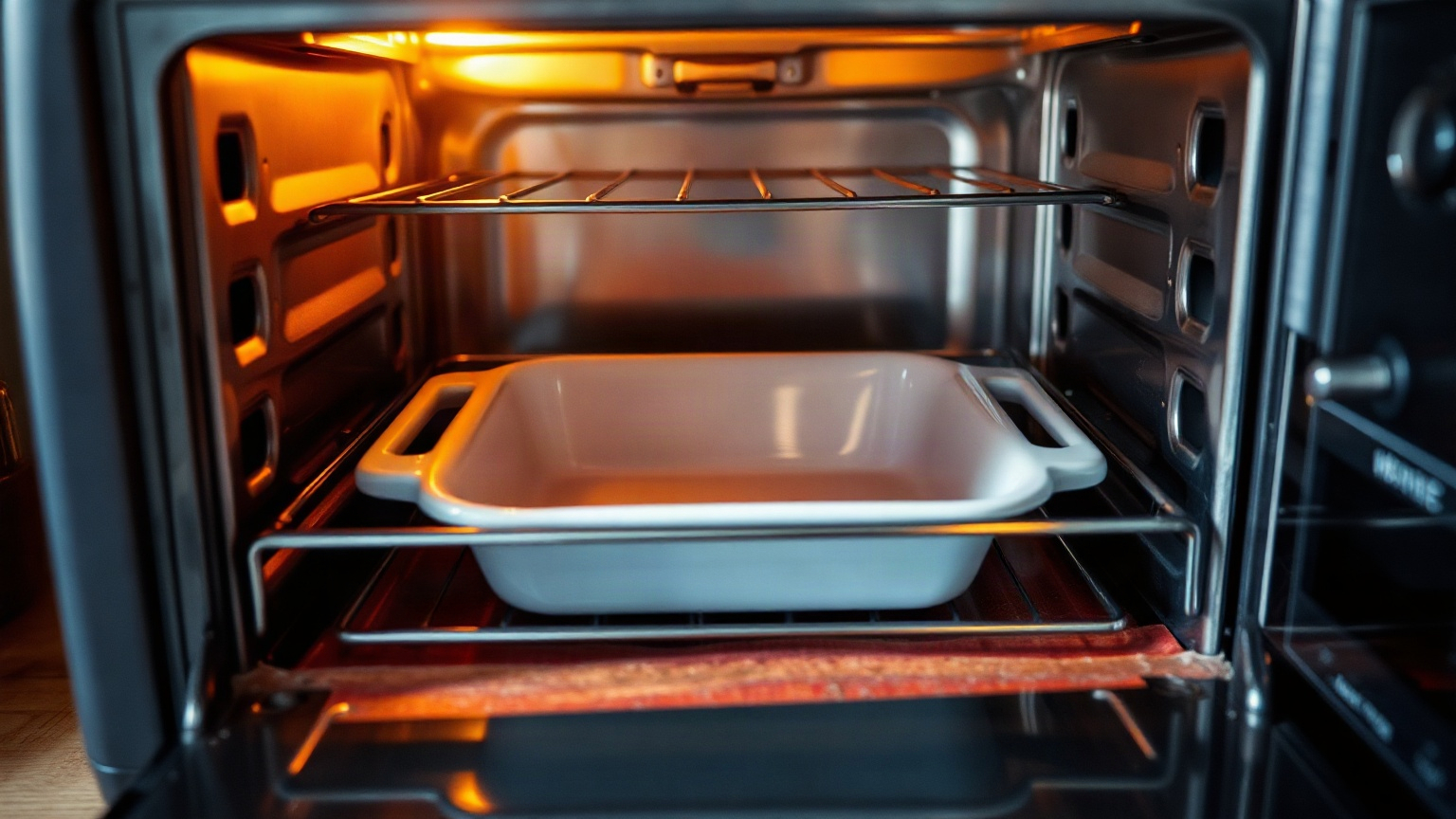
Manufacturers use volume (liters) and slice capacity interchangeably, which creates confusion. A “4-slice” toaster oven sounds big but is often just 9–12 liters. A “6-slice” unit might be 20–25 liters. The number that actually matters is interior cubic capacity, not slice count — because slice count assumes a specific slice size that your bread probably doesn’t match anyway.
Here’s what the categories look like in practice:
| Category | Typical Volume | Max Pan Size | Wattage | Avg. Preheat to 350°F | Counter Width |
|---|---|---|---|---|---|
| Compact / Mini | 6–9L | 9×9 inch | 1,000–1,200W | 4–5 min | 14–16 inches |
| Mid-size (4–6 slice) | 12–20L | 11×9 inch | 1,200–1,500W | 6–8 min | 16–18 inches |
| Large / Full-size | 25–35L | 13×9 inch or 12″ pizza | 1,500–1,800W | 10–12 min | 18–22 inches |
For reference, a standard quarter-sheet pan is 13×9 inches — it only fits in the large category. If you care about that, you already know which direction to go.
The Case for Staying Small (It’s Stronger Than You Think)
I ran a compact Black+Decker 4-slice unit for almost two years before I borrowed a friend’s Breville Smart Oven to “test” it for a week. Honest? I didn’t miss much. The compact handled every actual daily task faster — a couple of slices of sourdough, reheating leftover pasta on a small oven-safe dish, roasting a single chicken breast at 400°F for 18 minutes. Done. No waiting.
The preheat thing is genuinely underrated. When you’re hungry and making lunch for one, a 4-minute preheat feels fine. A 12-minute preheat feels like firing up a full oven, which defeats the entire point. I tracked this obsessively for a week with an oven thermometer (yes, I’m that person): my compact consistently hit 375°F in under 5 minutes. The Breville took 9–10 minutes to fully stabilize at the same setting.
Energy use adds up too. At roughly 1,200W versus 1,800W, the compact uses about 33% less electricity per session. Small difference per use, but over a year of daily cooking it’s not nothing — probably $15–20 depending on your rate, which isn’t the reason to decide, but it’s real.
And then there’s the counter space. I have a galley kitchen. Every inch is negotiated. The compact sat comfortably next to my coffee maker. The Breville needed its own zone — I had to move things, and I kept bumping into it. I actually liked the Breville. But I kept thinking about how much I’d resent it in February when I’m making oatmeal and there’s no room.
What a Compact Toaster Oven Handles Perfectly for One Person
- Toast, bagels, English muffins — obviously
- Reheating pizza (actually better than a microwave — crispier crust at 375°F for about 6 minutes)
- Roasting a single portion of vegetables at 425°F
- Baking two to four cookies at a time, which is the correct number of cookies to have around
- Melting cheese on things, broiling fish fillets, reheating casseroles in a small dish
Check out reheating food in a toaster oven for specific times and temperatures — it covers way more use cases than most people expect from these little machines.
The Three Situations Where Going Large Actually Makes Sense for One Person
Here’s where I’ll push back on the “always go compact” crowd. There are legit cases where a larger unit earns its counter real estate, even for solo living.
1. You Batch Cook on Weekends
If your Sunday ritual involves roasting a full tray of vegetables, baking a half-sheet of chicken thighs, or prepping grain bowls for the week — a compact oven just isn’t built for that. You’d do multiple cramped batches instead of one efficient pass. A large toaster oven that fits a 13×9 pan changes that calculus entirely. I know someone who lives alone but cooks like a meal-prep influencer. For her, a large unit isn’t wasted space; it’s the whole system.
2. You Hate Your Full-Size Oven
Some apartments have truly terrible ovens. Old electric coil ovens with uneven heating, gas ovens that run 50°F hot, or the oven that’s technically there but barely insulated so it heats the whole apartment. In that case, a large, well-calibrated toaster oven like the Breville Smart Oven Air Fryer becomes your actual primary oven. Makes complete sense. You want the capacity.
3. You Frequently Cook for Guests (Even Occasionally)
If you have people over even once or twice a month and you like to actually cook for them — not order in — a large toaster oven gives you flexibility a compact can’t. Fitting a full 12-inch pizza or roasting enough salmon for three people matters in those moments.
Specific Models Worth Looking At (And My Honest Takes)
I’m not going to list every toaster oven on the market. Here are the ones that actually come up in real conversations and that I’ve either used or evaluated closely.
| Model | Size Category | Key Strength | Honest Weakness | Price Tier | Best For |
|---|---|---|---|---|---|
| Hamilton Beach 4-Slice (31401) | Compact | Tiny footprint, dead simple | No convection, runs a bit hot | Budget | First apartment, tight counter |
| Cuisinart TOA-60 | Mid-size | Air fry + toaster oven combo | Fan is loud, exterior gets hot | Mid-range | Single person who air fries regularly |
| Ninja Foodi Digital Air Fry Oven (SP101) | Large (flips up) | Folds against wall when not in use | Slightly awkward door hinge | Mid-range | Small kitchen that needs large capacity |
| Breville Smart Oven Air Fryer (BOV900BSS) | Large | Temperature accuracy, build quality | Big, heavy, expensive | Premium | Replacing your main oven |
| Cuisinart TOA-70 | Large | Interior space, multiple rack positions | Preheat takes longer than Breville | Mid-to-premium | Batch cooker on a budget-ish |
My honest pick for most single people: the Cuisinart TOA-60 sits in a genuinely useful middle ground. It’s not tiny, but it’s not countertop-dominating either. The air fryer function is legitimately good — I’ve made crispy chickpeas in it that I’d stack against any dedicated air fryer. If budget is tight, the Hamilton Beach is fine. Just fine. No shame in fine.
For the batch cookers or the “this is my real oven” crowd: go look at the Breville Smart Oven Air Fryer. It’s expensive. It’s large. It’s also genuinely excellent. The element IQ system actually maintains temperature well, which matters if you bake anything that requires precision. I’d rather buy one Breville than two cheaper large units over five years.
One edge case nobody mentions: the Ninja SP101’s flip-up design is worth considering if your counter is short on width but you have some height clearance above. It folds flat against a wall or backsplash when not in use. Slightly weird to use the first few times but genuinely space-smart.
You can also see our full roundup of the best mini toaster ovens if you’re leaning compact — there are some solid picks under $60 that punch above their price.
The Electricity and Heat Question (Because People Always Ask)
A large toaster oven running at 1,800W uses 1.8 kWh per hour of operation. At a national average of roughly $0.16/kWh, that’s about $0.29 per hour of cooking. A compact at 1,200W costs about $0.19 per hour. The difference is real over time but it’s not the deciding factor — where it does matter is that large toaster ovens radiate noticeably more ambient heat into your kitchen, which is annoying in summer and slightly pleasant in winter.
For more on how toaster heating elements actually work and what temperatures they reach, our piece on how hot a toaster gets has the technical details. Short version: countertop toaster ovens can hit 450°F+ at max setting, which is hotter than most people think.
Serious Eats did a solid deep-dive on toaster oven performance if you want more lab-style testing methodology to compare against my kitchen-level observations.
The Verdict for One Person
Go compact if: you have limited counter space, you cook mostly single portions daily, you preheat your oven and want speed, and you don’t batch cook. The Hamilton Beach or Cuisinart TOA-60 at mid-size are your lanes.
Go large if: you batch cook, you have a bad or nonexistent main oven, you occasionally feed guests, or you bake things that need a real 13×9 pan. In that case, don’t cheap out — the Breville is worth the money, or the Cuisinart TOA-70 if you want to spend less.
What I’d actually tell a friend: buy the size that matches what you cook on a Tuesday, not what you imagine cooking on a perfect Sunday. Most people’s Tuesdays call for a compact. Be honest with yourself about this and you won’t resent the purchase.
And if you’re already eyeing specific accessories — a proper toaster oven wire rack upgrade makes a real difference in airflow regardless of which size you pick. The stock racks on budget models are often flimsy.
Frequently Asked Questions
Is a large toaster oven worth it if you live alone?
A large toaster oven is worth it for a single person only in specific cases: if you batch cook weekly, use it as a primary oven replacement, or regularly cook for guests. For everyday solo meals, a compact or mid-size unit heats faster, uses less energy, and takes up less counter space — which you’ll appreciate every single day.
What size toaster oven is best for one person?
A 4-to-6-slice toaster oven in the 12–20 liter range is the practical sweet spot for one person. It handles daily cooking tasks comfortably without dominating your counter. If you find yourself regularly wishing you could fit a full 13×9 pan, then size up to a large model — but most solo cooks genuinely don’t need that capacity day-to-day.
Do larger toaster ovens use significantly more electricity?
Yes, but not dramatically so. A large toaster oven at 1,800W uses about 33% more electricity per hour than a compact 1,200W model — roughly $0.10 more per hour at average U.S. rates. The bigger practical impact is ambient heat: larger units radiate more warmth into your kitchen, which can be uncomfortable in summer months.
Can a toaster oven replace a full-size oven for one person?
A large toaster oven can functionally replace a full-size oven for most single-person cooking needs. Models like the Breville Smart Oven Air Fryer fit a 13×9 pan and maintain accurate temperatures suitable for baking. The limitation shows up with very large roasts or multiple dishes simultaneously — but for solo cooking, that rarely comes up.
How long does a toaster oven take to preheat compared to a full oven?
A compact toaster oven reaches 350°F in roughly 4–5 minutes; a large toaster oven takes around 10–12 minutes. A full-size oven typically takes 15–25 minutes to fully preheat and stabilize. For quick weeknight meals, the toaster oven’s speed advantage over a conventional oven is one of its most practical benefits.
—
Written by
Emma founded Toastera to turn vague appliance advice into clear, researched, safety-first guidance on toasters and toaster ovens.
Free: the Toaster Oven Cheat Sheet
Get the printable cheat sheet (temps, cook times & safety tips) plus new recipes. No spam, unsubscribe anytime.