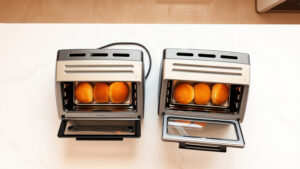
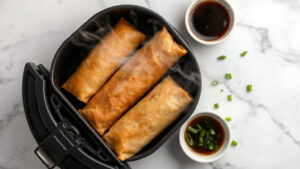
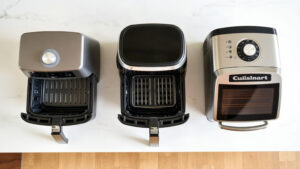
The air fryer wins, and it’s not particularly close. A basket-style air fryer circulates hot air at 400°F directly around each bean, triggering the Maillard reaction that gives you blistered, slightly chewy skins with a little char. A toaster oven, even a good one set to convection roast, tends to steam the edamame from the inside out before the outside gets a chance to crisp — you end up with beans that taste fine but look kind of sad and limp.
Safety First: Both appliances run heating elements at high temperatures (up to 450°F). Never line an air fryer basket with foil or parchment unless it’s perforated and weighted down — solid liners block airflow and can cause uneven heating or, in worst cases, the liner to blow into the heating element and ignite. Keep at least 5 inches of clearance above and behind the unit while it runs.
Quick Takeaways Before We Get Into It
- Air fryer (basket style) at 400°F for 12–15 minutes = genuinely crispy, blistered edamame with good snap
- Toaster oven on convection roast at 425°F for 18–22 minutes = softer, more steamed texture — not bad, just different
- Moisture is the enemy. Pat edamame dry or let it air-dry for 10 minutes after thawing, regardless of which appliance you use
- Shell-on edamame gets crispier than shelled in both appliances — the pods char at the tips in a good way
- If you only have a toaster oven, a wire rack (not the solid pan) closes the gap significantly
Why Edamame Is Actually Hard to Cook Well
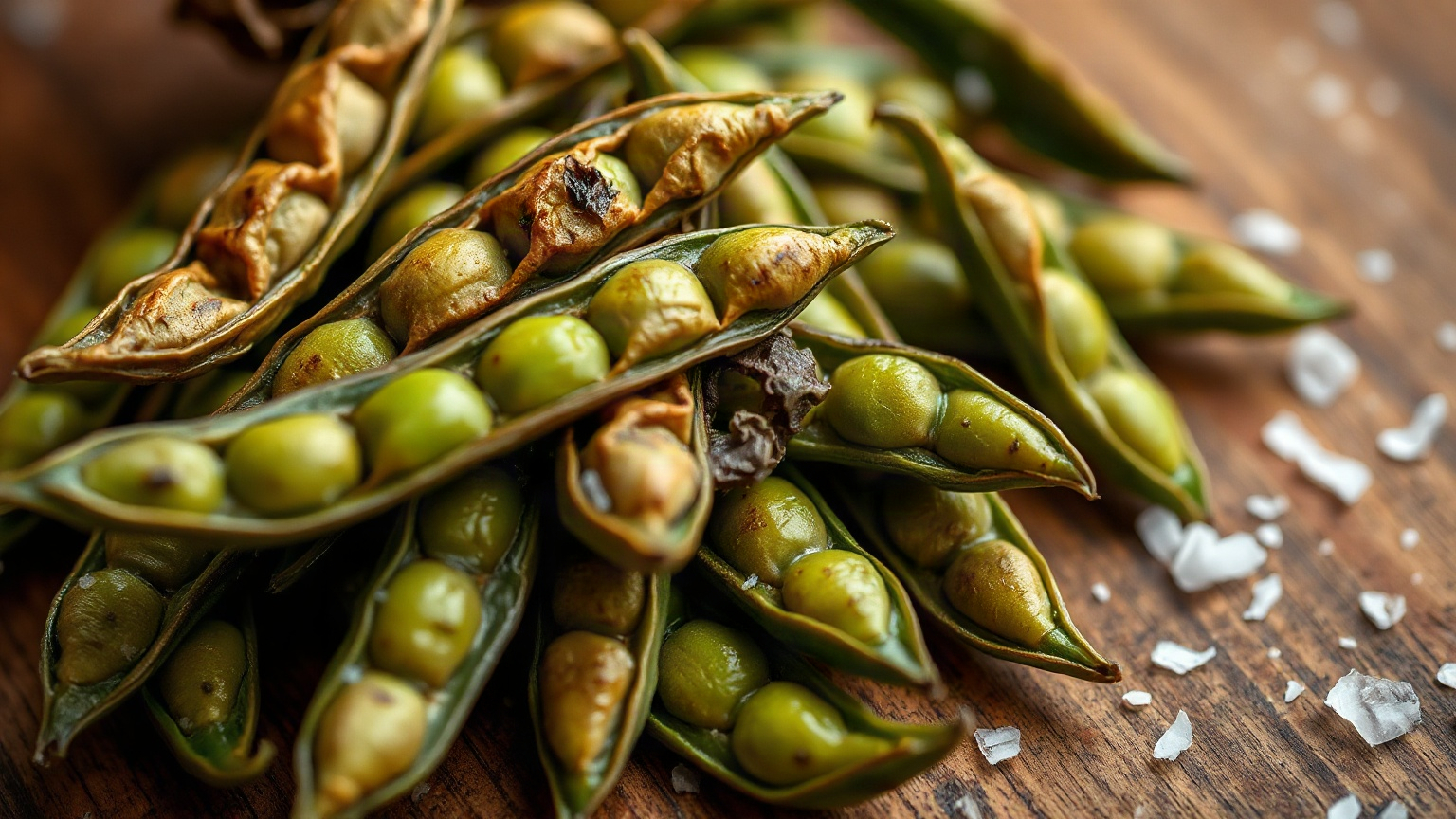
Edamame has a lot of water trapped in those pods. Frozen edamame even more so — the ice crystals melt during cooking and that moisture has to go somewhere. If your appliance isn’t moving hot air fast enough, the steam just sits there, and you get beans that are soft all the way through but never develop any texture on the outside. It’s the same reason restaurant-style crispy edamame is almost always deep fried or at least oven-roasted on a screaming-hot sheet pan with zero crowding.
The first time I made frozen edamame in my Cuisinart toaster oven, I dumped the still-frozen beans onto the baking pan without thinking. Twenty minutes at 425°F and they were hot and cooked, sure — but totally pale and waterlogged-looking. No browning. Zero crispiness. I ate them anyway because I was hungry, but it bugged me enough that I went back and did a proper side-by-side.
The Air Fryer Method: What Actually Happens
A basket-style air fryer is basically a small convection oven with a much more aggressive fan. The beans sit in a mesh basket where hot air hits them from every angle, including underneath. That constant high-velocity airflow strips moisture off the surface fast, which is exactly what you want.
Settings and timing that work
Set your air fryer to 400°F. If you’re starting from fully frozen, give them 15 minutes total — shake or toss at the 7-minute mark. If you’ve thawed them first (and patted them dry, seriously, do this), 12 minutes is enough. You’re looking for the skins to show some brownish-gold spotting, maybe a little dark at the tip of the pods. That’s the flavor you’re after.
Don’t stack them more than one layer deep. I know it’s tempting to just dump the whole bag in. Half the bag at a time gets much better results — about 8 ounces fits comfortably in most standard 5.8-quart baskets without overlapping too much.
Seasoning strategy
Toss the edamame with just a teaspoon of neutral oil before it goes in. Avocado or vegetable oil works better than olive oil here — olive oil can taste a bit bitter at 400°F. Add garlic powder, flaky salt, and if you’re feeling it, a pinch of smoked paprika. You can also add parmesan in the last 3 minutes; any earlier and it burns. I’ve seen people on Reddit swear by garlic powder and grated romano at 375°F for 15 minutes, and that checks out — slightly lower temp gives the cheese time to meld without scorching.
One thing nobody mentions: add a few drops of soy sauce to the oil toss before cooking. It caramelizes onto the pods and adds this savory-sweet thing that’s really good. Too much and they’ll steam from the extra liquid, so genuinely just a few drops.
The Toaster Oven Method: Honest Assessment
I want to be fair here. The toaster oven isn’t useless for edamame. It’s just not the right tool if crisping is your goal. But if you don’t own an air fryer, or you’re making a large batch for a party, the toaster oven has real advantages.
How to get the best toaster oven result
Use convection roast if your toaster oven has it. Set it to 425°F. This is important: use the wire rack with a pan underneath, not a solid baking sheet on its own. Elevating the beans — even on a toaster oven wire rack — lets hot air circulate under them, which helps with browning. If you just lay them flat on a solid toaster oven baking pan, the bottom side steams against the metal and you get that soft underside problem.
Cook for 18–22 minutes, flipping once at the halfway point. They’ll get some color — just not the same intensity. The texture is more like a roasted bean than a crisped one. Some people actually prefer this. My mom likes them this way. I don’t, but that’s a personal thing.
One more thing: preheat the toaster oven fully before the edamame goes in. Toaster ovens can take 7–10 minutes to actually stabilize at the set temperature, and putting cold frozen beans into a half-warm oven is basically a steam bath. For more on reheating food in a toaster oven and why preheating matters more than people think, that’s worth reading.
Side-by-Side Comparison: Air Fryer vs Toaster Oven for Frozen Edamame
| Factor | Basket Air Fryer | Toaster Oven (Convection) |
|---|---|---|
| Optimal temp | 400°F | 425°F |
| Cook time (from frozen) | 12–15 minutes | 18–22 minutes |
| Texture result | Crispy, blistered, some char | Soft-roasted, lightly browned |
| Moisture control | Excellent (airflow strips it fast) | Moderate (needs rack + preheat) |
| Batch size limit | ~8 oz per round | Up to 16 oz spread thin |
| Hands-on time | Shake once mid-cook | Flip once mid-cook |
| Best for | Crispy snack, solo or small group | Larger batch, softer texture okay |
The Edge Cases Nobody Covers
Here’s one that tripped me up: pre-seasoned frozen edamame (the kind that comes with a sauce packet or is already salted in the bag). That extra salt draws moisture out aggressively during cooking. In the air fryer, that’s actually fine — the moisture evaporates fast and you can get great results. But in the toaster oven, the same moisture gets trapped, and the edamame ends up wet and over-salted because the liquid concentrates on the surface without evaporating cleanly. If you’re using a pre-seasoned bag in the toaster oven, spread them even thinner than usual and add 3–4 minutes to the cook time.
Another edge case: toaster-oven-style air fryers (units that look like a toaster oven but have an air fry setting, like the Breville Smart Oven Air Fryer or the Ninja Foodi XL). These perform better than a standard toaster oven for edamame but still don’t match a dedicated basket air fryer. The fan is less aggressive, the basket is usually flat and wide rather than deep and mesh-like, and the beans have more surface area touching a solid tray. You can get decent results — probably a 7/10 crispiness versus 9/10 in a basket fryer — but you need to use the air fry setting specifically, not convection bake or roast. And still use the basket insert, not the solid pan.
Serious Eats has written about the physics of air fryer airflow in more depth if you want to understand why basket design matters so much. The short version: the fan position and basket mesh angle vary a lot by model, and both affect how evenly moisture is stripped from food surfaces.
What about shelled vs shell-on?
Shell-on edamame gets better results in both appliances, full stop. The pod provides some structural protection while the outside crisps, so you end up with a crunchy exterior and a warm, tender bean inside. Shelled edamame (just the loose beans) tends to dry out in the air fryer if you go past 10 minutes at 400°F — they go from perfect to slightly rubbery in about two minutes, so watch them. The toaster oven is actually a bit more forgiving for shelled beans because the lower airflow reduces the chance of over-drying.
If you want to know more about how heating elements behave in toaster ovens versus dedicated fryers, check out the breakdown of how hot a toaster gets — the temperature dynamics aren’t entirely different at the element level, but the airflow engineering is a completely separate story.
Which Appliance Should You Buy If Edamame Is Part of Your Regular Rotation?
If you don’t own either and you’re deciding: a mid-range basket air fryer is the better pick for snack-style edamame. The Cosori Pro basket air fryer in the 5.8-quart size is a solid choice — good airflow, easy to clean, and sized well for most households. The Ninja Foodi also performs well but it’s bigger than most people need.
If you’re already thinking about versatility — toast, bake, roast, air fry — then a toaster oven-style air fryer like the Breville Smart Oven Air Fryer does most things well. Just go in knowing that the edamame won’t be quite as crispy as it would be in a basket model. That’s a reasonable trade-off. For a full look at the best compact options, the best mini toaster ovens roundup is a good starting point.
According to the USDA, edamame is a complete protein source, which is part of why people eat so much of it — the nutrition profile is genuinely impressive. Getting the texture right just makes it less of a chore to eat regularly.
The Bottom Line
Use the air fryer. If you have one, there’s really no reason to default to the toaster oven for frozen edamame — the crispiness gap is real and noticeable, not marginal. The basket air fryer at 400°F, beans dried and lightly oiled, one layer, 12–15 minutes. That’s the whole answer.
If the toaster oven is all you’ve got, it works. Use convection, preheat fully, wire rack over the pan, 425°F, and don’t skip the pat-dry step. You’ll get something respectable. Just don’t expect the kind of blistered exterior that makes you eat half the batch standing over the counter before you even get to the table. That’s the air fryer’s territory.
Frequently Asked Questions
Can you cook frozen edamame in an air fryer without thawing first?
Yes, you can cook frozen edamame directly from frozen in the air fryer at 400°F — just add 2–3 extra minutes to the cook time and expect slightly less crispiness on the exterior since the ice has to cook off first. Thawing and patting dry first gives noticeably better results if you have an extra 10 minutes. Either way, don’t skip shaking the basket halfway through.
What temperature should you air fry frozen edamame?
400°F is the sweet spot for shell-on edamame in a basket air fryer. That temperature is high enough to blister the pods and trigger real browning without burning the skins before the beans inside are heated through. For shelled (loose) edamame, drop to 375°F and check at 8 minutes — they’re smaller and can dry out faster.
How long does it take to cook frozen edamame in a toaster oven?
At 425°F on convection roast, frozen edamame takes about 18–22 minutes in a toaster oven. Preheat the oven fully before adding the beans, use a wire rack instead of a solid tray, and flip them once at the halfway mark. Without convection, add another 5 minutes and expect less browning overall.
Why does my air fryer edamame come out soggy instead of crispy?
Soggy edamame in the air fryer almost always comes down to moisture — either from cooking straight from frozen without drying, overcrowding the basket, or not using any oil. Pat the beans dry after thawing, toss with a small amount of oil, and cook in a single layer with space between the pods. Overcrowding is the most common mistake and it creates steam instead of crispiness.
Is a toaster oven air fryer as good as a basket air fryer for edamame?
A toaster oven with an air fry setting is better than a standard toaster oven but still doesn’t match a dedicated basket air fryer for getting edamame crispy. The fan is typically less powerful and the basket design doesn’t allow hot air to circulate as aggressively beneath the beans. Use the air fry setting (not convection bake), use the basket insert, and expect results that are about 70–80% as crispy as what you’d get from a basket fryer.

Written by
Emma founded Toastera to turn vague appliance advice into clear, researched, safety-first guidance on toasters and toaster ovens.
Free: the Toaster Oven Cheat Sheet
Get the printable cheat sheet (temps, cook times & safety tips) plus new recipes. No spam, unsubscribe anytime.