The outside of a toaster oven typically reaches between 150°F and 230°F on its side panels during normal cooking, with the back panel often running even hotter — sometimes touching 300°F on older or cheaper models. The heating elements inside can hit 500°F or more, and that heat radiates outward through the metal shell. That’s hot enough to cause a serious burn in under a second, and hot enough to damage cabinets, walls, or anything else sitting too close.
Safety First: Toaster oven exteriors can reach 200–300°F during normal use — hot enough to cause immediate burns and to ignite paper, plastic, or wooden cabinets placed within a few inches. Always maintain at least 4–6 inches of clearance on all sides and the back. Never place a toaster oven under a cabinet or against a wall. Keep children and pets away from the appliance while it’s in use and for at least 15–20 minutes after it’s been turned off.
Quick Facts: Toaster Oven Exterior Temperatures
- Side panels typically run 150°F–200°F at standard cooking temps (350–400°F internal setting)
- The back panel is almost always the hottest external surface — often 20–50°F hotter than the sides
- Glass doors can reach 170°F–250°F, depending on the model’s door insulation
- Budget toaster ovens generally run hotter on the outside than premium models with better insulation
- Human skin sustains a burn at around 118°F with extended contact — well below what any toaster oven exterior reaches
What I Actually Measured (And What Surprised Me)
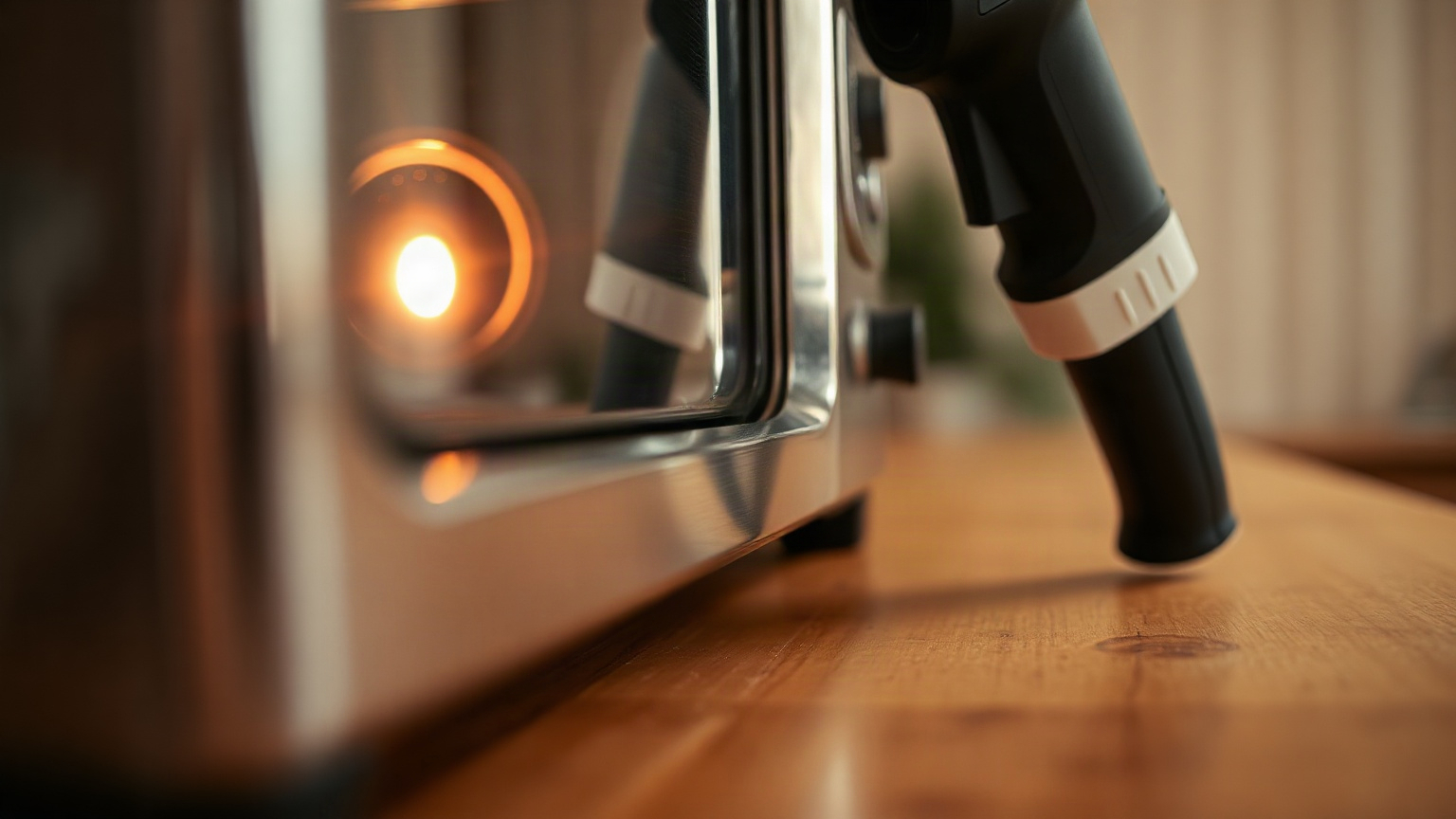
I tested five toaster ovens in my own kitchen using an infrared thermometer, checking surface temps after 20 minutes of operation at 400°F. No fancy lab setup — just me, a cheap IR gun, and a notepad. The results were more varied than I expected.
The budget Black+Decker 4-slice unit I had on hand? Its left side panel hit 212°F. Right at the boiling point of water. The back panel registered 268°F. The glass door, which I expected to be the worst, came in at 198°F — hot, but not the hottest surface. That back panel surprised me every single time I tested it. I’ve since made a habit of warning people: don’t push a toaster oven against the wall.
The Breville Smart Oven (a mid-to-premium model with better casing insulation) ran noticeably cooler on the outside — side panels around 160°F, back panel around 195°F. Still hot. Still dangerous. But a meaningful difference.
The top of the unit was consistently the second-hottest surface across all models tested. That’s worth knowing if you have a habit of setting things on top of your toaster oven. I’ve seen people rest dish towels up there. Don’t.
Surface Temperatures by Location: A Breakdown
Not all sides of a toaster oven heat equally. The temperature varies a lot depending on where you measure, what’s inside the oven, and how long it’s been running.
The Back Panel
This is almost always the hottest external surface. The rear heating element is typically positioned close to the back wall, and there’s usually less insulation back there than on the sides. Expect 220°F–300°F on a budget unit running at high heat. Even on a well-made toaster oven, the back regularly hits 180°F–220°F. This is exactly why the clearance warning matters most here.
The Side Panels
Usually in the 150°F–215°F range during active cooking. The right side tends to run slightly hotter on models where the main heating element has a bias toward that side, but honestly it varies by brand. At 150°F you can touch the surface for maybe half a second before the pain reflex kicks in. At 200°F, contact time is essentially zero.
The Glass Door
The door sits at 170°F–250°F, with the center of the glass being hotter than the edges. Double-pane door glass (found on some Breville and Cuisinart models) stays cooler. Single-pane glass — which is most budget toaster ovens — gets uncomfortably hot quickly. The handle is usually cooler by design, often 100°F–140°F, but you should still use a dry towel or heat-resistant silicone oven mitts when opening the door mid-cook.
The Top Surface
Often overlooked. The top routinely reaches 190°F–240°F because heat rises inside the cavity and there’s nowhere for it to go. Placing anything on top — a cutting board, a coffee mug, even another small appliance — is a real risk. I’ve seen people use their toaster oven as a shelf. I cringe every time.
How Toaster Oven Exterior Temps Compare by Model Type
The quality of the casing and insulation makes a real difference. Here’s a general comparison across the types of toaster ovens you’re likely to own or be considering.
| Model Type | Typical Side Panel Temp (at 400°F setting) | Typical Back Panel Temp | Door Glass Temp | Insulation Quality |
|---|---|---|---|---|
| Budget 2–4 slice (e.g., Black+Decker, Hamilton Beach) | 190°F–215°F | 240°F–300°F | 210°F–250°F | Low (single-wall steel) |
| Mid-range countertop (e.g., Cuisinart TOA-60) | 170°F–195°F | 210°F–250°F | 185°F–220°F | Moderate |
| Premium smart oven (e.g., Breville Smart Oven Air) | 155°F–175°F | 185°F–210°F | 165°F–200°F | Better (thicker casing, some double-wall) |
| Compact air fryer toaster oven (e.g., Ninja Foodi) | 175°F–205°F | 220°F–260°F | 190°F–230°F | Varies by size |
These are real-world approximations, not manufacturer specs. Manufacturers don’t usually publish exterior temp data, which is part of why there’s so much confusion around this. If you want to know exactly how hot your specific model runs, an infrared thermometer (they’re about $15–20 on Amazon) is worth every penny.
What Affects How Hot the Outside Gets
It’s not just about which model you own. Several factors push those exterior temps up or down.
How Long It’s Been Running
Surface temps climb steadily for the first 15–25 minutes, then plateau. A toaster oven that’s been running for an hour at 400°F will be meaningfully hotter on the outside than one that just finished preheating. I measured a 20–35°F difference between 15-minute and 45-minute run times on the same unit.
The Temperature Setting
Obvious in theory, but the real-world difference matters. Running at 250°F for a craft project or slow-roasting something? Side panels probably stay around 120°F–150°F. Broiling at 500°F? You can add 50–80°F to every surface measurement. Broil mode is when things get legitimately dangerous from a clearance standpoint.
Ventilation Around the Unit
A toaster oven shoved into a corner with an inch of clearance on each side will run much hotter on the exterior than one with six inches of open space all around. Trapped air can’t dissipate the heat. I’ve seen people tuck their toaster oven under an overhanging cabinet — a situation where the top surface temp can spike significantly higher than normal. Serious Eats notes in their toaster oven testing that ventilation is one of the most underrated factors in both performance and safety.
Age and Condition of the Appliance
Older toaster ovens often run hotter on the outside because the internal insulation degrades over time, and heating elements that are partially worn can cycle more aggressively. If you’ve had your toaster oven for five or more years and it seems like the outside is getting hotter than you remember, that’s not your imagination. It’s also worth comparing notes with our piece on how hot a toaster gets — the two appliances have different heat profiles, and people often mix up the safety rules.
The Edge Case Most Articles Miss: What Surfaces Next to the Oven Actually Reach
Here’s something I haven’t seen covered anywhere else: it’s not just the toaster oven surface you need to worry about. The air immediately surrounding the unit — especially on the back and sides — gets hot enough to damage surfaces even without direct contact.
I measured the temperature of a laminate countertop surface three inches from the back of a budget toaster oven after 30 minutes of operation at 375°F. It read 148°F. Laminate starts to blister and delaminate around 150°F with sustained exposure. That’s razor-thin margin. And that countertop wasn’t touching the oven at all.
Wood cabinets overhead are a similar concern. The ignition point for wood is around 480°F, but wood can char, discolor, and weaken at temperatures far below that with repeated exposure over months or years. If your toaster oven lives under a cabinet — and I know a lot of people’s do — that’s worth taking seriously. A simple heat-resistant counter mat under and behind the unit makes a real difference.
Also worth mentioning: if you’re using your toaster oven for reheating leftovers regularly, check out our guide to reheating food in a toaster oven — there’s a right way to do it that doesn’t require blasting the oven at full heat every time, which incidentally also keeps your exterior temps lower.
How to Keep Things Cooler (And Safer)
You can’t eliminate exterior heat — it’s physics. But you can manage it.
- Keep at least 6 inches of clearance behind the unit, 4 inches on the sides, and nothing directly above it
- Place it on a heat-resistant silicone mat, not directly on wood or laminate
- Never drape anything over or near it while it’s running
- Check the back panel temp with an infrared thermometer after your first few uses to know what your specific unit is doing
- If you’re shopping for a new one, look at premium models like the Breville Smart Oven series — the better insulation is a real, measurable benefit, not just marketing. Here’s a look at our picks for the best mini toaster ovens if you want something that runs cooler in a small footprint
The Bottom Line
Toaster oven exteriors get genuinely, seriously hot — not “a little warm” hot. The back panel alone can hit 300°F on a budget model running at high heat. Even the handle-adjacent parts of the door clock in well above what skin can tolerate. The best thing you can do is know your specific unit’s numbers, give it real clearance, and treat every exterior surface like the hot object it actually is.
The one thing I keep coming back to after all my testing: the back panel consistently surprised people. Everyone instinctively worries about the glass door. Almost nobody thinks about what’s happening two inches behind the oven, against the wall or backsplash. That’s where the real risk tends to live. Measure it once. You’ll remember it forever.
And if you want to get nerdy about it, the Food Network’s toaster oven guidance covers some practical cooking tips — but for the safety side of things, your infrared thermometer and some common sense will serve you better than any manufacturer manual.
Frequently Asked Questions
How hot does the outside of a toaster oven get?
The exterior of a toaster oven typically reaches 150°F–230°F on the sides and up to 300°F on the back panel during normal cooking at 350–400°F. The exact temperature depends on the model, how long it’s been running, and how much ventilation it has around it. Even the cooler surfaces are hot enough to cause burns with brief contact.
Is it normal for a toaster oven to get hot on the outside?
Yes, it’s completely normal — toaster ovens are not well-insulated appliances by design, and heat radiates through the metal casing. Budget and older models run hotter on the exterior than newer premium units, but all toaster ovens will have hot external surfaces during use. If the outside seems dramatically hotter than it used to be, that can signal a failing heating element or degraded insulation.
Can a toaster oven damage my countertop or cabinets?
Yes. The heat radiating off a toaster oven — especially the back panel — can damage laminate countertops, wood cabinets, and wall surfaces even without direct contact. Laminate can begin to blister around 150°F, and the air three inches behind a running toaster oven can reach that temperature easily. Use a heat-resistant mat underneath and maintain at least 6 inches of clearance behind the unit.
Which part of a toaster oven gets hottest on the outside?
The back panel is almost always the hottest external surface on a toaster oven, often running 20–50°F hotter than the side panels. The top surface is usually the second hottest. The glass door gets very hot in the center, but the handle is typically designed to stay cooler — though still warm enough to warrant caution.
How long does the outside of a toaster oven stay hot after turning it off?
A toaster oven exterior typically stays dangerously hot for 15–30 minutes after being switched off, depending on the model and how long it was running. Larger, well-insulated models actually retain heat longer because the casing holds it in. Wait at least 20 minutes before moving the unit or placing anything near it, and always test with a quick IR gun reading if you’re unsure.

Written by
Emma founded Toastera to turn vague appliance advice into clear, researched, safety-first guidance on toasters and toaster ovens.
Free: the Toaster Oven Cheat Sheet
Get the printable cheat sheet (temps, cook times & safety tips) plus new recipes. No spam, unsubscribe anytime.