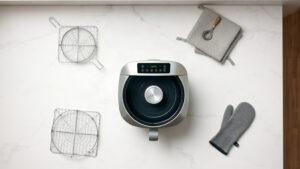
Yes, convection is worth it in a toaster oven for home baking — with one real caveat. The fan circulates hot air so evenly that cookies brown on the bottom without burning on top, roasted vegetables actually caramelize instead of steaming, and bake times drop by roughly 20–25% compared to a standard toaster oven. The caveat: delicate things like soufflés, custards, and very light chiffon cakes can get knocked around by the airflow, so you’ll want to know when to switch it off.
Safety First: Toaster ovens run heating elements at temperatures up to 500°F, and the exterior walls — especially on compact models — can get hot enough to cause serious burns on contact. Always use silicone oven mitts rated for high heat when handling pans, keep the unit at least 4 inches from walls or cabinets, and never leave it unattended when using convection at full temperature. If you smell burning plastic or see sparking near the fan, unplug immediately.
Quick Facts
- Convection fans in toaster ovens reduce bake times by roughly 20–25% and typically let you drop the temperature by 25°F from what a recipe calls for.
- Most convection toaster ovens top out between 450°F and 500°F — hot enough for bread, pizza, roasted veg, and most cookie and pastry work.
- The fan matters most for anything that benefits from a dry, circulating heat: crusty bread, crispy roasted potatoes, evenly browned cookies, and anything you’d normally rotate halfway through.
- For custards, cheesecakes, and very moist quick breads, turn the convection fan off — the airflow dries out the surface before the center is cooked.
- Budget convection toaster ovens exist, but the fan quality varies a lot — cheaper fans are louder, less consistent, and sometimes fail within a year of daily use.
What the Fan Is Actually Doing (and Why It Matters for Baking)
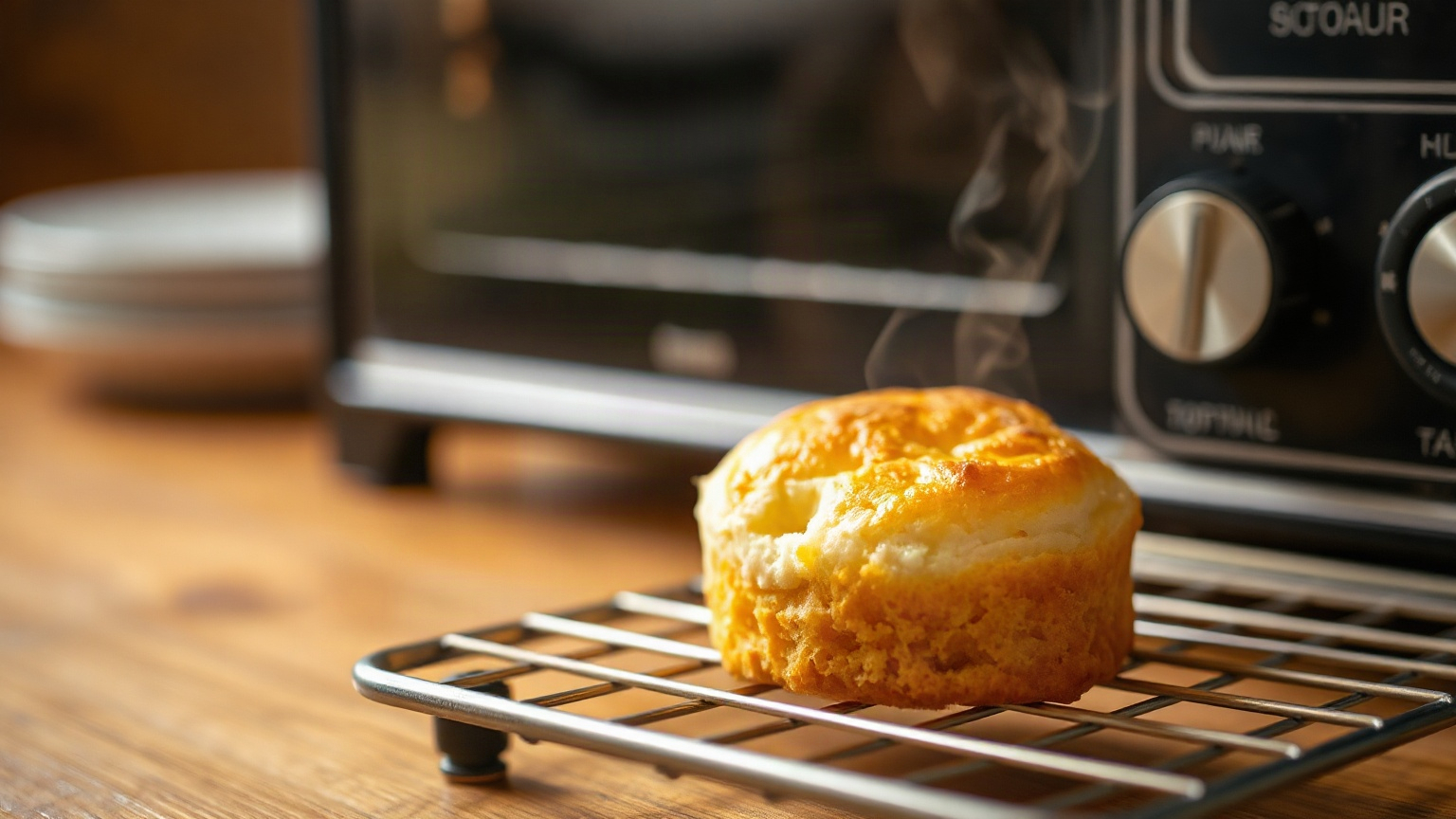
A regular toaster oven heats from fixed elements — usually top and bottom — and the air inside just sits there in layers. Hot air rises, cooler air pools near the bottom rack, and your food bakes unevenly depending on where it sits. You end up rotating pans, guessing at done-ness, and sometimes pulling out cookies where one side is pale and the other is overdone.
The convection fan breaks up those stagnant air pockets. It pushes hot air continuously around the food, so every surface sees roughly the same temperature at the same time. The practical result: faster browning, drier crusts, and a significantly more consistent bake from the front of the pan to the back.
I’ll be honest — the first time I baked a tray of chocolate chip cookies on convection at the temperature the recipe said, I pulled out a tray of dark brown discs. Completely my fault. Convection runs hotter than the dial suggests because the moving air transfers heat to food more efficiently than still air. Standard rule of thumb: drop the temperature by 25°F and start checking about 5 minutes early. Once I got that into my head, results improved dramatically.
There’s a good breakdown of how convection heat works differently from radiant heat over at Serious Eats, if you want to get deeper into the physics of it. Worth the read.
Where Convection Genuinely Earns Its Keep
Cookies and Pastries
This is the category where the fan earns its price difference the fastest. Drop cookie dough onto a toaster oven baking pan, set it to convection at 325°F instead of the recipe’s 350°F, and you’ll get an even golden-brown bottom without the top getting too dark before the center sets. No rotating the pan halfway through. No pale spots.
Same goes for puff pastry, croissants, and anything laminated. The circulating dry heat sets the layers fast, which is exactly what you want for lift and crispness.
Crusty Bread and Rolls
Artisan bread needs oven spring and a dry crust. Convection delivers both. I’ve baked small sourdough batards and dinner rolls in a Breville Smart Oven Air Fryer on convection at 450°F and gotten a crust that crackles properly when you press it — which is genuinely hard to replicate in a standard toaster oven. The fan evaporates surface moisture faster, which sets the crust earlier and gives it that characteristic crunch.
One thing to watch: if your loaf is taller than about 4 inches, make sure it’s not too close to the top element. Compact toaster ovens don’t have a lot of vertical clearance, and the top can scorch before the center’s done. Use the lower rack position and tent with foil if you see the top browning too fast.
Roasted Vegetables and Proteins
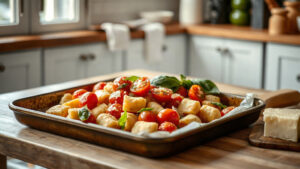
Not strictly baking, but this is probably where most home cooks get the most out of convection mode on a daily basis. Broccoli, Brussels sprouts, chicken thighs, salmon fillets — they all benefit from the same mechanism. Moving air pulls moisture off the surface, so you get actual browning and caramelization instead of that sad steamed-in-its-own-liquid texture. I roast potatoes at 425°F convection for about 25 minutes and they come out better than what I used to get in my full-size oven at 450°F for 35 minutes.
When You Should Turn the Fan Off
Convection isn’t always the answer. The same airflow that crisps up cookies can be a problem for moisture-sensitive bakes.
Cheesecakes. Custard tarts. Flourless chocolate cake. Anything that bakes low and slow and relies on a gentle, humid environment to stay creamy inside without cracking on top. The fan dries the surface prematurely and can cause cracks or a leathery skin before the interior sets. For these, switch to regular (non-convection) bake mode if your oven has that option — and most decent convection toaster ovens do.
Quick breads and muffins are a gray area. I’ve had fine results with muffins on a low convection setting (300°F), but banana bread went dry on me once when I forgot to turn the fan off. Now I just default to conventional for anything with a batter that’s meant to stay moist inside.
Also — and this one trips people up — don’t use convection when you have foods with loose toppings. Powdered sugar, fresh herbs, light breadcrumbs on top of a casserole. The fan will blow them right off. Found that out the hard way with a streusel topping. It ended up piled against the back wall of the oven.
Convection Toaster Oven Models Worth Considering
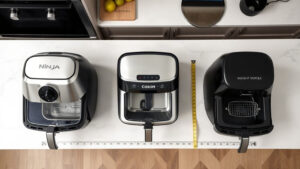
Not every convection toaster oven fan is built equally. Here’s a no-nonsense look at four models that come up constantly, what they’re actually good for, and who should buy which one.
| Model | Capacity | Convection Type | Price Tier | Best For |
|---|---|---|---|---|
| Breville Smart Oven Air Fryer Pro | 1 cu ft | Super Convection + standard | Premium | Serious home bakers, frequent use |
| Cuisinart TOA-70 | 0.6 cu ft | Single fan convection | Mid-range | Everyday baking, smaller kitchens |
| Ninja Foodi XL Pro Air Oven | Extra large (sheet pan) | Rapid dual fan | Mid-range/premium | High-volume cooking, sheet pan meals |
| Hamilton Beach 31123D | 0.5 cu ft | Single fan convection | Budget | Light use, occasional baking |
Breville Smart Oven Air Fryer Pro
This is the one I’d point a serious home baker toward without hesitation. The “Super Convection” setting moves air aggressively — almost air-fryer level — while the standard convection setting is gentler and better for bread or pastry. Having both in one machine is genuinely useful and not something the cheaper options offer. It’s expensive. But it’s also built well enough that you’re not replacing it in two years.
Check the Breville Smart Oven Air Fryer Pro on Amazon
Cuisinart TOA-70
A solid mid-range pick. The convection fan is consistent and quiet, the interior fits a 12-inch pizza or a 9×13 baking pan (barely, but it fits), and it’s not trying to do too many things. If you bake a few times a week and don’t need super-convection air-frying power, this is an easy recommendation. It’s been around long enough that there are real user reviews going back years, which matters.
Ninja Foodi XL Pro Air Oven
This one lives flat on the counter with the door opening toward you like a drawer, which some people love and others find awkward. The capacity is genuinely large — you can fit a full sheet pan, which almost no other toaster oven can do. The dual fans are powerful and fast. Great for families or for anyone who wants to replace their full-size oven entirely. Less ideal if you do a lot of delicate baking — it runs hot and fast and there’s less fine control than the Breville.
Hamilton Beach 31123D
Budget pick, full stop. The convection fan works, results are decent for simple baking tasks, and it won’t hurt your bank account. Fan noise is noticeable and the temperature calibration isn’t as precise as the pricier options. If you’re baking occasionally or just want to try convection before committing to a premium model, it’s fine. I wouldn’t rely on it for anything technically demanding.
See the Hamilton Beach convection toaster oven on Amazon
My clear pick for most people: the Cuisinart TOA-70 hits the sweet spot. The Breville is better, but you pay for it. Unless you bake frequently and care deeply about the results, the Cuisinart does the job without the sticker shock. For more options across different sizes, the best mini toaster ovens roundup covers some alternatives worth looking at.
Tips That Actually Help When Baking With Convection
A few things I wish someone had told me before my first scorched batch:
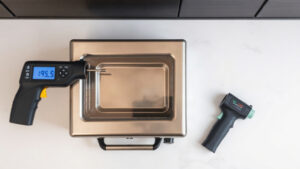
- Use an oven thermometer the first week. The dial on most toaster ovens — including expensive ones — can be off by 15–25°F. Know what your machine is actually doing before you blame the recipe.
- Light-colored aluminum pans work better than dark nonstick in a convection toaster oven. The fan already adds browning power; dark pans add more and the bottom can burn before the top sets.
- Don’t crowd the pan. The fan needs airflow around the food to work. Pack cookies or vegetables too close and you lose most of the convection benefit — it starts acting like a regular oven again.
- Preheat fully. Toaster ovens reach temperature fast but convection fans need a minute or two after the thermostat clicks to establish proper airflow. I give mine 10–12 minutes for baking.
- A toaster oven wire rack under your baking pan helps air circulate under the food too, which you don’t get if the pan sits flat on the oven floor.
Also worth reading if you use your toaster oven for more than baking: reheating food in a toaster oven has some useful notes on how convection versus regular mode affects reheated leftovers, which is a slightly different situation than baking from raw.
The Edge Case Almost Nobody Mentions: High-Altitude Baking
If you live above 3,500 feet — Denver, Albuquerque, Salt Lake City — convection in a toaster oven adds a complication that the standard “just drop the temp 25°F” advice doesn’t cover. At altitude, moisture already evaporates faster from baked goods. Convection accelerates that further. You may find cookies spreading too thin, bread drying out on the crust before the crumb is done, or cakes cracking more than usual.
The fix isn’t to skip convection entirely — it’s to drop the temperature more aggressively (up to 35–40°F below the recipe) and add a tablespoon or two of extra liquid to the batter. The Food Network’s high-altitude baking guide covers the general principles well, but very few sources flag the convection-specific issue. It’s a real thing if you live there.
So Is It Worth It?
For most home bakers, yes. Genuinely. The fan makes baking in a small oven more consistent, faster, and less fussy about pan rotation and rack placement. The learning curve is real but it’s short — mostly just remembering to drop the temperature. Once you do, you’ll wonder why you put up with uneven baking for so long.
The only people I’d tell to skip convection: anyone who bakes almost exclusively custards, cheesecakes, or delicate egg-based desserts, or anyone buying the cheapest possible toaster oven where the fan quality is questionable anyway. Otherwise, pay the small extra for the fan. It earns its keep.
And if you’re curious about the temperature range your oven is actually working in, how hot a toaster gets breaks down what different toaster and toaster oven models actually reach — useful context before you dial in your baking temps.
Frequently Asked Questions
Does convection really make a difference in a small toaster oven?
Yes, and arguably it matters more in a small oven than a large one. Small toaster ovens have less air volume to circulate, so hot and cold spots are more pronounced without a fan. Convection evens out those temperature differences and makes the limited space work more efficiently. The difference is especially noticeable with cookies and anything that benefits from bottom crisping.
Should I use convection for baking cookies in a toaster oven?
Yes — convection is one of the best settings for cookies in a toaster oven. Reduce your recipe temperature by 25°F and start checking 4–5 minutes before the recipe’s minimum time. The fan browns the bottom evenly and sets the edges without overcooking the centers, which is exactly what you want for most drop cookies and bar cookies.
Can I bake bread in a convection toaster oven?
You can, and it works well for smaller loaves, rolls, and flatbreads. Set convection to around 425–450°F for crusty bread. Keep in mind the vertical clearance in most toaster ovens is limited — loaves taller than 4–5 inches risk scorching on top. Use the lower rack position and check early.
Is convection baking faster in a toaster oven?
Yes, typically 20–25% faster than conventional mode. A recipe that calls for 20 minutes in a standard oven might be done in 15–16 minutes on convection. Always check early the first time you try a recipe in convection mode — it’s much easier to add time than to un-burn something.
What should I not bake using the convection setting on a toaster oven?
Avoid convection for cheesecakes, custard tarts, soufflés, and very moist quick breads. The fan’s circulating air dries out the surface faster than the interior can set, leading to cracking, rubbery tops, or a dry texture. Stick to the conventional bake setting for anything that needs a gentle, humid baking environment.

Written by
Emma founded Toastera to turn vague appliance advice into clear, researched, safety-first guidance on toasters and toaster ovens.
Free: the Toaster Oven Cheat Sheet
Get the printable cheat sheet (temps, cook times & safety tips) plus new recipes. No spam, unsubscribe anytime.