Most toasters use one of three mechanisms to decide when your bread is done: a simple timer, a capacitor-based circuit, or a bimetallic strip that physically bends from heat. The most common type in modern pop-up toasters is the bimetallic strip — it heats up alongside your bread, bends at a predictable rate, and triggers the release latch when it reaches a set deflection point. That’s why your toast settings aren’t really “light to dark” in any precise sense — they’re controlling how far the strip has to bend before it trips the catch.
Safety First: Toaster heating elements reach internal temperatures between 1,100°F and 1,400°F (593°C–760°C) during normal operation. Never attempt to open, modify, or probe the internal mechanism of a toaster while it’s plugged in — there’s no safe access point for a live appliance. If your toaster is malfunctioning (not popping up, sparking, or staying on), unplug it immediately and replace it. Do not use a metal utensil to retrieve stuck bread while plugged in.
Quick Facts
- Most modern pop-up toasters use a bimetallic strip — two bonded metals that bend at different rates when heated — to trigger the pop-up latch.
- Cheap toasters often use a simple capacitor-based timer instead, which is why they produce inconsistent results when toasting back-to-back slices.
- The “darkness” dial on your toaster isn’t a temperature control — it adjusts how far the bimetallic strip (or timer) must travel before releasing the bread.
- Toaster heating elements run at roughly 1,100°F–1,400°F internally; the bread’s surface only reaches around 300°F–400°F during toasting. Read more about how hot a toaster gets.
- A second consecutive slice of toast almost always comes out darker — because the toaster is already warm when you start.
I’ll be honest: I spent years assuming my toaster was just running on a basic timer, like a kitchen egg timer with a nichrome wire attached. It’s not. Well — sometimes it is. But the real answer is a bit more interesting than that, and once you understand it, you’ll immediately get why your second slice always burns.
The Three Ways a Toaster Decides It’s Done
Not all toasters use the same method. There are three main mechanisms across the toaster market, and which one you have largely depends on what you paid for the thing.
The Bimetallic Strip (Most Common)
This is the clever one. A bimetallic strip is exactly what it sounds like — two different metals bonded together in a single thin strip, usually brass and steel, or steel and invar. These metals expand at different rates when heated. So as the temperature inside the toaster rises, the strip physically bends in one direction. When it bends far enough, it trips a small latch that releases the spring-loaded bread carriage and — pop.
The shade dial? It moves a contact point on the strip, so the strip has to bend more or less before it hits the trigger. That’s it. “Light” means it trips sooner. “Dark” means it has to work harder. There’s no thermostat, no actual measurement of bread color, nothing fancy.
What I find genuinely clever about this design is that the bimetallic strip is heating up at the same time as the bread, inside the same environment. So it’s loosely tracking what’s happening in the toaster cavity. Not perfectly — but better than a dumb timer would.
The Capacitor Timer (Budget Models)
Some toasters — usually the really cheap ones, under $20 — skip the bimetallic strip entirely and use a capacitor circuit. When you push the lever down, a capacitor starts charging through a resistor. Once it hits a voltage threshold, it triggers a relay that releases the bread.
The shade dial in this case is adjusting the resistance in the charging circuit, which changes how long it takes to reach that threshold. Slower charge = longer toast time. That’s the whole mechanism.
The obvious problem: a timer doesn’t care whether your toaster is cold or already warm from a previous round. It runs for the same duration regardless. Which is exactly why budget toasters are so inconsistent. Toast slice one on the medium setting, then immediately toast slice two on the same setting — slice two will come out visibly darker, sometimes burnt. The toaster had no idea it was already hot.
Sensor-Based Toasters (Premium End)
A small handful of toasters — mostly at the premium end, like some Dualit and Breville models — incorporate actual sensors, sometimes infrared, to detect the surface color or moisture content of the bread. These are still relatively rare in standard pop-up toasters, but they exist. If you’ve ever used a Breville smart toaster, you may have noticed it actually adjusts for a cold start automatically — that’s not magic, that’s a smarter sensing circuit compensating for ambient temperature.
These are genuinely better. They cost more, obviously. Whether it’s worth it for bread is a question only you can answer.
How the Heating Element Fits Into All This
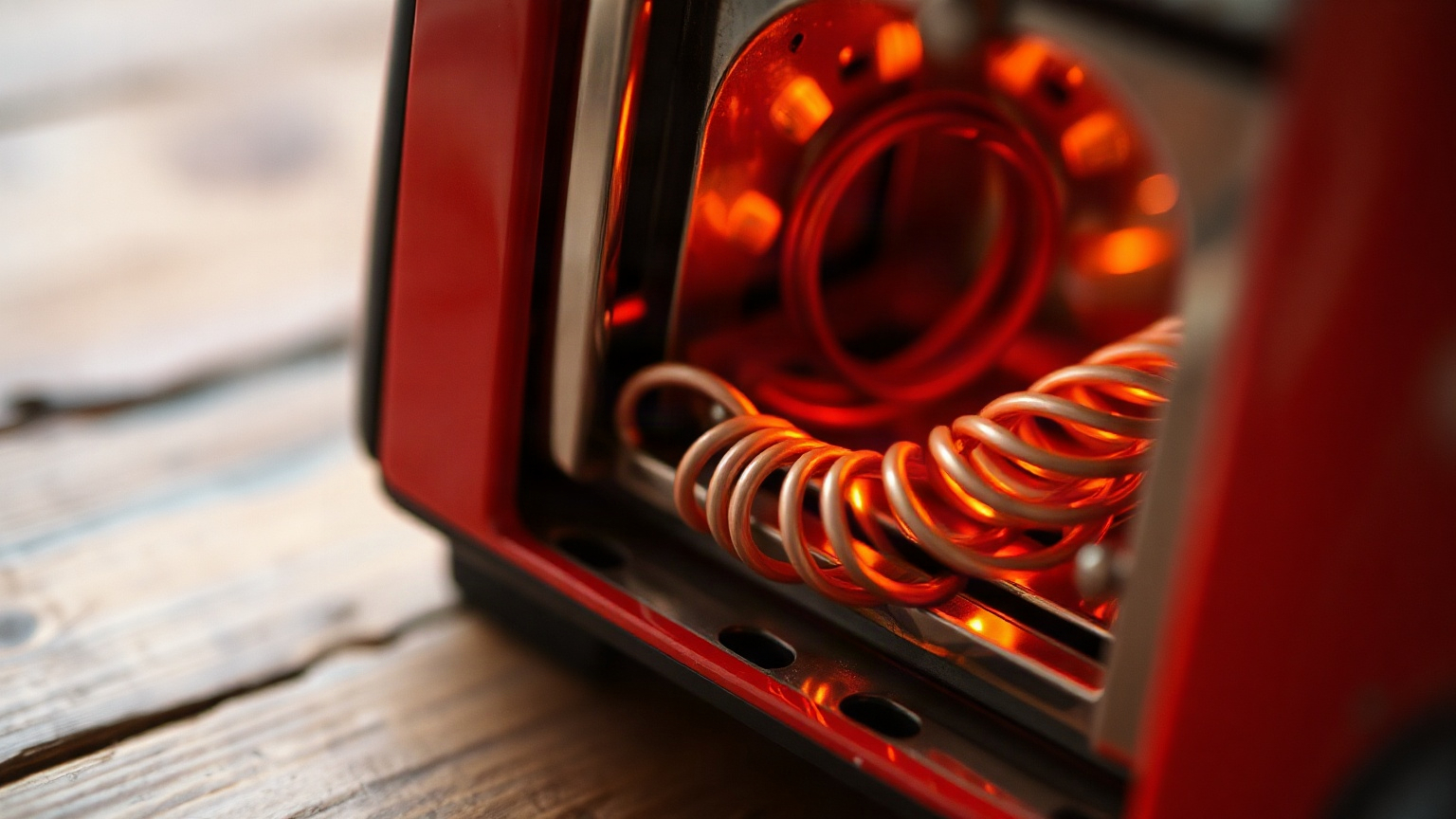
The heating element in a typical toaster is nichrome wire — a nickel-chromium alloy — wound into a tight coil and mounted near the bread. Nichrome is used because it has high electrical resistance, which is what generates the heat, and it doesn’t oxidize (read: rust) at high temperatures the way iron wire would.
When you plug the toaster in and push the lever down, the circuit closes and current flows through the nichrome. The wire glows red. That glow is infrared radiation, and it’s what actually browns your bread — via a process called the Maillard reaction, where sugars and proteins on the bread surface react under heat and produce that characteristic color and flavor. (Food science folks will correctly point out this is distinct from caramelization, though both happen during toasting.)
The heating element itself isn’t connected to the pop-up mechanism in any direct way. It just runs until the latch releases and the spring throws the carriage upward. At that point the circuit usually breaks automatically, cutting power to the element.
Why Your Second Slice Always Comes Out Darker
This is the edge case almost no one talks about, and it’s annoyed me for years. Here’s what’s happening.
If your toaster uses a bimetallic strip, the strip starts its next cycle already partially bent — because the toaster is still warm from the previous round. So it reaches the trip point faster. Result: shorter toast cycle, but the ambient heat in the toaster means the bread still gets more heat overall. Darker toast.
If your toaster uses a capacitor timer, the problem is even simpler: it just runs for the exact same time, but the toaster starts hotter, so the bread gets more radiant heat in that same window. Same result. Darker toast.
The fix is to either wait 2-3 minutes between batches, or bump the shade setting down by half a notch for the second slice. I do the latter. It’s not glamorous. But it works.
This is also why frozen bread behaves oddly. A bimetallic strip toaster will often undertoast frozen bread because the cold bread is absorbing heat from the toaster environment, keeping the strip cooler longer — and in some models, that actually means the strip trips a bit later, giving you slightly more time, which partially compensates. But not always. Many toasters have a dedicated frozen bread setting that simply extends the cycle; it’s not reacting to the bread temperature directly.
Comparison: Toaster Mechanism Types Side by Side
| Mechanism | How It Works | Consistency | Typical Price Tier | Second-Slice Problem? |
|---|---|---|---|---|
| Bimetallic Strip | Metal strip bends from heat, trips latch | Good | Budget to mid-range | Mild — strip partially compensates |
| Capacitor Timer | Capacitor charges to voltage threshold | Poor | Budget (under $20) | Yes — worst offender |
| Infrared / Smart Sensor | Sensor reads bread surface or ambient temp | Excellent | Premium ($50+) | No — actively compensates |
What the Shade Dial Is Actually Doing
I want to dwell on this for a second because I think it’s widely misunderstood. The shade dial is not controlling temperature. The heating element runs at the same wattage regardless of where you set the dial. What changes is when the pop-up mechanism trips.
On a bimetallic strip model, the dial physically repositions a contact point, changing how far the strip must deflect before it hits the release. On a timer model, it adjusts resistance in the capacitor circuit, which changes how long the timer runs. Either way, you’re adjusting duration, not intensity.
That’s worth knowing because it means if you’ve ever tried to get a “slightly warmed but not toasted” piece of bread out of a pop-up toaster, you’re fighting the physics of the design. The lowest setting still runs the full heating element; it just cuts the cycle shorter. The bread is still getting blasted with the same infrared intensity. For genuinely gentle warming, a toaster oven set to 200°F does a much better job.
If you’re toasting specialty breads — sourdough, thick brioche, dense rye — you might find that most pop-up toasters do a poor job on the thicker slices because the mechanism times out before the center has fully warmed. That’s another scenario where a compact toaster oven earns its counter space. Or, honestly, just use a long-slot toaster designed for thicker bread — they exist and they’re better for the job.
The Spring, the Latch, and the Pop
When you push the toast lever down, you’re compressing a spring and latching the carriage in place. The latch is held by either the bimetallic strip or the relay from the capacitor circuit. When the trigger fires, the latch releases, and the spring throws the carriage up fast enough to eject the bread a few inches above the toaster slots.
The spring tension is why toast always pops up — not some electronic ejector. Pure mechanical energy stored in a compressed spring. It’s one of those elegant-in-hindsight designs that’s been basically unchanged since the first successful pop-up toaster, the Waters Genter Company’s Model 1-A-1 “Toastmaster,” introduced in 1926. Almost 100 years later, the core mechanism is the same. That’s either a sign it’s perfectly designed, or a sign nobody’s bothered to fundamentally rethink it. Probably both.
The Bottom Line
Your toaster knows when to pop up because a bimetallic strip has bent far enough to trip a spring-loaded latch — or, in cheaper models, because a timer said time’s up. Neither mechanism is actually “reading” the toast. They’re inferring doneness from heat exposure, which is a decent proxy but not a perfect one. That’s why toasting conditions vary so much with bread type, starting temperature, and back-to-back use.
If you want truly consistent results, a toaster with smart sensors is worth the premium. For everyday white sandwich bread, though, an honest bimetallic strip model from a decent brand does the job reliably enough. Just don’t expect perfection from your second slice. And if you’re regularly dealing with thick artisan loaves, do yourself a favor and check out the best mini toaster ovens — they’ll handle it without making you fight the mechanism.
Frequently Asked Questions
How does a toaster know when to pop up the bread?
Most toasters use a bimetallic strip — two bonded metals that bend at different rates when heated — to trip a spring-loaded latch and release the bread. Budget models use a capacitor timer instead, which runs for a set duration regardless of actual heat conditions. Premium toasters use infrared or electronic sensors for more accurate results.
How hot does a toaster get inside?
The nichrome heating elements inside a standard pop-up toaster reach roughly 1,100°F to 1,400°F (593°C–760°C) during operation. The bread’s surface temperature only reaches about 300°F–400°F because it’s not in direct contact with the element. You can read a full breakdown of how hot a toaster gets in our dedicated article.
Why does my second slice of toast always come out darker?
Your toaster is still warm from the first cycle, so the bimetallic strip starts the second round already partially deflected and trips the latch sooner — but the residual heat means the bread still absorbs more energy overall. With timer-based toasters, it’s even simpler: same run time, hotter environment, darker toast. Waiting 2-3 minutes between batches or reducing your shade setting by half a notch on the second slice fixes this.
What does the toaster’s shade dial actually control?
The shade dial adjusts when the pop-up mechanism trips, not how hot the heating elements get. On a bimetallic strip model it repositions the contact point so the strip must bend more or less before releasing the latch. On a timer model it changes the resistance in the charging circuit, which affects how long the timer runs. The heating element always operates at the same wattage.
Is it safe to leave a toaster plugged in when not in use?
A properly functioning toaster draws no meaningful power when idle, but most electricians and fire safety guides recommend unplugging small appliances when not in use — primarily because a fault in the switch or wiring could theoretically energize the heating circuit unexpectedly. The USDA’s food safety resources don’t specifically address this, but fire safety organizations consistently advise unplugging countertop appliances as a precaution. It takes two seconds and it’s the right habit.

Written by
Emma founded Toastera to turn vague appliance advice into clear, researched, safety-first guidance on toasters and toaster ovens.
Free: the Toaster Oven Cheat Sheet
Get the printable cheat sheet (temps, cook times & safety tips) plus new recipes. No spam, unsubscribe anytime.