Cleaning: The Cuisinart’s Underrated Win
Cleaning: The Cuisinart’s Underrated Win
The Cuisinart TOB-260N1 has a steam clean function. You put water in a small tray, run the cycle, and the steam loosens baked-on grease so you can wipe it out. I didn’t think I’d care about this. I was wrong. After roasting a chicken with skin-on thighs, the difference in cleanup effort is significant. Breville’s interior is non-stick coated and easy enough to wipe down, but it doesn’t have anything like this.
Both ovens have removable crumb trays. Both are annoying to clean around the heating elements (this is true of every countertop oven I’ve ever used). Neither should go in a dishwasher. For general cleaning guidance on toaster ovens, this guide on reheating food in a toaster oven has some useful tips on keeping the interior in good shape between deep cleans.
Side-by-Side Comparison
Side-by-Side Comparison
| Feature | Breville Smart Oven BOV845BSS | Cuisinart TOB-260N1 |
|---|---|---|
| Price Tier | Premium (~$250-$300) | Premium (~$150-$200) |
| Interior Capacity | ~0.8 cu ft | ~1.0 cu ft |
| Temperature Stability | ±2°F | ±6°F |
| Cooking Functions | 10 | 15 |
| Convection | Yes | Yes (Speed Convection) |
| Steam Clean | No | Yes |
| Max Temp | 450°F | 450°F |
| Controls | Dials + LCD | Touchscreen |
| Included Pan Fit | Fits properly | Smaller than interior |
| Dual Cook Stages | No | Yes |
The Edge Case Most Comparisons Miss: High-Altitude Baking
If you’re above 3,500 feet — Denver, Salt Lake City, Albuquerque — temperature consistency matters even more than at sea level. Baked goods at altitude are already fighting against lower boiling points and faster leavening. A 6°F swing in your oven at altitude is the difference between cookies that puff and spread correctly versus ones that collapse. The Breville’s tighter temperature control is a more meaningful advantage the higher up you live. I haven’t seen this mentioned anywhere else in the comparison coverage of these two ovens, but it’s real.
Who Should Buy Which
Buy the Breville Smart Oven BOV845BSS if you bake regularly, care about consistent results, prefer physical dials, and want a tighter, more precise cooking environment. The $100 premium is legitimate if you’re using the oven for things where temperature accuracy actually matters. It’s also the better choice if you live at altitude.
Buy the Cuisinart TOB-260N1 if you want more interior space, appreciate having the Dual Cook function, do a lot of large-batch cooking, or will genuinely use the steam clean feature. It’s also the smarter pick if your primary uses are reheating, broiling, and making toast — where temperature stability ±2°F vs ±6°F is basically irrelevant.
If neither of these feels right for your situation, the best mini toaster ovens roundup covers more options across different sizes and budgets. And if you’re curious about how these compare on internal cooking temperatures more broadly, this breakdown of how hot toaster ovens actually get is worth a read.
One last thing: Breville’s build quality feels more solid over time. The dials don’t wobble after a year of use. That’s not guaranteed, but in my experience it’s held up better than a Cuisinart I owned before the TOB-260N1 that developed a sticky touchscreen button around month 14. Your mileage may vary, obviously, but it’s not nothing. Food Network’s appliance coverage tends to agree that Breville consistently earns praise for longevity in the countertop oven category.
The Bottom Line
The Breville Smart Oven is the better oven for baking and temperature-sensitive cooking. Full stop. The Cuisinart TOB-260N1 is a genuinely good appliance with more interior space, a smarter feature set in some ways, and a real advantage in cleanup — and it costs meaningfully less. Neither one is a bad choice. But if you bake even semi-regularly, the Breville’s temperature accuracy justifies the extra spend. If you mostly reheat and roast, save the $100 and put it toward a good toaster oven baking pan set for the Cuisinart.
Frequently Asked Questions
Is the Breville Smart Oven worth the extra money over the Cuisinart TOB-260N1?
Yes, if you bake regularly. Breville’s temperature accuracy (±2°F vs Cuisinart’s ±6°F) produces more consistent results with cookies, cakes, and roasted proteins. If your main uses are reheating, toast, and simple broiling, the Cuisinart saves you around $100 without meaningfully compromising performance.
Which toaster oven has more interior space — Breville Smart Oven or Cuisinart TOB-260N1?
The Cuisinart TOB-260N1 has the larger interior at approximately 1.0 cubic foot compared to the Breville Smart Oven’s 0.8 cubic feet. This means the Cuisinart can more comfortably fit a 9×13 baking dish or a 13-inch pizza, which matters if you cook for a larger household.
Does the Cuisinart TOB-260N1 have convection?
Yes — and it has a Speed Convection mode that uses a stronger fan to circulate air more aggressively than standard convection, cutting cook times noticeably for items like roasted vegetables and chicken pieces. The Breville Smart Oven also has convection, but doesn’t offer the same high-speed fan option.
How do you clean the Cuisinart TOB-260N1?
The TOB-260N1 has a built-in steam clean function: add water to the included tray, run the cycle at around 450°F for a few minutes, then wipe out the loosened residue with a damp cloth. The crumb tray slides out for separate cleaning. Neither the oven rack nor the interior should go in a dishwasher.
Can the Breville Smart Oven replace a full-size oven for everyday cooking?
For 1-4 people, yes, it can handle most everyday cooking tasks including baking, roasting, broiling, and reheating. It won’t fit a full-size turkey or multiple sheet pans at once, so for large family meals or holiday cooking you’d still want access to a standard oven. For daily use in a small-to-medium household, it’s genuinely capable.
Cuisinart TOB-260N1
Cuisinart TOB-260N1
Fifteen functions, including one the Breville doesn’t have: a dedicated Speed Convection setting that uses a more powerful fan to cut cook times significantly. There’s also a Dual Cook function that lets you program two cooking stages back to back — like starting at 425°F convection for 15 minutes then dropping to 375°F for another 20 — without babysitting the oven. That’s genuinely clever and I missed it when I went back to the Breville.
The touchscreen controls on the TOB-260N1 look sleek. They’re also slightly annoying to use when your hands are damp, and I found I had to press a bit harder than felt natural. Minor thing, but you interact with controls hundreds of times, so minor adds up.
Cleaning: The Cuisinart’s Underrated Win
Cleaning: The Cuisinart’s Underrated Win
The Cuisinart TOB-260N1 has a steam clean function. You put water in a small tray, run the cycle, and the steam loosens baked-on grease so you can wipe it out. I didn’t think I’d care about this. I was wrong. After roasting a chicken with skin-on thighs, the difference in cleanup effort is significant. Breville’s interior is non-stick coated and easy enough to wipe down, but it doesn’t have anything like this.
Both ovens have removable crumb trays. Both are annoying to clean around the heating elements (this is true of every countertop oven I’ve ever used). Neither should go in a dishwasher. For general cleaning guidance on toaster ovens, this guide on reheating food in a toaster oven has some useful tips on keeping the interior in good shape between deep cleans.
Side-by-Side Comparison
Side-by-Side Comparison
| Feature | Breville Smart Oven BOV845BSS | Cuisinart TOB-260N1 |
|---|---|---|
| Price Tier | Premium (~$250-$300) | Premium (~$150-$200) |
| Interior Capacity | ~0.8 cu ft | ~1.0 cu ft |
| Temperature Stability | ±2°F | ±6°F |
| Cooking Functions | 10 | 15 |
| Convection | Yes | Yes (Speed Convection) |
| Steam Clean | No | Yes |
| Max Temp | 450°F | 450°F |
| Controls | Dials + LCD | Touchscreen |
| Included Pan Fit | Fits properly | Smaller than interior |
| Dual Cook Stages | No | Yes |
The Edge Case Most Comparisons Miss: High-Altitude Baking
If you’re above 3,500 feet — Denver, Salt Lake City, Albuquerque — temperature consistency matters even more than at sea level. Baked goods at altitude are already fighting against lower boiling points and faster leavening. A 6°F swing in your oven at altitude is the difference between cookies that puff and spread correctly versus ones that collapse. The Breville’s tighter temperature control is a more meaningful advantage the higher up you live. I haven’t seen this mentioned anywhere else in the comparison coverage of these two ovens, but it’s real.
Who Should Buy Which
Buy the Breville Smart Oven BOV845BSS if you bake regularly, care about consistent results, prefer physical dials, and want a tighter, more precise cooking environment. The $100 premium is legitimate if you’re using the oven for things where temperature accuracy actually matters. It’s also the better choice if you live at altitude.
Buy the Cuisinart TOB-260N1 if you want more interior space, appreciate having the Dual Cook function, do a lot of large-batch cooking, or will genuinely use the steam clean feature. It’s also the smarter pick if your primary uses are reheating, broiling, and making toast — where temperature stability ±2°F vs ±6°F is basically irrelevant.
If neither of these feels right for your situation, the best mini toaster ovens roundup covers more options across different sizes and budgets. And if you’re curious about how these compare on internal cooking temperatures more broadly, this breakdown of how hot toaster ovens actually get is worth a read.
One last thing: Breville’s build quality feels more solid over time. The dials don’t wobble after a year of use. That’s not guaranteed, but in my experience it’s held up better than a Cuisinart I owned before the TOB-260N1 that developed a sticky touchscreen button around month 14. Your mileage may vary, obviously, but it’s not nothing. Food Network’s appliance coverage tends to agree that Breville consistently earns praise for longevity in the countertop oven category.
The Bottom Line
The Breville Smart Oven is the better oven for baking and temperature-sensitive cooking. Full stop. The Cuisinart TOB-260N1 is a genuinely good appliance with more interior space, a smarter feature set in some ways, and a real advantage in cleanup — and it costs meaningfully less. Neither one is a bad choice. But if you bake even semi-regularly, the Breville’s temperature accuracy justifies the extra spend. If you mostly reheat and roast, save the $100 and put it toward a good toaster oven baking pan set for the Cuisinart.
Frequently Asked Questions
Is the Breville Smart Oven worth the extra money over the Cuisinart TOB-260N1?
Yes, if you bake regularly. Breville’s temperature accuracy (±2°F vs Cuisinart’s ±6°F) produces more consistent results with cookies, cakes, and roasted proteins. If your main uses are reheating, toast, and simple broiling, the Cuisinart saves you around $100 without meaningfully compromising performance.
Which toaster oven has more interior space — Breville Smart Oven or Cuisinart TOB-260N1?
The Cuisinart TOB-260N1 has the larger interior at approximately 1.0 cubic foot compared to the Breville Smart Oven’s 0.8 cubic feet. This means the Cuisinart can more comfortably fit a 9×13 baking dish or a 13-inch pizza, which matters if you cook for a larger household.
Does the Cuisinart TOB-260N1 have convection?
Yes — and it has a Speed Convection mode that uses a stronger fan to circulate air more aggressively than standard convection, cutting cook times noticeably for items like roasted vegetables and chicken pieces. The Breville Smart Oven also has convection, but doesn’t offer the same high-speed fan option.
How do you clean the Cuisinart TOB-260N1?
The TOB-260N1 has a built-in steam clean function: add water to the included tray, run the cycle at around 450°F for a few minutes, then wipe out the loosened residue with a damp cloth. The crumb tray slides out for separate cleaning. Neither the oven rack nor the interior should go in a dishwasher.
Can the Breville Smart Oven replace a full-size oven for everyday cooking?
For 1-4 people, yes, it can handle most everyday cooking tasks including baking, roasting, broiling, and reheating. It won’t fit a full-size turkey or multiple sheet pans at once, so for large family meals or holiday cooking you’d still want access to a standard oven. For daily use in a small-to-medium household, it’s genuinely capable.
The Breville Smart Oven is worth it over the Cuisinart TOB-260N1 for most serious home cooks — but not everyone. Breville holds temperature to within ±2°F versus the Cuisinart’s ±6°F swing, which matters if you bake or roast regularly. If you mostly reheat leftovers and make toast, the Cuisinart saves you roughly $100 and does the job fine.
Safety First: Both of these ovens reach internal temperatures of 450°F and their exterior walls and door glass get dangerously hot during use. Always use oven mitts when removing pans or touching the door, keep the oven at least 4 inches from walls and cabinets, and never leave either appliance unattended during broiling. Unplug when not in use if children are present.
Key Takeaways
- Breville Smart Oven (BOV845BSS) holds temperature to ±2°F; Cuisinart TOB-260N1 fluctuates up to ±6°F — a real difference for baking
- Breville’s interior is about 0.8 cubic feet; Cuisinart TOB-260N1 is slightly larger at around 1.0 cubic foot of usable space
- Cuisinart comes with a steam cleaning function; Breville doesn’t — and that’s actually a bigger deal than it sounds for cleanup
- Breville uses square pans that fit the cavity properly; Cuisinart’s included pan is smaller than the oven interior, which is a minor but persistent annoyance
- Both are premium countertop ovens. Breville is the better baker’s oven; Cuisinart wins on interior volume and ease of cleaning
I’ve had both of these ovens on my counter at different points. The Breville’s been my daily driver for about two years. The Cuisinart sat in my kitchen for a full month before I sent it back, not because it was bad, but because I kept running into small frustrations. Here’s what actually matters if you’re trying to decide between them.
Temperature Accuracy: Where Breville Earns Its Price Premium
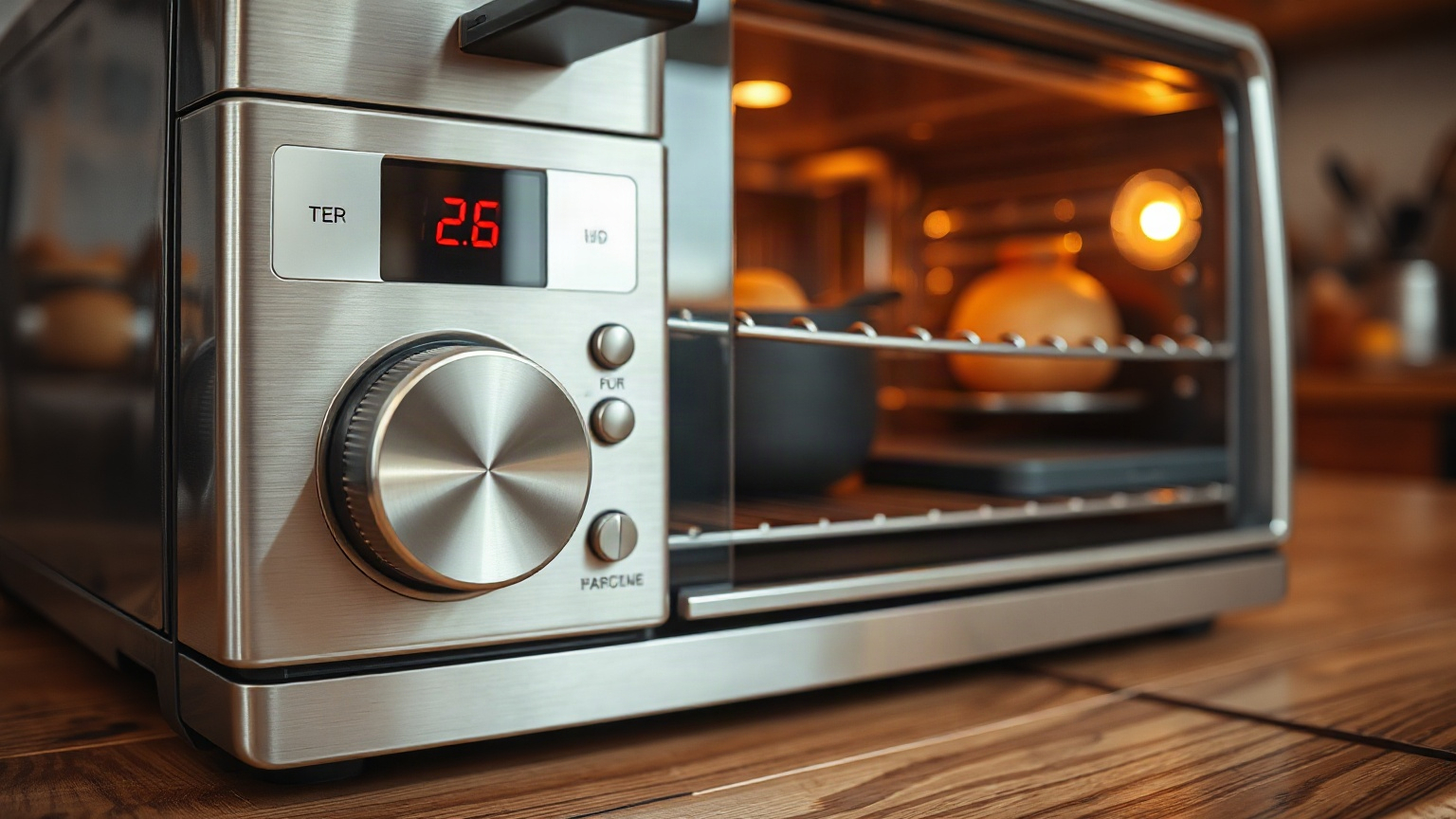
This is the biggest functional difference between these two ovens and it’s the one most people don’t think about until they ruin a batch of macarons or wonder why their roast chicken is underdone on one side.
The Breville Smart Oven uses something Breville calls “Element IQ” — nine heating elements that the oven actively shifts power between depending on what you’re cooking. In practice, it means temperature stays very close to whatever you set. Independent testing at Serious Eats has flagged Breville’s temperature stability as among the best for countertop ovens in this price range, and my own experience with an oven thermometer backs that up. Set it to 375°F for cookies and it holds 375°F, give or take 2 degrees.
The Cuisinart TOB-260N1 is less disciplined. A ±6°F swing sounds small but try baking croissants at 400°F when your oven is actually cycling between 394°F and 406°F. The bottoms brown faster than the tops. It’s not a disaster, but it’s noticeable. For everyday cooking — reheating pizza, broiling vegetables, making toast — you’ll never care. For actual baking? You’ll notice.
One thing I tripped over first with the Breville: the “slow start” on the top elements. The first time I tried to broil salmon I thought the oven wasn’t working because the top elements took about 90 seconds to come up to full heat. Turns out that’s intentional, not a defect. Once I knew that, fine.
Capacity, Footprint, and What Actually Fits Inside
Here’s where the Cuisinart has a genuine edge. The TOB-260N1’s interior is bigger — roughly 1.0 cubic foot versus the Breville Smart Oven’s 0.8 cubic feet. That doesn’t sound like much, but it means the Cuisinart can fit a 13-inch pizza or a 9×13 baking dish more comfortably.
The irony is that Cuisinart ships the oven with a baking pan that’s noticeably smaller than the interior. First time I used it I kept sliding the pan around, wondering if I was missing a rack insert. I wasn’t. The pan just doesn’t fill the cavity. Breville’s included pan fits properly — it’s proportional to the interior, so you’re using the full cooking surface.
Footprint on the counter is similar. Both are substantial. The Breville Smart Oven (BOV845BSS) is about 18.5″ wide x 16.3″ deep x 11.4″ tall. The Cuisinart TOB-260N1 is slightly wider and taller. Neither of these is a small appliance. If your counter space is tight, check those numbers before you order either one — this is not a decision to make based on the product photos, which always make them look smaller than they are.
Cooking Functions and Controls
Breville Smart Oven (BOV845BSS)
Ten preset functions: Toast, Bagel, Bake, Roast, Broil, Pizza, Proof, Warm, Reheat, and Cookies. The Cookies preset is legitimately useful — it adjusts element balance to avoid over-browning the bottom. I use it for sheet pan cookies set to 325°F, 12 minutes, and they come out evenly golden without having to rotate the pan halfway through. That’s not trivial.
Controls are dials, which I personally prefer over touchscreens on appliances that sit near a stove. Easier to adjust with wet or greasy hands. The LCD display is bright and readable.
Cuisinart TOB-260N1
Cuisinart TOB-260N1
Fifteen functions, including one the Breville doesn’t have: a dedicated Speed Convection setting that uses a more powerful fan to cut cook times significantly. There’s also a Dual Cook function that lets you program two cooking stages back to back — like starting at 425°F convection for 15 minutes then dropping to 375°F for another 20 — without babysitting the oven. That’s genuinely clever and I missed it when I went back to the Breville.
The touchscreen controls on the TOB-260N1 look sleek. They’re also slightly annoying to use when your hands are damp, and I found I had to press a bit harder than felt natural. Minor thing, but you interact with controls hundreds of times, so minor adds up.
Cleaning: The Cuisinart’s Underrated Win
Cleaning: The Cuisinart’s Underrated Win
The Cuisinart TOB-260N1 has a steam clean function. You put water in a small tray, run the cycle, and the steam loosens baked-on grease so you can wipe it out. I didn’t think I’d care about this. I was wrong. After roasting a chicken with skin-on thighs, the difference in cleanup effort is significant. Breville’s interior is non-stick coated and easy enough to wipe down, but it doesn’t have anything like this.
Both ovens have removable crumb trays. Both are annoying to clean around the heating elements (this is true of every countertop oven I’ve ever used). Neither should go in a dishwasher. For general cleaning guidance on toaster ovens, this guide on reheating food in a toaster oven has some useful tips on keeping the interior in good shape between deep cleans.
Side-by-Side Comparison
Side-by-Side Comparison
| Feature | Breville Smart Oven BOV845BSS | Cuisinart TOB-260N1 |
|---|---|---|
| Price Tier | Premium (~$250-$300) | Premium (~$150-$200) |
| Interior Capacity | ~0.8 cu ft | ~1.0 cu ft |
| Temperature Stability | ±2°F | ±6°F |
| Cooking Functions | 10 | 15 |
| Convection | Yes | Yes (Speed Convection) |
| Steam Clean | No | Yes |
| Max Temp | 450°F | 450°F |
| Controls | Dials + LCD | Touchscreen |
| Included Pan Fit | Fits properly | Smaller than interior |
| Dual Cook Stages | No | Yes |
The Edge Case Most Comparisons Miss: High-Altitude Baking
If you’re above 3,500 feet — Denver, Salt Lake City, Albuquerque — temperature consistency matters even more than at sea level. Baked goods at altitude are already fighting against lower boiling points and faster leavening. A 6°F swing in your oven at altitude is the difference between cookies that puff and spread correctly versus ones that collapse. The Breville’s tighter temperature control is a more meaningful advantage the higher up you live. I haven’t seen this mentioned anywhere else in the comparison coverage of these two ovens, but it’s real.
Who Should Buy Which
Buy the Breville Smart Oven BOV845BSS if you bake regularly, care about consistent results, prefer physical dials, and want a tighter, more precise cooking environment. The $100 premium is legitimate if you’re using the oven for things where temperature accuracy actually matters. It’s also the better choice if you live at altitude.
Buy the Cuisinart TOB-260N1 if you want more interior space, appreciate having the Dual Cook function, do a lot of large-batch cooking, or will genuinely use the steam clean feature. It’s also the smarter pick if your primary uses are reheating, broiling, and making toast — where temperature stability ±2°F vs ±6°F is basically irrelevant.
If neither of these feels right for your situation, the best mini toaster ovens roundup covers more options across different sizes and budgets. And if you’re curious about how these compare on internal cooking temperatures more broadly, this breakdown of how hot toaster ovens actually get is worth a read.
One last thing: Breville’s build quality feels more solid over time. The dials don’t wobble after a year of use. That’s not guaranteed, but in my experience it’s held up better than a Cuisinart I owned before the TOB-260N1 that developed a sticky touchscreen button around month 14. Your mileage may vary, obviously, but it’s not nothing. Food Network’s appliance coverage tends to agree that Breville consistently earns praise for longevity in the countertop oven category.
The Bottom Line
The Breville Smart Oven is the better oven for baking and temperature-sensitive cooking. Full stop. The Cuisinart TOB-260N1 is a genuinely good appliance with more interior space, a smarter feature set in some ways, and a real advantage in cleanup — and it costs meaningfully less. Neither one is a bad choice. But if you bake even semi-regularly, the Breville’s temperature accuracy justifies the extra spend. If you mostly reheat and roast, save the $100 and put it toward a good toaster oven baking pan set for the Cuisinart.
Frequently Asked Questions
Is the Breville Smart Oven worth the extra money over the Cuisinart TOB-260N1?
Yes, if you bake regularly. Breville’s temperature accuracy (±2°F vs Cuisinart’s ±6°F) produces more consistent results with cookies, cakes, and roasted proteins. If your main uses are reheating, toast, and simple broiling, the Cuisinart saves you around $100 without meaningfully compromising performance.
Which toaster oven has more interior space — Breville Smart Oven or Cuisinart TOB-260N1?
The Cuisinart TOB-260N1 has the larger interior at approximately 1.0 cubic foot compared to the Breville Smart Oven’s 0.8 cubic feet. This means the Cuisinart can more comfortably fit a 9×13 baking dish or a 13-inch pizza, which matters if you cook for a larger household.
Does the Cuisinart TOB-260N1 have convection?
Yes — and it has a Speed Convection mode that uses a stronger fan to circulate air more aggressively than standard convection, cutting cook times noticeably for items like roasted vegetables and chicken pieces. The Breville Smart Oven also has convection, but doesn’t offer the same high-speed fan option.
How do you clean the Cuisinart TOB-260N1?
The TOB-260N1 has a built-in steam clean function: add water to the included tray, run the cycle at around 450°F for a few minutes, then wipe out the loosened residue with a damp cloth. The crumb tray slides out for separate cleaning. Neither the oven rack nor the interior should go in a dishwasher.
Can the Breville Smart Oven replace a full-size oven for everyday cooking?
For 1-4 people, yes, it can handle most everyday cooking tasks including baking, roasting, broiling, and reheating. It won’t fit a full-size turkey or multiple sheet pans at once, so for large family meals or holiday cooking you’d still want access to a standard oven. For daily use in a small-to-medium household, it’s genuinely capable.

Written by
Emma founded Toastera to turn vague appliance advice into clear, researched, safety-first guidance on toasters and toaster ovens.
Free: the Toaster Oven Cheat Sheet
Get the printable cheat sheet (temps, cook times & safety tips) plus new recipes. No spam, unsubscribe anytime.