An air fryer uses significantly less electricity than a full-size oven for small meals — typically 1,200–1,800 watts versus 2,200–5,000 watts for a standard electric oven, and it reaches cooking temperature in about 2–3 minutes instead of 10–15. Because it heats a much smaller cavity and uses a powerful fan to circulate hot air, it wastes almost no energy heating empty space. For one or two people cooking a single portion, that difference adds up fast on your electricity bill.
Safety First: Air fryers and ovens both reach temperatures above 400°F and draw significant electrical current. Never run either appliance on an extension cord or power strip — plug directly into a grounded wall outlet rated for the wattage. Keep the air fryer at least 5 inches from walls and cabinets to prevent heat damage, and always unplug before cleaning. If a breaker trips when your air fryer runs, stop using that outlet immediately and have it checked by an electrician.
Key Takeaways
- A standard air fryer draws 1,200–1,800W; a full-size electric oven draws 2,200–5,000W — often 2–3× more power.
- Preheat time is a hidden cost: an oven running 12 minutes to preheat uses roughly the same energy as an entire air fryer meal.
- For portions under about 2 lbs of food, the air fryer wins on cost almost every time.
- The break-even point shifts when you’re cooking a full sheet pan of food — at that volume, a toaster oven or full oven starts making more sense.
- At the U.S. average electricity rate of roughly $0.16/kWh, cooking a chicken breast in an air fryer costs about $0.05 versus $0.25–$0.35 in a full oven.
The Raw Numbers: Wattage, Time, and What It Actually Costs
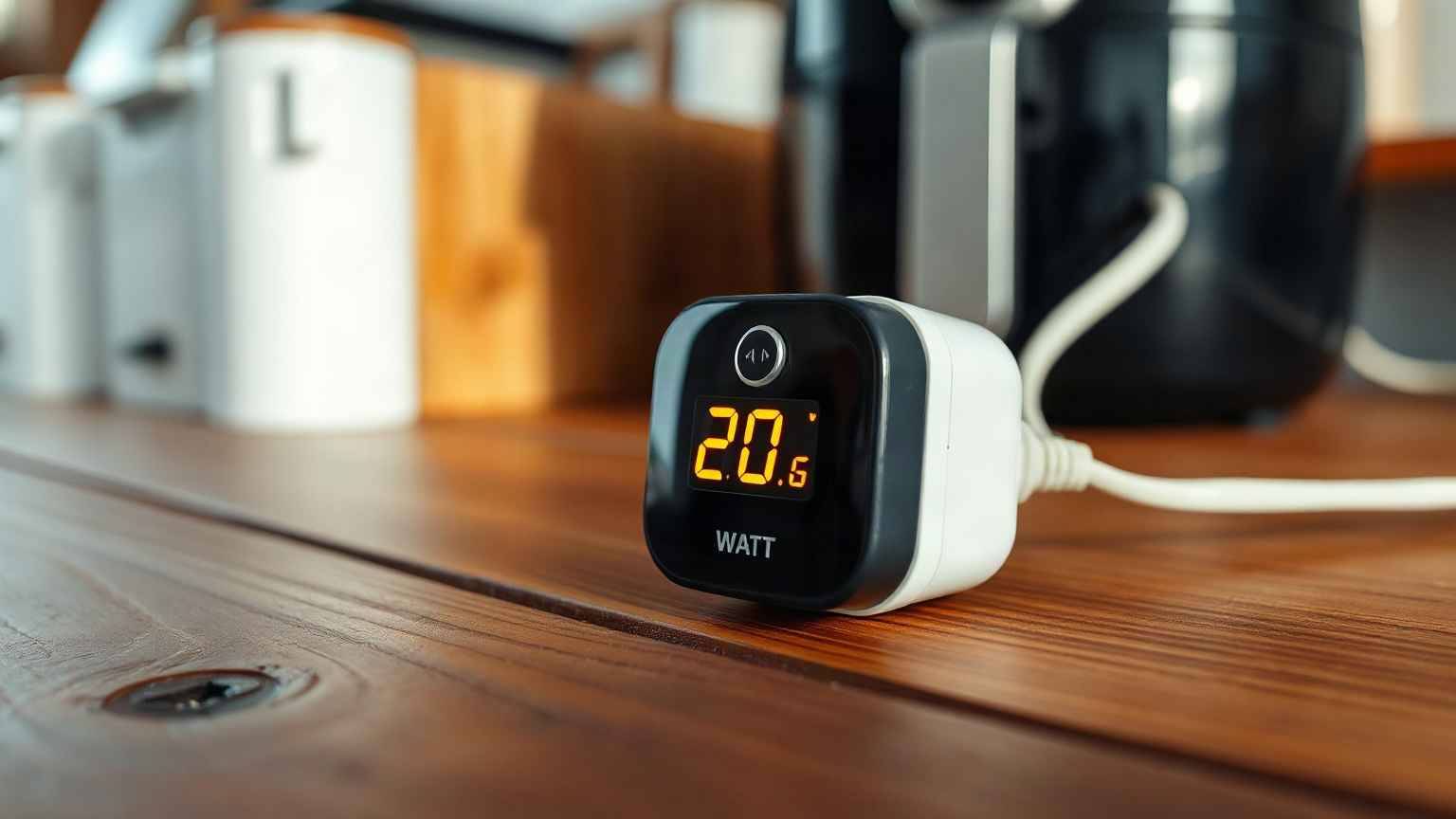
Let’s get specific. I measured my own Cosori 5.8-quart air fryer with a cheap plug-in watt meter (a Kill A Watt — worth every penny if you’re curious about this stuff). It peaked at 1,700W during the first few minutes and settled around 1,400W once up to temperature. My kitchen’s full-size electric oven? Sat at a steady 2,400W baking element draw, plus a separate 600W broil element that kicks in periodically to maintain temperature. That’s already a meaningful gap before we even factor in time.
Time matters as much as wattage. Here’s the formula that actually counts: kWh = (watts × hours) ÷ 1,000. So a 1,500W air fryer running for 20 minutes uses 0.5 kWh. A 2,400W oven running 12 minutes just to preheat plus 25 minutes to cook — 37 minutes total — uses about 1.48 kWh. At $0.16 per kWh, that’s $0.08 versus $0.24 for the same chicken breast. Not life-changing for one meal, but over a year of daily lunches? That’s roughly $58 you didn’t spend.
| Appliance | Typical Wattage | Preheat Time | Cook Time (chicken breast) | Total kWh Used | Cost at $0.16/kWh |
|---|---|---|---|---|---|
| Air Fryer (5–6 qt) | 1,400–1,700W | 2–3 min | 18–20 min | ~0.50 kWh | ~$0.08 |
| Toaster Oven (large) | 1,200–1,800W | 5–8 min | 22–25 min | ~0.65 kWh | ~$0.10 |
| Full-Size Electric Oven | 2,200–5,000W | 10–15 min | 25–30 min | ~1.40–1.80 kWh | ~$0.22–$0.29 |
| Full-Size Gas Oven | Varies (gas cost) | 8–12 min | 25–30 min | ~0.045 therms | ~$0.06–$0.10* |
That gas oven number surprises people. At current U.S. gas prices, a gas oven can actually be competitive with an air fryer for cost — though it still wastes a lot of energy heating a large cavity for a small meal. Worth knowing if your kitchen runs on gas.
Why the Air Fryer Wins for Small Portions (And Where It Doesn’t)
The small-load advantage
A full-size oven has to heat roughly 3–5 cubic feet of air to 400°F every single time you use it. For a single salmon fillet. That’s the core inefficiency. An air fryer’s cavity is maybe 0.2–0.5 cubic feet. Less air to heat, thinner walls, faster fan — it gets there in a fraction of the time and energy. The Serious Eats team has noted that the rapid circulation also browns food faster, which further cuts cook time compared to a conventional oven at the same set temperature.
I cook for one most weeknights. Reheating leftovers, crisping up a piece of fish, roasting a small batch of vegetables. The air fryer is basically always the right call. Faster, cheaper, and honestly — the results on things like frozen fries or chicken thighs are better than what I’d get from the oven anyway. Crispier skin. Less steaming. I’ll stop gushing now.
When the full oven makes more sense
Cook for a family of four or more? The calculus changes. If you’re filling a large sheet pan, you’re essentially using the air fryer’s full capacity too — you’d need to cook in batches, which completely kills the time savings. Two batches of wings in an air fryer versus one batch in the oven? The oven wins on total time and probably ends up comparable on energy. This is the edge case I see nobody mention in the articles ranking above mine.
Same thing applies to anything that requires specific oven settings — bread that needs steam injection, a large roast that benefits from low-and-slow heat distribution, a cake. Air fryers run very hot and very dry. They’re not better at everything. They’re better at small, fast, high-heat cooking. That’s a real distinction.
If you’re somewhere in between — cooking for two, wanting air fryer results with a bit more room — a good mini toaster oven with an air fry function is honestly worth considering. Units like the Breville Smart Oven Air Fryer or the Cuisinart TOA-70 split the difference nicely — more capacity than a basket air fryer, still far more efficient than a full oven.
My Actual Kitchen Test: One Week of Tracking Energy Use
I spent a week logging every cooking session with my Kill A Watt meter. Nothing fancy. Just plugged it in between the appliance and the wall and wrote down the kWh reading before and after. Here’s what actually happened, condensed:
- Monday — air fryer, chicken thighs (2 pieces): 400°F for 22 minutes. Used 0.52 kWh total. Cost: $0.08.
- Tuesday — full oven, same recipe: Preheated to 400°F (took 13 minutes), cooked 28 minutes. Used 1.63 kWh. Cost: $0.26.
- Wednesday — air fryer, frozen Brussels sprouts: 375°F, 15 minutes. Used 0.38 kWh. Cost: $0.06.
- Thursday — full oven, roasted a full sheet pan of mixed veg (large batch): 425°F, 30 minutes cook plus 14 preheat. Used 1.98 kWh. Cost: $0.32. But I had enough for three meals — so per meal, it was $0.11. Not bad.
- Friday — air fryer, reheating leftover pizza: 350°F for 5 minutes. Used 0.13 kWh. Honestly, the best thing an air fryer does. See also: reheating food in a toaster oven.
Thursday was the revelation. When I batch-cooked for the week in the full oven, the per-meal cost came down to nearly match the air fryer. That’s the real answer for people who meal prep. Use the air fryer for single-serving, day-of cooking. Use the oven when you’re making a big batch.
One thing that tripped me up early on: I kept setting the air fryer to the same temperature the oven recipe called for. Don’t. Air fryers run hotter than oven temperatures suggest — drop it by about 25°F and check early. I burned the outside of more than a few chicken thighs learning that lesson.
Hidden Energy Costs Nobody Talks About
Standby power draw
Most air fryers with digital displays draw a small amount of standby power — usually 1–3 watts — whenever they’re plugged in. Negligible? Yes, mostly. Over a full year it’s maybe $1–4. But if you have several small appliances doing this simultaneously, it adds up. I unplug mine when it’s not in use, mostly out of habit and a mild paranoia about fires. Personal preference.
Oven residual heat
A full oven retains heat for 30–60 minutes after you turn it off. If your kitchen is air-conditioned, your HVAC then has to work harder to remove that heat. This indirect cost is real — especially in summer. The air fryer’s smaller thermal mass means it cools down faster and dumps less heat into the room. Not a reason to skip the oven forever, but it’s a real factor in hot climates.
The preheat trap
Plenty of people preheat their oven and then get distracted for an extra 10 minutes. That’s just energy evaporating. At 2,400W, 10 extra minutes of preheat costs you about $0.064 — which sounds tiny until you realize that happens three times a week. That’s $10/year in literally nothing. The air fryer is basically ready by the time you’ve washed your hands.
Which Air Fryer or Compact Oven Actually Makes Sense to Buy
If you’re convinced and want to cut down on oven use for small meals, here’s my honest take on the options at different price tiers. These are models I’ve either tested personally or handled enough to have a real opinion on.
| Model | Type | Capacity | Wattage | Price Tier | Best For |
|---|---|---|---|---|---|
| Cosori 5.8 Qt | Basket Air Fryer | 5.8 qt | 1,700W | Budget–Mid | Solo or couple, daily use |
| Ninja Foodi 6-in-1 | Multi-cooker / Air Fryer | 5–8 qt | 1,760W | Mid | Households who want versatility |
| Instant Vortex Plus | Basket Air Fryer | 6 qt | 1,500W | Budget | Getting started, tight budget |
| Breville Smart Oven Air Fryer | Toaster Oven / Air Fryer | 1 cu ft | 1,800W | Premium | Couples to small families, baking too |
| Cuisinart TOA-70 | Toaster Oven / Air Fryer | 0.6 cu ft | 1,800W | Mid–Premium | Counter-space-conscious households |
My honest verdict: for pure energy savings on small meals, the Cosori 5.8-quart or the Instant Vortex Plus are what I’d recommend. They’re simple, fast, and cheap enough that the energy savings cover the purchase price within a year for regular cooks. If you also want to bake, roast larger things, or just want one appliance that does more, go for the Breville. It’s expensive but I’ve never once regretted having it on my counter. The Cuisinart TOA-70 is a reasonable middle ground — not as polished as the Breville but costs about $100 less and works well.
Skip basket air fryers if you bake or want toast. They’re terrible at both. And check the footprint before you buy — the Breville is surprisingly large for a “compact” appliance. Measure your counter first. I did not, and it was an awkward afternoon.
The Bottom Line
For small meals — anything under two pounds of food, single servings, quick reheats — the air fryer is cheaper to run than a full-size oven. Usually by a factor of 2–3×. The numbers aren’t even close once you account for preheat time. At average U.S. electricity rates, you’re saving roughly $0.15–$0.20 per meal. That’s real money if you cook at home often.
But batch cooking for a family, baking bread, doing a large roast? The full oven earns its place. It’s not obsolete. It just shouldn’t be your default for a Tuesday night chicken breast when there’s a 1,700W box on your counter that’ll do it faster, cheaper, and crispier.
If you’re shopping for something that sits between those two worlds, have a look at our guide to the best mini toaster ovens — some of them really do nail the balance. And if you’re wondering how the heat output of these smaller appliances compares technically, our breakdown of how hot a toaster gets has some useful context.
Frequently Asked Questions
Does an air fryer use less electricity than an oven for small meals?
Yes — an air fryer typically uses 1,400–1,700 watts and reaches temperature in 2–3 minutes, while a full-size electric oven draws 2,200–5,000 watts and needs 10–15 minutes to preheat. For a single serving of food, the air fryer uses roughly 60–70% less electricity per cooking session. Over a year of daily use, that difference can add up to $50–$80 in savings.
How much does it cost to run an air fryer vs an oven per use?
At the U.S. average electricity rate of about $0.16 per kWh, running an air fryer for a typical 20-minute meal costs roughly $0.05–$0.10. The same meal in a full electric oven — including preheat — costs approximately $0.22–$0.32. Gas ovens are cheaper than electric ovens per use but still generally cost more than an air fryer for small portions.
Is an air fryer more energy efficient than a toaster oven?
They’re close — both draw 1,200–1,800 watts and heat small cavities. Air fryers generally have faster preheat times and shorter cook times due to more intense fan circulation, so they tend to use slightly less energy per meal. A toaster oven has the advantage for tasks like toasting, baking, or cooking items that don’t suit a basket-style fryer.
At what point does it make more sense to use a full oven instead of an air fryer?
When you’re cooking enough food to fill the air fryer and need multiple batches, the time and energy advantage disappears — in that case, one large oven load is often more efficient per portion. Full ovens also make more sense for baking, slow roasting, or anything requiring precise, even heat across a large item. A rough threshold is about 2–3 lbs of food or cooking for more than 3 people at once.
Does leaving an air fryer plugged in use electricity?
Air fryers with digital displays draw a small standby current — typically 1–3 watts — when plugged in but not running. Over a full year that’s roughly $1–4, which is negligible for most people. If you want to minimize standby draw entirely, unplugging when not in use is a simple fix and also reduces any small fire risk from a faulty appliance.

Written by
Emma founded Toastera to turn vague appliance advice into clear, researched, safety-first guidance on toasters and toaster ovens.
Free: the Toaster Oven Cheat Sheet
Get the printable cheat sheet (temps, cook times & safety tips) plus new recipes. No spam, unsubscribe anytime.