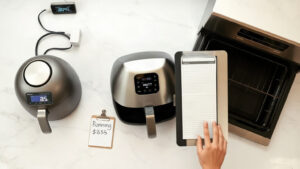
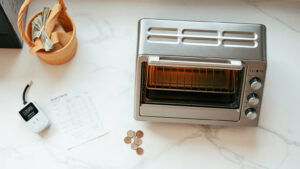
The air fryer wins for salmon fillets — but not by a huge margin. It runs hotter and faster, which means crispier skin and a better sear in less time. The toaster oven is more forgiving if your fillets are thick or you’re cooking for more than two people.
Safety First: Both air fryers and toaster oven heating elements get extremely hot during cooking — salmon drips fat, which can smoke or ignite on bare heating elements. Always use an oven-safe tray or basket liner, never leave either appliance unattended on high heat, and keep the unit at least six inches from walls or cabinets. Use oven mitts rated for 450°F or higher. Let grease cool completely before cleaning.
Quick Facts: Air Fryer vs Toaster Oven for Salmon
- Air fryer cooks salmon fillets in 7–10 minutes at 400°F. Toaster oven takes 12–15 minutes at the same temp.
- Air fryers produce crispier skin due to rapid hot air circulation around all sides of the fillet.
- Toaster ovens handle thicker cuts (1.5 inches or more) more evenly without overcooking the outside.
- USDA recommends cooking salmon to an internal temperature of 145°F — both appliances can hit this reliably.
- For meal-prepping multiple fillets at once, a toaster oven almost always wins on capacity.
I’ve cooked salmon more times than I can count in both appliances, and I’ve had it come out rubbery, perfectly flaky, and occasionally over-done to the point of sadness. So let me actually walk you through what happens in each one, where they differ in practice, and which I reach for on a given night.
How Each Appliance Actually Cooks Salmon
The Air Fryer Method
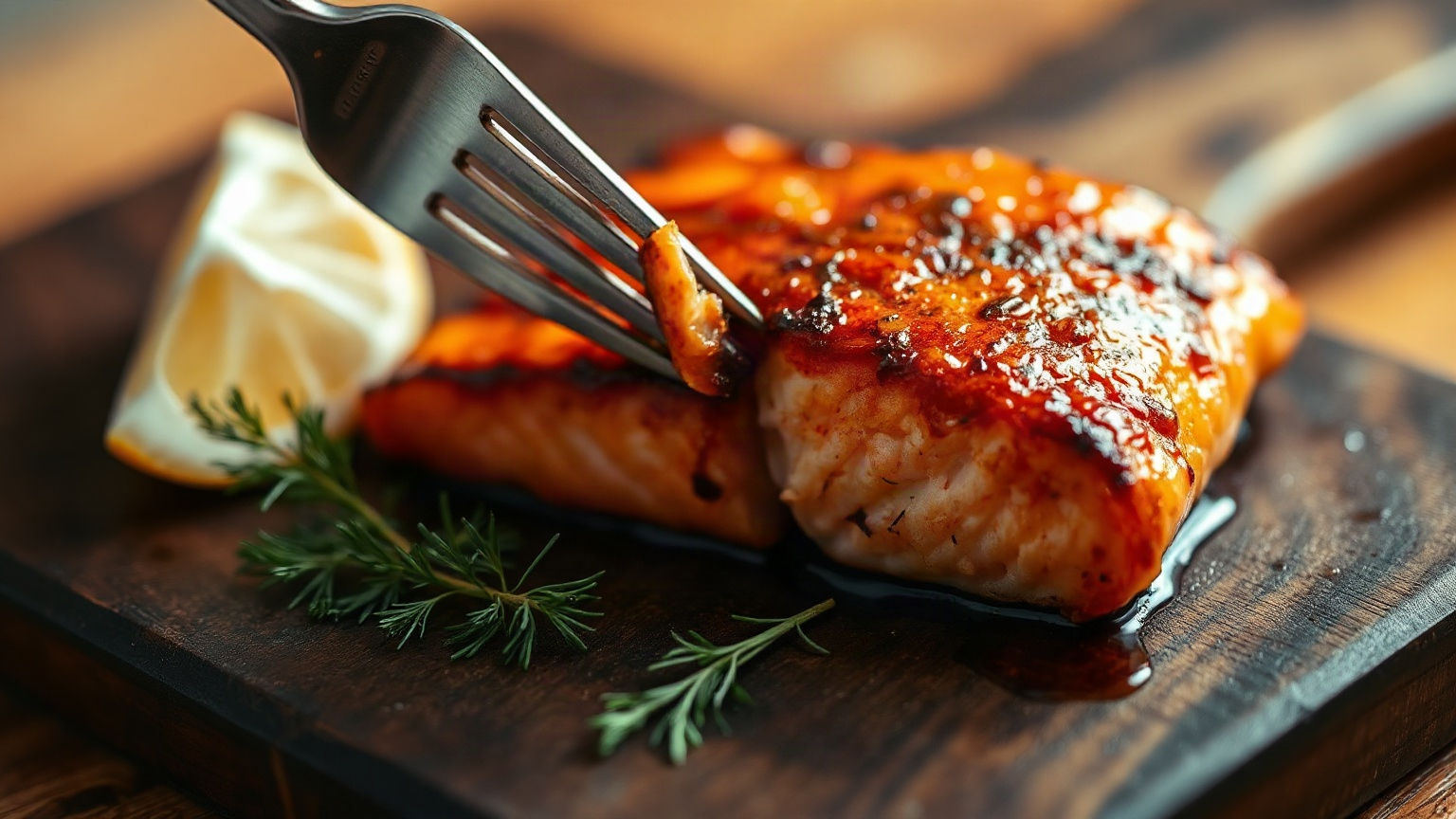
An air fryer is basically a compact convection oven with a very powerful fan crammed into a small space. That tight chamber means the hot air hits the salmon from every angle almost simultaneously. When I cook a standard 6-oz fillet skin-side down at 400°F, it’s done in about 8 minutes. The skin comes out genuinely crispy — not oven-crispy, but close to pan-seared crispy. That surprised me the first time.
The catch? The basket is small. Most air fryer baskets fit two fillets comfortably. Three is a squeeze. And if you stack anything, you’ve ruined the whole point of the circulating air. So for a solo dinner or cooking for two, an air fryer is hard to beat.
The Toaster Oven Method
A toaster oven heats from top and bottom elements, often with convection as an option. Without convection, the heat is more static — think baking rather than blasting. With convection on, you get closer to air fryer results, but still not quite the same skin texture. The skin usually stays slightly soft or leathery in a toaster oven unless you finish it under the broiler for 2–3 minutes.
But here’s the thing: a larger toaster oven can fit four or even six fillets at once on a toaster oven wire rack. If you’re feeding a family or doing meal prep for the week, that matters a lot. And for thicker Norwegian-style fillets or center-cut pieces over 1.5 inches, the toaster oven’s gentler, more even heat does a better job of cooking the center without drying out the edges.
Side-by-Side: Temperature, Time, and Texture
| Factor | Air Fryer | Toaster Oven (Convection) |
|---|---|---|
| Cooking temp for salmon | 400°F | 400°F (convection) / 425°F (standard) |
| Time for 6-oz fillet | 7–10 minutes | 12–15 minutes |
| Skin crispiness | High — genuinely crispy | Low to medium — needs broiler finish |
| Capacity (fillets) | 2–3 max | 4–6 depending on model |
| Best for thick fillets (1.5″+) | Moderate — watch edges | Better — more even heat |
| Cleanup | Basket needs degreasing | Pan/rack combo, less grease splatter |
| Preheat time | 3–4 minutes | 5–8 minutes |
I ran this test three times in the same week with wild-caught sockeye salmon from the same store, same thickness (about 1 inch), same basic olive oil and salt seasoning. The air fryer won on skin texture and speed every single time. The toaster oven gave me a slightly more moist interior — barely noticeable, but real.
Specific Models Worth Knowing About
Not all air fryers and toaster ovens are equal, and the gap between a cheap unit and a good one matters more with fish than almost any other food, because you’re working in narrow temperature windows.
Best Air Fryers for Salmon
The Ninja Foodi is probably the most forgiving air fryer I’ve used for fish. Its temperature regulation is consistent, and the basket is wide enough that a 6-oz fillet doesn’t crowd the edges. The Cosori Pro II is a solid budget pick — the fan is strong, preheats fast, and the basket has a decent nonstick coating that handles salmon skin without it welding itself to the surface (salmon skin is notorious for this). The Instant Vortex Plus is reliable but runs slightly hot, so I’d drop the temp to 390°F with that one.
Best Toaster Ovens for Salmon
The Breville Smart Oven Air Fryer is genuinely the best of both worlds — it functions as a proper toaster oven and has an air fry mode that legitimately crisps salmon skin. Pricey, but you’re essentially buying two appliances in one footprint. The Cuisinart TOA-70 is a close second and usually costs less. For something more basic, the Hamilton Beach Easy Reach does the job fine if you’re not chasing crispy skin and just want cooked, flaky fish. Check our list of best mini toaster ovens if counter space is a concern.
| Model | Type | Capacity | Air Fry Mode | Price Tier |
|---|---|---|---|---|
| Ninja Foodi Air Fryer | Air fryer | 2–3 fillets | Yes (primary function) | Mid-range |
| Cosori Pro II | Air fryer | 2–3 fillets | Yes (primary function) | Budget–mid |
| Breville Smart Oven Air Fryer | Toaster oven + air fry | 4–6 fillets | Yes (dedicated mode) | Premium |
| Cuisinart TOA-70 | Toaster oven + air fry | 4–5 fillets | Yes (dedicated mode) | Mid-range |
| Hamilton Beach Easy Reach | Toaster oven | 4–5 fillets | No | Budget |
Honest verdict: if you cook salmon (or any fish) regularly and you care about texture, get the Breville or the Cuisinart TOA-70. You get toaster oven capacity and air fryer crispiness. If you’re cooking for one or two and counter space is tight, a Ninja Foodi or Cosori is the right call. The Hamilton Beach is fine for weeknight baked salmon if you’re not fussed about crispy skin — which, genuinely, some people aren’t.
Edge Cases Nobody Talks About
Frozen Salmon (From Straight Out of the Freezer)
Most articles assume you’re starting with thawed salmon. But lots of people pull fillets straight from frozen, especially with individually vacuum-sealed portions. In an air fryer at 400°F, frozen salmon needs about 12–14 minutes and you should flip it halfway. Toaster ovens handle frozen salmon slightly better — the longer, more gradual heat reduces the temperature shock that makes air fryers occasionally overcook the outside before the center thaws. Add 5–6 minutes to any toaster oven recipe and use a toaster oven baking pan lined with foil so the released water doesn’t make a mess.
Marinated Salmon
This one caught me off-guard. If your salmon is marinated in anything with sugar (teriyaki, honey garlic, maple glaze), be careful with the air fryer. That high-speed hot air can char a sugary glaze in under 2 minutes. I’d reduce the air fryer temp to 370°F for marinated fillets and watch it like a hawk from the 6-minute mark. In a toaster oven, glaze handles more predictably — the slower heat caramelizes it instead of burning it. This is actually one area where the toaster oven genuinely outperforms.
Salmon with the Skin Off
If you’re cooking skinless fillets, the air fryer vs toaster oven gap narrows considerably. You lose the crispiness argument entirely, so what you care about is moist, flaky flesh. Both appliances can deliver that at 400°F — air fryer in 8 minutes, toaster oven in 13. The toaster oven actually edges ahead here because the gentler, more consistent heat keeps skinless fillets from drying on the edges. Skinless salmon in an air fryer is fine, just don’t go past 10 minutes.
For more on repurposing leftovers from either method, the guide on reheating food in a toaster oven is worth a look — salmon reheats surprisingly well at low temp (275°F, 8 minutes) compared to the microwave disaster it usually becomes.
The USDA’s guidance on safe fish temperatures is 145°F internal for salmon. I use a thin instant-read thermometer every time — not because I’m paranoid, but because fillets vary in thickness even within a single piece and timing alone will get you wrong occasionally. Serious Eats has a solid breakdown of salmon doneness if you want to go deeper on the internal temp question.
The Bottom Line
For most people cooking one or two fillets on a weeknight, the air fryer wins. Faster, crispier skin, less waiting around. If you’re cooking for a family, working with frozen fillets, or your salmon is glazed with anything sweet, the toaster oven is more reliable. And if you want to stop choosing? The Breville Smart Oven Air Fryer or Cuisinart TOA-70 handle both jobs in the same machine. That’s actually what I use most nights.
Both methods produce perfectly good salmon when you hit 145°F internal temp. The difference is texture and convenience — not quality of the fish itself. Don’t let the appliance be the thing you stress about.
Frequently Asked Questions
How long does salmon take in an air fryer vs a toaster oven?
A 6-oz salmon fillet at 400°F takes 7–10 minutes in an air fryer and 12–15 minutes in a toaster oven on convection. Thicker fillets over 1.5 inches may need an extra 2–3 minutes in either appliance. Always verify with an instant-read thermometer — 145°F is your target.
Can you cook salmon from frozen in an air fryer or toaster oven?
Yes, both handle frozen salmon, but the toaster oven does it more evenly. In an air fryer, cook frozen fillets at 400°F for 12–14 minutes, flipping halfway through. In a toaster oven, add 5–6 minutes to your normal cook time and cover loosely with foil for the first half to prevent the surface drying out before the center thaws.
Does an air fryer really make salmon skin crispy?
Yes — it’s the one place the air fryer clearly beats a standard toaster oven. The rapid hot air circulation creates a texture closer to pan-seared skin than baked. Pat the skin completely dry before cooking and don’t add oil to the skin side; oil actually softens it in an air fryer environment.
What temperature should I cook salmon to?
The USDA recommends an internal temperature of 145°F for salmon. Many cooks prefer pulling it at 130–135°F for a silkier, medium-done texture — the fish will be opaque on the outside but still slightly translucent in the very center. If you’re serving anyone immunocompromised, stick to the full 145°F.
Which is better for cooking marinated or glazed salmon — air fryer or toaster oven?
The toaster oven is better for marinated or glazed salmon, especially anything with sugar, honey, or maple syrup. The air fryer’s intense heat can char a sugary glaze before the fish is cooked through. If you do use an air fryer, drop the temperature to 370°F and check at the 6-minute mark.

Written by
Emma founded Toastera to turn vague appliance advice into clear, researched, safety-first guidance on toasters and toaster ovens.
Free: the Toaster Oven Cheat Sheet
Get the printable cheat sheet (temps, cook times & safety tips) plus new recipes. No spam, unsubscribe anytime.