An air fryer circulates heat faster and more intensely than a standard toaster oven because its heating element and fan are positioned to blast air directly over and around the food in a compact chamber — resulting in a faster preheat, crispier exteriors, and less actual cooking space. A convection toaster oven does something similar but in a larger cavity, which means the airflow is less concentrated. That difference in airflow speed and chamber size is what actually changes your food’s texture, not some mysterious air fryer magic.
Safety First: Both air fryers and toaster ovens reach temperatures above 400°F and their exterior surfaces get hot enough to cause serious burns. Always use oven mitts when handling baskets or racks, never place either appliance directly against a wall or under overhead cabinets, and never leave either unattended when cooking high-fat foods like bacon — grease splatter can ignite near heating elements. Keep a safe 4–6 inch clearance around any countertop cooking appliance.
Quick Facts: Air Fryer vs Toaster Oven Heat Circulation
- Air fryers typically preheat to 400°F in 2–4 minutes; most toaster ovens take 8–12 minutes to reach the same temp.
- Air fryer fans move air at a significantly higher velocity (roughly 20–30 mph in some models) through a much smaller chamber — that’s what creates the crunch.
- Convection toaster ovens use a fan too, but the cavity is 2–4x larger, so air velocity over the food’s surface is lower.
- Neither appliance is universally better — it comes down to what you’re cooking and how much of it.
- For households cooking for 1–2 people, an air fryer often wins on speed and crunch. For families or batch cooking, a toaster oven is more practical.
How Each One Actually Moves Heat Around
Let me just say this plainly: an air fryer is a convection oven. It’s not some completely different technology. What makes it distinct is the geometry. The heating coil wraps around or sits just above the fan, usually at the top of the unit, and hot air gets pushed down and around the food in a tight, rapid loop. The basket helps too — food sits up off the bottom, so air hits it from below as well. That 360-degree exposure is real.
A toaster oven with convection has a fan (usually at the back) and heating elements at the top and bottom. Same principle, but the food is sitting on a flat rack in a much bigger box. The fan has to push air across a larger distance before it reaches your chicken wing. By the time it gets there, it’s lost some velocity. And velocity is kind of the whole point — moving air strips moisture from the surface faster than still air does, which is what gives you that crispy exterior without deep frying.
Basic toaster ovens without a convection fan? Those just rely on radiant heat from the elements. That’s closer to a broiler than anything else. They work fine for toast and melting cheese, but they don’t circulate heat in any meaningful way.
The Physics, Briefly
Hot air transfers heat to food through convection. The faster the air moves, the thinner the “boundary layer” of cooler air sitting right against the food’s surface. Thinner boundary layer = faster moisture evaporation = crispier crust. This is why wind makes you colder on a winter day even if the temperature hasn’t dropped. Air fryers exploit this aggressively. Convection toaster ovens do it more gently. Neither is wrong — they’re just optimized differently.
I Tested This With Frozen Fries and a Chicken Thigh (Here’s What I Found)
I’ve used a Ninja Foodi 6-quart air fryer and a Breville Smart Oven Air Fryer on my counter at the same time for about eight months now, which is a lot of counter space to sacrifice, but I wanted to actually compare them rather than guess. Here’s what stood out.
Frozen shoestring fries at 400°F. Air fryer: 12 minutes, shaking halfway through, genuinely crispy. Breville on convection at 400°F: 18 minutes, and I had to bump it to 425°F for the last 4 minutes to get a comparable result. Not dramatically different, but the air fryer was faster and the fries were a bit crunchier without being dried out.
Bone-in chicken thigh, 375°F. This is where the toaster oven started to pull ahead. The Breville’s bigger cavity let the thigh sit without the meat crowding the walls. Skin came out crispy, interior hit 165°F at around 28 minutes. In the air fryer, I got the same internal temp in 22 minutes, but the skin on the bottom was a little overdone because it was sitting closer to the basket floor. I know some people love that. I don’t — it got slightly bitter. That’s a texture preference, not a food safety thing, but it’s worth mentioning.
The first time I used the air fryer, I overloaded it badly. Half a bag of broccoli, thinking it would just all cook at once. It steamed. No crunch at all. The number one air fryer mistake is too much food in the basket — it blocks airflow and you get the opposite of what you wanted. The toaster oven is more forgiving of a full rack because the cavity is larger to begin with.
Model Comparison: Which Appliance Actually Does This Best?
If you’re deciding between specific machines, here’s how some of the most popular options stack up. I’m going to be direct about which one I’d actually recommend for different situations.
| Model | Type | Capacity | Fan/Convection | Footprint | Price Tier |
|---|---|---|---|---|---|
| Ninja Foodi 6-Qt | Dedicated air fryer | 6 qt basket | High-velocity fan, top element | Compact, tall | Mid-range |
| Breville Smart Oven Air Fryer Pro | Convection toaster oven + air fry mode | 1 cu. ft. | Super convection fan | Large countertop | Premium |
| Cuisinart TOA-70 | Toaster oven with air fry mode | 0.6 cu. ft. | Convection + air fry fan | Medium countertop | Mid-range |
| Hamilton Beach Digital | Toaster oven with air fry | ~0.5 cu. ft. | Basic convection fan | Medium countertop | Budget |
My honest take: the Breville Smart Oven Air Fryer Pro is the most versatile single appliance if you have the counter space and the budget. Its “super convection” setting genuinely gets close to dedicated air fryer results while still being a full toaster oven for everything else. It replaced both my old toaster oven and my smaller air fryer, eventually.
But if counter space is tight and you mostly cook for one or two people? A dedicated air fryer like the Ninja Foodi does the crisping job faster and better, full stop. The Cuisinart TOA-70 is a smart middle ground — it does both reasonably well without being exceptional at either. The Hamilton Beach option is fine for the price, but its fan isn’t strong enough to really replicate air fryer crunch on dense foods. I’d skip it if crisping is your main goal.
The Edge Cases Nobody Mentions
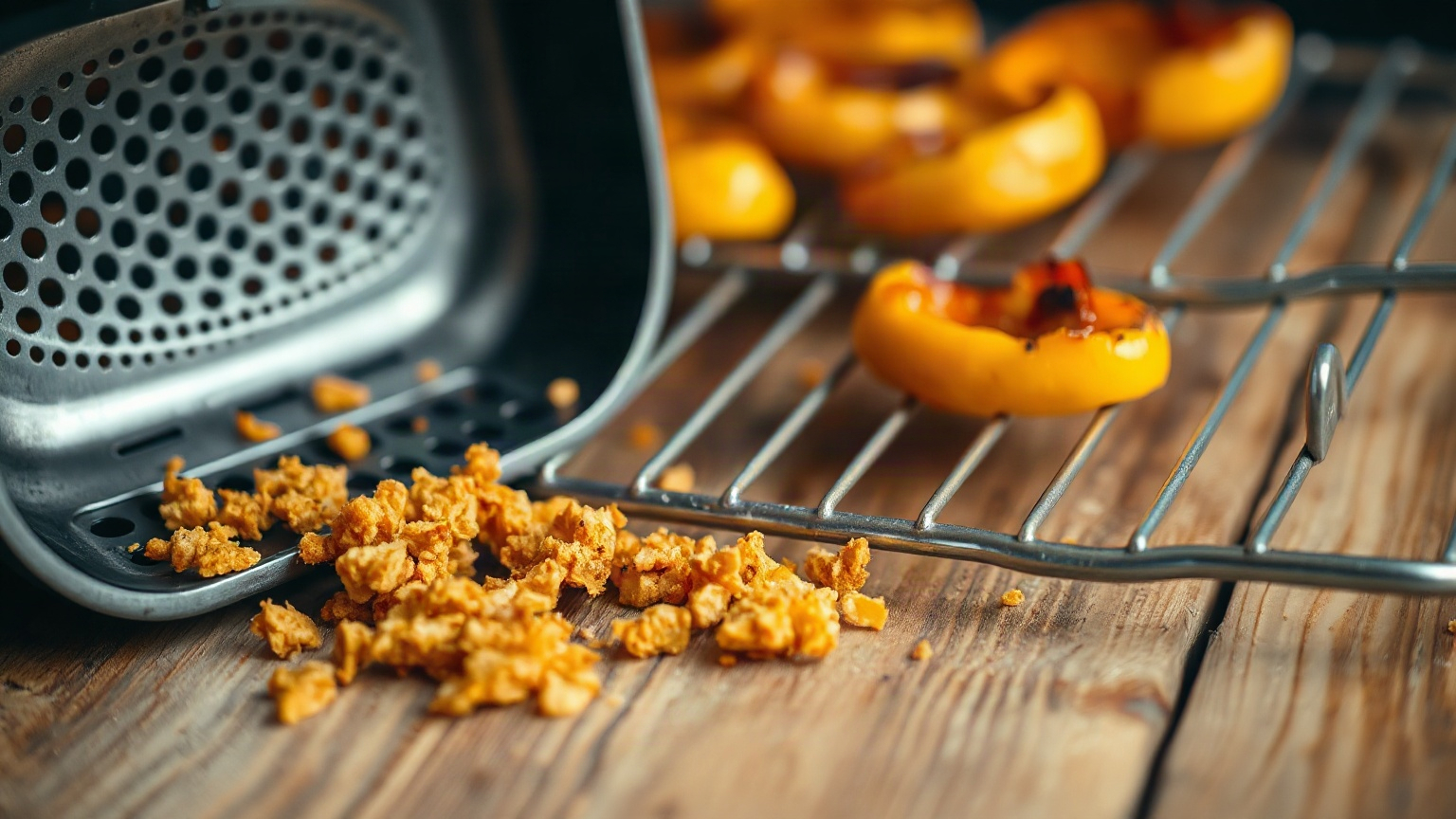
Here’s something most comparison articles skip: the fan in an air fryer can actually blow lightweight foods around. Panko-coated fish, stuffed peppers with loose toppings, anything with a delicate crust — these can get disturbed by the airflow and end up uneven. I’ve had breading slide right off a piece of fish in the air fryer. It did not slide in the toaster oven. So for fragile, breaded things, the toaster oven’s gentler convection is actually the better call.
Also: dehydrating. If you want to dry herbs, make beef jerky, or do anything low-and-slow at 130–150°F, most air fryers struggle because their heating elements aren’t designed for sustained low-heat output with airflow. Some models have a dehydrate setting, but results are inconsistent. A convection toaster oven handles this much more reliably. I learned this the hard way with a batch of basil that came out half-burned, half-not-dry.
One more: baking. For cookies, muffins, anything where you need even, consistent heat rather than rapid surface crisping, the toaster oven is flat-out better. The aggressive airflow of an air fryer can cause baked goods to form a crust too fast on the outside before the inside is set. Serious Eats has covered this well — the air fryer is not an oven replacement for baked goods, it’s a crisping tool.
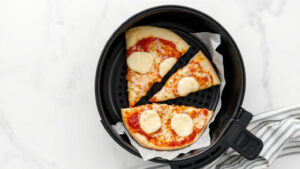
For reheating food in a toaster oven, the toaster oven is usually gentler and less likely to dry out leftovers. For pizza reheating? The air fryer wins every time, honestly.
So Which One Should You Actually Get?
If you already have a full-size oven and you’re looking for a faster, crispier countertop option: get a dedicated air fryer. It does one thing exceptionally well. Don’t overthink it.
If you don’t have much oven space, cook a variety of things, and want something that can toast, bake, broil, and also do a passable air fry — a convection toaster oven with an air fry mode is more practical. Check out some of the best mini toaster ovens if you’re tight on space. You’ll also want a decent toaster oven wire rack designed for air frying — the right rack lets air circulate underneath food, which makes a real difference.
The Food Network’s air fryer buying guide makes a reasonable point that “air fryer toaster ovens” are becoming good enough that many people don’t need both. I’d agree, with the caveat that the Breville or similar premium options are genuinely good at the air fry mode — budget combo units mostly aren’t. And if you want to understand more about how hot these countertop appliances actually get compared to traditional slots, this breakdown of how hot a toaster gets puts the temperatures in context.
The Bottom Line
The real difference between an air fryer and a toaster oven is airflow velocity relative to the size of the cooking chamber. Air fryers push hot air harder through a smaller space, which strips surface moisture faster and gives you crispier results in less time. Toaster ovens — especially with convection — do the same thing more gently, which makes them more versatile but less aggressive on crisping.
Neither is objectively superior. What matters is what you cook, how much of it, and how much counter space you’re willing to give up. I’ve used both for months side by side, and honestly, if I had to keep only one, I’d keep the Breville. But if crispiness is your whole thing and your kitchen is small, the dedicated air fryer wins that specific argument every time.
Frequently Asked Questions
Does an air fryer actually circulate heat differently than a toaster oven?
Yes, though both use fans to move hot air, an air fryer’s fan and heating element are positioned to blast air more intensely through a much smaller chamber — which increases the air velocity over the food’s surface. A convection toaster oven moves air through a larger cavity, so the airflow is less concentrated and the crisping effect is slower. The core mechanism is the same; the intensity and chamber size are what differ.
Can a toaster oven replace an air fryer?
A convection toaster oven with an air fry mode can get close to air fryer results, but it’s not identical — especially for smaller batches of food where the air fryer’s compact chamber really shines. Premium models like the Breville Smart Oven Air Fryer Pro come close enough for most home cooks. Budget toaster ovens with air fry labels generally don’t deliver the same crunch.
What temperature does an air fryer cook at compared to a toaster oven?
Most air fryers max out at 400–450°F, and most convection toaster ovens reach 450–500°F. The air fryer’s advantage isn’t a higher temperature — it’s reaching cooking temperature faster (2–4 minutes versus 8–12 minutes) and maintaining higher airflow. Temperature range alone doesn’t tell the full story of how these appliances cook.
Is it faster to cook in an air fryer or a toaster oven?
An air fryer is typically faster for small-batch, single-layer foods because of the shorter preheat time and more intense airflow. For larger or thicker foods, the time difference shrinks. A bone-in chicken thigh, for example, might cook in 22 minutes in an air fryer versus 28 minutes in a toaster oven — not a huge gap once you factor in preheating both.
Which is better for reheating leftovers, an air fryer or a toaster oven?
It depends on what you’re reheating, but as a general rule: use an air fryer for anything you want re-crisped (pizza, fries, fried chicken) and a toaster oven for things you want gently warmed without drying out (casseroles, pasta, bread). The toaster oven’s larger cavity and lower airflow intensity make it less likely to blast moisture out of delicate leftovers.

Written by
Emma founded Toastera to turn vague appliance advice into clear, researched, safety-first guidance on toasters and toaster ovens.
Free: the Toaster Oven Cheat Sheet
Get the printable cheat sheet (temps, cook times & safety tips) plus new recipes. No spam, unsubscribe anytime.