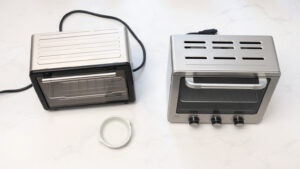
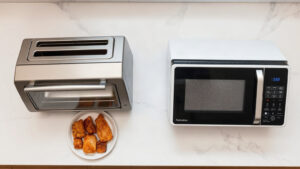
The best toaster oven for baking bread in a small kitchen is the Breville Smart Oven Pro — it hits 450°F consistently, has a convection mode that actually circulates heat evenly, and fits a standard 9×5 loaf pan without you having to jam it in sideways. If that’s out of budget, the Cuisinart TOA-70 is a solid second, and the Ninja Foodi XL Pro rounds out the list for anyone who wants air frying on top of everything else. All three can produce a proper loaf with a crackly crust — you just need to know how to use them.
Safety First: Toaster ovens reach temperatures up to 450°F and their outer surfaces — including the door and sides — can get hot enough to cause serious burns during and after baking. Always use oven mitts rated for high heat, keep the oven at least 4 inches from walls and cabinets, never leave it unattended while baking, and place it on a heat-resistant surface. If you smell burning or see smoke, turn the unit off and unplug it before investigating.
Quick Facts: Baking Bread in a Toaster Oven
- A good bread-baking toaster oven needs to reach at least 400°F — ideally 450°F — with convection to brown the crust properly.
- The three models covered here (Breville Smart Oven Pro, Cuisinart TOA-70, Ninja Foodi XL Pro) all fit a standard 9×5 loaf pan and offer convection modes.
- Convection baking reduces bread baking time by roughly 10–15% — you’ll want to adjust recipes accordingly.
- Counter footprint matters: the Breville is largest, the Cuisinart is mid-size, and if you’re truly cramped, check the best mini toaster ovens list before committing.
- Internal capacity and rack position — not just temperature — determine whether your bread bakes evenly or burns on top.
Why Most Toaster Ovens Fail at Bread (And What to Look For)
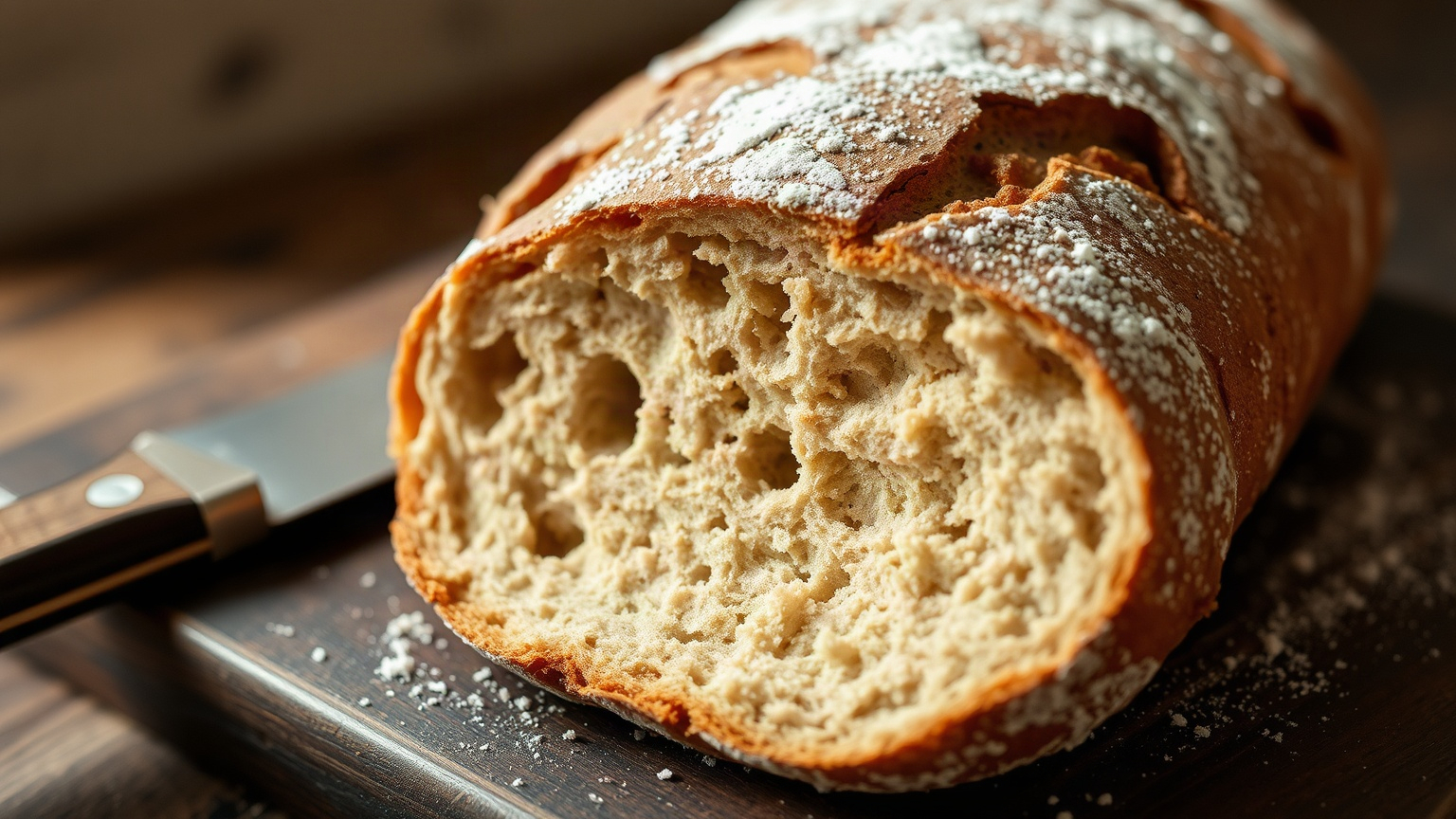
Here’s the honest truth: most toaster ovens are fine for reheating leftovers. Bread is different. You need sustained, even heat — not the hot-and-cold cycling that cheaper units do when they can’t hold temperature. The first time I tried baking a simple white sandwich loaf in a basic 4-slice toaster oven, the bottom was pale and gummy while the top was nearly burnt. The element was too close, and there was no way to regulate where the heat came from.
What actually matters for bread: maximum temperature (400°F minimum, 450°F preferred), a real convection fan that moves air rather than just existing as a marketing checkbox, internal capacity deep enough for a loaf pan, and rack positions low enough to keep the top of your dough away from the heating element. Interior height is the one spec people almost never check — and then their loaf touches the element on the rise. Ask me how I know.
For context on how toaster oven temperatures compare to what a standard toaster produces, this piece on how hot a toaster gets gives a useful baseline. Toaster ovens run much hotter and hold heat very differently.
The 3 Models Worth Considering
1. Breville Smart Oven Pro — My Top Pick
This is the one I use most often. It’s not small — I’ll be upfront about that. The footprint is about 18 inches wide and 16 inches deep, so if your counter space is genuinely tiny, it might not work. But if you can find room for it, it bakes bread better than anything else in this price range. Reliably holds temperature. The convection setting actually circulates heat, not just warm air in a vague general direction. And the interior height is generous enough that a fully-proofed sandwich loaf won’t hit the top element.
For bread, I use the “Bake” function (not convection) at 375°F for the first 20 minutes with a small pan of water on the lower rack for steam — then I switch to convection at the same temp for the last 15–20 minutes to set the crust. You get a proper, crackly result. Serious Eats has a detailed breakdown of toaster oven performance that validates what I’ve found about convection consistency in this unit.
The one thing that tripped me up early: the oven runs about 10–15°F hotter than the display says once it’s been on for a while. I use an oven thermometer for toaster ovens now, which I’d genuinely recommend for any serious baking. Price tier: premium.
2. Cuisinart TOA-70 — Best Mid-Range Option
Smaller than the Breville, cheaper, and genuinely capable. The TOA-70 is an air fryer/toaster oven combo, which either sounds useful or like a gimmick depending on how you feel about air fryers (I’m lukewarm, personally). For bread, ignore the air fryer function entirely. What you care about is that it reaches 450°F, has a decent convection mode, and fits a 9×5 loaf pan — which it does, just barely. The rack position matters more in this one because there’s less vertical clearance; I always use the lowest rack setting for bread.
Baking-wise, it performs well for a mid-range unit. The crust development isn’t quite as even as the Breville — the back of the loaf tends to brown slightly faster — but it’s nothing a quarter-turn halfway through baking can’t fix. At this price, you’re giving up a little precision for a lot of savings. For most home bakers doing a loaf or two a week, that trade is completely fine. Price tier: mid-range.
3. Ninja Foodi XL Pro — If You Want Everything in One Box
Biggest of the three. The Ninja Foodi XL Pro has a large interior — larger than either the Breville or Cuisinart — which means more room for your loaf to rise without drama, and it can fit a 13×9 pan if you ever want to bake focaccia or flatbread. It also air fries, dehydrates, and does about twelve other things. I find the control panel a bit much, honestly. There are a lot of buttons for what I mostly use it for.
For bread specifically: the convection bake function works well at 375°F. Preheat fully — the Ninja takes a little longer to stabilize than the Breville. Crust color is good, crumb structure is decent. If you already want an air fryer and you bake bread regularly, this is a genuinely good single-appliance answer. If you only care about bread, the Breville is still the better dedicated option. Price tier: mid-range to premium depending on sale pricing.
Side-by-Side Comparison
| Model | Max Temp | Convection? | Loaf Pan Fit | Counter Footprint | Price Tier | Best For |
|---|---|---|---|---|---|---|
| Breville Smart Oven Pro | 450°F | Yes (excellent) | 9×5 — comfortable | Larger (18″W) | Premium | Dedicated bread bakers |
| Cuisinart TOA-70 | 450°F | Yes (good) | 9×5 — just fits | Mid-size | Mid-range | Budget-conscious bakers |
| Ninja Foodi XL Pro | 450°F | Yes (good) | 9×5+ with room | Largest footprint | Mid to Premium | Multi-use households |
Practical Tips for Actually Getting a Good Loaf
The oven matters, but technique fills in the gaps. A few things I’ve learned from baking in toaster ovens specifically — some of which don’t come up in recipes written for full-size ovens:
- Preheat longer than you think. Most toaster ovens signal “ready” before the interior walls are actually up to temperature. I give it an extra 10 minutes after the preheat beep.
- Use a loaf pan sized for toaster ovens — not a standard 8.5×4.5. A 9×5 is usually the sweet spot, but measure your interior before buying a pan.
- Steam in the first phase matters. A small ramekin of boiling water on the rack below your loaf during the first 15–20 minutes helps the crust develop properly instead of setting too early and preventing rise.
- Tent with foil if the top is browning too fast. In a smaller oven, the top element is closer. Don’t just turn the heat down — tent and keep the temperature up.
- Always bake to internal temperature, not time. 195–200°F for a sandwich loaf, 205–210°F for a crusty artisan-style loaf. A cheap instant-read thermometer removes the guesswork entirely. Food Network has a solid guide on how to tell when bread is done that’s worth a bookmark.
And if you’re using your toaster oven for other cooking too — not just bread — the tips in this guide on reheating food in a toaster oven are useful for getting familiar with how your specific unit behaves at lower temperatures before you throw a loaf in.
The Clear Pick (And Who Should Get What)
If you bake bread with any regularity and you can make the counter space work: get the Breville Smart Oven Pro. It’s not cheap, but it performs consistently and the learning curve is low. I’ve had mine for two years and it still calibrates well. Worth it.
If you’re on a tighter budget or your counter is genuinely small: the Cuisinart TOA-70 does the job. It has some quirks — the back-of-loaf browning thing is real — but it’s manageable. You’ll bake good bread in it.
If your household also wants an air fryer and you bake a few times a month: the Ninja Foodi XL Pro makes sense. You’re getting a lot of functionality. Just be prepared to actually use those other features, otherwise it’s paying a premium for buttons you’ll never press.
What I’d skip: any toaster oven under 1500 watts, anything without a true convection fan, and any unit that doesn’t clearly state its maximum temperature reaches 400°F or above. There are a lot of toaster ovens that market themselves as “baking” ovens and truly aren’t up to it. The three above are.
Frequently Asked Questions
Can you actually bake bread in a toaster oven?
Yes — a toaster oven with convection and a max temperature of 400°F or higher will bake a proper loaf of bread. The key adjustments are using the right pan size for your specific oven’s interior, adding steam during the early bake phase, and checking doneness with a thermometer rather than relying on recipe times alone. It’s not a compromise; plenty of good bread comes out of toaster ovens every day.
What temperature should I bake bread in a toaster oven?
For a standard sandwich loaf, 375°F on convection bake works well — or 375–400°F without convection if you add steam. Artisan-style loaves with a thick crust benefit from starting at 425–450°F for the first 15 minutes, then dropping to 400°F. Because toaster ovens can run hotter than their displays indicate, using an oven thermometer is genuinely helpful, not optional if you want consistent results.
What size loaf pan fits in a toaster oven?
A 9×5 inch loaf pan fits most full-size toaster ovens, but measure your interior before assuming. Some compact models only accommodate an 8×4 pan comfortably. Interior height matters just as much as width — you need enough clearance above the pan for your dough to rise without hitting the top heating element, which usually means at least 3 inches of clearance above your pan rim.
Is convection necessary for baking bread in a toaster oven?
It’s not strictly required, but it makes a real difference in a small oven where heat distribution can be uneven. Convection circulates the hot air, which means more even browning and better crust development without having to babysit or rotate. If your toaster oven has a convection mode, use it for at least the second half of the bake — that’s when crust color sets.
How long does bread take to bake in a toaster oven compared to a regular oven?
Generally about 10–20% less time than a full-size oven at the same temperature setting, mostly because toaster ovens are smaller and heat up faster with less air volume to maintain. A loaf that takes 45 minutes in a conventional oven might be done in 35–38 minutes in a toaster oven on convection. Always check the internal temperature — 195–200°F for sandwich bread — rather than relying solely on timing.

Written by
Emma founded Toastera to turn vague appliance advice into clear, researched, safety-first guidance on toasters and toaster ovens.
Free: the Toaster Oven Cheat Sheet
Get the printable cheat sheet (temps, cook times & safety tips) plus new recipes. No spam, unsubscribe anytime.