Bread turns brown when toasted because of a chemical process called the Maillard reaction — amino acids and reducing sugars in the bread react under heat (typically above 280°F / 138°C) to form hundreds of new flavor and color compounds. This is not caramelization, though both happen during toasting. The practical implication: the shade of your toast is a direct indicator of flavor intensity, and getting it right comes down to temperature and time.
Safety First: Toaster heating elements reach 300–400°F and the slots and bread carriage get extremely hot during and after toasting. Never insert metal utensils into a toaster to retrieve stuck bread — always unplug first and let it cool. Keep flammable materials (paper towels, dish cloths) away from any toaster or toaster oven in use, and never leave either appliance running unattended.
Quick Facts: The Maillard Reaction and Toast
- The Maillard reaction starts at around 280°F (138°C) — well below what most toasters produce at their heating elements.
- It’s not the same as caramelization (which involves only sugars); the Maillard reaction requires both amino acids and reducing sugars working together.
- Toast tastes different from plain bread because browning creates over 600 distinct flavor compounds — not just color change.
- Lower-moisture doughs and bread slices brown faster because water evaporation has to happen before surface temperatures can climb high enough for the reaction to really get going.
- Toaster ovens give you more control over browning than pop-up toasters because you can adjust temperature independently of time.
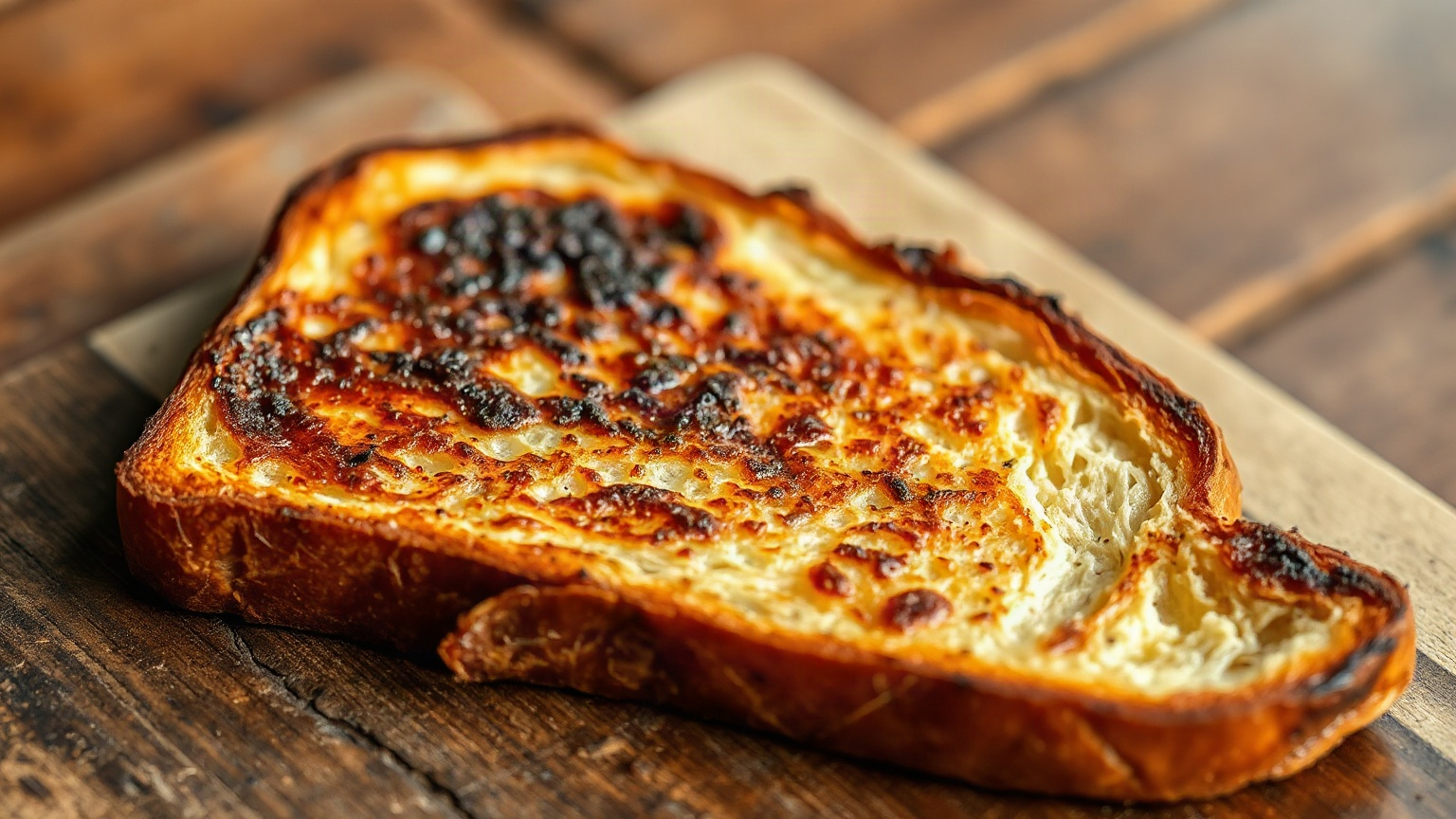
I’ve burned more toast than I’d like to admit. The first time I tested a cheap two-slice pop-up on the darkest setting, the bread didn’t just brown — it went full charcoal on the bottom while staying pale on top. That experience sent me down a bit of a rabbit hole on what’s actually happening inside the bread, chemically speaking. Turns out it’s genuinely fascinating, and once you understand it, you stop guessing at the right setting and start dialing it in.
What Exactly Is the Maillard Reaction?
It’s named after Louis-Camille Maillard, a French chemist who described it in 1912. He wasn’t even trying to understand cooking — he was studying how amino acids and sugars interact in biological systems. The culinary world caught up later.
Here’s the basic chemistry without making it a lecture: proteins in bread are made of amino acids. The bread also contains reducing sugars — glucose, fructose, maltose. When heat is applied, those amino acids and sugars react with each other. Not slowly. Rapidly, in a cascade of reactions that produce melanoidins (the brown pigments) and a staggering variety of volatile aromatic compounds. That’s where the flavor comes from.
What makes it distinct from caramelization is the protein component. Caramelization is just sugar breaking down. The Maillard reaction is a conversation between protein fragments and sugars — which is why a slice of white bread with more protein will brown differently than a low-protein brioche. And why a sugar-dusted piece of bread might caramelize in spots while Maillard browning is happening elsewhere on the same slice. Both reactions can run simultaneously.
The Temperature Window That Matters
The Maillard reaction kicks off meaningfully at around 280–300°F (138–149°C). It accelerates sharply as temperatures climb. By the time the bread surface hits 350°F (177°C), browning happens fast. Above 400°F (204°C), you’re getting into burning territory — the same chemical cascade starts producing acrylamide and bitter compounds instead of pleasant ones.
Standard pop-up toasters have heating elements that run at 300–400°F at the wire surface. The bread itself doesn’t reach that temperature — it sits close to the element and absorbs radiant heat. For a detailed breakdown of internal toaster temperatures, check out how hot a toaster gets. The surface of the bread typically reaches 310–330°F on a medium setting, which lands squarely in the sweet spot for Maillard browning without charring.
Why Moisture Is the Hidden Variable
Fresh bread straight from the bag browns more slowly than day-old bread. This isn’t just because it’s softer. The surface of fresh bread is wetter, and water caps the temperature of that surface at 212°F (100°C) — the boiling point — until it evaporates. The Maillard reaction can’t really run at 212°F. So the toaster first has to drive off surface moisture before browning can begin.
That’s why frozen bread often comes out pale and rubbery on a standard setting. The ice has to melt, then the water has to evaporate, and by the time the surface is dry enough to brown, the timer’s already stopped. Most toasters have a “frozen” setting for exactly this reason — it extends the cycle to account for the extra moisture load. If yours doesn’t, just run it twice on a medium-low setting rather than once on high. The result is better.
Sourdough is an interesting case here. The fermentation process changes the sugar composition of the dough and lowers the pH. A more acidic environment actually inhibits the Maillard reaction slightly, which is one reason cold sourdough can come out of the toaster looking underdone even after a full cycle. Toast it longer, or use a toaster oven where you can bump the temperature up a bit.
Toaster vs. Toaster Oven: How the Appliance Affects Browning
This is where it gets practical. Pop-up toasters use radiant heat from wires that sit very close to the bread surface. The browning happens fast and is fairly localized — you get crispy edges and surface browning, but the inside of the slice barely heats up. That’s by design.
Toaster ovens use a combination of radiant heat and convected air. The bread sits further from the elements, which means more even browning across the whole surface. With a convection fan running, you get a Maillard reaction happening somewhat more uniformly than in a pop-up toaster. The tradeoff: it takes longer. I usually run toast in my toaster oven at 375°F for 4–5 minutes, flipping halfway, and it comes out better than any pop-up toast I’ve made. Slightly more effort, noticeably better result.
| Method | Typical Surface Temp Reached | Browning Style | Time for Medium Toast | Control Over Browning |
|---|---|---|---|---|
| Pop-up toaster | 310–330°F (154–166°C) | Fast, localized, uneven | 1.5–3 min | Low (timer/shade dial only) |
| Toaster oven (bake) | 350–375°F (177–191°C) | Even, slightly slower | 4–6 min | High (temp + time + rack position) |
| Toaster oven (broil) | 400–450°F (204–232°C) | Very fast, top-only | 1.5–2.5 min | Medium (requires watching) |
| Conventional oven | 350–400°F (177–204°C) | Very even, slow | 8–12 min | High |
If you’re using a toaster oven regularly, the rack position matters more than people realize. Too close to the top element and you scorch the surface before the inside warms up. I keep mine on the middle rack for toast. For a broader look at toaster oven options, the best mini toaster ovens roundup covers some models that give you genuinely good browning control at a reasonable price.
How Bread Composition Changes the Browning
Not all bread browns the same way, and it’s not just about the toaster. The type of flour, the sugar content, the fat content, and even the yeast fermentation all affect how quickly and deeply the Maillard reaction proceeds.
Protein Content
Higher-protein flours (bread flour, for example) provide more amino acids for the reaction, which means more potential for browning. Whole wheat bread tends to brown faster than white bread made with similar timing, partly because of this, and partly because the bran particles heat up quickly and create dark spots. I’ve scorched whole wheat on a setting that works fine for white sandwich bread — worth keeping in mind.
Added Sugars and Fats
Enriched breads — brioche, challah, milk bread — contain more sugars and fats. More reducing sugars means the Maillard reaction has more substrate to work with, so browning happens faster and at lower temperatures. That’s why brioche toast can go from perfect to too dark in what feels like seconds. Fat also conducts heat differently than a dry bread surface, which speeds things along. Keep the setting lower and watch it closely.
The Edge Case: Gluten-Free Bread
Gluten-free breads lack the wheat proteins that drive much of the Maillard reaction in regular bread, and the starches used as substitutes (rice flour, tapioca) have different amino acid profiles. The result is patchy, uneven browning. Using a toaster oven at 350°F instead of a pop-up toaster, and lightly buttering the surface first, produces significantly more even results.
Does darker toast have more acrylamide?
Yes. Acrylamide forms when starchy foods are heated above approximately 248°F (120°C) for extended periods, and the amount increases with browning intensity. Heavily charred toast has meaningfully higher acrylamide levels than medium-toasted bread. The FDA recommends aiming for a golden-yellow color rather than dark brown or black for starchy foods cooked at high heat.
Why does toast taste so different from plain bread if it’s the same ingredients?
The Maillard reaction creates over 600 new chemical compounds that simply aren’t present in untoasted bread — including pyrazines, furans, and various volatile aromatics that give toast its distinctive roasty, slightly nutty flavor. It’s not just drier bread; it’s chemically different bread. The texture change (crispness) also sends different signals to your palate, which amplifies the perception of flavor intensity.

Written by
Emma founded Toastera to turn vague appliance advice into clear, researched, safety-first guidance on toasters and toaster ovens.
Free: the Toaster Oven Cheat Sheet
Get the printable cheat sheet (temps, cook times & safety tips) plus new recipes. No spam, unsubscribe anytime.