No, you should not put aluminum foil in a toaster slot. A standard pop-up toaster reaches internal temperatures between 300°F and 450°F (150°C–232°C), and the nichrome heating elements run even hotter than that. Foil contacting those elements can cause arcing, sparks, and potentially start a fire inside your machine. It’s genuinely one of the few toaster rules worth taking seriously.
Safety First: Never place aluminum foil, plastic wrap, paper towels, or any non-food material into a pop-up toaster slot. If foil touches a live heating element, it can arc and ignite. If your toaster starts sparking, unplug it immediately — do not reach inside. Let it cool completely before inspecting or cleaning.
Quick Facts
- Pop-up toasters reach 300°F–450°F internally; heating elements themselves can exceed 1,100°F at the wire surface.
- Aluminum foil in a toaster slot is a documented fire and arc-flash hazard — most manufacturers explicitly void warranties if foil is found inside.
- Toaster ovens are a completely different story: foil is generally usable there, with specific precautions.
- Parchment paper is a safer alternative for toaster ovens, though it has its own temperature limits (usually 425°F max).
- If you’ve already put foil in your toaster and nothing happened, you got lucky — don’t repeat it.
Why Foil and Toaster Slots Are a Bad Combination
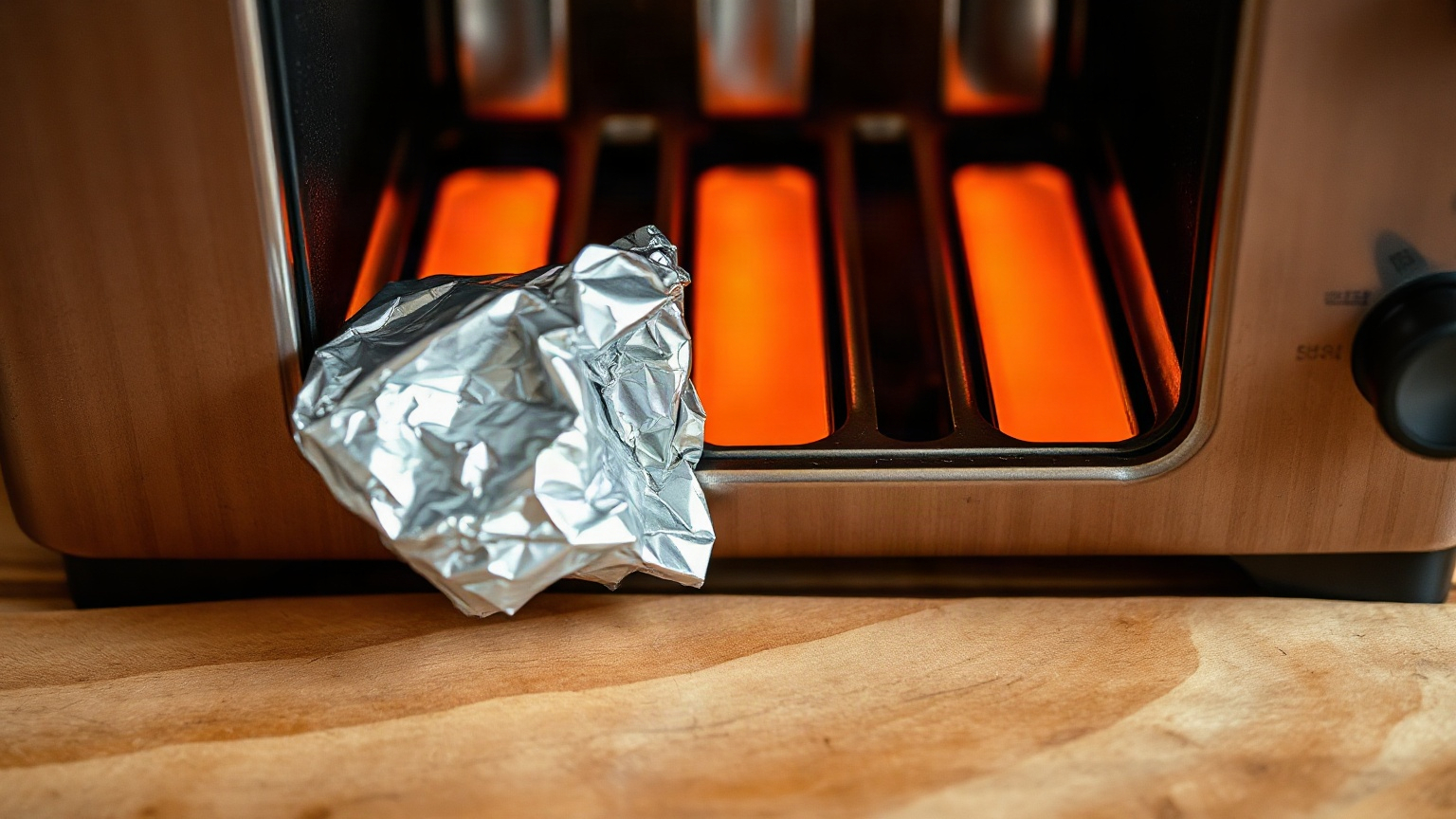
The inside of a pop-up toaster is basically a compact, high-temperature electrical cage. The nichrome wire elements are extremely close to the bread guides, often less than half an inch apart. When you slide foil into that space, you’re introducing a conductive metal into an environment designed exclusively for non-conductive food. That’s the core problem.
Foil can touch two heating elements simultaneously and create a short circuit. It can also arc — that’s the word for when electricity jumps across a small gap through the air. Arc flashes generate enormous heat and can ignite crumbs already sitting in the crumb tray below. I’ve seen a crumb fire in a toaster up close once (a friend’s kitchen, not mine), and it moves fast. Faster than you’d think.
Beyond arcing, there’s the simpler issue of heat concentration. Foil reflects radiant heat back toward the elements rather than absorbing it, which can cause localized overheating. Some elements have failed this way. And you absolutely should read up on how hot a toaster gets if you haven’t — the numbers are genuinely surprising for such a small appliance.
What Happens in the First Few Seconds
If foil makes contact with the elements while the toaster is on, you’ll often see sparking within two to four seconds. Sometimes there’s a small pop. The foil will heat rapidly — aluminum melts at 1,221°F (660°C), which is above most element surface temperatures, so it probably won’t melt entirely, but it doesn’t need to. The electrical hazard happens before that point. If you see sparks: unplug immediately, stand back, do not blow on it.
Why People Try It Anyway
Usually it’s because someone wants to toast something sticky, or they’re trying to prevent cheese from dripping inside. I get it — nobody wants a cheesy mess in a toaster. But the toaster slot is not the right tool for that job. A toaster oven handles it without any of these risks. More on that in a moment.
The Toaster Oven Situation Is Completely Different
This is where things get more nuanced. Toaster ovens — the countertop box-style appliances — are actually designed with the expectation that people will use foil inside them. The heating elements are mounted to the top and bottom of a larger cavity, not right next to your food. That distance matters a lot.
That said, there are real rules for using foil in a toaster oven, and most people ignore at least one of them.
The One Rule That Actually Matters
Never let the foil touch the heating elements. Not “try not to” — just don’t. If foil bridges the gap between two elements or contacts a live element, you get the same arcing hazard as in the pop-up toaster, just in a bigger box. Leave at least an inch of clearance between the foil edges and any element. You can line a toaster oven baking pan with foil without any issue — that keeps the foil well away from the elements and makes cleanup easy.
Don’t Line the Bottom of the Oven Itself
This is the mistake I made the first time I used a toaster oven with foil. I laid a sheet across the bottom floor of the cavity — the same way you might line the bottom rack of a full oven — and it blocked the lower element’s airflow, caused uneven heating, and apparently stressed the element enough that the toaster ran noticeably hotter on subsequent uses. Most manufacturers say explicitly: don’t line the crumb tray or cavity floor with foil. Use the rack or a pan instead.
Foil on the Wire Rack
Putting foil directly on a toaster oven wire rack is fine in principle but can restrict airflow underneath your food, which affects browning. I generally prefer a small pan over foil-on-the-rack if I want to catch drips. If you’re just reheating something, foil works. For a crisper result — say, reheating pizza — skip the foil entirely and put the food directly on the rack. Check out the full guide on reheating food in a toaster oven for specific temperature suggestions by food type.
How Toaster Temperatures Compare (And Why It Matters for Foil Safety)
| Appliance Type | Typical Air Temp (°F) | Element Surface Temp (°F) | Foil Safe to Use? |
|---|---|---|---|
| Pop-up toaster slot | 300–450 | 900–1,100+ | No — ever |
| Toaster oven (standard) | 200–450 | 500–700 | Yes, with clearance |
| Toaster oven (convection/air fry) | 200–450 | 500–700 | Avoid — foil blocks airflow |
| Full-size oven | 200–550 | Varies | Yes, standard rules apply |
The element surface temperature in a pop-up toaster is the number most people don’t know, and it’s the one that changes everything. At over 1,000°F, there’s very little margin for error with any conductive material nearby.
Safer Alternatives to Foil in a Toaster Slot
If your goal is to toast something sticky or delicate without it falling apart in the slot, you have a few real options.
- Use a toaster oven instead. Seriously. If the food needs any kind of lining or containment, it should go in a toaster oven, not a slot toaster. You’ll get better results anyway.
- Use a toaster bag. These are heat-resistant fabric pouches you slip food into before inserting it in the slot. They’re specifically designed for this. Sandwiches, cheese toast, that kind of thing. They work well and they’re cheap.
- Parchment paper in a toaster oven (not a toaster slot) works for most tasks up to about 425°F. Above that it can char and potentially smoke.
- Keep the toaster clean. A lot of the “I need foil” impulses come from not wanting to deal with crumbs. Empty the crumb tray regularly — weekly if you use it daily — and you’ll have fewer reasons to improvise.
The Edge Case Most People Miss: Foil Residue From Previous Use
Here’s something the other articles on this topic skip entirely. Even if you used foil in a toaster oven correctly and removed it after cooking, small torn fragments can remain on the rack or cavity walls. If a piece falls against a heating element the next time you run the oven — without you noticing — you’ve got the same sparking hazard. I do a quick visual check of my toaster oven interior before turning it on, particularly after any foil use. Takes about five seconds. Worth it.
Similarly: if you’ve ever used foil in a pop-up toaster (even once, even if nothing happened), inspect the interior with the toaster unplugged and completely cool. Use a flashlight. Look for any foil fragments near the elements or caught in the bread guides. If you find any, don’t use the toaster until they’re removed — carefully, with wooden or plastic tweezers, never metal.
The Serious Eats kitchen team has written about toaster oven care more broadly, and the USDA’s food safety resources at usda.gov cover kitchen appliance hygiene if you want an authoritative cross-reference. Neither one endorses foil in a pop-up toaster slot.
The Bottom Line
Pop-up toaster slot: no foil, no exceptions. The electrical and fire risk is real and not worth testing. Toaster oven: foil is fine on a pan or rack, as long as it doesn’t touch the elements and you’re not running an air-fry mode where airflow matters. If you’re regularly finding yourself wanting to modify what goes in your slot toaster, it might be time to look at a small countertop model — check out the roundup of the best mini toaster ovens for options that give you a lot more flexibility without taking up much space.
The honest version of this answer has always been simple: slot toasters aren’t designed to hold foil, and they don’t need to be. Use the right tool, keep the crumb tray clean, and your toaster will outlast most things in your kitchen.
Frequently Asked Questions
How hot does a toaster get?
The air inside a pop-up toaster slot reaches about 300°F to 450°F during normal use, but the nichrome wire heating elements themselves can exceed 1,100°F at the surface. That’s why contact between foil and an element is so dangerous — the temperature differential is extreme, and arcing can happen almost instantly.
Can you put aluminum foil in a toaster oven?
Yes, with precautions. Use foil on a baking pan or rack, keep it away from the heating elements by at least an inch, and avoid using it in convection or air-fry modes where it blocks airflow. Never line the floor of the toaster oven cavity with foil — that’s the most common mistake and it can damage the appliance.
What happens if you accidentally put foil in a toaster?
If the foil touched a heating element while the toaster was on, you may have seen sparking or heard a pop — that’s electrical arcing. Unplug the toaster immediately, let it cool completely, and inspect the interior for foil fragments before using it again. If the foil didn’t contact the elements and nothing happened, consider yourself lucky, and don’t repeat it.
Is it safe to leave a toaster plugged in?
Most appliance safety guidance recommends unplugging small appliances like toasters when not in use, particularly if the toaster is older or has seen any electrical issues. Modern toasters with auto shut-off are lower risk, but a toaster left plugged in with crumbs in the tray is still a potential hazard if something ignites. Unplug it after each use if you want the safest setup.
Can you use parchment paper in a toaster oven instead of foil?
Yes, parchment paper works well in a toaster oven up to about 425°F — beyond that it can char or smoke. It’s actually my preference for most baking tasks because it doesn’t reflect heat the way foil does, so browning is more even. Never use parchment paper in a pop-up toaster slot; like foil, it’s a fire hazard in that environment.

Written by
Emma founded Toastera to turn vague appliance advice into clear, researched, safety-first guidance on toasters and toaster ovens.
Free: the Toaster Oven Cheat Sheet
Get the printable cheat sheet (temps, cook times & safety tips) plus new recipes. No spam, unsubscribe anytime.