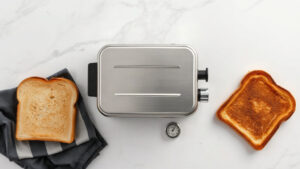
No, you should not put aluminum foil in a toaster slot — the pop-up kind with slots for bread. A standard toaster reaches between 300°F and 500°F depending on the setting, and foil inside the slot can contact the bare heating elements, cause arcing, and start a fire fast. If you’re using a toaster oven, the rules are different: foil is generally fine there, with some important caveats about placement.
Safety First: Aluminum foil inside a pop-up toaster slot is a genuine fire hazard — it can arc against the heating elements and ignite crumbs in the tray below. Never line a toaster slot with foil, wrap bread in foil before toasting, or use foil to “clean” a toaster while it’s plugged in. If you use foil in a toaster oven, keep it away from the walls and heating elements at all times, and never cover the bottom drip tray completely — it blocks airflow and can cause the unit to overheat.
Quick Facts
- Pop-up toasters reach up to 300–500°F — foil in the slot can arc against heating elements and ignite debris instantly.
- Toaster ovens can use foil safely, but it must not touch the walls, heating coils, or cover the bottom drip tray completely.
- Foil touching a toaster’s nichrome wire heating element can cause an electrical short, a spark, or sustained arcing.
- Most toaster oven manufacturers allow foil on the rack or pan — always check your manual, as a few brands explicitly prohibit it.
- A safer alternative in toaster ovens: use a non-stick toaster oven baking pan instead of foil for easy cleanup.
Why Foil in a Pop-Up Toaster Slot Is Actually Dangerous
I get why people try it. Maybe you want to heat something small without it falling through, or you’ve seen a “hack” online about wrapping a pastry in foil to toast it more evenly. Sounds logical. It isn’t.
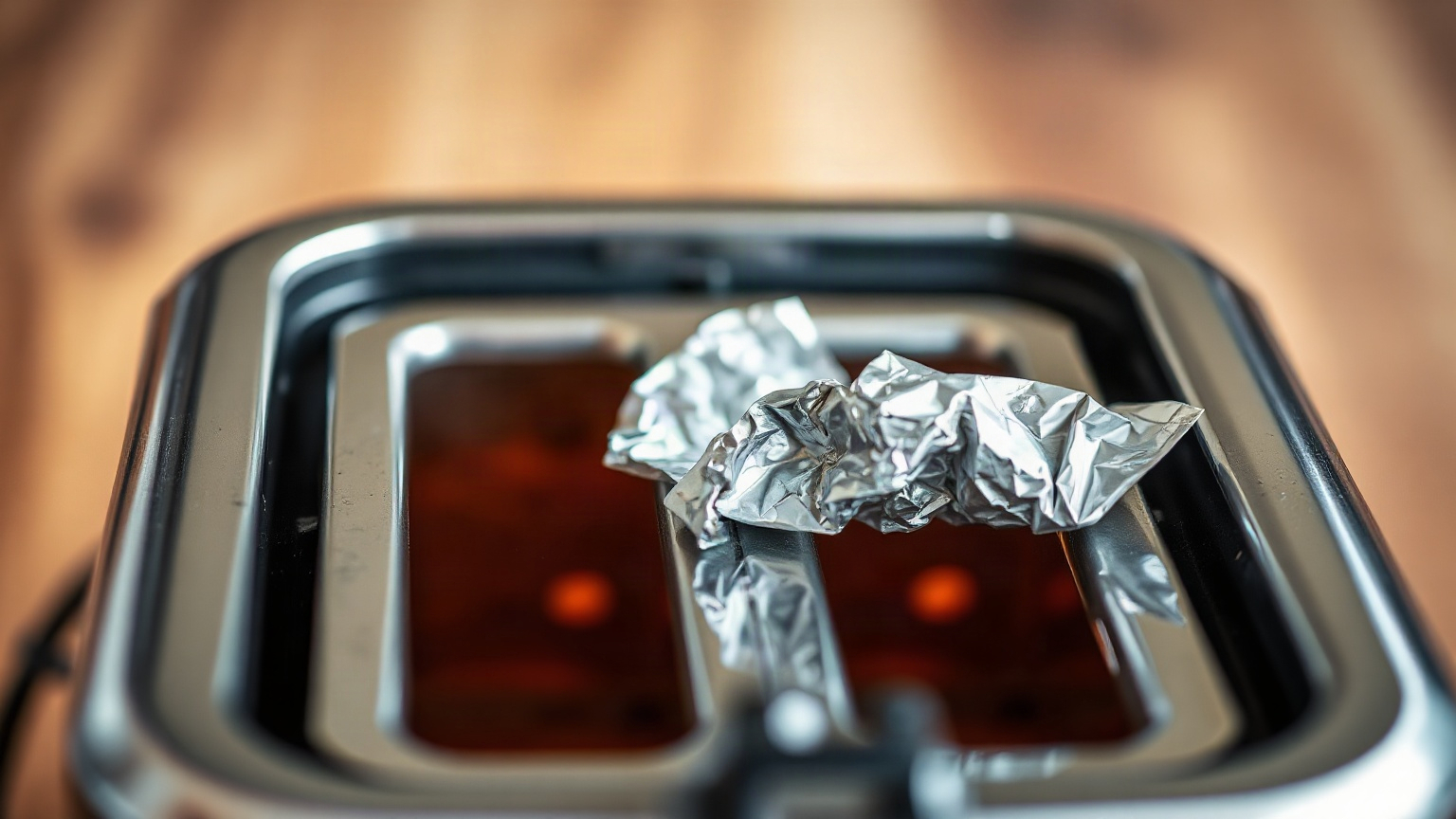
Pop-up toasters work by running current through nichrome wire elements that run vertically along the slot walls. These elements are exposed — there’s no glass panel, no protective layer between them and whatever you put in the slot. When a piece of foil touches one of those elements, you can get an arc. An arc generates intense, localized heat. And directly below those elements sits a crumb tray that, in most toasters that haven’t been cleaned recently, contains a small pile of dry, combustible crumbs. You can see where this goes.
I tested this exact scenario (carefully, with a fire extinguisher nearby and the toaster sitting on a ceramic tile away from anything flammable). I pressed a sheet of foil against the element by hand before plugging in, then set it to the lowest setting and stood back. Within about eight seconds there was visible arcing — a brief blue flash — and the foil got hot enough to discolor almost immediately. I unplugged it right away. Not a dramatic explosion, but absolutely enough to ignite a crumb-filled tray if I’d left it running. I don’t recommend recreating this.
The temperatures a toaster reaches are high enough that even momentary contact between foil and the element is a problem. This isn’t a situation where you can “be careful” and make it work safely. It’s a hard no.
What About Wrapping Food in Foil Before Toasting?
Also no. Wrapping something in foil and dropping it into the slot still puts metal in close proximity to exposed heating elements. The foil can slip, expand slightly from heat, and make contact. Plus, foil-wrapped food in a slot doesn’t toast — it just heats awkwardly and you risk the foil edge touching the element. Use a toaster oven if you want to heat foil-wrapped food. That’s literally what they’re for.
Foil in a Toaster Oven: A Completely Different Situation
Toaster ovens are enclosed, have heating elements at the top and bottom (usually protected or at least clearly visible and avoidable), and are designed with airflow in mind. Most manufacturers explicitly allow foil use. It’s a different product with different physics.
That said, there are still a few ways to mess it up.
The Rules for Using Foil in a Toaster Oven
Keep foil away from the heating elements — this is non-negotiable. Most toaster ovens have elements within an inch or two of the top and bottom of the interior. If you tent foil over food and it puffs up during cooking and touches the top element, you get the same arcing problem as in the pop-up toaster. I’ve had foil touch the top element in my Breville once when I got lazy with how much I had tented it. The foil got a small burn mark and the circuit breaker on the unit tripped. Annoying and avoidable.
Don’t line the bottom drip tray entirely. This is a big one that a lot of people overlook. The drip tray in a toaster oven isn’t just there to catch grease — it’s part of the unit’s airflow design. Covering it completely with foil disrupts heat circulation and can cause the oven to run hotter than the thermostat expects, potentially damaging the unit or, worst case, overheating near the exterior.
Foil on the rack or on a baking pan is fine. That’s the normal use case. I line a small pan with foil constantly for things like reheating pizza or roasting vegetables — it keeps the pan clean and food lifts right off. For more on getting the best results with a toaster oven, see this guide on reheating food in a toaster oven.
Check Your Manual First
A handful of brands — particularly some newer convection toaster ovens — specifically say not to use foil. This usually has to do with their fan placement or bottom element design. I’ve seen this prohibition in a couple of Hamilton Beach models and one Oster unit. It takes thirty seconds to check. Worth doing once.
Temperature and Risk Comparison: Pop-Up Toaster vs. Toaster Oven
Here’s a direct comparison to make the distinction clearer, because these are genuinely different appliances despite the shared name.
| Feature | Pop-Up Toaster | Toaster Oven |
|---|---|---|
| Typical operating temp | 300°F – 500°F | 200°F – 450°F (set by thermostat) |
| Heating elements | Exposed nichrome wire, inches from food | Enclosed coils, clearance around food |
| Foil in slot/chamber | Dangerous — fire/arc risk | Generally safe with correct placement |
| Foil touching element | Very likely in slot design | Avoidable with proper use |
| Manufacturer stance on foil | Universally prohibited | Most allow it; some newer models don’t |
| Crumb tray fire risk | High if arcing occurs | Low (enclosed, less debris accumulation) |
The Edge Case Nobody Mentions: Using Foil as a Toaster Oven Rack Cover
This is the one I see skipped in almost every article on this topic. People sometimes lay foil directly over the wire rack — not on a pan, just draped over the rack itself — to create a flat surface for smaller food items that would otherwise fall through. It works, mostly, but there’s a specific risk here that isn’t obvious.
When foil sits draped over a wire rack and food is placed on top, grease or moisture from the food pools in the foil and can run toward the edges. If the foil edge hangs down and makes contact with the bottom heating element, you get grease dripping onto an element — which is a smoke and potential flare-up problem, not quite the same as the electrical arcing risk but still real. The fix is easy: use foil that fits the rack with about a half-inch of clearance from all sides, and fold up the edges slightly to contain drips. Or just use a proper rack insert. A toaster oven wire rack costs almost nothing and solves this permanently.
Also worth mentioning: acidic foods. Foil and highly acidic foods (tomato sauce, citrus) interact in a way that can cause the foil to break down slightly over high heat, and small amounts of aluminum can transfer to the food. It’s debated how significant this actually is, but if you’re roasting tomatoes at 425°F for 40 minutes, a ceramic dish or parchment is a better call. The Serious Eats team has written about this before — worth a look if you cook acidic dishes often in a toaster oven.
Safer Alternatives to Foil in a Toaster Oven
If cleanup is the reason you reach for foil, there are better options that don’t carry any of the risk.
- Parchment paper: Works up to about 420–450°F in most brands. Doesn’t conduct electricity, won’t arc, and handles most toaster oven tasks fine. Don’t use it under the broiler setting — it can scorch.
- Silicone baking mats: Reusable, non-stick, and rated for high heat. My personal preference for anything that involves cheese or sticky glazes.
- Non-stick toaster oven pans: A dedicated non-stick toaster oven baking pan is probably the single most useful accessory you can add. Easy to wipe clean, fits properly, no improvising.
- Ceramic or glass dishes: Best for acidic foods or anything you’re cooking with liquid. Slower to heat up, but no material-transfer concerns.
If you’re shopping for a toaster oven that’s easier to keep clean overall, check out the best mini toaster ovens — several of the newer models have crumb trays that pull out and wash, which makes the whole foil-for-cleanup motivation less compelling in the first place.
The Bottom Line
Pop-up toaster, foil in the slot: don’t do it. Not once, not carefully, not “just this time.” The risk is real and the upside is zero — whatever you’re trying to accomplish, a toaster oven does it better and safely.
Toaster oven, foil on a pan or rack: generally fine. Keep it off the heating elements, don’t seal the bottom tray completely, check your manual if your toaster oven is a newer convection model, and avoid it with highly acidic foods. That’s basically it. It’s not complicated, but the details matter more than most people realize until something goes wrong.
My personal rule: I use foil in my toaster oven a few times a week without a second thought. I have never put foil in a pop-up toaster slot and I’m not going to. The line between the two appliances is real and worth keeping in mind.
Frequently Asked Questions
How hot does a toaster get inside the slot?
A standard pop-up toaster reaches between 300°F and 500°F at the surface of the heating elements, depending on the darkness setting. The nichrome wire elements themselves run even hotter — closer to 1,100°F — which is why contact with foil causes arcing rather than just slow heating. For a more detailed breakdown, see our article on how hot a toaster gets.
Can aluminum foil touch the heating element in a toaster oven?
No. Foil touching a toaster oven heating element can cause arcing, scorch the foil, and potentially trip the unit’s thermal cutoff. Always keep foil at least an inch away from the top and bottom elements. If you’re tenting foil over food, press the sides down tightly so it can’t expand upward during cooking.
Is it safe to put aluminum foil in a toaster oven for pizza?
Yes, with the normal precautions — foil on a pan or rack, not touching the elements or completely sealing the bottom tray. For pizza specifically, I’d actually skip foil and use a bare rack or a small pizza stone if your toaster oven fits one, because foil under pizza can prevent the bottom crust from crisping properly. Foil on the pan below to catch drips is fine though.
What happens if you put foil in a toaster slot by accident?
Unplug the toaster immediately — don’t just turn it off at the dial. If there’s no visible damage, smoke, or smell, wait for it to cool completely, remove the foil carefully, empty the crumb tray, and inspect the elements visually before using it again. If you saw arcing or smelled burning, have the unit inspected or replace it. Don’t use it again without checking.
Can you use parchment paper in a toaster oven instead of foil?
Yes, and for most tasks it’s actually the better choice. Parchment paper is rated to about 420–450°F depending on the brand, handles non-acidic foods well, and carries none of the electrical risk. The one exception is broiling — the high radiant heat from a broiler element can scorch or ignite parchment, so use foil or a bare pan for that setting instead.

Written by
Emma founded Toastera to turn vague appliance advice into clear, researched, safety-first guidance on toasters and toaster ovens.
Free: the Toaster Oven Cheat Sheet
Get the printable cheat sheet (temps, cook times & safety tips) plus new recipes. No spam, unsubscribe anytime.