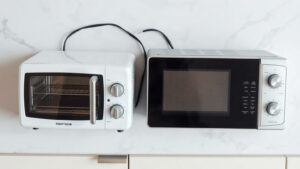
Yes, you can use parchment paper in a toaster oven — but only if you keep it below 425°F and make sure it never hangs over the edges near the heating elements. Toaster ovens run hotter and more unevenly than full-size ovens, and the heating elements sit just inches from your food. That proximity is exactly what makes parchment paper genuinely dangerous if you get one thing wrong.
Safety First: Parchment paper can ignite if it touches or gets too close to a toaster oven’s exposed heating elements. Always trim parchment to fit inside the pan — never let it overhang the edges — and never use it under the broil setting or above 425°F. Keep an eye on it the first time you use it in any new oven; don’t walk away.
Quick Facts
- Parchment paper is generally rated to 420–450°F depending on the brand — check the box before you use it.
- The number one cause of parchment fires in toaster ovens is overhang — loose edges that curl toward the heating element.
- Never use parchment under the broil setting. Broil can spike past 500°F within minutes.
- Wax paper is not the same as parchment. It will smoke and catch fire. Don’t confuse them.
- A toaster oven baking pan lined with trimmed parchment is the safest setup for most tasks.
Why Toaster Ovens Are Different From Regular Ovens
A standard kitchen oven has heating elements either hidden beneath the floor or tucked away at the top, and the oven cavity is big enough that parchment paper is well away from any direct heat. Toaster ovens don’t have that luxury. The top heating element in most countertop models sits maybe two to four inches from whatever you’re cooking. That’s it. And because the cavity is small, heat reflects and concentrates in ways that can surprise you.
I learned this the annoying way. First time I used parchment in my Breville, I cut a sheet that was about an inch too long on one side. It curled up during baking, drifted toward the top element, and started to brown at the corner. Nothing caught fire — I was watching — but it was close enough to smell. After that I started trimming parchment to fit inside the pan, not just inside the oven.
The other thing worth knowing is that toaster ovens often run hot. I’ve tested several models, and a fair number read 25–50°F hotter than their dial suggests. So if you set yours to 400°F, you might actually be at 440°F inside. That eats into your safety margin fast. An oven thermometer — just a cheap one — is genuinely useful here. Learn more about how hot a toaster gets and why that number matters more than most people think.
The One Mistake That Actually Starts Fires
It’s the overhang. Full stop.
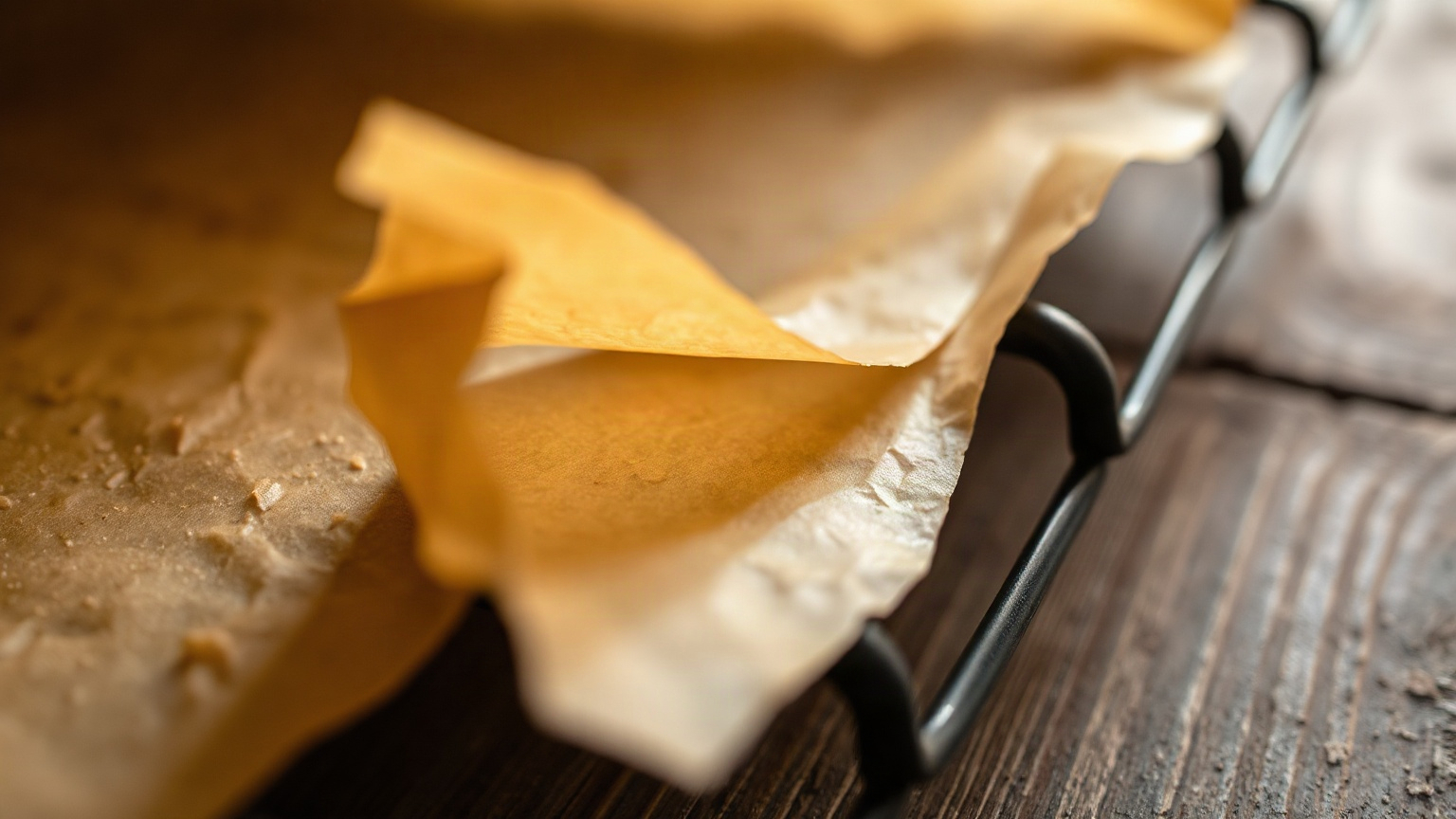
When parchment paper extends past the edge of the pan, it has nothing anchoring it flat. Hot air circulates inside a toaster oven aggressively, especially in convection models. That loose edge lifts. It bends toward the heating element. And parchment paper, for all its convenience, is still paper — it ignites around 450°F, and the element itself can run significantly hotter than that on its surface.
The fix is simple and takes ten seconds. Cut the parchment so it sits inside the pan with a little margin from the edges. I usually trace the bottom of the pan lightly and then cut just inside that line. It doesn’t need to be perfect. It just needs to stay flat and contained. That’s what keeps it safe.
The broil setting is a separate issue entirely. When you broil in a toaster oven, the top element cranks up to full power — we’re talking well past 500°F, and the element glows visibly. No parchment, no aluminum foil, no shortcuts. Just food on a rack or in a pan. I keep a toaster oven wire rack for exactly this reason — broiling directly on a rack with a drip pan below is the safer approach.
Parchment Paper vs. Other Liners: What You Should Actually Use
Not all pan liners behave the same, and the differences matter a lot in a toaster oven.
Parchment Paper
Safe up to around 420–450°F, non-stick, doesn’t transfer any flavor to food. Good for baking cookies, roasting vegetables at moderate heat, reheating things that stick. As long as it’s trimmed to fit and you’re staying under the temperature limit, it’s a solid choice.
Wax Paper
Do not use this in a toaster oven. Or any oven. The wax coating melts and smokes, and at higher temps it can ignite. The packaging on wax paper often says “not for oven use” — people just don’t read it. Wax paper looks almost identical to parchment, so double-check the label before you line anything.
Aluminum Foil
Foil is generally safe in a toaster oven as long as you’re not covering the crumb tray (restricts airflow and can overheat the oven) and not letting it touch the walls or heating elements. It reflects heat rather than absorbing it, which can actually cause uneven browning. For something like wrapping potatoes or covering a dish partway through cooking, it’s fine. For lining a pan for easy cleanup, foil works well — probably better than parchment for high-heat roasting above 400°F.
Silicone Baking Mats
Silicone mats are rated to around 480°F on most brands, so they give you a bit more headroom than parchment. The catch is sizing — most silicone mats are made for half-sheet pans, which are way too big for a toaster oven. You can find smaller ones, but they’re not always easy to track down. If you bake in your toaster oven regularly, it might be worth finding one that fits. No fire risk, fully reusable, nothing to trim.
| Liner Type | Max Safe Temp | OK in Toaster Oven? | Best For |
|---|---|---|---|
| Parchment Paper | 420–450°F | Yes, with precautions | Baking, moderate roasting |
| Wax Paper | Not oven-safe | No — fire/smoke risk | Cold food wrapping only |
| Aluminum Foil | Very high | Yes, with precautions | High-heat roasting, wrapping |
| Silicone Baking Mat | ~480°F | Yes, if it fits | Baking, frequent use |
| Nothing (bare pan) | N/A | Always safe | Broiling, high heat |
How to Use Parchment Paper in a Toaster Oven Safely
Here’s what I actually do, in order.
- Check the brand’s temperature rating. Reynolds is rated to 425°F. If-You-Care brand says 420°F. Some generics don’t print a rating at all — I’d skip those for oven use.
- Set your oven to 400°F or below when possible. This gives you a real buffer. For most baking and reheating tasks, 375–400°F is plenty. You can read more about reheating food in a toaster oven without overdoing the heat.
- Trim the parchment to fit inside the pan. Not the oven — the pan. The pan keeps it weighted down and contained.
- Put food on top of the parchment before it goes in. The weight of the food helps keep it flat. An empty sheet of parchment in a hot oven with circulating air will lift and move.
- Stay nearby the first few times. Especially with a new oven. Toaster ovens vary more than you’d expect, and it’s just good practice to watch until you know how yours behaves.
That’s really the whole protocol. It’s not complicated, it just requires a little intention rather than just grabbing a sheet and tossing it in.
If you’re shopping for a toaster oven that gives you better temperature control and more consistent results, the options on our best mini toaster ovens list are a good starting point. Some of the better models have tighter temperature calibration out of the box, which makes all of this less guesswork. According to Serious Eats, even quality home ovens can run significantly off their set temperature — toaster ovens are often worse.
When to Skip Parchment Entirely
There are a few scenarios where I just don’t bother with parchment and reach for a different solution.
Broiling anything. Already covered this, but it bears repeating — no parchment under the broil element. Ever.
Air fryer mode. A lot of newer toaster ovens double as air fryers. When you’re running that high-circulation, high-heat mode, parchment can lift even if it’s weighted, and the temps are often 400°F+. Foil or just a bare basket works better.
Anything above 425°F. Even if your oven theoretically stays at 425°F, the element itself runs hotter than the air temperature. Proximity matters. I’d rather use a lightly oiled pan than push parchment past its rating.
Fatty foods that could drip. Bacon, sausage, that kind of thing. Grease + parchment + high heat is a combination I’d rather avoid. Foil with a bit of a lip works better here, or a dedicated toaster oven baking pan with rack so the drips fall away from the heat source. The Food Network’s guide to parchment paper echoes this — fatty, high-drip foods are better off on foil or bare pans.
The Bottom Line
Parchment paper in a toaster oven is totally fine — it’s not some risky workaround. It’s just a tool that needs to be used correctly. Trim it to the pan. Stay under 425°F. Skip it entirely for broiling and air fryer mode. Keep an eye on it.
The fires people associate with parchment paper in toaster ovens almost always come down to one thing: a piece of paper that wasn’t contained, got too close to an element, and went from “slightly scorched” to “actually on fire” faster than expected. That’s completely avoidable. And once you’ve made it a habit to trim and tuck, you stop thinking about it at all — it just becomes part of the routine.
Frequently Asked Questions
Can parchment paper catch fire in a toaster oven?
Yes, parchment paper can catch fire in a toaster oven if it touches or gets too close to a heating element, or if the oven temperature exceeds the paper’s rated limit (usually 420–450°F). The most common cause is overhang — a loose edge that curls toward the top element during cooking. Keeping parchment trimmed to fit inside the pan and staying below 400°F virtually eliminates this risk.
What temperature is parchment paper safe to use in a toaster oven?
Most parchment paper brands are rated to between 420°F and 450°F. Because toaster ovens often run hotter than their dial setting, it’s safer to stay at 400°F or below when using parchment. Always check the packaging on your specific brand — ratings do vary.
Can I use wax paper instead of parchment paper in a toaster oven?
No. Wax paper is not oven-safe and should never go in a toaster oven. The wax coating melts and smokes at oven temperatures and can ignite. Wax paper and parchment look similar in packaging, so check the label before using either one.
Is parchment paper or aluminum foil safer in a toaster oven?
Both are safe if used correctly. Aluminum foil handles higher temperatures than parchment paper and doesn’t have an ignition risk, making it the better choice for broiling or cooking above 425°F. Parchment is better for baking tasks where you want a non-stick surface and don’t want food browning too fast on the bottom. For most toaster oven cooking under 400°F, either works fine.
Can I put parchment paper directly on the toaster oven rack?
Technically yes, but it’s riskier than putting it in a pan. Without a pan to hold it in place, parchment on a rack can lift and shift with hot air circulation — especially in convection or air fryer mode. If you’re going to use parchment on the rack, make sure food is weighted on top of it at all times and trim the paper so it doesn’t extend past the rack edges.

Written by
Emma founded Toastera to turn vague appliance advice into clear, researched, safety-first guidance on toasters and toaster ovens.
Free: the Toaster Oven Cheat Sheet
Get the printable cheat sheet (temps, cook times & safety tips) plus new recipes. No spam, unsubscribe anytime.