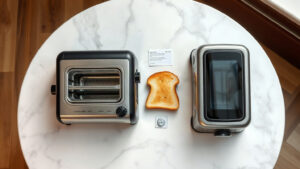
A convection toaster oven is worth the extra money for home baking in most cases — the built-in fan circulates hot air around your food, cutting bake times by roughly 25% and producing noticeably more even browning than a standard radiant-heat model. For anyone baking more than a few times a month, that consistency alone justifies the price difference. If you mostly make toast and the occasional frozen pizza, a basic model is probably fine.
Safety First: Convection toaster ovens run hot — surfaces including the door glass, top panel, and side walls can reach burn temperatures during and after use. Keep the oven at least four inches from cabinets and walls, never line the bottom tray with foil (it blocks airflow and can cause overheating), and always use oven mitts when handling pans. Unplug the unit when not in use if children are present.
Quick Facts
- Convection toaster ovens typically cost $60–$350 more than comparable radiant models, depending on brand and features.
- The fan lowers effective baking temperature by about 25°F — so if a recipe says 375°F, you’d set a convection oven to 350°F.
- Bake times are usually 20–25% shorter under convection, which saves real energy over time.
- Not every bake benefits from convection — delicate items like soufflés, custards, and quick breads with a loose batter can be disrupted by the fan.
- Several mid-range convection toaster ovens now include an “air fry” mode, which is convection running at maximum fan speed.
What Actually Happens Inside Each Oven Type
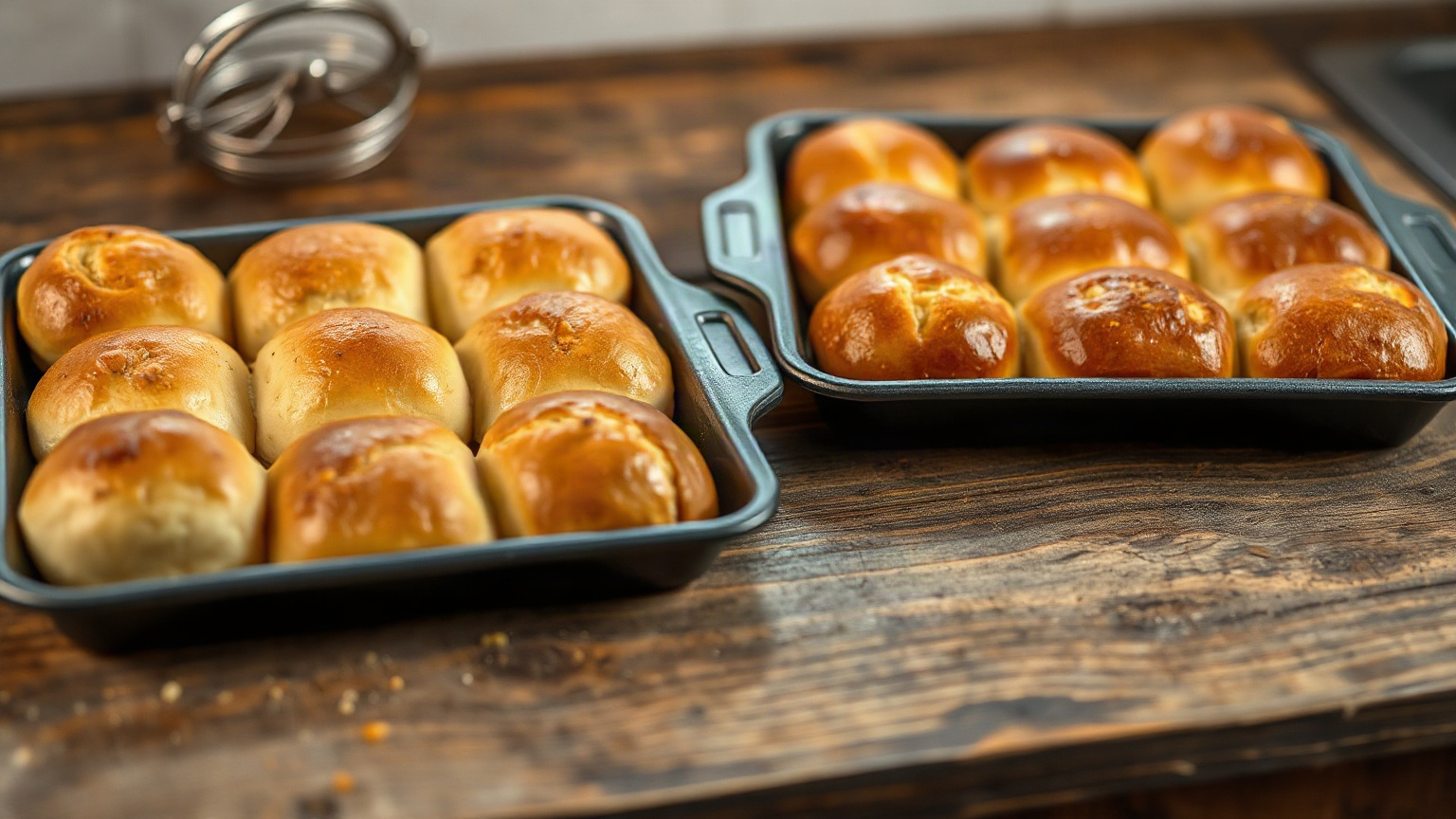
Standard toaster ovens heat food through radiant heat — coils at the top and bottom glow red and the air inside gets hot, but that air mostly just sits there. Hot spots are real. I’ve burned the back-right corner of more cookie batches than I’d like to admit using a basic Black+Decker I had in my first apartment, while the front-left cookies were barely golden.
Convection adds a fan, usually at the back of the cavity. That fan keeps the air moving continuously, which does two important things: it strips away the cooler layer of air that clings to your food’s surface (called the boundary layer, if you want to get technical), and it distributes heat more evenly throughout the oven. The result is faster browning, crispier edges, and far fewer hot spots.
Some higher-end models — the Breville Smart Oven Air Fryer being the obvious example — use what Breville calls “Element IQ,” which routes power to specific heating elements depending on the cooking function. That’s a step beyond a simple fan. But even a basic convection setting on a $80 Hamilton Beach makes a noticeable difference versus a purely radiant oven.
Baking Performance: Side-by-Side Results
I ran the same chocolate chip cookie recipe in three different ovens over one weekend — a no-frills radiant toaster oven, a mid-range convection toaster oven (the Cuisinart TOA-65), and my full-size kitchen oven with convection on. Same dough, same pan, same position in each cavity.
Cookies and Sheet Pan Items
The radiant toaster oven took 14 minutes at 375°F and produced cookies that were darker on the left side and underdone in the center of the pan. The Cuisinart on convection took 11 minutes at 350°F and the results were nearly identical across all twelve cookies. The color was even, the undersides were properly golden, and the texture was exactly what I wanted — crisp edge, chewy center. My full-size oven with convection was comparable but honestly not dramatically better for a single-rack bake.
That 3-minute difference doesn’t sound like much. But over 20 baking sessions a year, you’re saving an hour of oven time and proportionally less electricity. And the consistency difference matters a lot if you’re baking gifts or trying to repeat a recipe reliably.
Items Where Convection Doesn’t Help (or Actually Hurts)
Here’s the part most comparison articles skip. Convection isn’t universally better. Cheesecakes, custards, and anything with a wet batter that needs to set gently — these can crack, dome unevenly, or develop a skin on top from the moving air. Same goes for things like meringue, which dries out too fast under a fan. For these, you’d want to either turn the convection off (many ovens let you do this) or stick with a standard model.
Quick breads — banana bread, zucchini bread — are borderline. I’ve had them turn out fine on convection at a reduced temp, but I’ve also had the top crust set before the inside fully cooked. If you bake those regularly, pay attention to whether your convection model allows you to disable the fan. Most do. But cheap models sometimes don’t, which is annoying.
Model Comparison: Which Convection Toaster Ovens Are Actually Worth Buying
There are genuinely good options at every price tier. Here’s how the most popular models stack up for home bakers specifically.
| Model | Price Tier | Capacity | Convection Type | Air Fry? | Fan Can Be Disabled? | Best For |
|---|---|---|---|---|---|---|
| Hamilton Beach 31123D | Budget | 6-slice | Basic fan | No | No | Occasional bakers on a budget |
| Cuisinart TOA-65 | Mid-range | 6-slice | Standard convection | Yes | Yes | Regular home bakers, small kitchens |
| Ninja Foodi XL Pro (SP351) | Mid-range | 9-slice | Strong convection + air fry | Yes | Yes | Families, multi-function cooking |
| Breville Smart Oven Air Fryer (BOV900) | Premium | 13-slice | Element IQ + super convection | Yes | Yes | Serious bakers, frequent use |
My Honest Take on Each
The Hamilton Beach is fine for reheating and basic tasks but I’d find the inability to turn off the fan genuinely frustrating for baking. It’s the one I’d skip if baking is your main use case.
The Cuisinart TOA-65 is probably the sweet spot for most people. It’s big enough for a 9-inch round cake pan, the convection is consistent, and the air fry function is a genuine bonus. I’ve used one for about two years and my main complaint is that the interior is slightly harder to clean than the Breville — the crumb tray doesn’t slide out as smoothly. That said, a good toaster oven baking pan set makes a difference in how evenly things cook regardless of which oven you use.
The Ninja Foodi XL Pro is worth considering if you want to replace multiple appliances. It’s bulky — be honest with yourself about whether your counter has room before you buy it. But the air fry performance is legitimately good and it handles a full chicken without struggling.
The Breville Smart Oven Air Fryer is the premium pick, and I think it earns it for people who bake seriously. The temperature accuracy is better than the others, the cavity is large enough to handle a 13×9 pan, and the preset functions are genuinely calibrated rather than decorative. It’s expensive. But if you’re baking multiple times a week and you care about results, it’s the one I’d choose without hesitating.
Clear pick: For most home bakers — the Cuisinart TOA-65 at mid-range, or the Breville BOV900 if you bake frequently and your budget allows. Skip the Hamilton Beach if baking is your priority. Check out our guide to the best mini toaster ovens if counter space is a serious constraint for you.
The Energy and Cost Math
Standard toaster ovens typically draw 1,200–1,500 watts. Convection models with fans run similarly, but the shorter cook times mean actual energy consumption can be lower overall. A Serious Eats analysis of toaster ovens found that toaster ovens use roughly half the energy of a full-size range oven for small-batch cooking — and convection models push that efficiency further by cutting bake times.
At average US electricity rates (around 16 cents per kWh as of 2024), baking a batch of cookies in a standard toaster oven for 14 minutes costs about 5–6 cents in electricity. The same batch in a convection toaster oven at 11 minutes costs around 4 cents. Not exactly life-changing per session, but it adds up. And more importantly, you’re not heating a full-size oven cavity for a single pan of muffins, which makes a real difference in summer.
Also worth mentioning: if you currently use a full-size oven for most baking and would switch to a convection toaster oven for smaller batches, the energy savings are more substantial. Full-size ovens typically draw 2,000–5,000 watts. That’s a meaningful difference. For more on how reheating food in a toaster oven compares in terms of energy and results, we’ve covered that separately.
Tips for Getting the Most Out of Convection Baking
A few things tripped me up early on that nobody mentioned in the manual.
- Always reduce temperature by 25°F when converting a standard recipe to convection. The fan makes it run hotter than the dial suggests.
- Start checking baked goods about 5 minutes before the recipe’s minimum time. Convection moves fast and it’s easy to overbake your first few attempts.
- Use light-colored metal pans. Dark pans absorb more radiant heat and can lead to over-browned bottoms, especially with the extra air movement.
- Don’t crowd the cavity. Convection needs airflow to do its job — if pans are too close together or touching the walls, you lose the benefit.
- A good toaster oven wire rack improves air circulation under your pan significantly. Worth buying separately if your oven didn’t come with a great one.
One thing worth knowing: convection can make things dry out faster. This matters most for things like brown sugar cookies or moist cakes. I tent those with foil for the last few minutes if I think they’re browning too quickly on top. Works fine. Food Network’s convection guide covers this adjustment well if you want more detail on converting recipes.
The Verdict
If you bake regularly at home — cookies, roasted vegetables, sheet pan dinners, small cakes — a convection toaster oven is worth the extra cost. The consistency and time savings are real, not marketing. The price gap between a decent radiant model and a decent convection model has also narrowed a lot in recent years; you can get solid convection for under $100 now.
If you bake rarely and mostly want something to make toast and reheat leftovers, save the money. A basic model does those jobs just fine. You can read more about how hot a toaster gets in our general guide if you’re trying to understand what you actually need for your use case.
But if you’re genuinely undecided and you bake even occasionally? Get the convection. You’ll use it more because the results are better, and that’s really the whole point.
Frequently Asked Questions
Is a convection toaster oven worth it for occasional bakers?
Probably yes, even for occasional use, as long as the price difference is under $60–70 for the model you’re comparing. The more even baking results mean fewer failed batches, which saves both ingredients and frustration. If you only bake once or twice a year, though, a standard model is honestly sufficient.
Do I need to adjust recipes for a convection toaster oven?
Yes — reduce the temperature by 25°F and start checking for doneness about 20–25% earlier than the recipe suggests. Most recipes are written for standard radiant ovens, so without this adjustment you’ll overbake. After a few sessions, it becomes second nature.
Can a convection toaster oven replace a full-size oven for baking?
For small-batch baking — one or two pans at a time — yes, a good convection toaster oven handles it well. It won’t work for large items like a full-size Bundt cake or multiple sheet pans simultaneously, but for most everyday home baking quantities it’s genuinely capable. The Breville BOV900’s 13-slice cavity comes closest to replacing a full oven.
What is the difference between convection and air fry in a toaster oven?
Air fry is essentially convection running at its highest fan speed, usually with a higher temperature setting, to mimic the rapid hot-air circulation of a dedicated air fryer. Standard convection uses a slower, gentler fan speed suited for baking and roasting. Many toaster ovens now offer both as separate presets on the same fan hardware.
How much more electricity does a convection toaster oven use than a regular one?
The wattage is similar — both typically run between 1,200 and 1,800 watts — but convection models finish cooking faster, so they’re often more efficient overall. For small-batch baking, a convection toaster oven uses significantly less energy than a full-size kitchen oven, which can draw up to 5,000 watts. The actual dollar difference per baking session is small, but it adds up over a year of regular use.

Written by
Emma founded Toastera to turn vague appliance advice into clear, researched, safety-first guidance on toasters and toaster ovens.
Free: the Toaster Oven Cheat Sheet
Get the printable cheat sheet (temps, cook times & safety tips) plus new recipes. No spam, unsubscribe anytime.