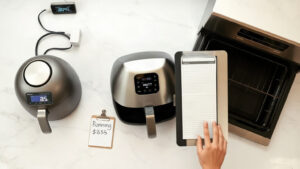
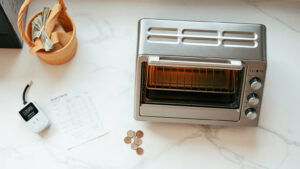
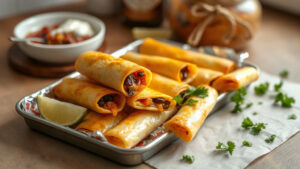
A toaster oven can absolutely replace a full kitchen for most everyday meals — it bakes, roasts, broils, and toasts at temperatures up to 450°F or higher depending on the model. For a dorm student with no kitchen access, that’s enough heat to cook proteins, roast vegetables, melt cheese, and reheat leftovers properly (not the sad, soggy microwave version). You don’t need a stove, an oven, or even a hot plate — just a compact countertop unit, a few basic pans, and a willingness to experiment.
Safety First: Always place your toaster oven on a flat, heat-resistant surface at least 4 inches from any wall, curtain, or fabric. Never leave it running unattended in a small room — especially overnight. Keep the crumb tray empty and clean it every few uses to prevent grease fires. Check your dorm’s appliance policy before buying; some schools ban heating elements above a certain wattage (usually 1,000W). Unplug the unit when you leave the room.
Quick Facts: Toaster Oven Dorm Cooking
- Most compact toaster ovens run between 1,000–1,500 watts and reach 400–450°F — enough for real cooking, not just reheating.
- A 6-slice / 0.6 cubic foot model is the sweet spot for dorm use — fits a small baking pan, doesn’t hog the desk.
- You’ll need exactly three accessories to cook everything in this article: a small baking pan, a wire rack, and aluminum foil.
- Cook time for most meals below is under 25 minutes. Active prep time is usually under 10.
- Always preheat for at least 5 minutes — skipping this step is the single biggest reason food comes out undercooked on one side.
Before we get into the actual meals, a word on setup. I’ve tested a lot of compact toaster ovens over the years, and the ones that work best for real cooking — not just bagel toasting — tend to have a convection fan and at least four heating elements. Two-element budget units can do it, but you’ll need to rotate your pan halfway through. Just something to keep in mind. If you’re still shopping, the best mini toaster ovens guide on this site covers the ones I’d actually recommend for small spaces.
What You Actually Need (Keep It Short)
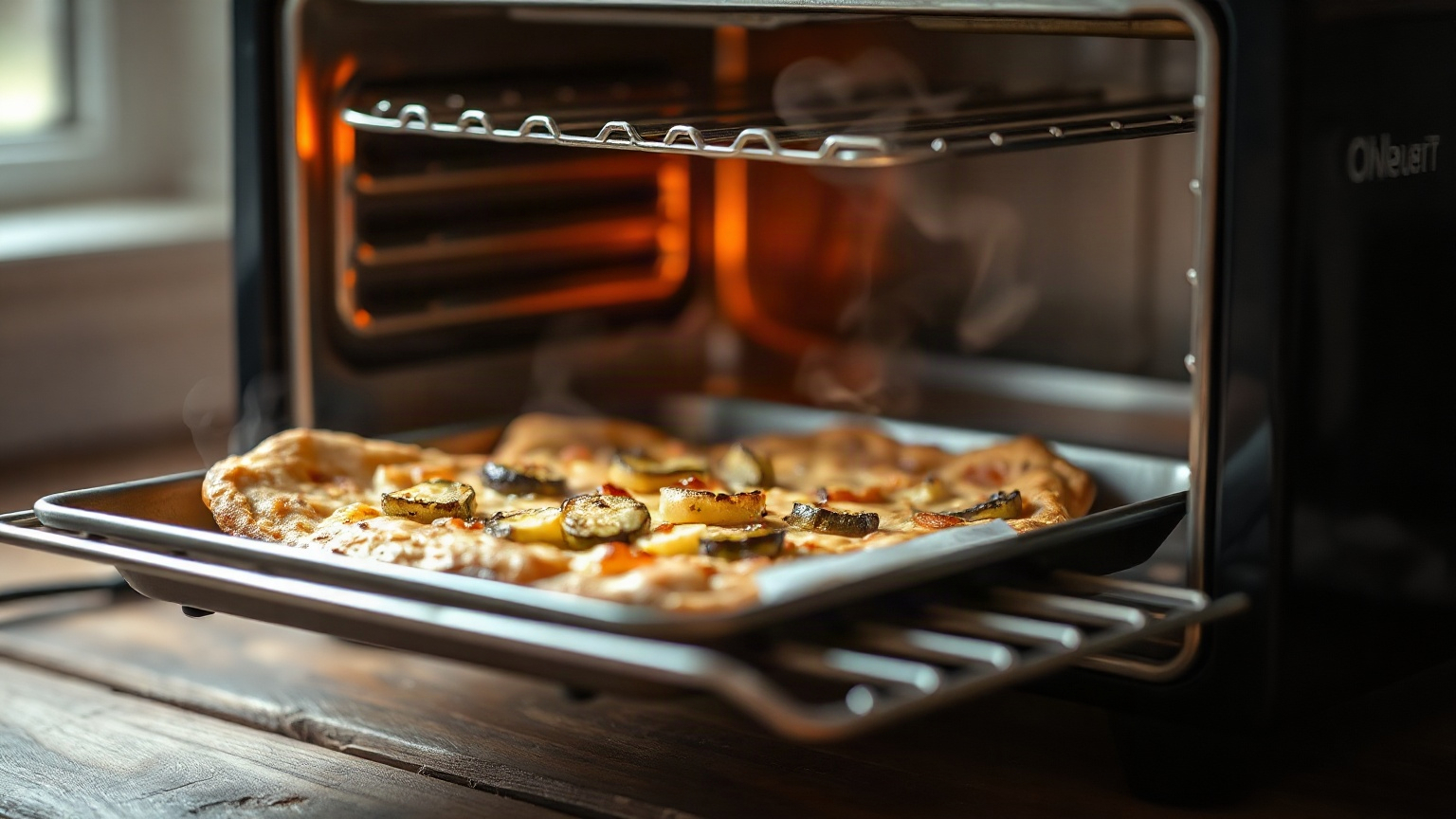
One decent toaster oven. One small toaster oven baking pan. Foil. A toaster oven wire rack (usually included, but check). A paring knife. That’s genuinely it for the six meals below.
Optional but very useful: a small silicone brush for oil, a meat thermometer if you’re cooking chicken (please get one — it’s about $10 and removes all the guesswork), and a roll of parchment paper. Parchment makes cleanup so much easier. I learned that one the hard way after baking cheese directly onto a pan at 425°F.
Toaster Oven Temperature Reference
Before the meals, here’s a quick reference table. These are the temps I actually use — not just what the manuals say.
| Food Type | Temp (°F) | Approx. Time | Notes |
|---|---|---|---|
| Toast / bagels | 400°F | 4–6 min | Use the toast setting if available |
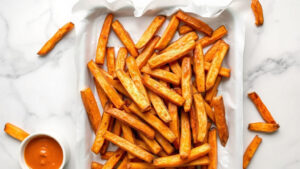
| Roasted vegetables | 425°F | 18–22 min | Flip halfway through |
| Chicken thighs (bone-in) | 400°F | 35–40 min | Internal temp must hit 165°F |
| Chicken breasts (boneless) | 375°F | 22–26 min | Thinner = faster; check at 20 min |
| Frozen burritos / wraps | 350°F | 15–18 min | Flip once at 8 min |
| Baked eggs / frittata | 325°F | 12–15 min | Use a small oven-safe ramekin or pan |
| Sheet pan nachos | 375°F | 8–10 min | Watch closely — cheese burns fast |
| Salmon fillet | 400°F | 12–14 min | Don’t overcook; it dries out quickly |
6 Real Meals You Can Actually Make
1. Sheet Pan Chicken Thighs with Roasted Vegetables
This is the most useful meal on the list. One pan, one meal, almost no cleanup. Bone-in, skin-on thighs are forgiving — they don’t dry out as easily as breasts, which is great when you’re still figuring out your oven’s hot spots.
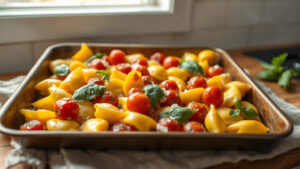
Season the thighs with olive oil, salt, pepper, garlic powder, and paprika. Cut whatever vegetables you have — bell pepper, zucchini, cherry tomatoes, broccoli — into roughly equal pieces, toss them in oil and salt, and spread everything on your baking pan. Chicken on one side, veg on the other. Roast at 400°F for 35–40 minutes. The skin gets genuinely crispy. First time I made this in a small convection toaster oven, I was honestly surprised — it came out better than I expected from such a small machine.
Internal temp should hit 165°F. If you don’t have a thermometer yet, cut into the thickest part near the bone — juices should run clear, not pink. For more on reheating food in a toaster oven, we’ve got a separate guide that covers leftovers from exactly this kind of meal.
2. Baked Eggs (The Dorm Breakfast That Actually Fills You Up)
Scrambled eggs in a microwave are an abomination. Baked eggs in a toaster oven are not. You need an oven-safe ramekin or a small oven-safe dish — even a ceramic mug works if it’s labeled oven-safe, though I’d test it with water first before cracking an egg in.
Crack two eggs into a lightly buttered ramekin. Add a tablespoon of cream or milk, salt, pepper, and whatever you have: shredded cheese, leftover diced peppers, a pinch of chili flakes. Bake at 325°F for 12–15 minutes. The whites should be fully set, yolks still a bit soft. Serve with toast made on the rack above. That’s a real breakfast, not a vending machine situation.
3. Loaded Sheet Pan Nachos
Fast, cheap, and wildly satisfying. Spread tortilla chips in a single layer on foil-lined pan. Cover with shredded cheese (pre-shredded is fine), black beans from a can (drain them), and any toppings that won’t release too much water during cooking — jalapeño slices, corn, diced onion.
Bake at 375°F for 8–10 minutes. Watch them. Cheese goes from melted to burnt in about 90 seconds at this temp. Add cold toppings after — sour cream, salsa, avocado — not before. This is the edge case most dorm cooking articles skip: layering matters. If you put wet salsa on before baking, you get soggy chips. Put it on after. Simple fix, big difference.
4. Salmon Fillet with Lemon and Garlic
Yes, salmon. In a dorm. It’s actually one of the easier proteins to cook in a toaster oven because it cooks fast and doesn’t require any flipping. The objection I always hear is “my roommate will hate the smell.” Fair. Open the window, run the fan, and accept that some sacrifices must be made for a good meal.
Place a salmon fillet (about 6 oz) on a foil-lined pan. Drizzle with olive oil, minced garlic or garlic powder, lemon juice, salt, and pepper. Bake at 400°F for 12–14 minutes. It should flake easily with a fork. Don’t go past 14 minutes — dry salmon is genuinely sad. Pair with microwaved frozen rice or a side of roasted broccoli from the same oven (roast the broccoli first at 425°F for 15 minutes, then drop to 400°F for the fish).
For food safety on fish temps, the FDA’s safe minimum internal temperature guidelines list fish at 145°F internal. A cheap instant-read thermometer solves this entirely.
5. Stuffed Bell Peppers
This one takes a little more prep — maybe 15 minutes — but it’s the kind of meal that feels like you actually cooked something. Slice a bell pepper in half lengthwise, remove the seeds. Mix canned black beans, cooked rice (microwaveable packets work), shredded cheese, salsa, cumin, and garlic powder. Stuff the mixture into the pepper halves. Top with more cheese.
Place on a foil-lined pan, bake at 375°F for 22–25 minutes until the peppers are tender and the cheese is browned. The edge case here: if your pepper halves are really thick, they may need an extra 5 minutes. Poke the pepper wall with a fork to check — it should give easily. This is vegetarian, filling, and costs almost nothing if you’re buying ingredients from a campus convenience store. Even the overpriced ones.
6. Mini Frittata (Egg + Whatever You Have)
Different from baked eggs — a frittata is a proper egg dish, not just eggs cracked into a dish. Whisk 3–4 eggs with salt, pepper, and a splash of milk. Pour into a small oven-safe pan that’s been lightly oiled. Add whatever mix-ins you have: diced peppers, spinach (squeeze out water first), cheese, leftover chicken, canned mushrooms.
Bake at 325°F for 15–18 minutes until the center doesn’t jiggle when you nudge the pan. It slices into wedges. It reheats well the next day. And it’s flexible enough that you can basically never make the same one twice, which keeps it from getting boring. I make some version of this at least twice a week. It’s reliable in a way that feels almost unfair given how little effort it takes.
The One Setup Mistake That Ruins Everything
Not preheating. That’s it. That’s the mistake. Every single dorm cooking guide I’ve read glosses over this, but it genuinely matters. A cold toaster oven that you stuff food into immediately will cook unevenly — burnt on the outside before the inside is done, or undercooked on top because the top element hasn’t fully cycled up.
Preheat for 5 full minutes before anything goes in. Set the temp, walk away, come back. Your food will cook correctly. Also: don’t crowd the pan. I know it’s tempting when you’re working with a tiny space, but airflow is what makes toaster oven cooking actually work — especially in convection mode. See also: how hot a toaster gets for a deeper look at how these heating elements actually behave.
One more thing. The Serious Eats guide to chicken thighs is excellent general reading on why skin-on, bone-in thighs are the most forgiving cut for high-heat cooking — very applicable to toaster oven cooking even though the article is skillet-focused.
Wrapping Up
A toaster oven isn’t a consolation prize for not having a kitchen. For a single person cooking one or two meals at a time, it’s genuinely efficient — faster preheat than a full oven, no wasted energy heating a huge cavity, and small enough to fit on a shelf. The six meals above are real food. Not “dorm food” as a euphemism for sad snacks. Actual proteins, vegetables, and meals you’d eat by choice if you had a full kitchen.
Start with the chicken thighs and roasted vegetables if you want one meal to prove the concept. Once you’ve done that, the rest comes naturally. Buy a cheap instant-read thermometer so you’re not guessing on proteins. Keep your crumb tray clean. And check your dorm’s appliance wattage rules before you buy anything — it’s a boring step, but it’s the kind of thing you really don’t want to find out the hard way during finals week.
Frequently Asked Questions
Can you cook raw chicken in a toaster oven safely?
Yes, you can cook raw chicken in a toaster oven safely, as long as it reaches an internal temperature of 165°F. Use a meat thermometer to check the thickest part of the meat — don’t rely on color alone. Bone-in thighs at 400°F for 35–40 minutes will hit that temp reliably in most compact models.
Are toaster ovens allowed in college dorms?
It depends on your school’s specific appliance policy, and policies vary widely. Many schools allow toaster ovens under 1,000–1,500 watts; others ban open heating elements entirely in dorms. Check your housing agreement or email your RA before buying — getting a unit confiscated is an expensive lesson.
What size toaster oven is best for a dorm room?
A 6-slice or 0.6 cubic foot model is the practical sweet spot for a dorm. It fits a small baking pan for single-person meals, doesn’t take up the entire desk surface, and usually stays within dorm wattage limits. Anything smaller than 4-slice starts limiting what you can actually cook.
How do you cook meals in a dorm room without a kitchen?
A toaster oven handles most real cooking tasks — roasting, baking, broiling, and toasting — without any kitchen access. Pair it with a microwave for rice and liquids, and you can prepare full meals including proteins, roasted vegetables, eggs, and baked dishes. The six meals in this article are all designed for exactly that setup.
Is it safe to leave a toaster oven on in a dorm room?
Don’t leave a toaster oven running unattended, particularly in an enclosed dorm room with limited ventilation. Always stay in the room while it’s on, keep the crumb tray clean to reduce fire risk, and unplug the unit when you’re done. Most fires from countertop appliances happen from grease buildup and unattended use — both of which are easy to prevent.

Written by
Emma founded Toastera to turn vague appliance advice into clear, researched, safety-first guidance on toasters and toaster ovens.
Free: the Toaster Oven Cheat Sheet
Get the printable cheat sheet (temps, cook times & safety tips) plus new recipes. No spam, unsubscribe anytime.