To roast frozen corn in a toaster oven, set it to 425°F and spread the kernels in a single layer on a greased pan — no thawing needed. High heat evaporates the surface moisture fast enough that the corn actually browns instead of just steaming in its own liquid. Plan on 20 to 25 minutes total, stirring once around the halfway point.
Safety First: A toaster oven running at 425°F gets extremely hot — the pan, rack, and interior walls will all burn bare skin on contact. Always use oven mitts rated for high heat when pulling the pan out, keep the toaster oven on a heat-safe surface with at least four inches of clearance on all sides, and never leave it unattended when roasting at high temperatures. If your unit is older and the door seal looks worn, check that the exterior isn’t getting dangerously hot to the touch during the cook.
Quick Facts Before You Start
- Ideal temperature: 425°F — lower than this and you’ll steam the corn, not roast it
- Cook time: 20–25 minutes from frozen, stirring once at the 12-minute mark
- Pan setup matters: single layer only, lightly oiled, no parchment (it blocks airflow)
- Don’t thaw first — adding wet, thawed corn to a hot pan creates a steam bath
- A dark metal pan outperforms a light one for browning; air fryer basket is even better if your unit has one
I’ve cooked a lot of frozen corn in a lot of different ways, and the toaster oven version is now the one I default to on weeknights. Faster than a full oven to preheat, more browning than a skillet, and I don’t have to stand over it stirring. Here’s exactly what I’ve figured out.
Why Temperature Is Everything Here
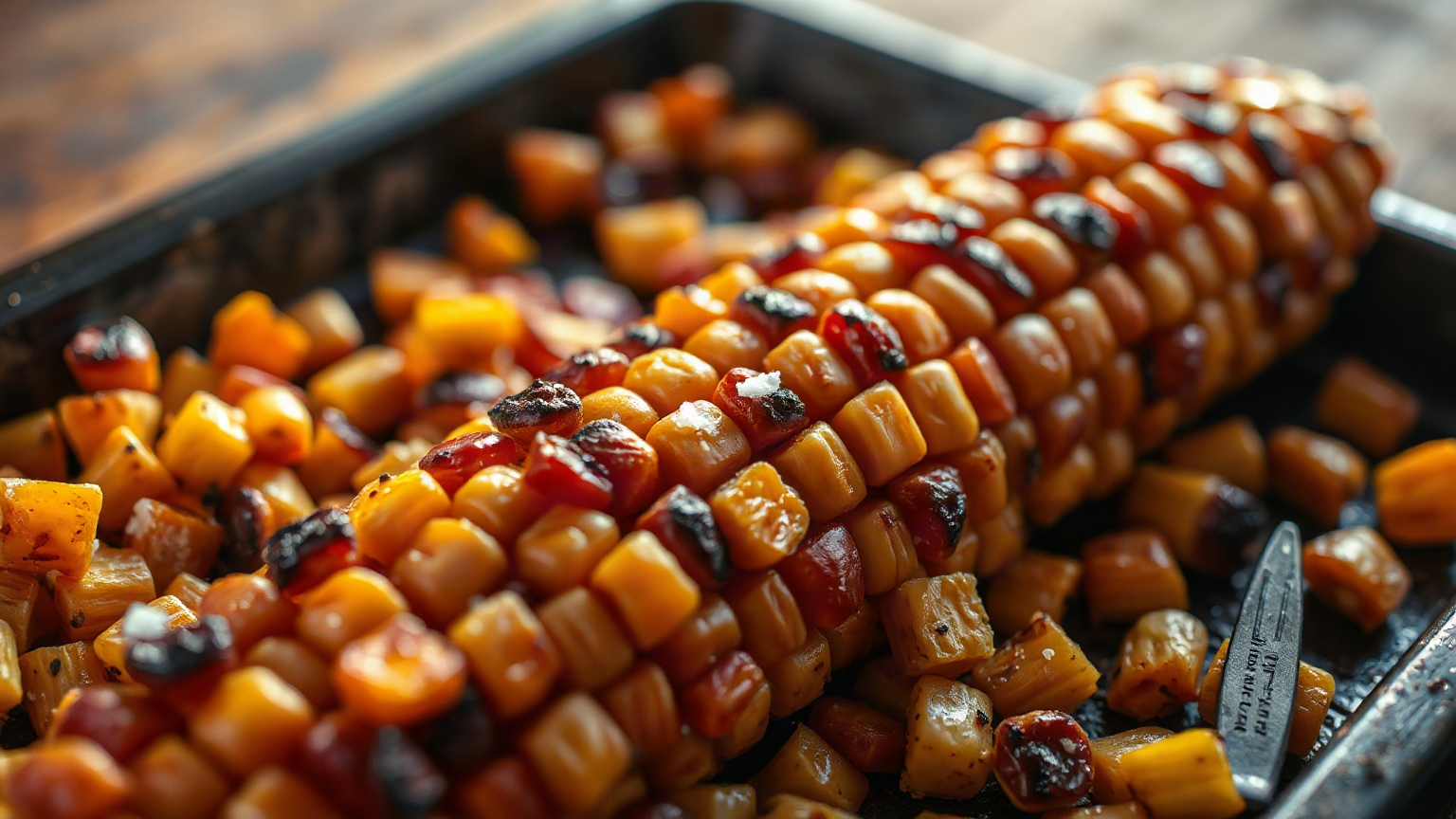
The single biggest mistake people make with frozen corn — in any oven — is going too low. I see a lot of recipes calling for 350°F or even 375°F, and I get it, those temps feel “safe.” But frozen corn carries a lot of water. If your oven isn’t hot enough to drive that moisture off quickly, the corn just sits in a puddle of its own steam and you end up with something that tastes boiled. Fine, technically. Not what we’re going for.
At 425°F, the surface moisture evaporates in the first 10 minutes or so, and then the actual roasting starts. That’s when you get the color. Some kernels go a deep golden-yellow, a few edges go slightly charred in the best possible way. The flavor concentrates. It tastes like corn that’s been on a grill, not corn that’s been reheated.
If your toaster oven runs hot (many do — mine skews about 15 degrees high based on my oven thermometer), you can back off to 415°F or just keep a closer eye on it after the 18-minute mark. But I wouldn’t go below 400°F. At 400°F you can still get decent results, just expect to add 5 minutes and accept a little less color.
The Exact Method I Use
Pan Choice
This is where a lot of home cooks go wrong without knowing it. The pan you use has a real effect on the outcome. A thin, dark metal toaster oven baking pan absorbs heat faster and conducts it more directly to the corn, which helps with browning from the bottom up. A light-colored aluminum sheet will get there eventually, but it’s slower.
What I actually prefer, if your toaster oven came with one, is the air fryer basket or the wire rack set over a drip pan. The airflow underneath each kernel makes a noticeable difference. That said, most people don’t have that option, so a greased dark pan works just fine.
One thing I’d skip: parchment paper. I know it’s convenient for cleanup, but it creates a small insulating layer between the pan and the corn, and it also traps steam underneath. Just grease the pan with a little olive oil and accept that you’ll need to give it a quick scrub later.
Step-by-Step
- Preheat the toaster oven to 425°F. Give it a full 10 minutes to actually reach temperature — toaster ovens cycle on and off and the thermostat reading isn’t always accurate when it first beeps ready.
- Lightly coat your pan with olive oil or avocado oil (something with a decent smoke point).
- Pour the frozen corn straight from the bag — no thawing. Spread it in a single, relatively flat layer. If there’s too much corn for your pan size, do it in two batches. Crowding is the enemy of browning.
- Season now or after — I season after because salt draws out more moisture if you add it too early. Light drizzle of oil over the top of the corn too.
- Roast for 12 minutes, pull the pan out, stir well so the bottom kernels rotate to the top, push it back in.
- Roast another 10–13 minutes until you see good golden color on a solid portion of the kernels. Some should look almost toasted.
- Season immediately after pulling from the oven — salt, pepper, whatever additions you’re using. The heat helps everything adhere.
Total active time: maybe four minutes. The oven does the rest.
Temperature and Time Comparison
Here’s how different temperatures actually play out, based on my own tests with the same bag of frozen sweet corn across multiple batches:
| Temp (°F) | Cook Time (from frozen) | Result | Worth It? |
|---|---|---|---|
| 350°F | 35–40 min | Cooked through, no color, slightly mushy texture | No |
| 375°F | 28–33 min | A little color on some kernels, mostly steamed | Marginally |
| 400°F | 25–30 min | Decent browning, needs the full 30 min to get there | Yes, if your oven maxes here |
| 425°F | 20–25 min | Good golden color, some charred edges, great flavor | Yes — this is the target |
| 450°F | 17–20 min | Fast browning but easy to over-char; requires close attention | Only if you’re watching it |
My personal sweet spot is 425°F for 22 minutes with one stir. That’s the number I’d write on a sticky note and put on my cabinet door.
Seasoning and Variations That Actually Work
Roasted corn is one of those things that’s genuinely good with just salt and pepper. But it’s also a solid base for a lot of different directions. Here are the ones I’ve made more than once:
Simple and Sharp
Olive oil, flaky salt, black pepper, a squeeze of lemon after roasting. That’s it. This is what I make when I just need a side dish and don’t want to think about it. The lemon does something that makes the whole thing taste brighter — more “fresh” than frozen corn has any right to taste.
Mexican Street Corn Style (Elote-ish)
After roasting: toss with a small spoonful of mayo, lime juice, cotija or feta, chili powder, and cilantro if you’re into that. It’s messy and great. I’ve served this as a side for tacos and people ask for the recipe every time. Food Network has a bunch of corn variations worth browsing if you want more inspiration beyond the basics.
Smoky and Simple
Toss with smoked paprika and a touch of garlic powder before roasting, then finish with a little butter right when it comes out of the oven. Good alongside anything grilled or barbecue-adjacent.
The Edge Case Nobody Talks About: Corn for Salads and Grain Bowls
This is the use case the other recipes I’ve seen completely miss. If you’re adding roasted corn to a salad or a grain bowl, you actually want it slightly drier and more charred than if you’re serving it as a hot side dish. So I push it to the 25-minute mark at 425°F and skip the oil drizzle on top — just oil the pan. The kernels come out with more concentrated sweetness and a chewier texture that holds up against dressings without going soggy. Big difference. Try it.
For even more ideas on how to use your toaster oven beyond basic roasting, the guide to reheating food in a toaster oven covers a lot of ground on getting the most out of the appliance.
What Trips People Up (And Tripped Me Up)
The first time I tried this, I didn’t let the toaster oven fully preheat. I figured once it beeped, we were good. We were not good. The corn went in when the oven was still at maybe 370°F internally, and the first 8 minutes were essentially just slow-steaming. I got edible corn. Not roasted corn.
A cheap oven thermometer — like, a $10 one from any kitchen store — will tell you exactly what your toaster oven is actually doing. Some run 25–30 degrees cool, some run hot. Mine runs about 15 degrees hot, which means when I set it to 425°F it’s actually closer to 440°F. That explains why my corn sometimes charred faster than expected in the early tests.
Also: don’t use a pan that’s too big. Counterintuitive, but if you spread a small amount of corn across a large pan, the kernels end up too spread out and the ones near the edges can over-char before the middle ones are done. You want the corn in a single layer but not so sparse that it looks lonely on the pan. And if you’re working with a smaller toaster oven, check out the best mini toaster ovens — some compact models have surprisingly capable convection settings that can actually speed up the roasting process.
The Serious Eats breakdown of corn cooking methods is a good read if you want to get into the actual food science of what’s happening to the starches and sugars. Knowing why 425°F works makes it easier to troubleshoot when your particular unit behaves differently.
One more thing: if your toaster oven has a convection setting, use it. Even if you need to drop the temperature by 25°F to compensate (standard convection adjustment), the airflow cuts 4–5 minutes off the cook time and gets more even browning. I don’t always bother because mine takes forever to switch modes, but it genuinely makes a difference. You can read more about how hot a toaster gets to understand the heating dynamics if your model is behaving strangely.
The Bottom Line
425°F, single layer, greased dark pan, 20–25 minutes with one stir. That’s the whole thing. If you’ve been getting steamed, sad frozen corn from your toaster oven, temperature is almost certainly the reason — and fixing it takes zero extra effort, just a thermostat adjustment. The wire rack with drip pan setup is worth grabbing if yours didn’t come with one; the airflow improvement is real. For pan browning, a good dark nonstick toaster oven pan is the other upgrade that actually changes the results. Everything else is just seasoning preference — and on that front, you’ve got a lot of options.
Frequently Asked Questions
Do I need to thaw frozen corn before roasting it in a toaster oven?
No — roast it straight from frozen. Thawing first makes the corn wet and releases extra water onto the pan, which creates steam and actively works against browning. Frozen corn dropped into a fully preheated 425°F oven will shed its surface moisture quickly and start roasting properly within the first 10 minutes.
What temperature should I roast frozen corn in a toaster oven?
425°F is the target temperature. Anything below 400°F doesn’t drive off the moisture fast enough and you end up with steamed rather than roasted corn. At 425°F, you get golden color on the kernels within 20–25 minutes without needing to babysit it closely.
How long does it take to roast frozen corn in a toaster oven?
At 425°F, frozen corn takes 20 to 25 minutes in a toaster oven, with one stir at around the 12-minute mark. The exact time depends on your specific unit and how much corn you’re cooking — a thinner layer will finish closer to 20 minutes, and if your toaster oven runs cool it may need the full 25 or slightly longer.
Can I roast frozen corn on the cob in a toaster oven the same way?
Frozen corn on the cob needs different handling — you’ll want to wrap it in foil with a small pat of butter and roast at 350–375°F for 30–35 minutes, or thaw it first and reduce the time to around 20–25 minutes. The loose kernel method in this article is specifically for frozen cut corn; whole cob pieces have too much mass to benefit from high-heat dry roasting in the same way.
Why does my roasted frozen corn turn out soggy instead of golden?
Soggy corn usually comes from one of three things: the temperature was too low (under 400°F), the corn was crowded on the pan so steam couldn’t escape, or parchment paper was used underneath which traps moisture. Fix all three — high heat, single layer on a greased pan with no parchment — and you’ll get the browning you’re looking for.

Written by
Emma is a home cook who loves coaxing big flavor out of a toaster oven — from crispy roasted vegetables to easy weeknight dinners and sweet treats. She develops and tests Toastera's recipes for small-appliance kitchens.
Free: the Toaster Oven Cheat Sheet
Get the printable cheat sheet (temps, cook times & safety tips) plus new recipes. No spam, unsubscribe anytime.