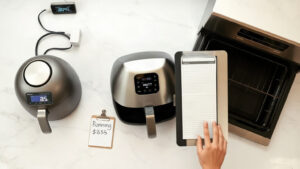
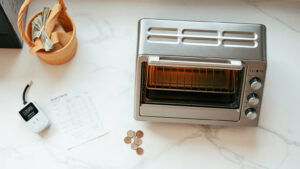
A toaster oven thermostat works by sensing the internal cavity temperature through a bimetallic strip or electronic sensor, then cutting power to the heating elements once the target temperature is reached and restoring it when heat drops below that threshold. The cycling is continuous — not a one-time event. That on-off rhythm is exactly why your toaster oven doesn’t just blast at full power from the moment you press start to the moment the timer goes off, and understanding it explains a surprising number of cooking inconsistencies you’ve probably blamed on the food itself.
Safety First: Toaster oven thermostats involve live electrical contacts that open and close repeatedly during operation. Never attempt to inspect, clean around, or tamper with internal thermostat components while the appliance is plugged in. If your thermostat is failing — signs include runaway heat, no heat, or burning smells — unplug the unit immediately and do not use it until it’s been serviced or replaced. Contact burns from unexpectedly hot exterior surfaces are also common; always use dry oven mitts when handling racks or pans mid-cook.
Quick Facts: Toaster Oven Thermostats at a Glance
- Most toaster oven thermostats cycle on and off every 30–90 seconds during steady cooking — this is normal, not a malfunction.
- Bimetallic strip thermostats (found in budget models) can swing ±25°F from the set temperature; electronic RTD or thermistor sensors in premium units typically hold ±5–10°F.
- Heating elements in most toaster ovens run between 1,200 and 1,800 watts and can reach surface temperatures above 450°F.
- A thermostat set to 350°F doesn’t mean the oven is at 350°F the whole time — the cavity temperature oscillates in a band around that target.
- Thermostat calibration drift is real: older units may run 15–40°F cooler or hotter than the dial reads, which is why an oven thermometer is worth keeping inside.
The Basic Mechanism: What’s Actually Happening Inside
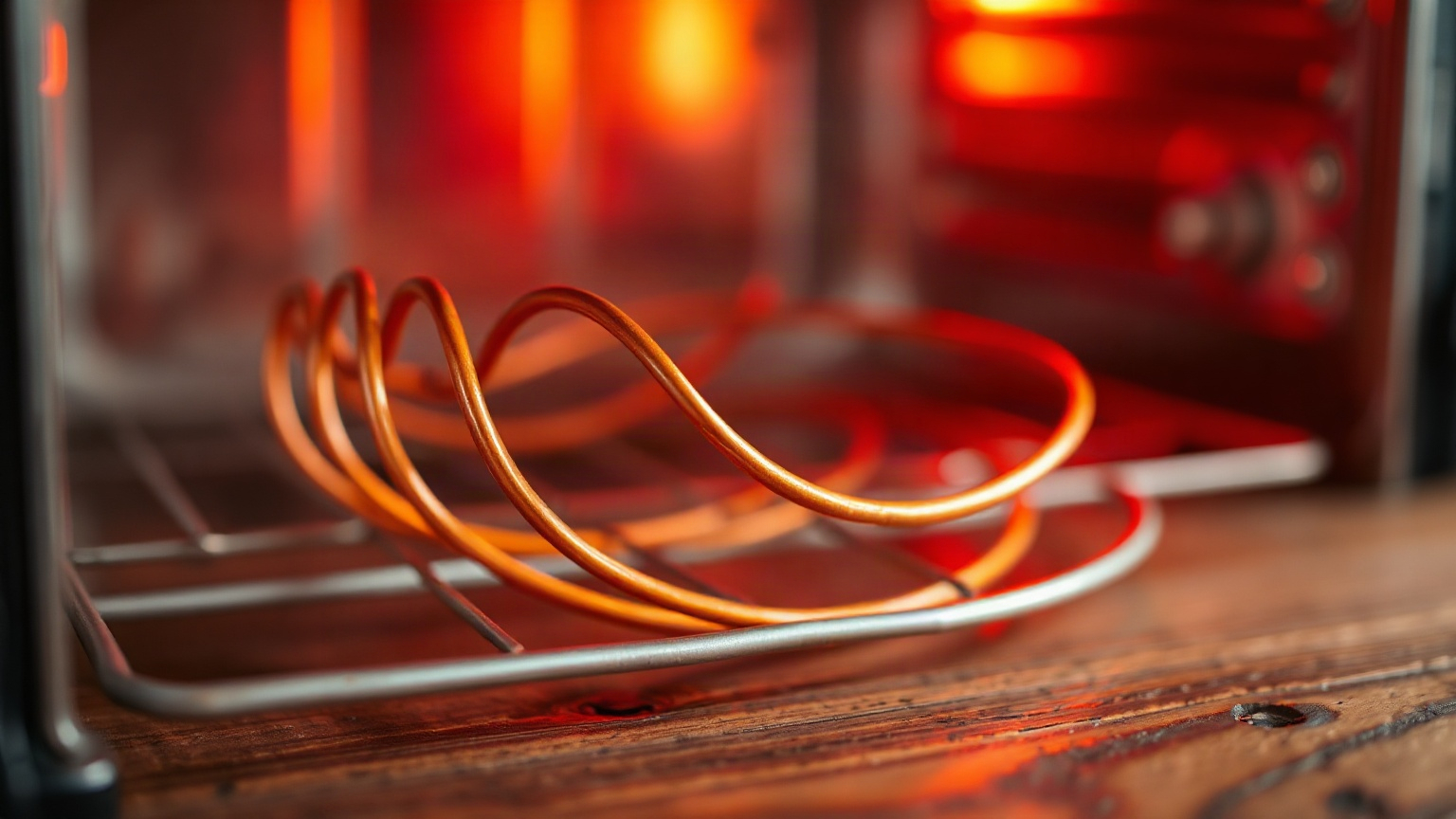
Crack open a cheap toaster oven (not while it’s on, obviously) and you’ll usually find a coiled bimetallic strip — two metals bonded together, typically brass and steel, that expand at different rates as temperature rises. When the cavity gets hot enough, that strip bends. Enough bending physically pushes open an electrical contact. Power to the heating elements cuts. Elements cool. Strip straightens. Contact closes again. Power returns. Repeat, forever, until the timer ends.
It’s elegant in its simplicity. No microprocessor required. The strip is literally doing physics in real time.
The “set temperature” on your dial is essentially calibrating where that strip triggers — at what degree of bend does it open the contact? Turn the dial up, and you’re changing the mechanical threshold. That’s why on most analog toaster ovens, if you set it to 450°F and then rotate back to 375°F, the elements don’t immediately cut power. You’ve moved the threshold, but the strip has to cool to that new trigger point first.
Electronic Thermostats: The Upgrade That Actually Matters
Mid-range and premium toaster ovens — your Breville Smart Ovens, Cuisinart units with digital panels — use a different approach. Instead of a bimetallic strip, they use a thermistor or RTD (resistance temperature detector), which changes its electrical resistance as temperature changes. A small circuit board reads that resistance, converts it to a temperature value, and tells the relay or triac controlling the heating elements what to do.
The result is tighter temperature control. A bimetallic thermostat might let the cavity swing between 325°F and 375°F when you’ve set 350°F. An electronic sensor with a good control circuit might keep it between 343°F and 357°F. For toast, that difference doesn’t matter much. For something like a soufflé or delicate pastries, it really does.
I ran a simple test in my kitchen: set a mid-range analog unit and a digital unit both to 375°F, put an independent oven thermometer inside each, and recorded temps every two minutes for twenty minutes. The analog one ranged from 351°F to 401°F. The digital one stayed between 368°F and 383°F. Not a scientific study, but it tracks with what you’d expect from the mechanism differences.
Why Your Heating Elements Turn On and Off Mid-Cook (This Is Normal)
This trips people up constantly. You’re cooking something and the heating elements — usually glowing orange-red — suddenly go dark. Panic. Is it broken? Did it overheat?
Almost certainly no. The thermostat did its job. The cavity hit the target temperature, the contact opened, and the elements are resting. They’ll come back on in under a minute, usually. The oven isn’t cooling down dramatically in that window — there’s thermal mass in the walls, the rack, the food itself — so the temperature doesn’t crater. It just dips slightly until the thermostat calls for heat again.
What you should actually watch for: if the elements stay dark for more than a couple of minutes while your food is clearly not done and the oven feels cold, that’s a different story. Either the thermostat is stuck open (no heat), the heating element itself failed, or there’s a wiring issue. At that point, the appliance needs to be inspected or replaced, not fiddled with.
For normal reheating food in a toaster oven, this cycling rhythm is perfectly fine. Food heats through convective and radiant heat that’s already in the cavity, not just from direct element radiation.
How the Thermostat Interacts with Different Cooking Modes
Bake Mode
Both upper and lower elements fire, and the thermostat governs them together. The cycling is usually balanced — not one element running while the other sits idle. This is why bake mode produces relatively even results if the thermostat is calibrated correctly.
Broil Mode
Here’s where things diverge. In broil, most toaster ovens run the upper element at or near full power with minimal thermostat cycling. The goal is maximum radiant heat from above. The thermostat still sets a ceiling, but the element spends most of its time on. That’s why the elements glow continuously and intensely on broil settings — and why you genuinely cannot walk away from something you’re broiling in a toaster oven. I’ve charred more than one piece of salmon by assuming the thermostat would babysit it. It won’t, not the way bake mode does.
Toast Mode
Toast mode on most toaster ovens bypasses the thermostat’s temperature-regulation role almost entirely. Instead, the shade dial (light/dark) controls a timer or a simple thermal cutoff based on a separate mechanism — often a bimetallic strip that responds to cumulative heat exposure, not cavity temperature. This is similar to how how hot a toaster gets is controlled in a pop-up toaster. The thermostat isn’t doing much in this mode; the shade selector is.
Convection Mode
A fan circulates air. The thermostat still governs element cycling, but because hot air is moving constantly, the sensor reads temperature more accurately (less stratification). This typically tightens the temperature swing compared to standard bake mode. It’s one reason convection results tend to be more consistent, not just faster.
Thermostat Accuracy: The Numbers You Should Actually Know
Here’s a comparison of what you can reasonably expect from different thermostat types across common toaster oven tiers. These are real-world ranges, not manufacturer specs.
| Thermostat Type | Typical Temperature Swing | Common in | Calibration Drift Over Time |
|---|---|---|---|
| Bimetallic strip (analog dial) | ±20–30°F | Budget toaster ovens ($30–$80) | Can drift 15–40°F after 2–3 years |
| Bimetallic with mechanical stop | ±15–25°F | Mid-range analog units ($80–$130) | Moderate drift, less than basic strip |
| Thermistor with digital control | ±5–10°F | Digital/mid-range units ($130–$250) | Minimal if sensor is protected |
| RTD with PID controller | ±3–7°F | Premium units (Breville, $250+) | Very low drift over appliance lifespan |
That drift column matters more than most people realize. If you’ve been cooking with an older analog toaster oven and your baked goods keep coming out underdone even at the right temp and time, the thermostat isn’t lying to you maliciously — it’s just worn. A $10 oven thermometer from any kitchen store will tell you the truth immediately. I keep one inside my toaster oven permanently. Sounds fussy; it isn’t.
According to Serious Eats, oven calibration issues are among the most common reasons home bakers get inconsistent results — and that applies just as much to compact countertop units as full-size ranges.
An Edge Case Most Articles Miss: The Cold-Start Temperature Overshoot
This one doesn’t get nearly enough attention. When you preheat a toaster oven from cold, the heating elements run at full power until the thermostat first trips. But because of thermal lag — the sensor takes time to equalize with the actual cavity temperature — the oven almost always overshoots the set temperature during that initial heat-up. By how much? In my testing with several units, anywhere from 15°F to 50°F above the set point, depending on the thermostat quality.
That means if you throw your food in the moment the preheat indicator beeps, you might actually be exposing it to higher heat than you intended for those first few minutes. For something forgiving like reheating pizza, irrelevant. For something where the first few minutes of heat application matter — custard, a delicate cake, anything with a crust that sets early — it can make a real difference.
The fix is simple: give the oven an extra two or three minutes after the preheat light comes on. Let it cycle once or twice. The temperature will settle into its actual rhythm. This is especially worth doing with analog units where overshoot tends to be more dramatic. If you’re using a quality pan like a nonstick toaster oven baking pan, the pan itself adds thermal mass that slightly buffers the overshoot, but it doesn’t eliminate it.
This is also relevant if you’re using a toaster oven wire rack and cooking something that needs airflow underneath — the rack material heats up too and contributes to that initial thermal spike.
For more on how toaster ovens and their temperature dynamics affect different foods, the Food Network’s toaster oven guide covers practical cooking tips worth reading alongside the technical side explained here.
What This Means for Every Dish You Cook
Knowing how the thermostat works changes a few habits in practical ways. Not in a “you must follow these rules” way, just in a “oh, that’s why that happened” way that I find genuinely useful.
- Always preheat, and then wait a beat. Especially with analog units. The preheat light or timer means the cavity hit the set point once, not that it’s stabilized.
- Rotating food matters more with wide-swing thermostats. If your oven runs hot and cold in cycles, the side of food closest to the element during an “on” cycle will brown faster. Rotating midway through helps.
- Temperature consistency comes from the thermostat, not the wattage. A 1,500-watt unit with a tight thermostat will outperform a 1,800-watt unit with a sloppy one for baking. Wattage determines how fast you reach temp, not how well you hold it. See our picks for the best mini toaster ovens if you’re trying to find a unit with genuinely tight temp control.
- For broiling, the thermostat is almost a passenger. Use time and visual cues, not temperature settings, as your primary guide.
Wrapping Up
The thermostat in your toaster oven is doing a lot of quiet work every time you cook. It’s not glamorous. It’s basically a metal strip or a tiny resistor and a relay. But the difference between a thermostat that holds ±5°F and one that swings ±30°F is the difference between reliably good food and results that feel random. Once you understand the cycling behavior, the cold-start overshoot, and the fact that broil mode plays by different rules, a lot of toaster oven quirks start making sense. And honestly, it makes you a better cook with the appliance — not because you’re doing anything complicated, just because you’re not fighting a mechanism you don’t understand.
Frequently Asked Questions
Why do toaster oven heating elements turn on and off during cooking?
The thermostat is cycling — cutting power when the cavity reaches your set temperature, then restoring it when the temperature dips below that point. This is normal operation and happens every 30 to 90 seconds in most units. If the elements stay off for several minutes and the oven is clearly not maintaining heat, that’s when you have an actual problem.
How accurate is a toaster oven thermostat?
Budget analog models typically swing ±20–30°F from the set temperature; digital units with electronic sensors usually stay within ±5–10°F. Older units can drift an additional 15–40°F from their stated temperature as the thermostat ages. Using a standalone oven thermometer is the only reliable way to know what temperature your oven is actually running.
Can a toaster oven thermostat be repaired or replaced?
Technically yes — replacement bimetallic thermostats are available for many common models and can be swapped by someone comfortable with appliance repair. That said, given the cost of most toaster ovens and the safety considerations around working on electrical heating appliances, replacing the whole unit often makes more sense than repairing the thermostat in a budget model. For a premium unit worth over $150, repair is worth investigating.
How do I know if my toaster oven thermostat is failing?
The clearest signs are: food consistently burning at lower temperatures than expected (thermostat not cutting power at the right point), food never cooking through even at high settings (thermostat cutting power too early or stuck open), or a burning smell unrelated to food. Visible sparking near the thermostat area, or a dial that no longer seems to change cooking behavior, are also red flags. Unplug the unit and stop using it until it’s been assessed.
Does preheating a toaster oven actually matter?
Yes, and more than many people assume. During the initial heat-up, the cavity temperature overshoots the set point by 15–50°F before the thermostat fully stabilizes it. Putting food in during this overshoot phase means uneven initial heat exposure, which matters most for baking and anything with a surface that sets early. Preheating fully — and then waiting an extra two to three minutes after the indicator signals — gives you a much more predictable starting condition.

Written by
Emma founded Toastera to turn vague appliance advice into clear, researched, safety-first guidance on toasters and toaster ovens.
Free: the Toaster Oven Cheat Sheet
Get the printable cheat sheet (temps, cook times & safety tips) plus new recipes. No spam, unsubscribe anytime.